Myopia Treatment: How It Works, Results and What to Expect

Glasses and contact lenses provide effective vision correction but do not permanently change the eye. In children, myopia-control strategies may help slow worsening and require regular eye follow-up.
Key Takeaways
- Glasses and contact lenses provide effective vision correction but do not permanently change the eye.
- In children, myopia-control strategies may help slow worsening and require regular eye follow-up.
- Laser refractive surgery and implantable lens procedures can reduce dependence on glasses or contacts in suitable adults.
- A detailed eye examination is essential because the best option depends on age, prescription stability, corneal health and overall eye health.
- Most procedures have high satisfaction rates, but side effects and uncommon complications should be discussed before treatment.
Myopia treatment improves blurred distance vision by changing how light focuses in the eye. Options range from glasses and contact lenses to approaches that slow myopia progression in children and refractive procedures for appropriately selected adults.
Myopia Treatment: An Overview
Myopia treatment corrects the blurred distance vision caused by short-sightedness. The most appropriate choice depends on a person’s age, prescription, whether the prescription is changing, eye health, daily activities and preferences. Glasses and contact lenses are reliable ways to see clearly, while certain treatments may help slow progression in children and refractive procedures may reduce dependence on corrective lenses in selected adults.
In myopia, light entering the eye focuses in front of the retina rather than directly on it. This usually happens because the eye is longer than average or because the cornea is too curved. Treatment either redirects light so it reaches the retina correctly or, in some procedures, reshapes the cornea or places a lens inside the eye.
Myopia is common and often begins during school years. It may progress as a child grows, then become more stable in early adulthood. A comprehensive eye assessment helps distinguish uncomplicated myopia from other conditions that can affect vision and helps guide safe, realistic treatment planning.
How Does Myopia Treatment Work?
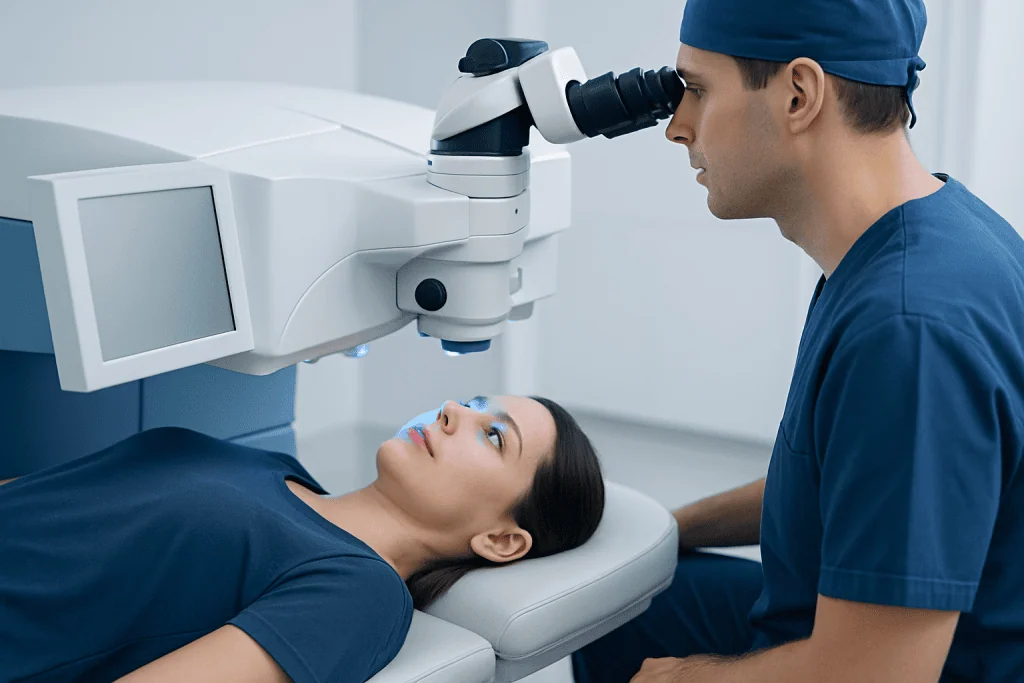
How does myopia treatment work? Most myopia treatments work by moving the eye’s focal point backward onto the retina. Concave spectacle and contact lenses spread incoming light slightly before it enters the eye, allowing distant objects to become clear. These options correct vision while worn but do not shorten the eye or permanently remove myopia.
For children with progressing myopia, an eye specialist may recommend evidence-based myopia-control methods. Depending on the child and local clinical practice, these can include specially designed spectacle lenses, multifocal contact lenses, overnight corneal reshaping lenses, or low-dose atropine eye drops. Their purpose is generally to slow progression rather than provide a complete cure.
For adults with stable prescriptions, refractive procedures can alter the optical system of the eye. Laser procedures reshape the cornea; implantable collamer lenses add a prescription lens inside the eye; and lens replacement procedures exchange the natural lens for an artificial one. Each approach has different eligibility requirements, benefits and trade-offs.
Regular eye examinations remain important even after successful correction. Very high myopia can be associated with a greater lifetime risk of retinal, macular and glaucoma-related problems, which are monitored separately from whether a person sees clearly without glasses.
What Is the Best Age to Treat Myopia?
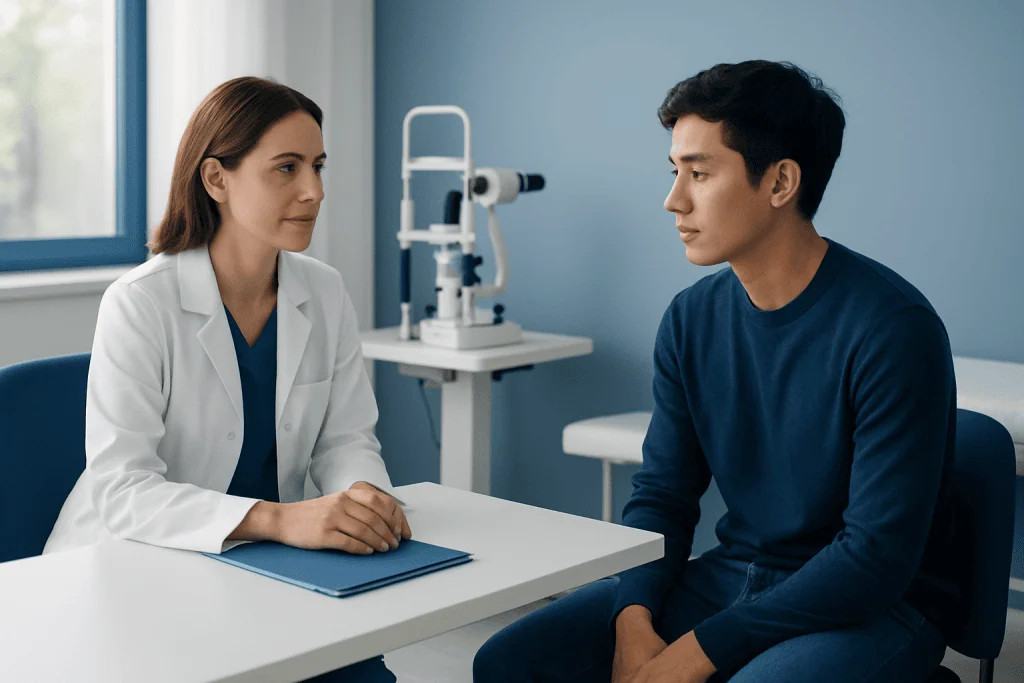
What is the best age to treat myopia? Vision correction can begin at any age when it is needed. Children can safely use glasses, and contact lenses may be appropriate for some children and teenagers when prescribed and supervised by an eye-care professional. The priority during childhood is clear vision, healthy visual development and monitoring for progression.
Myopia-control treatment is often considered during childhood or adolescence when the prescription is still increasing. Starting at the right time is individual: the eye specialist considers the child’s age, rate of change, family history, level of myopia and ability to use treatment consistently. Time outdoors and regular reviews are also commonly encouraged as part of a broader plan.
Laser eye surgery is generally considered only after adulthood, when the prescription has been stable for an appropriate period and the eyes have fully developed. The exact age threshold and stability requirements vary by procedure and clinician. People in their 40s and beyond may also need to account for presbyopia, the normal age-related reduction in near focusing ability.
Candidacy and Choosing a Procedure
Before considering a procedure, an ophthalmologist performs a detailed assessment. This commonly includes a refraction test, corneal mapping and thickness measurement, pupil assessment, tear-film evaluation, eye-pressure testing and a dilated retinal examination when indicated. Contact lens wearers may need to stop wearing lenses for a period before testing because lenses can temporarily affect corneal measurements.
Good candidates for laser refractive surgery usually have a stable prescription, sufficient corneal thickness, a suitable corneal shape and no untreated eye disease. Pregnancy and breastfeeding can temporarily change prescription and tear quality, so elective refractive surgery is commonly postponed. Significant dry eye, keratoconus, cataract, glaucoma, retinal disease or certain autoimmune conditions may affect eligibility or require individual assessment.
People with higher prescriptions or corneas unsuitable for laser reshaping may be assessed for an implantable lens procedure. Lens replacement may be more relevant for older adults, particularly when cataract or age-related near-vision changes are also present. An evaluation should focus on safety and visual needs rather than on choosing one procedure based on convenience alone.
- Glasses: simple, reversible and suitable at any age.
- Contact lenses: provide wider peripheral vision but need careful hygiene and follow-up.
- Laser corneal procedures: may reduce reliance on glasses for suitable adults.
- Implantable or replacement lenses: may be options when laser treatment is not appropriate.
Myopia Surgery: What Happens Step by Step?
Myopia surgery is usually planned after measurements confirm that the chosen procedure is appropriate. On the day, the eye is numbed with anesthetic drops. The person remains awake, and the surgical team provides clear instructions about where to look. Sedation may sometimes be offered, depending on the procedure and clinical setting.
In laser corneal surgery, a laser precisely reshapes corneal tissue to change the way light is focused. In flap-based procedures, a thin corneal flap is created and repositioned after reshaping. Surface laser procedures treat the outer corneal layer differently and may have a longer initial healing period. The treatment itself is brief, although preparation and checks take longer.
For an implantable lens procedure, a small incision is made and a prescription lens is placed behind the iris and in front of the natural lens. Lens replacement involves removing the natural lens and inserting an intraocular lens. These are intraocular procedures, so the pre-operative assessment and follow-up plan are especially important.
After any procedure, patients are given eye-drop instructions and scheduled reviews. They should arrange transport home and avoid rubbing the eyes. The surgeon will explain activity restrictions, return-to-work expectations and the symptoms that require prompt contact.
Recovery, Results, Benefits and Risks
Recovery depends on the treatment used. After many laser procedures, vision may improve quickly, but fluctuations, glare and dry-eye symptoms can occur while the eye heals. Surface procedures often involve more discomfort and a slower visual recovery than flap-based techniques. Implantable lens and lens replacement procedures also require recovery time and follow-up to monitor eye pressure, healing and lens position.
The main potential benefit of refractive treatment is less dependence on glasses or contact lenses for distance vision. Some people still need glasses for certain tasks, such as night driving or fine print, and most people eventually develop presbyopia with age. Surgery corrects the current refractive error; it does not prevent normal age-related changes or replace routine eye care.
How risky is myopia surgery? Modern refractive procedures are commonly performed and can be safe for carefully selected patients, but no surgery is risk-free. Possible temporary effects include dry eyes, light sensitivity, halos, glare, fluctuating vision and discomfort. Less common but potentially significant complications include infection, inflammation, undercorrection or overcorrection, corneal healing problems, raised eye pressure, retinal complications in susceptible eyes, or a need for further treatment.
A thorough consultation supports informed decision-making. The eye surgeon should explain the expected result for the individual prescription, alternatives to surgery, the likelihood of needing glasses later in life and the specific risks of the procedure being considered.
Can Minus 2.5 Eyesight Be Cured?
Can minus 2.5 eyesight be cured? A prescription of minus 2.5 diopters is usually considered mild myopia and can typically be corrected effectively with glasses or contact lenses. These methods provide clear vision while being used, but they do not permanently remove the refractive tendency of the eye.
For an adult with a stable minus 2.5 prescription and healthy eyes, laser refractive surgery may be an option that reduces reliance on glasses or contacts. Whether it is suitable cannot be decided from the prescription alone: corneal shape and thickness, dry-eye symptoms, pupil size, retinal health, occupation and visual expectations all matter.
In children and teenagers, the focus is usually on correction and, where appropriate, slowing further progression rather than permanent surgical correction. A qualified ophthalmologist can discuss whether a particular myopia treatment is suitable and what result is realistic for the person’s stage of life.
When to Seek Medical Care
Routine eye examinations are important for anyone with myopia, particularly children whose prescription is changing and adults with moderate or high myopia. An eye-care professional can check vision, update correction and examine the retina and optic nerve. People considering surgery should seek assessment from an ophthalmologist experienced in refractive care rather than relying on a prescription alone.
Urgent medical assessment is needed for sudden flashes of light, a new shower of floaters, a curtain or shadow across vision, sudden loss of vision, significant eye pain, marked redness, or a sudden change in vision. These symptoms can have several causes and should not be assumed to be a normal feature of myopia.
Acibadem International’s multidisciplinary specialists and JCI-accredited hospitals diagnose and treat myopia and related eye conditions for international patients. Individual recommendations should always follow a full ophthalmic examination and discussion of personal visual goals.
Frequently asked questions
Is myopia treatment permanent?
Glasses and contact lenses correct myopia only while they are worn. Refractive surgery can provide long-lasting reduction in dependence on corrective lenses, but vision can still change over time and age-related near-vision loss may develop.
Can myopia get better naturally?
Myopia in children commonly progresses as the eye grows, although the rate varies. It does not usually reverse naturally, but some treatments may help slow progression under the guidance of an eye specialist.
Are contact lenses safe for myopia?
Contact lenses can be safe when properly fitted, cleaned and replaced as instructed. Sleeping in lenses not designed for overnight wear, poor hygiene and wearing lenses during eye irritation can increase the risk of infection.
Will laser surgery stop myopia from worsening?
Laser surgery reshapes the cornea to correct the current prescription; it does not change the underlying length of the eye. This is why surgeons generally prefer a stable prescription before proceeding and why ongoing eye health checks remain important.
What should someone expect at a myopia surgery consultation?
The consultation usually includes vision testing, corneal measurements, an eye-health examination and a review of medical history and visual needs. The ophthalmologist will discuss whether surgery is suitable, alternative options, likely outcomes and possible risks.
Can children have surgery for myopia?
Laser refractive surgery is generally not used for routine myopia correction in children because their eyes and prescriptions may still be changing. Children are usually managed with glasses, contact lenses when appropriate and myopia-control strategies if progression is a concern.
References
- American Academy of Ophthalmology
- National Eye Institute
- World Health Organization
- International Myopia Institute
- Royal College of Ophthalmologists
This article is for general information only and is not a substitute for professional medical advice. Please consult a qualified doctor about your individual situation.
Myopia in Turkey — costs, top hospitals & a free quote
JCI-accredited · board-certified surgeons · reply within 24h

More from the Health Library


Related Specialists

Assoc. Prof. Dr. Hüseyin Cahit Yılmaz
General Surgery
Dr. Ali Serkan Kılıç
Urology
Fzt. Fırat Çenberci
Physical Medicine and Rehabilitation
Gizem Erbil
Pediatric Rehabilitation