Sprained Finger Recovery: A Week-by-Week Timeline

A finger sprain affects ligaments that stabilize the finger joints, most often after bending, twisting, or impact. Mild sprains often improve noticeably within the first 1 to 2 weeks, although swelling can last longer.
Key Takeaways
- A finger sprain affects ligaments that stabilize the finger joints, most often after bending, twisting, or impact.
- Mild sprains often improve noticeably within the first 1 to 2 weeks, although swelling can last longer.
- Pain, instability, deformity, inability to bend or straighten the finger, or numbness needs prompt medical assessment.
- Buddy taping or a splint may protect the joint, but prolonged immobilization without guidance can cause stiffness.
- Gradual return to hand use is usually safer than resuming gripping, sports, or heavy work as soon as pain decreases.
Sprained finger recovery time is commonly 1 to 3 weeks for a mild injury, but a moderate or severe sprain can take 6 to 8 weeks or longer to regain comfortable movement and strength. Early protection, appropriate movement, and a timely medical assessment when needed can support healing and help rule out a fracture or tendon injury.
Overview: What Is a Sprained Finger?
A sprained finger occurs when one or more ligaments supporting a finger joint are stretched or torn. Ligaments are strong bands of tissue that help keep bones aligned while allowing the joint to move. Finger sprains commonly involve the middle joint, called the proximal interphalangeal (PIP) joint, after a ball strikes the fingertip, a fall, or the finger is forced sideways.
Sprained finger recovery time depends on how much the ligament was injured, which joint is involved, and whether there is an associated fracture, dislocation, tendon injury, or cartilage injury. A mild sprain may settle within 1 to 3 weeks. A more substantial ligament injury may need several weeks of protection and rehabilitation, and some swelling or stiffness can remain for a few months.
Because a sprain can resemble a broken or dislocated finger, it is sensible not to assume the injury is minor based on appearance alone. A clinician can assess alignment, movement, circulation, sensation, and joint stability, and may arrange an X-ray when appropriate.
Symptoms and Signs of a Finger Sprain
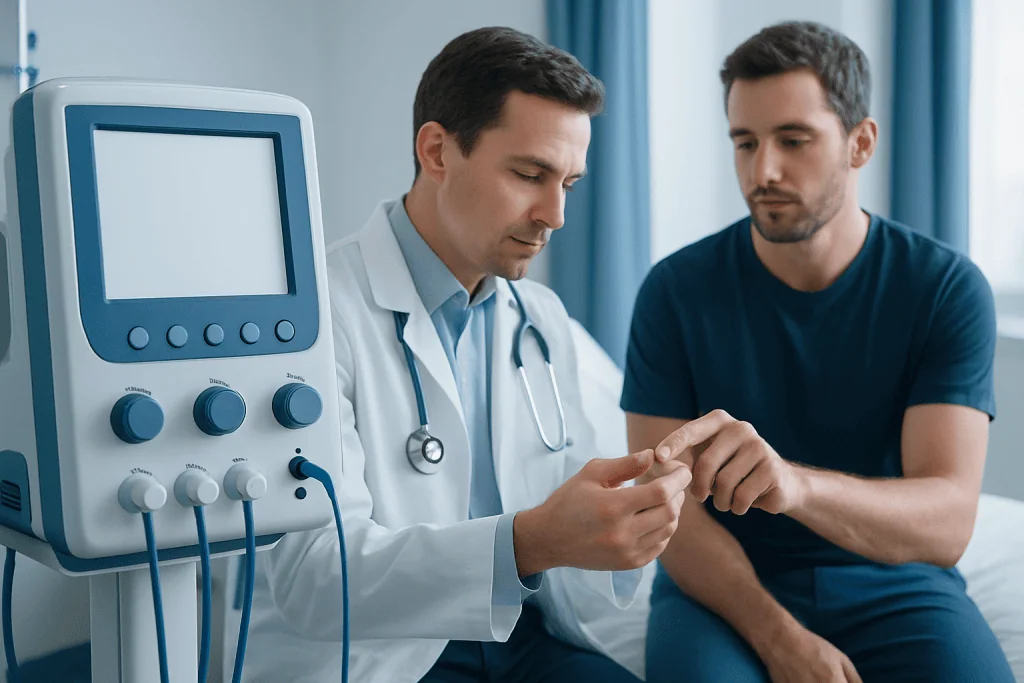
Typical symptoms begin soon after the injury. The joint may be painful, tender to touch, swollen, bruised, and difficult to move. Symptoms are usually most noticeable around the injured joint rather than along the entire finger. Gripping, twisting, catching, or straightening the finger may increase discomfort.
A mild sprain may cause soreness and slight swelling but preserve most movement and joint stability. A moderate sprain may involve more pronounced swelling, bruising, reduced range of motion, and pain with side-to-side stress. With a severe sprain, the finger may feel unstable, look misaligned, or be very difficult to bend or straighten.
Not all painful swollen fingers are sprains. A fracture, dislocation, tendon injury, or a joint injury involving the growth plate in a child may require different care. Assessment is especially important when symptoms are severe or do not improve as expected.
What are the symptoms of a torn ligament in the finger?
A torn finger ligament may cause sudden sharp pain at the time of injury, rapid swelling, bruising, and marked tenderness around a joint. The joint may feel loose or unstable, particularly when the finger is gently stressed sideways, although this should not be tested forcefully at home.
A complete tear can also occur with a small avulsion fracture, where a piece of bone is pulled away by the ligament. A visible change in joint shape, inability to use the finger normally, or a finger that locks, gives way, or feels unstable should be assessed by a healthcare professional.
Causes, Risk Factors, and Why Recovery Varies

Finger sprains usually result from a direct impact or force that pushes the joint beyond its usual range. Common situations include ball sports, falls, catching a hand on an object, workplace injuries, and accidents during everyday activities. The PIP joint is particularly vulnerable because it is frequently exposed during catching and falls.
Recovery may take longer when the injury involves a complete ligament tear, a dislocation, a fracture, more than one joint, or a delayed diagnosis. Continued gripping, impact, or repeated bending during the early healing phase can also prolong symptoms. Older age, joint arthritis, smoking, and medical conditions that affect healing may contribute to slower recovery in some people.
Children and adolescents should be assessed carefully after a finger injury because growing bones can be injured near the joint. People who play sports or use their hands intensively for work may need individualized advice about taping, splinting, rehabilitation, and a safe return to activity.
Assessment and Diagnosis
A clinician will usually ask how the injury happened, when symptoms began, and whether the person noticed a pop, deformity, numbness, or loss of movement. The examination includes checking the skin, swelling, tenderness, finger alignment, circulation, sensation, active movement, and the stability of the joint.
An X-ray is often used when there is substantial pain or swelling, limited movement, tenderness over bone, joint deformity, or concern for an avulsion fracture. X-rays do not show ligaments directly, but they can identify fractures and confirm whether the joint is aligned. Ultrasound or magnetic resonance imaging may occasionally be considered if the diagnosis remains uncertain or a significant ligament or tendon injury is suspected.
Prompt diagnosis helps distinguish a simple sprain from injuries that need more targeted treatment. This includes a dislocation, a fracture, or a tendon injury such as mallet finger, which typically causes difficulty actively straightening the fingertip.
Treatment: Protection, Movement, and Rehabilitation
Most uncomplicated finger sprains are treated without surgery. During the first day or two, protecting the finger from further impact, using a cold pack wrapped in cloth for short periods, and keeping the hand elevated when practical may help reduce discomfort and swelling. Over-the-counter pain relief may be suitable for some people, but a pharmacist or clinician can advise based on medical history and other medicines.
A clinician may recommend buddy taping the injured finger to a neighboring finger or using a short splint. This can protect the joint while still allowing some controlled movement. The correct method and duration depend on the joint and injury pattern; overly tight tape can affect circulation, while keeping a finger immobilized for too long may contribute to stiffness.
Once serious injury has been excluded, gentle range-of-motion exercises are commonly introduced as advised. The aim is to regain bending and straightening gradually without forcing painful movement. Hand therapy may be helpful after more severe sprains, prolonged stiffness, complex injuries, or when recovery is important for sport or work.
Surgery is uncommon but may be considered for an unstable joint, a displaced fracture, certain complete tears, or injuries that do not respond to appropriate non-surgical care. Procedures may involve repairing damaged structures or stabilizing the joint, followed by carefully supervised rehabilitation.
What helps a sprained finger heal faster?
The safest way to support recovery is to protect the joint early, follow advice about taping or splinting, and begin gentle movement at the recommended time. Avoiding reinjury is important: contact sports, heavy lifting, forceful gripping, and activities that cause sharp pain should wait until the joint is stable and function is returning.
Good general health measures also support tissue repair, including adequate sleep, regular nutritious meals, hydration, and avoiding tobacco. There is no reliable shortcut that heals a ligament immediately. Trying to “push through” persistent pain or stiffness can delay recovery, so gradual progression is preferable.
Sprained Finger Recovery Timeline: Week by Week
First 48 to 72 hours: Pain, swelling, tenderness, and bruising may develop or increase. The priority is protecting the finger and arranging assessment if there is deformity, severe pain, numbness, reduced circulation, or inability to move the joint. If a clinician has advised buddy taping or splinting, it should be used as directed.
Week 1: A mild sprain may begin to feel less painful at rest, although the joint can remain swollen and sore with bending or gripping. Appropriate gentle movement may help prevent stiffness. Moderate injuries may still have significant swelling and need continued protection.
Weeks 2 to 3: Many mild sprains show clear improvement in comfort and daily hand use. Bruising often fades, while joint swelling and stiffness may linger. Higher-impact activities should only be resumed when movement, strength, and joint stability are improving and activity does not provoke significant pain.
Weeks 4 to 8: Moderate sprains often continue improving during this period. A person may need a protective tape arrangement for sport or specific activities, depending on clinical advice. Exercises may focus on restoring full motion, grip strength, and confidence using the hand.
Beyond 8 weeks: Severe sprains, complete tears, associated fractures, or injuries that were initially missed can take longer. Mild residual swelling, a thicker-looking joint, or stiffness may persist for months even after the ligament has healed. Ongoing pain, loss of motion, or instability warrants reassessment rather than simply waiting.
When should a sprained finger start to feel better?
A mild sprained finger often starts to feel better within several days and shows noticeable improvement within 1 to 2 weeks. However, improvement is not always linear: the joint can feel comfortable at rest but still hurt with gripping, twisting, or sports.
If pain and swelling are not beginning to improve after about a week, or if function is worsening at any point, medical review is appropriate. More serious injuries may take longer to improve and benefit from an individualized treatment plan.
How long do fingers stay swollen after a sprain?
For a mild injury, obvious swelling may reduce over 1 to 3 weeks. After a moderate or severe sprain, the joint can remain mildly puffy or enlarged for several weeks to a few months, particularly around the middle finger joint.
Swelling should gradually trend downward. New or increasing swelling, warmth, redness, severe throbbing pain, color change, or numbness should be assessed promptly, especially if there has been a wound or recent procedure.
When to Seek Medical Care
Medical care is recommended promptly if the finger looks crooked, the joint appears out of place, there is severe swelling or bruising, the person cannot bend or straighten the finger, or there is numbness, tingling, paleness, blueness, or coldness. These signs may indicate a fracture, dislocation, circulation problem, or tendon injury rather than an uncomplicated sprain.
A doctor should also assess an injury after a high-force impact, a deep cut, a bite, or a puncture wound. Children should be evaluated when finger pain or swelling follows trauma, particularly if the finger is difficult to use or tenderness is close to a joint.
For ongoing symptoms, review is appropriate when pain, swelling, stiffness, or instability does not steadily improve, when everyday use remains difficult after a few weeks, or when the finger cannot return to its usual position or movement. Orthopedic and hand specialists can assess complex finger injuries and coordinate imaging and rehabilitation when required.
Acibadem International’s multidisciplinary specialists and JCI-accredited hospitals can evaluate and treat hand and finger injuries for international patients, including coordinated orthopedic care and rehabilitation where appropriate.
Frequently asked questions
Can a sprained finger heal on its own?
Many mild finger sprains heal with protection, appropriate support, and gradual return to movement. However, a fracture, dislocation, tendon injury, or severe ligament tear can look similar at first. Medical assessment is important if symptoms are severe, the finger is deformed, or function is limited.
Should a sprained finger be taped to another finger?
Buddy taping can be useful for some sprains because it protects the injured finger while permitting controlled movement. It should be applied correctly and not too tightly. A clinician can advise whether buddy taping, a splint, or another approach is best for the specific injury.
Can I move my finger if it is sprained?
Gentle movement is often helpful after serious injury has been ruled out and according to clinical advice. Keeping a finger completely still for too long can lead to stiffness. Painful, forceful movement and activities that stress the joint should be avoided during early healing.
Why is my finger still stiff after a sprain?
Finger joints are prone to stiffness after injury because swelling and protective guarding can limit movement. Stiffness may continue after pain has improved, especially after a moderate or severe sprain. Gentle rehabilitation and, when needed, hand therapy can help restore movement.
Can a finger sprain cause permanent swelling?
Some people notice that the injured joint remains slightly thicker or fuller after a significant sprain, even when function is good. This can reflect healing of ligaments and surrounding tissues. Persistent pain, reduced movement, or instability should be evaluated rather than attributed to normal healing.
When can I return to sports after a finger sprain?
Return depends on the severity of the injury, the sport, joint stability, and whether the finger has regained comfortable movement and useful strength. A clinician may recommend protective taping for an initial return. Returning too early can increase the chance of reinjury or prolonged stiffness.
References
- American Academy of Orthopaedic Surgeons
- American Society for Surgery of the Hand
- National Health Service
- Mayo Clinic
This article is for general information only and is not a substitute for professional medical advice. Please consult a qualified doctor about your individual situation.
Joint and spine care in Turkey — expert assessment & treatment
JCI-accredited · board-certified surgeons · reply within 24h
Add us as a Preferred Source to see more of our trusted health content across Google Search, AI Overviews and Discover.