

Terminal Liver Cancer Treatment Options Infusions Immunotherapy: Procedure, Recovery and Results

Advanced liver cancer treatment is individualized and may combine systemic infusions, liver-directed therapy and supportive care. Immunotherapy helps the immune system recognize cancer cells and is given intravenously on a planned schedule.
Key Takeaways
- Advanced liver cancer treatment is individualized and may combine systemic infusions, liver-directed therapy and supportive care.
- Immunotherapy helps the immune system recognize cancer cells and is given intravenously on a planned schedule.
- Not every person is a candidate for every treatment; liver function, symptoms, cancer spread and prior treatment all matter.
- Palliative care can be provided alongside cancer treatment and focuses on symptoms, practical support and personal goals.
- Survival estimates cannot predict an individual outcome, particularly when treatment response and liver health vary widely.
Terminal or advanced liver cancer is not always curable, but treatment may slow cancer growth, relieve symptoms and help preserve quality of life. Options can include immunotherapy infusions, targeted medicines, liver-directed procedures and specialist palliative care, chosen according to liver function, overall health and the extent of cancer.
Overview: terminal liver cancer treatment options, infusions and immunotherapy
Terminal liver cancer treatment options may include immunotherapy infusions, targeted medicines, chemotherapy in selected situations, liver-directed procedures and palliative care. Although advanced liver cancer is often not curable, treatment can sometimes control growth for a period of time, reduce cancer-related symptoms and support daily function and comfort. The best approach is decided by a multidisciplinary team together with the person and their family.
The phrase “terminal liver cancer” is often used when cancer cannot be removed completely with surgery or cured with a transplant, has spread outside the liver, or when severe underlying liver disease limits treatment. Doctors may instead use terms such as advanced, unresectable or metastatic liver cancer. These terms describe the stage and treatment goals, but they do not determine exactly how one person will respond.
Most primary liver cancers are hepatocellular carcinoma, which commonly develops in a liver affected by cirrhosis, chronic hepatitis B or hepatitis C, alcohol-related liver disease, or metabolic dysfunction-associated steatotic liver disease. Cancer that started elsewhere and spread to the liver is managed differently, because treatment is based mainly on the original cancer type.
How infusion immunotherapy works
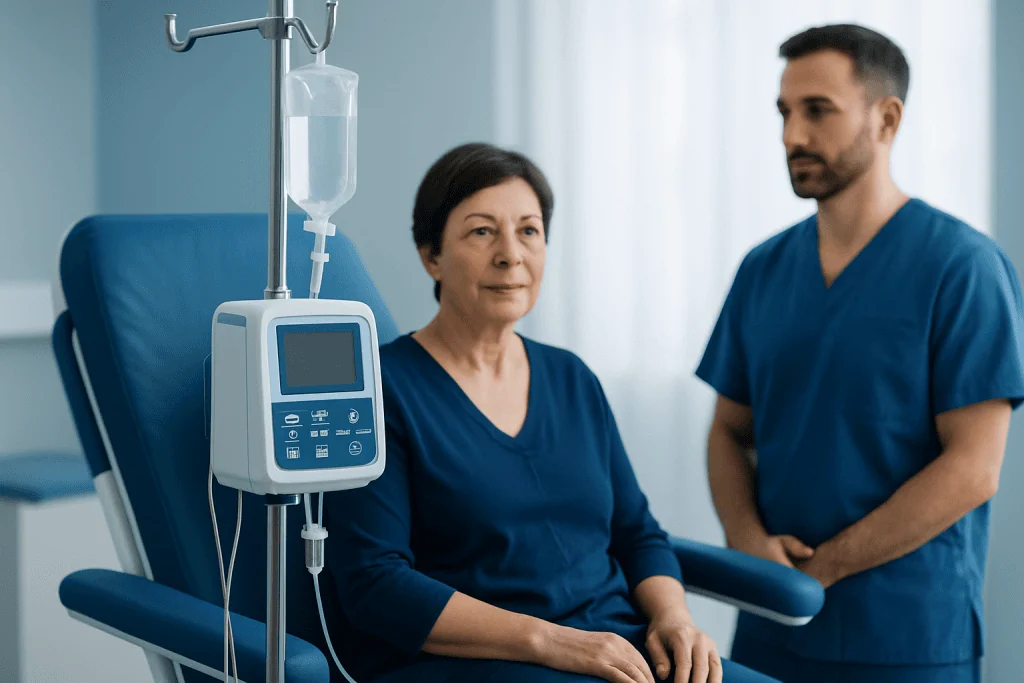
Immunotherapy is a systemic treatment, meaning it travels through the bloodstream and can treat cancer in the liver and cancer that has spread elsewhere. Many current approaches use immune checkpoint inhibitors. These medicines release natural “brakes” on immune cells, helping them recognize and attack cancer cells more effectively.
For advanced hepatocellular carcinoma, an immune checkpoint inhibitor may be used alone or combined with another medicine that affects blood-vessel signaling to the tumor. The combination selected depends on factors such as bleeding risk, blood pressure, kidney function, autoimmune disease, prior treatment and the condition of the liver. Some people may receive a targeted oral medicine rather than, or after, immunotherapy.
Immunotherapy is not chemotherapy. It does not directly kill rapidly dividing cells in the same way, and its side effects are different. Because it activates immune activity, it can occasionally cause inflammation in healthy organs, including the skin, bowel, lungs, thyroid gland or liver. Early reporting of new symptoms helps the team assess and manage potential immune-related effects promptly.
Who may be a candidate and how treatment is planned

Before recommending infusion treatment, the cancer team considers where the cancer is located, whether it has spread, prior therapies, symptoms, physical function and personal priorities. Equally important is how well the liver is working. Blood tests, imaging and clinical assessment help determine whether a person can safely tolerate a proposed treatment.
People with active autoimmune conditions, a previous organ transplant, uncontrolled infection, significant bleeding risk or severely reduced liver function may need a modified approach. These factors do not automatically exclude treatment, but they require careful discussion among oncology, hepatology, radiology, surgery and supportive-care specialists.
Some tumors are suitable for liver-directed treatments, such as embolization or radiation-based procedures, either before systemic therapy or alongside it in selected cases. Liver cancer assessment may also include endoscopy when there is concern about enlarged veins in the esophagus, which can occur with cirrhosis and may influence the safety of certain treatments.
- Imaging such as CT or MRI defines the tumor burden and blood-vessel involvement.
- Blood tests assess liver function, blood counts, kidney function and tumor markers where appropriate.
- The team reviews medicines, nutritional needs, pain, fatigue and emotional wellbeing.
- Goals of care are discussed, including whether the priority is tumor control, symptom relief, time at home, or a combination of these.
What happens during infusion treatment and recovery
Infusion immunotherapy is usually provided in an outpatient infusion unit. Before each treatment, clinicians ask about symptoms and may perform blood tests to check liver function, blood counts and other measures relevant to the prescribed medicine. A nurse places an intravenous line, unless a longer-term access device is already being used, and the medicine is infused over a scheduled period.
After the infusion, the person is observed briefly for an uncommon infusion reaction, then can usually return home the same day. Treatments are repeated at intervals set by the oncology team. Scan timing varies, but imaging is commonly arranged after several treatment cycles to assess whether the cancer is responding, stable or progressing.
Recovery from an individual infusion is often short. Some people continue usual activities the next day, while others experience fatigue, reduced appetite, nausea, itching or flu-like symptoms for several days. Keeping a written record of symptoms, temperature changes and bowel habits can make follow-up discussions more useful.
Benefits vary. Some people have meaningful tumor shrinkage or prolonged disease control, while others do not respond or need to stop because of side effects. If one treatment is no longer helping or is not tolerated, the team may discuss another systemic option, a liver-directed procedure, clinical trials where available, or a stronger focus on symptom-directed care.
Risks, benefits and supportive palliative care
The potential benefit of immunotherapy is improved cancer control without surgery, and for some people it may extend the time before cancer worsens. However, no treatment can promise a response. The balance between possible benefit and side effects should be reviewed regularly, especially if liver function changes or symptoms become more burdensome.
Possible immune-related adverse effects include rash, diarrhea, cough or breathlessness, fatigue, hormone changes, and inflammation of the liver. New jaundice, dark urine, marked abdominal swelling, severe diarrhea, chest pain, confusion, fever or rapidly worsening weakness should be reported urgently. The oncology team may pause treatment and use medicines such as corticosteroids if significant immune inflammation is suspected.
Palliative care is appropriate at any stage of serious illness and is not the same as stopping cancer treatment. It can work alongside immunotherapy or other treatments to manage pain, nausea, itching, appetite changes, anxiety, sleep problems and practical concerns. It also supports conversations about future care preferences and helps families access community resources when needed.
Acibadem International’s multidisciplinary specialists and JCI-accredited hospitals can assess advanced liver cancer and coordinate systemic, liver-directed and supportive treatment planning for international patients.
When to seek medical care
A person receiving treatment should contact their cancer team promptly for new or worsening symptoms, particularly fever, persistent vomiting, diarrhea, severe fatigue, rash, increasing pain, jaundice, swelling of the abdomen or legs, or a clear decline in eating and drinking. These symptoms may be caused by treatment, the cancer, liver disease or another medical problem, and should not be self-diagnosed.
Emergency medical care is needed for vomiting blood, black stools, severe shortness of breath, chest pain, fainting, sudden confusion, seizures, severe abdominal pain or inability to stay awake. In people with cirrhosis, confusion can sometimes indicate hepatic encephalopathy and needs urgent assessment.
Regular contact with the oncology and liver teams is important even when symptoms are mild. Early treatment of pain, fluid buildup, nutrition problems or mood changes can improve comfort and may make it easier to continue a chosen cancer treatment safely.
Outlook and decisions about next steps
Advanced liver cancer outcomes depend on many interacting factors: cancer stage, liver reserve, performance status, response to therapy, other health conditions and access to supportive care. Doctors may use population-based survival data to explain the overall situation, but these figures cannot accurately predict an individual person’s life expectancy.
It can help to ask the team what the treatment is intended to achieve, how success will be measured, what side effects are most important to watch for, and what alternatives are available if the cancer progresses. Some people prioritize trying further cancer-directed therapy; others prioritize avoiding hospital visits or side effects. Both preferences are valid and should guide care.
Advance care planning can be reassuring rather than discouraging. It allows a person to document values, identify a healthcare decision-maker and discuss preferred settings of care while they are able to participate fully. Palliative-care clinicians can facilitate these discussions while continuing to address symptoms and support the family.
Frequently asked questions
How long can you live on immunotherapy for liver cancer?
There is no single answer because response to immunotherapy varies considerably. Some people have disease control for months, and a smaller group may have durable benefit for longer; others may not respond or may need to stop treatment because of side effects. The treating oncologist can give the most individualized outlook after reviewing scan results, liver function and overall health.
Can you fully recover from liver cancer?
Some early liver cancers can potentially be cured with surgery, liver transplant or local ablative treatment when the cancer and liver function meet suitable criteria. Advanced or terminal liver cancer is usually not considered curable, but treatment may still slow the disease and relieve symptoms. The care plan should reflect both medical options and the person’s goals.
What is the life expectancy for someone with palliative care liver cancer?
Palliative care itself does not define life expectancy; it is supportive care that can begin alongside active cancer treatment at any point. Life expectancy depends on the extent of cancer, liver function, treatment response, complications and overall condition. A clinician who knows the individual situation can discuss prognosis sensitively and update it as circumstances change.
What is the longest someone has lived with liver cancer?
There is no meaningful single longest survival figure, because liver cancer includes different stages, tumor types and liver conditions. Some people with early disease are cured and live for many years, while others with advanced disease may have prolonged control with treatment. Individual stories are not reliable predictors of another person’s outcome.
Is immunotherapy always suitable for advanced liver cancer?
No. Suitability depends on liver function, medical history, autoimmune conditions, bleeding risk, previous transplant, infection status and other treatments being considered. A multidisciplinary cancer and liver team can weigh these factors and recommend the safest appropriate option.
Can palliative care be given while receiving immunotherapy?
Yes. Palliative care can be provided alongside immunotherapy, targeted treatment or liver-directed procedures. It focuses on pain, fatigue, nausea, appetite, emotional wellbeing and practical needs, and may improve quality of life throughout treatment.
References
- National Cancer Institute
- American Cancer Society
- European Society for Medical Oncology
- American Association for the Study of Liver Diseases
- World Health Organization
This article is for general information only and is not a substitute for professional medical advice. Please consult a qualified doctor about your individual situation.
Immunotherapy in Turkey — costs, top hospitals & a free quote
JCI-accredited · board-certified surgeons · reply within 24h
Add us as a Preferred Source to see more of our trusted health content across Google Search, AI Overviews and Discover.
Check your numbers in seconds
BMI, calories, due date, blood pressure and 30+ more clinical calculators — free, instant, doctor-reviewed ranges.

Medical Oncology Department
Medical treatment of cancer with chemotherapy, immunotherapy and targeted therapies under a multidisciplinary tumor board.
60 specialists in this unitMore from the Health Library



Related Specialists

Asst. Prof. Dr. Ozan Kocakaya
Internal Medicine
Dr. Abdullah Etöz
Aesthetic Plastic & Reconstructive Surgery
Dr. Mustafa Baran Yavuz
Anesthesiology
Dr. Ali Muslu
Pediatrics