

Treatment of Gastric Cancer: How It Works, Results and What to Expect

Treatment plans are individualized through staging tests and tumor biomarker testing. Surgery can remove early or localized gastric cancer and nearby lymph nodes when cure is the goal.
Key Takeaways
- Treatment plans are individualized through staging tests and tumor biomarker testing.
- Surgery can remove early or localized gastric cancer and nearby lymph nodes when cure is the goal.
- Chemotherapy may be given before surgery, after surgery, or to control advanced cancer.
- Targeted therapy and immunotherapy may be options for tumors with specific biomarkers.
- Nutritional support, symptom management and follow-up care are important throughout treatment.
Treatment of gastric cancer is planned around the cancer’s stage, location, biological features and the person’s overall health. Many people receive more than one treatment, with surgery often used for localized disease and systemic therapies used before, after or instead of surgery when appropriate.
How treatment of gastric cancer works
Treatment of gastric cancer aims to remove or control cancer, relieve symptoms and preserve nutrition and quality of life. The best approach depends on whether the cancer is limited to the stomach, has grown into nearby tissues or lymph nodes, or has spread to distant organs. A multidisciplinary team commonly includes a surgical oncologist, medical oncologist, gastroenterologist, radiation oncologist, radiologist, pathologist, dietitian and supportive-care specialists.
For early-stage cancer, endoscopic treatment or surgery may be enough. For cancer that is deeper in the stomach wall or involves lymph nodes, chemotherapy is often given before and/or after surgery. When cancer has spread beyond the stomach, treatment usually focuses on systemic therapies that travel through the bloodstream, such as chemotherapy, targeted therapy or immunotherapy.
The treatment plan should be based on careful staging and discussion of personal priorities. Patients may find it helpful to ask about the goal of each recommended treatment, expected benefits, likely side effects and alternatives. A dedicated gastric cancer treatment program can coordinate these decisions across specialties.
Who may be a candidate for each treatment
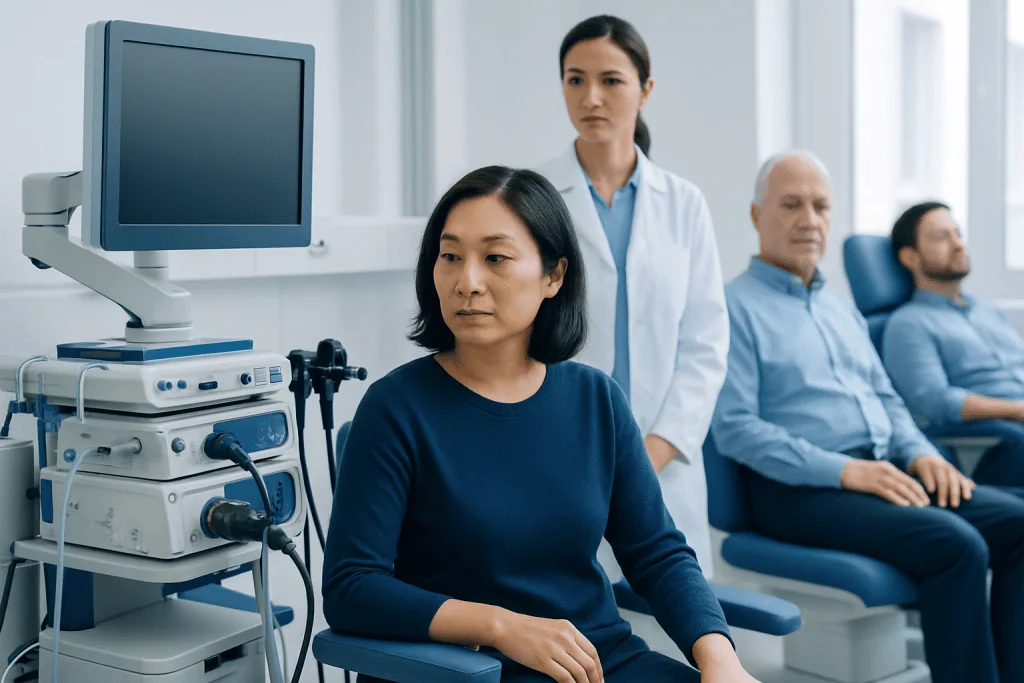
People with very early gastric cancer confined to the inner lining of the stomach may be candidates for endoscopic resection. In this procedure, a specialist removes the cancer through an endoscope passed through the mouth, without an abdominal incision. This is only suitable when the likelihood of cancer spread to lymph nodes is very low.
Surgery is generally considered for localized gastric cancer that can be completely removed. Some people have a partial gastrectomy, which removes part of the stomach, while others need a total gastrectomy. Nearby lymph nodes are usually removed at the same time because microscopic cancer cells may be present there even when imaging does not show them.
Chemotherapy, targeted therapies and immunotherapy may be considered according to the cancer stage, pathology results and the person’s ability to tolerate treatment. Tumor testing can assess markers such as HER2, PD-L1 and mismatch repair status. These results can help identify whether a targeted medicine or immunotherapy may be useful, particularly in advanced disease. General health, nutrition, heart and kidney function, and personal wishes also guide treatment choices.
What happens during treatment: step by step
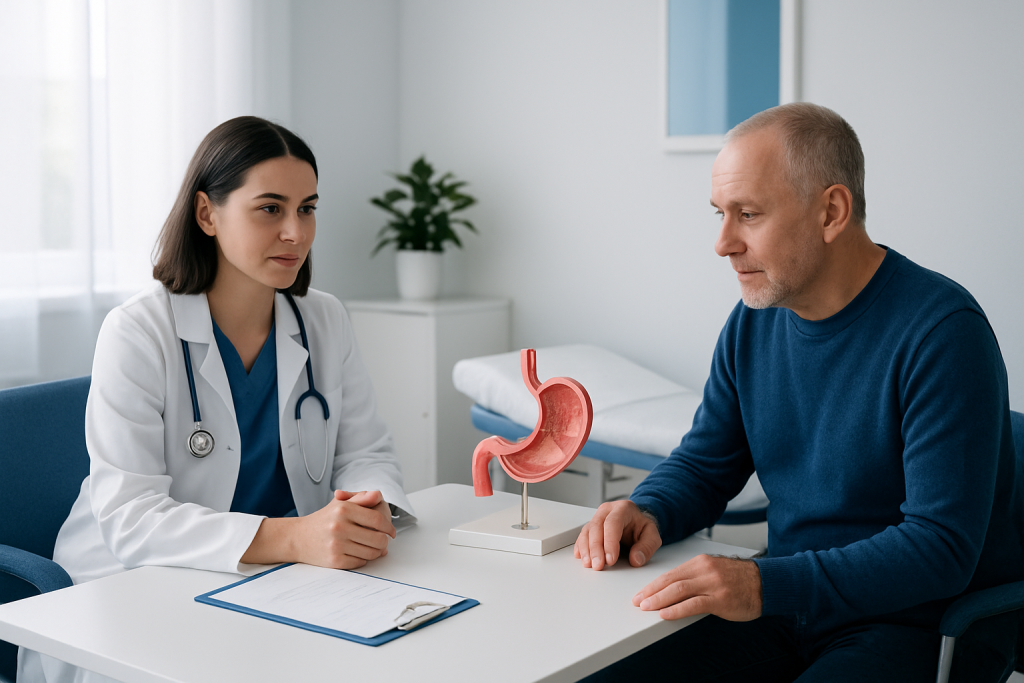
Care usually begins with confirmation of the diagnosis from a biopsy. Staging may include endoscopy with ultrasound, CT scans, blood tests and sometimes PET imaging or diagnostic laparoscopy. During laparoscopy, a surgeon uses a small camera to check for small areas of spread inside the abdomen that may not appear on scans. The biopsy sample is also reviewed for tumor type and biomarkers.
For locally advanced but operable disease, chemotherapy may be given first to shrink or control the tumor and address cancer cells that cannot be seen on scans. After several treatment cycles and reassessment, surgery is performed if the cancer remains removable and the person is fit for an operation. Further chemotherapy may be recommended after recovery, depending on the treatment strategy and final pathology findings.
During surgery, the surgeon removes the affected portion of the stomach or the whole stomach, along with regional lymph nodes. Reconstructive surgery reconnects the digestive tract so food can pass from the esophagus to the intestine. Minimally invasive approaches may be suitable for selected patients, but the safest technique depends on tumor location, stage and surgical expertise.
If surgery is not appropriate or the cancer has spread, systemic treatment is typically the main approach. Radiation therapy may sometimes be used with chemotherapy after surgery, for local control, or to help manage symptoms such as bleeding or pain. Supportive treatments—including nutrition counseling, pain management and management of nausea, fatigue or anemia—are provided alongside anticancer therapy.
Benefits, risks and recovery after gastric cancer treatment
The potential benefit of treatment is greatest when gastric cancer is found before it has spread. Surgery can be curative for some people with localized cancer, while chemotherapy before or after surgery can reduce the risk of recurrence in appropriate cases. For advanced cancer, systemic treatments may slow tumor growth, reduce symptoms and help people live longer with better quality of life.
Every treatment has possible risks. Surgery can cause bleeding, infection, blood clots, leakage where the digestive tract is reconnected, bowel blockage and complications related to anesthesia. Longer-term changes may include early fullness, weight loss, reflux, diarrhea, dumping syndrome and deficiencies of iron, vitamin B12, calcium or other nutrients. These effects can often be managed with dietary changes, supplements and regular monitoring.
Chemotherapy can cause fatigue, nausea, appetite changes, diarrhea or constipation, low blood cell counts, infection risk, numbness or tingling in the hands and feet, and other effects depending on the medicines used. Targeted therapy and immunotherapy have different side-effect profiles; immunotherapy can occasionally cause inflammation in organs such as the bowel, lungs, liver or hormone-producing glands. New or worsening symptoms should be reported promptly to the oncology team.
Recovery after endoscopic treatment may take days to a few weeks. Recovery after gastrectomy is more gradual and commonly takes several weeks, with nutritional adjustment continuing for months. Follow-up visits, imaging or endoscopy when indicated, laboratory testing and dietitian support help the team monitor recovery, nutrition and any signs of recurrence.
Does gastric cancer spread quickly?
Gastric cancer does not follow one fixed pattern or speed. Some tumors grow relatively slowly, while others are more aggressive. The rate can be influenced by the cancer subtype, depth of invasion, molecular features and whether cancer cells have entered lymphatic or blood vessels.
Because early gastric cancer often causes no symptoms or only vague indigestion-like symptoms, it may be diagnosed after it has already grown deeper into the stomach wall. This does not necessarily mean that the cancer suddenly spread quickly. Accurate staging is the best way to understand the current extent of disease and plan treatment.
Persistent symptoms such as unexplained weight loss, trouble swallowing, vomiting, black stools, anemia, early fullness or worsening stomach pain should be medically assessed. People with a confirmed diagnosis should discuss treatment timing with their oncology team rather than trying to estimate growth from symptoms alone.
How long can you live with gastric cancer?
How long a person can live with gastric cancer varies widely and cannot be predicted reliably from stage alone. Important factors include whether the cancer can be fully removed, the extent of spread, tumor biology, response to treatment, overall health and access to supportive care. Some people with early-stage cancer are treated with curative intent and remain cancer-free after treatment.
For advanced gastric cancer, treatment can often control the disease for a period of time, but outcomes differ substantially between individuals. Oncologists use staging results, pathology and response to therapy to discuss prognosis in a way that is relevant to the individual rather than relying only on broad population averages.
Supportive and palliative care can be introduced at any stage. It is not limited to end-of-life care; it can help manage symptoms, maintain nutrition, address emotional needs and support daily functioning while anticancer treatment continues.
How long is chemo for gastric cancer?
The length of chemotherapy for gastric cancer depends on why it is being used and which medicines are selected. When chemotherapy is given around surgery, it is commonly delivered in cycles before surgery and, after adequate surgical recovery, in additional cycles afterward. A cycle usually includes treatment days followed by a planned rest period, but schedules vary.
For advanced or metastatic gastric cancer, chemotherapy may continue for as long as it is helping and side effects remain manageable. The team regularly reviews scans, symptoms, blood tests and treatment tolerance. Medicines may be adjusted, paused or changed if side effects become significant or the cancer stops responding.
Some treatments are given through a vein at a clinic or hospital, while others may include tablets taken at home. Patients should follow their oncology team’s instructions, attend monitoring appointments and report fever, severe diarrhea, dehydration, uncontrolled vomiting, unusual bleeding or other concerning symptoms promptly.
How long does it take for gastric cancer to reach stage 4?
There is no dependable timeline for gastric cancer to reach stage 4. Stage 4 means the cancer has spread to distant parts of the body or the lining of the abdominal cavity, and this may occur at different rates in different people. In some cases, distant spread is already present when the cancer is first diagnosed, even if symptoms started only recently.
The time to progression depends on factors such as tumor subtype, grade, genetic and molecular characteristics, the body’s immune response and treatment. Imaging and other staging tests show the cancer’s current extent, but they usually cannot determine exactly when spread began or predict precisely when it might occur.
Prompt assessment after concerning symptoms and timely follow-up after a diagnosis are important. A person should not delay recommended staging or oncology consultations because the team needs accurate information to select the most suitable treatment approach.
When to seek medical care
Medical care should be sought for persistent or worsening digestive symptoms, especially unexplained weight loss, difficulty swallowing, feeling full after small amounts of food, repeated vomiting, persistent upper abdominal pain, black or bloody stools, fatigue from possible anemia, or a new abdominal lump. These symptoms have many possible causes, but they warrant evaluation, particularly when they persist.
Anyone receiving treatment should contact the clinical team urgently for a fever, signs of infection, severe abdominal pain, chest pain, shortness of breath, uncontrolled vomiting, inability to drink fluids, black stools, vomiting blood, confusion or sudden weakness. Emergency assessment may be needed for severe symptoms.
After treatment, regular surveillance and nutritional follow-up remain important. Acibadem International’s multidisciplinary specialists and JCI-accredited hospitals provide diagnosis and treatment planning for international patients with gastric cancer, including surgical, medical oncology and supportive-care needs.
Frequently asked questions
Can gastric cancer be cured?
Gastric cancer may be curable when it is diagnosed at an early stage and can be completely removed or treated effectively. Treatment often includes surgery, sometimes combined with chemotherapy or other therapies. Even when cure is not possible, treatments can help control cancer and manage symptoms.
Is surgery always needed for gastric cancer?
Surgery is commonly used for localized gastric cancer when the tumor can be removed safely. Very early cancers may sometimes be removed endoscopically, while advanced cancers may be treated mainly with systemic therapy. The decision depends on stage, location, tumor characteristics and overall health.
What can a person eat after stomach cancer surgery?
After gastrectomy, people usually begin with small, frequent meals and gradually adjust food choices with help from a dietitian. Protein-rich foods, adequate fluids and prescribed vitamin or mineral supplements are often important. Individual tolerances vary, and some people need to limit highly sugary foods if they trigger dumping symptoms.
Can immunotherapy treat gastric cancer?
Immunotherapy can be helpful for some gastric cancers, particularly when tumor testing shows certain biomarkers. It may be used alone or with chemotherapy in selected advanced cases, and sometimes in other treatment settings based on current clinical guidance. Not every tumor responds, so biomarker testing and oncology review are essential.
What is the difference between gastric cancer and stomach cancer?
Gastric cancer and stomach cancer generally mean the same condition: cancer that begins in the stomach. Most cases are adenocarcinomas, which start in the glandular cells lining the stomach. The exact area of the stomach involved can influence treatment planning.
Will I need vitamins after a total gastrectomy?
Many people need lifelong nutritional monitoring after total gastrectomy because the stomach has important roles in digestion and nutrient absorption. Vitamin B12 supplementation is commonly required, and iron, calcium, vitamin D and other nutrients may also need monitoring or replacement. A dietitian and clinical team can tailor the plan to laboratory results and dietary intake.
References
- World Health Organization
- National Cancer Institute
- American Cancer Society
- European Society for Medical Oncology
- National Comprehensive Cancer Network
This article is for general information only and is not a substitute for professional medical advice. Please consult a qualified doctor about your individual situation.
Persistent digestive symptoms? Get evaluated in Turkey
JCI-accredited · board-certified surgeons · reply within 24h
Add us as a Preferred Source to see more of our trusted health content across Google Search, AI Overviews and Discover.

More from the Health Library

Related Specialists

Dr. Cem Tangay
Orthopedic Surgery & Traumatology
Assoc. Prof. Dr. Murat Saylık
Orthopedic Surgery & Traumatology
Prof. Dr. Uğur Çınar
Otorhinolaryngology
Dr. Edvin Murrja
Internal Medicine