Bruise Treatment: How It Works, Results and What to Expect

Most bruises heal naturally without a procedure or prescription treatment. Cold packs soon after injury, rest, gentle compression when appropriate and elevation may limit swelling and discomfort.
Key Takeaways
- Most bruises heal naturally without a procedure or prescription treatment.
- Cold packs soon after injury, rest, gentle compression when appropriate and elevation may limit swelling and discomfort.
- A changing color pattern and decreasing tenderness are common signs that a bruise is healing.
- Bruising that is unexplained, frequent, severe, rapidly spreading or accompanied by concerning symptoms needs medical assessment.
- People taking blood-thinning medicines should seek advice before using medicines or supplements for a bruise.
Bruise treatment usually involves simple self-care while the body gradually reabsorbs blood that has leaked beneath the skin after an injury. Most uncomplicated bruises improve steadily and disappear within about 2 to 3 weeks, although larger or deeper bruises can take longer.
Bruise treatment: what to expect
Bruise treatment is usually supportive rather than a procedure: the aim is to ease pain and swelling while the body clears a small collection of blood under the skin. A bruise, also called a contusion, develops when an impact damages tiny blood vessels and blood leaks into nearby tissue. The skin is not necessarily broken.
For a minor bruise, early care generally includes protecting the area, applying a cold pack wrapped in cloth for short periods, and raising the limb if possible. Most bruises need time more than intensive treatment. The color may evolve from red or purple to blue, green, yellow or brown before it fades.
Bruising can also accompany a more significant soft-tissue injury, fracture, muscle tear or bleeding disorder. Treatment therefore depends on the cause, location, size and associated symptoms. A healthcare professional can assess injuries that are unusually painful, extensive or slow to improve.
How bruise treatment works
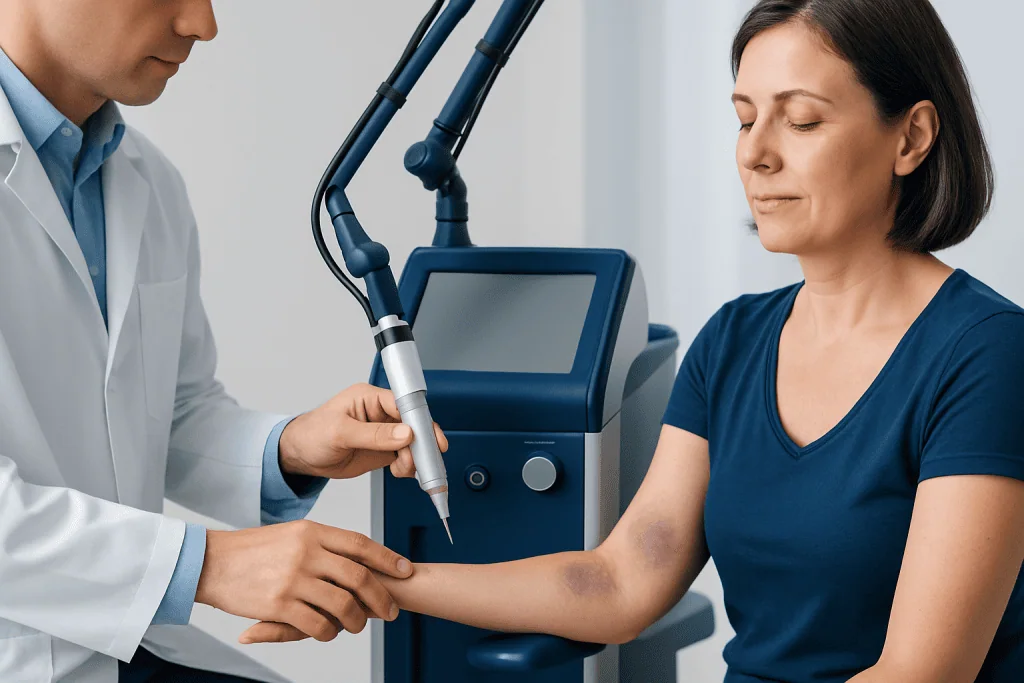
Immediately after an injury, cooling the area can reduce pain and may help limit early swelling by narrowing local blood vessels. A cloth barrier should always be placed between the skin and an ice or gel pack to avoid cold injury. Resting the affected body part and avoiding further impact are also helpful in the first day or two.
Elevation above heart level, when practical, can reduce fluid buildup in an arm or leg. Gentle compression with an appropriate bandage may help swelling in some injuries, but it should not cause numbness, tingling, increasing pain, pale skin or a cold limb. Compression is not suitable for every injury, particularly if a fracture or circulation problem is possible.
After the early phase, normal comfortable movement may support recovery. Heat is sometimes used later for muscle stiffness, but it should not be applied to a newly injured, swollen area. Massage, vigorous exercise and alcohol may worsen swelling or bleeding soon after an injury, so they are best avoided initially.
Simple pain relief may be appropriate for some people. Because some medicines can increase bleeding or interact with prescribed treatment, a pharmacist or doctor can advise on the safest choice, especially for people using anticoagulants, antiplatelet medicines or regular anti-inflammatory medicines.
Who may need assessment rather than home care?
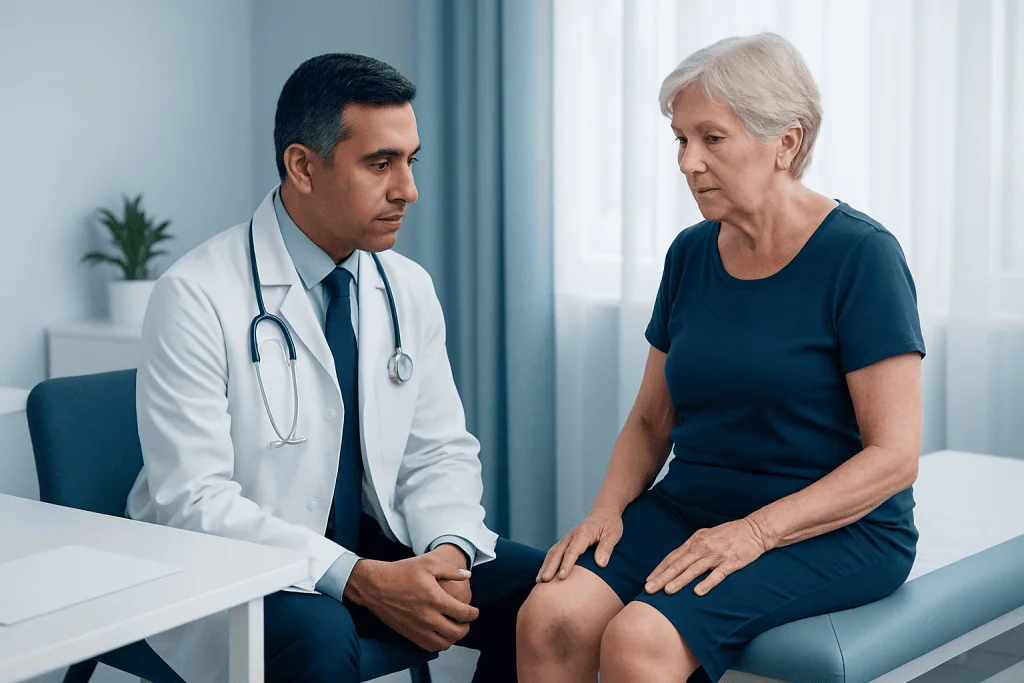
Most people with a small bruise after a clear minor injury can begin self-care at home. Medical assessment is more appropriate when there is marked pain, inability to use a joint or limb normally, a very large swelling, numbness, weakness, deformity or concern about a fracture. A deep collection of blood, called a hematoma, can occasionally require monitoring or treatment depending on its location and size.
Some people bruise more easily because of aging skin, medicines, nutritional issues, liver disease, platelet problems or inherited bleeding conditions. Recurrent or unexplained bruising should be discussed with a doctor rather than repeatedly treated as a routine injury. This is particularly important when bruises appear without a remembered bump or injury.
Children, older adults and people with reduced mobility may need a more careful review after a fall or injury. Bruising around the eye, head, neck, chest, abdomen or genital area also warrants more caution because these locations can be associated with injuries that are not visible on the skin.
- People taking blood thinners should contact their clinician after a significant fall, head injury or unusually large bruise.
- People with known bleeding disorders should follow their individual care plan and seek advice for new or severe bruising.
- New bruising with fever, weight loss, marked fatigue or bleeding from the nose, gums, urine or bowel requires prompt medical evaluation.
Bruise treatment step by step and recovery timeline
During the first 24 to 48 hours, protect the injured area from repeat trauma. Use a wrapped cold pack for brief intervals, rest the area and elevate it when possible. If swelling is present, remove rings, watches or tight clothing near the injury, particularly on hands, wrists, ankles or feet.
Over the next several days, pain and swelling should gradually settle. The bruise may look more noticeable before it begins to fade because blood pigments spread and break down beneath the skin. Gentle everyday movement is usually reasonable when it does not increase pain; strenuous activity should wait until function and comfort are improving.
Many minor bruises fade within 1 to 2 weeks. Larger bruises, bruises over the shin, or those involving deeper muscle may take 2 to 3 weeks or occasionally longer. The person should seek clinical advice if the bruise is enlarging, remains very painful, develops a firm growing lump, or shows no clear improvement over time.
At Acibadem International, multidisciplinary specialists in JCI-accredited hospitals can assess injuries, unexplained bruising and related conditions for international patients when further evaluation is needed.
How do you know when a bruise is getting better?
A bruise is usually getting better when tenderness, swelling and tightness lessen, and the affected area becomes easier to move or use. The color often changes gradually as the body breaks down and reabsorbs blood pigments. It may become greenish, yellow or light brown before returning to the person’s usual skin tone.
Color alone is not a precise clock, because skin tone, bruise depth, location and overall health affect how a bruise looks. A bruise can appear darker or more widespread for a short time after the injury and still heal normally. The more useful signs are that pain is reducing, the border is not expanding and normal function is returning.
Worsening pain, increasing swelling, a rapidly enlarging dark area, numbness or reduced movement are not typical signs of straightforward healing. These symptoms should be assessed, particularly after a significant impact.
What helps speed up bruise healing?
No treatment can instantly remove a bruise, because the body needs time to clear blood from damaged tissue. The best approach is to support healing and prevent further bleeding: cold therapy and elevation early after injury, protection from repeat impact, adequate rest and a gradual return to activity as comfort allows.
Good general nutrition, hydration and sleep support normal tissue recovery, but there is no reliable evidence that a particular food, vitamin or supplement rapidly clears a routine bruise. Supplements may be unsafe for people taking blood thinners or those with medical conditions, so it is sensible to speak with a clinician before trying them.
After the initial swelling has settled, gentle movement can reduce stiffness. Forceful massage, scraping techniques and intense heat should be avoided, especially if the bruise is recent, painful or swollen, as these measures may aggravate tissue damage.
What is the longest a bruise can take to heal?
Many uncomplicated bruises resolve within 2 to 3 weeks, but a large, deep or muscle-related bruise can take several weeks to settle. Bruises on the legs may also linger because gravity can draw blood and fluid downward. Older age, fragile skin, certain medicines and circulation or clotting problems can lengthen recovery.
There is no single maximum healing time that applies to everyone. However, a bruise that persists beyond a few weeks without obvious improvement, repeatedly returns, develops a hard or enlarging lump, or follows no known injury should be checked by a healthcare professional.
Persistent discoloration may occasionally reflect staining of the skin after a deep bruise rather than ongoing bleeding, but this distinction cannot be made reliably at home. Assessment may include a physical examination and, when indicated, blood tests or imaging to look for a hematoma, fracture or another cause.
How quickly does bruise cream work?
Bruise creams, gels and topical products may provide a cooling sensation, moisturize the skin or ease mild discomfort depending on their ingredients, but they do not usually make a bruise disappear quickly. Evidence that over-the-counter topical products substantially shorten bruise healing is limited, and results vary between individuals.
Such products should only be applied to intact skin and used according to the product instructions. They should not be placed on cuts, infected skin, mucous membranes or around the eyes unless the product is specifically intended for that area. A patch test may be sensible for people with sensitive skin.
A person should stop using a cream if it causes burning, rash, itching or worsening redness. A clinician or pharmacist can help choose a suitable product when there are allergies, pregnancy, long-term health conditions or use of blood-thinning medicines.
When to seek medical care
Urgent medical care is needed after a head injury if there is loss of consciousness, confusion, severe or worsening headache, repeated vomiting, seizure, unusual sleepiness, weakness, vision changes or fluid or blood from the nose or ears. Emergency help is also appropriate for severe pain, a limb that becomes cold or pale, rapidly increasing swelling, or signs of significant bleeding.
A doctor should assess bruising that is frequent or unexplained, very large, increasingly painful, associated with bleeding elsewhere, or accompanied by fever or general unwellness. Medical advice is especially important for people who use anticoagulants or antiplatelet medication, have a bleeding disorder, or have sustained a substantial fall or collision.
For an ordinary bruise that is steadily improving, supportive care and observation are usually enough. If there is any uncertainty about the severity of an injury, a qualified healthcare professional can provide individualized advice.
Frequently asked questions
Should a bruise be iced or heated?
A cold pack wrapped in a cloth is generally most useful soon after an injury, particularly during the first 24 to 48 hours when pain and swelling are present. Heat is usually avoided early because it can increase blood flow and swelling. Later, gentle warmth may help stiffness for some people once acute swelling has settled.
Can a bruise get worse before it gets better?
A bruise can look darker or spread somewhat over the first day or two as blood disperses under the skin. This can be normal if pain and swelling are not rapidly increasing. A quickly expanding bruise, severe pain or new numbness should be assessed urgently.
Why do some people bruise easily?
Easy bruising can occur with aging, thin or sun-damaged skin, certain medicines and frequent minor bumps. It can also be associated with low platelets, bleeding disorders, liver disease or nutritional problems. New or unexplained easy bruising should be discussed with a doctor.
Is it safe to exercise with a bruise?
Gentle movement is often reasonable when it is comfortable and does not worsen symptoms. High-impact exercise, heavy lifting or activities that could reinjure the area should be delayed while pain, swelling or reduced function persists. A clinician can advise after a major muscle injury or suspected fracture.
Can a bruise be a blood clot?
A typical bruise is blood that has leaked into tissue after small blood vessels are damaged, while a blood clot in a vein is a different condition. A painful swollen calf, one-sided leg swelling, warmth, redness, chest pain or shortness of breath needs urgent medical evaluation. These symptoms should not be assumed to be a simple bruise.
Do blood thinners make bruises more serious?
Blood-thinning medicines can make bruises larger or more frequent because they reduce the blood’s ability to clot. People should not stop prescribed anticoagulant or antiplatelet medicines without medical advice. They should seek prompt guidance after a significant injury, head impact or unusually large or painful bruise.
References
- National Health Service
- MedlinePlus
- Mayo Clinic
- American Academy of Orthopaedic Surgeons
This article is for general information only and is not a substitute for professional medical advice. Please consult a qualified doctor about your individual situation.
Explore treatments in Turkey — costs, top hospitals & a free quote
JCI-accredited · board-certified surgeons · reply within 24h
Add us as a Preferred Source to see more of our trusted health content across Google Search, AI Overviews and Discover.