Balance Therapy for Kids: How It Works, Results and What to Expect
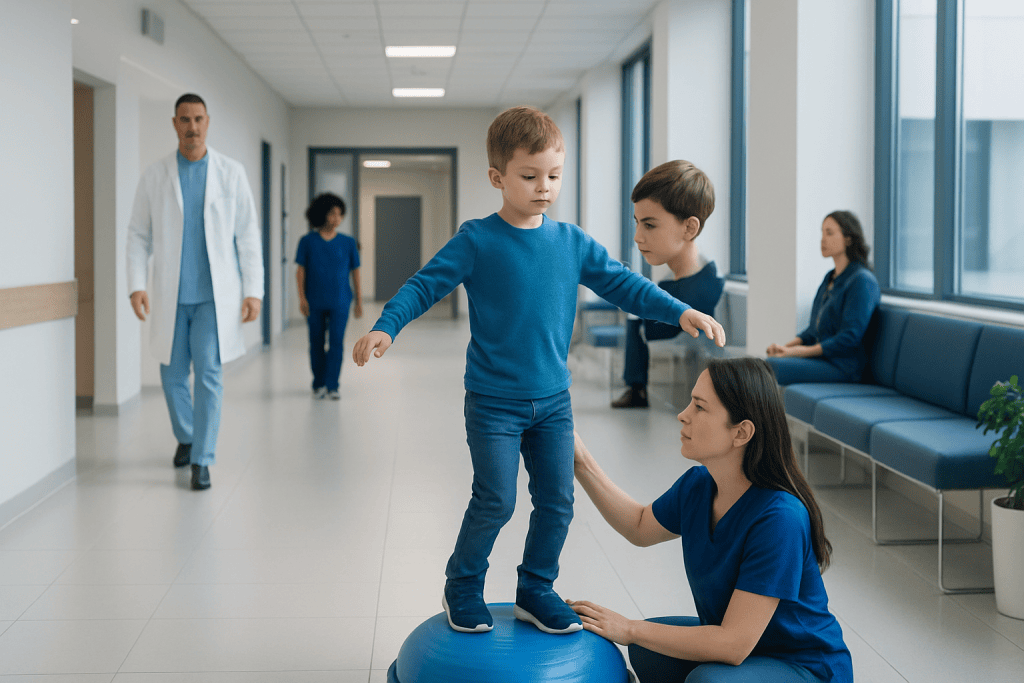
Balance therapy is tailored to the child’s age, abilities, symptoms and underlying cause of balance difficulty. Sessions often use play-based activities that challenge posture, movement, coordination and sensory processing safely.
Key Takeaways
- Balance therapy is tailored to the child’s age, abilities, symptoms and underlying cause of balance difficulty.
- Sessions often use play-based activities that challenge posture, movement, coordination and sensory processing safely.
- Improvement may include fewer falls, better participation in play and school activities, and greater confidence with movement.
- A pediatric assessment is important when balance problems are persistent, worsening, sudden, or accompanied by other symptoms.
- Home exercises can support therapy when they are selected and supervised by the child’s rehabilitation team.
Balance therapy for kids is a personalized form of pediatric rehabilitation that uses safe, age-appropriate movement activities to improve stability, coordination and confidence. It may help children with developmental, vestibular, neurological, visual or musculoskeletal factors affecting balance, following an individual assessment.
Balance Therapy for Kids: An Overview
Balance therapy for kids is a structured rehabilitation approach designed to help children develop or regain steadiness, coordination and confidence during everyday movement. It is commonly provided by a pediatric physical therapist, and may also involve occupational therapists, pediatricians, neurologists, ear specialists or other professionals depending on the child’s needs. Therapy is not a single standardized procedure; it is an individual program built around how a child moves, plays and functions.
Balance depends on several systems working together. The brain uses information from the inner ears, eyes, muscles and joints to understand where the body is in space and make quick adjustments. A difficulty in any of these areas can affect walking, running, climbing stairs, riding a bicycle or participating in sports and playground activities.
Some children are simply developing coordination at their own pace. However, ongoing balance concerns may be associated with developmental coordination challenges, vestibular disorders, vision problems, hearing changes, neurological conditions, muscle weakness, joint issues or recovery after illness or injury. Assessment helps identify whether therapy is appropriate and which skills need support.
How Balance Therapy Works and Who May Benefit
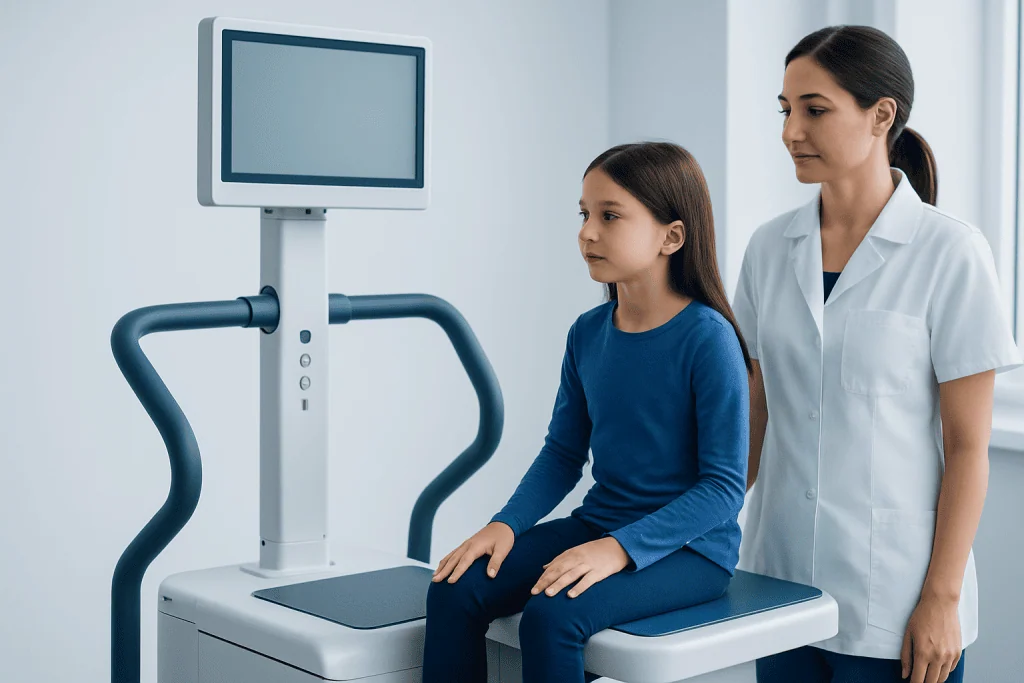
Therapy works through repeated, meaningful practice. A therapist gradually introduces activities that challenge a child’s postural control, movement planning, strength, coordination and ability to use sensory information. The tasks are adjusted so that they are achievable but still encourage progress, often through games, obstacle courses and favorite activities rather than formal exercise alone.
A child may be considered for balance therapy when they fall more often than expected, avoid playground equipment, seem unsteady when walking or running, have difficulty with stairs, struggle with sports skills, or report dizziness. Therapy may also be useful after concussion, injury, prolonged illness or ear-related balance symptoms, when recommended by a clinician.
Children with conditions affecting the brain, nerves, muscles, joints or inner ear may benefit from coordinated rehabilitation. For example, a child with persistent dizziness may need assessment of vestibular function, while a child with weakness or altered gait may need a broader musculoskeletal and neurological evaluation. The therapy plan should address the child’s functional goals, such as safely navigating school corridors, joining friends in play or learning a new physical skill.
Not every child who is cautious or occasionally clumsy needs therapy. A qualified professional considers developmental stage, medical history, current symptoms and the impact on daily life before recommending a program.
Assessment and a Typical Therapy Session
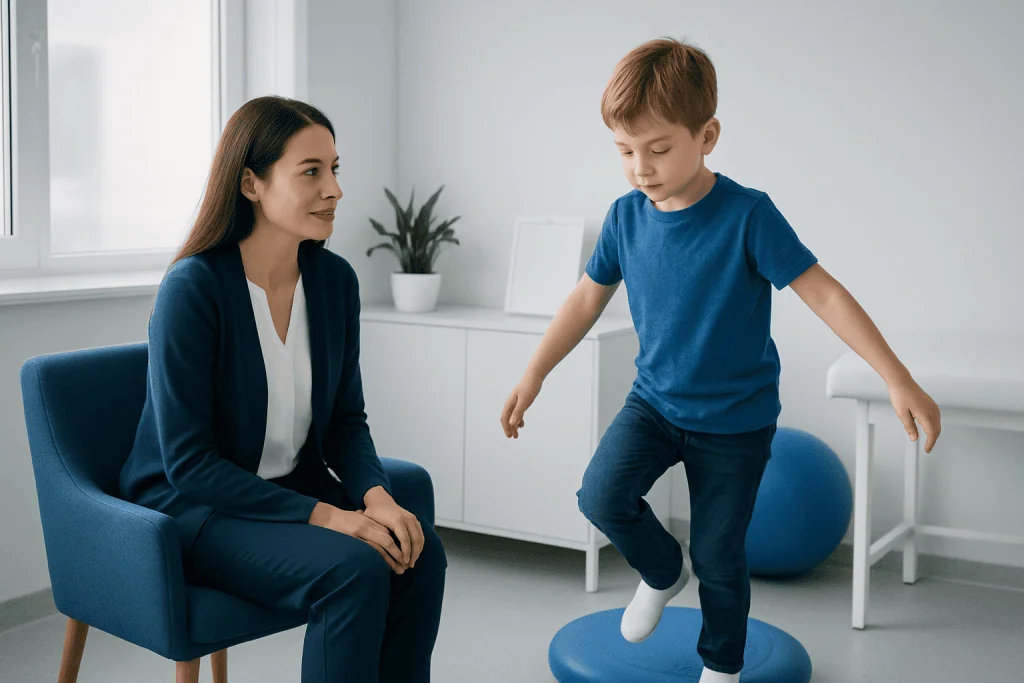
The first appointment usually begins with a detailed conversation with the parent or caregiver. The clinician asks when the concerns started, whether the child experiences dizziness, pain, headaches, hearing or vision changes, falls, fatigue, developmental differences or recent injury. Information from school, sports instructors and other healthcare professionals can also be helpful.
The physical assessment may look at posture, walking pattern, leg and trunk strength, flexibility, coordination, eye movements, reactions to movement, standing on one foot, stair climbing and play skills. Younger children are often assessed through observation during age-appropriate games. Testing is kept safe and adapted for the child’s comfort and attention span.
A typical session may include a warm-up, guided balance tasks, movement games and a short home-practice plan. Activities can involve stepping over objects, walking along lines, changing direction, reaching while standing, catching a ball, moving across soft or uneven surfaces, or using low equipment under close supervision. If vestibular symptoms are present, exercises may also carefully train tolerance to head and body movements.
Parents are usually involved in setting goals and learning how to encourage practice without turning it into pressure. The therapist regularly reassesses progress and adjusts the program as the child develops skills and confidence.
Does Neuro Balance Therapy Really Work?
“Neuro balance therapy” is not one universally defined treatment. It generally refers to rehabilitation that uses principles of neuroplasticity—the brain’s ability to adapt through practice—to improve balance and movement control. For children with identified balance or coordination difficulties, targeted pediatric rehabilitation can improve functional skills when it is based on a careful assessment and delivered consistently.
Results depend on the underlying cause, the child’s starting abilities, the specific goals and how regularly exercises are practiced. Evidence supports task-specific, progressive rehabilitation for many pediatric movement and balance concerns, but no single branded program or exercise method works equally well for every child. Claims of a quick, universal cure should be approached cautiously.
Meaningful outcomes are often practical rather than dramatic: fewer trips and falls, smoother stair use, better endurance during play, improved participation in physical education, or less fear of movement. Some children need a short period of focused therapy, while others with long-term conditions may benefit from periodic review and ongoing support.
When symptoms suggest an underlying medical issue, therapy complements rather than replaces medical care. A clinician may recommend additional evaluation of hearing, vision, the nervous system, development or musculoskeletal health before or during rehabilitation.
What Are 5 Exercises for Balance for Kids?
Simple balance activities can be enjoyable at home when they match a child’s abilities and are performed in a clear, safe area with adult supervision. A therapist can personalize activities, especially for children with dizziness, frequent falls, pain, neurological conditions or recent injury. The following examples are often suitable as play-based starting points for many children.
- Single-leg stands: Ask the child to stand on one foot near a wall or stable support, then switch sides. Turn it into a game by counting together.
- Line walking: Have the child walk heel-to-toe along a taped line on the floor, first looking ahead and later adding simple challenges such as carrying a soft toy.
- Stepping-stone course: Use flat markers, cushions that do not slide, or paper shapes as “stones” to step between without rushing.
- Animal walks: Bear walks, crab walks and slow frog jumps can build trunk and limb strength while encouraging coordination.
- Ball toss while standing: Tossing and catching a soft ball while standing with feet together, then in a staggered stance, challenges balance and hand-eye coordination.
Activities should stop if the child becomes dizzy, distressed, unusually tired or develops pain. Parents should avoid elevated beams, unstable equipment and blindfolded tasks unless a trained professional has specifically recommended them.
What Age Is Best to Start Balance Beam?
Children begin developing balance from infancy through everyday activities such as sitting, standing, walking, climbing and playing. For a low, wide and stable balance beam or taped line on the floor, many toddlers can begin supervised exploration once they are walking confidently. The focus should be on enjoyment and safety rather than performance.
There is no single “best” age because readiness differs between children. A child should be able to follow simple safety instructions, tolerate taking turns and use the equipment within their abilities. A floor-level line, foam pathway or very low beam is generally a more appropriate introduction than raised equipment.
For formal gymnastics equipment or activities at height, trained supervision and age-appropriate instruction are important. Children who have frequent falls, dizziness, significant fear of movement, joint pain or known medical conditions should be assessed before attempting more challenging balance tasks.
Progression matters more than speed. A child can move from broad, stable surfaces to narrower pathways, then add reaching, carrying or direction changes only when they show good control and confidence.
At What Age Do Balance Issues Start?
Balance issues can appear at any age. In infancy and toddlerhood, occasional unsteadiness is common while children are learning to sit, stand and walk. During preschool and school years, concerns may become more noticeable when children are expected to run, hop, climb, ride a bicycle, manage stairs independently or participate in group sports.
Some balance difficulties are present from early development, while others begin suddenly after an ear infection, viral illness, head injury, medication change or other health event. Children may not describe dizziness clearly; instead, they may avoid movement, ask to be carried, hold onto furniture, become carsick, fall often or seem less coordinated than before.
Persistent changes should not be dismissed as simple clumsiness. A healthcare professional can distinguish typical developmental variation from symptoms that require further assessment. Early support can help children build skills before balance difficulties significantly affect participation, confidence or safety.
Assessment is particularly important if balance problems are progressive, occur with weakness or changes in speech, are associated with hearing or vision symptoms, or follow a head injury.
Benefits, Risks, Recovery and When to Seek Medical Care
The potential benefits of balance therapy include improved postural control, coordination, strength, motor planning and confidence in daily activities. Families may notice that a child participates more comfortably in school, play and sports. Progress is often gradual, and the timeline varies with the cause of the difficulty, the child’s goals and the consistency of supervised practice and home activities.
There is usually no physical recovery period after a standard therapy session. Children may feel pleasantly tired after active work, particularly at the beginning of a program. Exercises should be adapted if they cause pain, significant dizziness, nausea, distress or prolonged fatigue. The main risks are typically related to falls or overexertion, which is why appropriate supervision, safe equipment and gradual progression are essential.
Parents should arrange medical assessment if a child has persistent or worsening unsteadiness, repeated unexplained falls, dizziness that interferes with daily life, new headaches, fainting, hearing or vision changes, weakness, unusual eye movements, trouble speaking, severe vomiting, or balance changes after a head injury. Urgent medical care is needed for sudden severe symptoms, loss of consciousness, new one-sided weakness, confusion or difficulty speaking.
Acibadem International’s multidisciplinary specialists and JCI-accredited hospitals can assess and treat pediatric balance concerns for international patients, coordinating care when rehabilitation, pediatric, neurological, ear or musculoskeletal expertise is needed.
Frequently asked questions
How long does balance therapy for kids take?
The length of therapy varies according to the child’s diagnosis, goals, age and response to treatment. Some children benefit from a limited series of sessions and home exercises, while others need longer-term support or occasional reassessment. The therapist should review progress regularly and adjust the plan accordingly.
Can balance therapy help a child who falls frequently?
It can help when frequent falls are related to reduced balance, coordination, strength, motor planning or confidence with movement. However, repeated falls should be assessed first because they may also be linked to vision, ear, neurological, developmental or orthopedic concerns. Treatment should target the cause whenever possible.
Is balance therapy safe for children with dizziness?
It can be safe when delivered by a clinician who has evaluated the child and understands the likely cause of the dizziness. Exercises may be introduced slowly and monitored for symptoms such as nausea, distress or worsening dizziness. Sudden, severe or unexplained dizziness requires medical assessment before starting exercises.
Can parents do pediatric balance exercises at home?
Yes, simple supervised activities can support a therapist-guided plan. Exercises should be appropriate for the child’s age and ability, and should be done on a clear, non-slip surface away from stairs or hard edges. Parents should stop an activity if it causes pain, marked dizziness or unusual fatigue.
Does poor balance mean a child has a neurological condition?
No. Balance can be affected by normal developmental variation, temporary illness, reduced strength, vision changes, inner-ear problems, injury and many other factors. A neurological condition is only one possible explanation, so persistent concerns should be assessed rather than assumed.
Should a child with balance problems avoid sports?
Most children benefit from safe physical activity, but the type and level of activity may need adjustment while assessment or therapy is underway. A clinician or therapist can recommend suitable activities and safety measures based on the child’s symptoms and abilities. Sports should be paused and medical advice sought after significant injury or when symptoms worsen during activity.
References
- American Academy of Pediatrics
- Centers for Disease Control and Prevention
- American Physical Therapy Association
- National Institute on Deafness and Other Communication Disorders
- World Health Organization
This article is for general information only and is not a substitute for professional medical advice. Please consult a qualified doctor about your individual situation.
Explore treatments in Turkey — costs, top hospitals & a free quote
JCI-accredited · board-certified surgeons · reply within 24h
Add us as a Preferred Source to see more of our trusted health content across Google Search, AI Overviews and Discover.