Children’s Wart Removal: Procedure, Recovery and Results

Warts are common viral skin growths in children and are usually harmless. Not every wart needs removal; treatment is often chosen for pain, spread, persistence, or distress.
Key Takeaways
- Warts are common viral skin growths in children and are usually harmless.
- Not every wart needs removal; treatment is often chosen for pain, spread, persistence, or distress.
- Cryotherapy and salicylic acid are common options, while minor procedures are reserved for selected cases.
- Healing time varies by treatment, but tenderness, a blister, or a scab can occur temporarily.
- Parents should avoid cutting, burning, or using strong over-the-counter products on a child without clinical advice.
Children's wart removal is usually a straightforward outpatient process that may involve home-applied medicines, cryotherapy (freezing), or a minor procedure when a wart is painful, persistent, spreading, or affecting daily activities. Many warts resolve without treatment, but a clinician can help families choose an approach that is safe, tolerable, and appropriate for the wart's location.
Children's wart removal: what families can expect
Children’s wart removal can be considered when a wart is painful, repeatedly irritated, spreading, located on the face or around nails, or troubling a child. Treatment is not always necessary: many common warts disappear naturally as the immune system recognizes the virus. However, this may take months or longer, and treatment can be helpful when waiting is uncomfortable or impractical.
A clinician first confirms that the growth is likely a wart. Depending on its size, site, and the child’s age and comfort, options may include a carefully selected topical medicine, freezing with liquid nitrogen, or a minor in-clinic procedure. The aim is to remove or reduce wart tissue while protecting healthy skin and supporting the child’s wellbeing.
Warts are caused by certain types of human papillomavirus (HPV) that infect the outer layer of skin. The HPV types that cause ordinary hand and foot warts are different from those associated with most genital HPV infections. Children can have more than one wart, and new warts may appear even after a successfully treated lesion.
How wart removal works and who may benefit
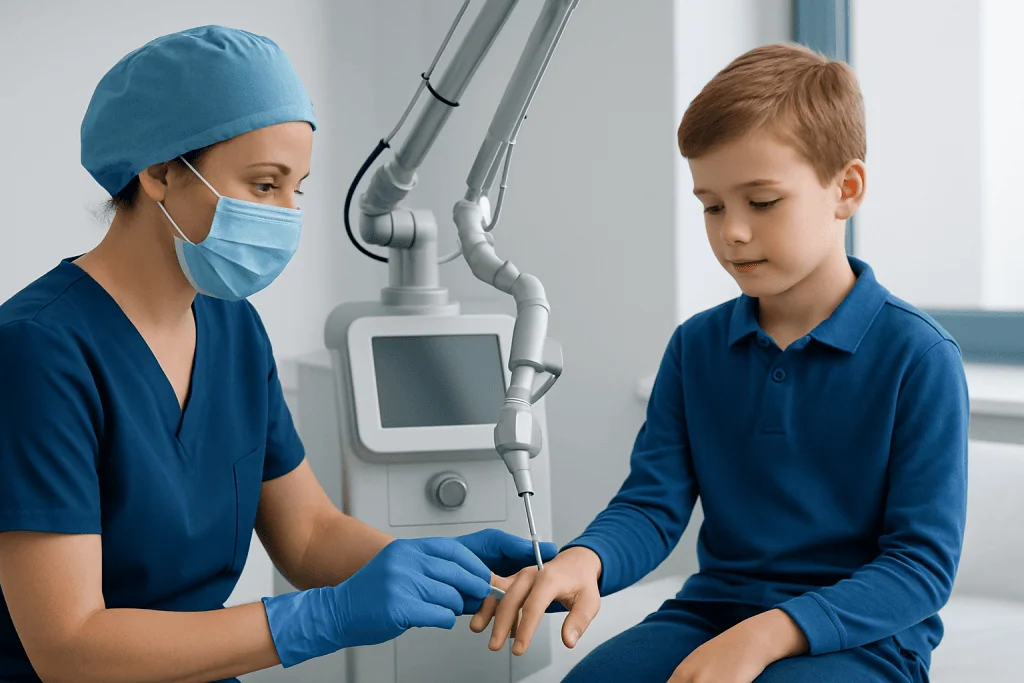
Wart treatments work by gradually breaking down thickened skin, creating a controlled local injury that stimulates immune recognition, or physically removing the wart. A pediatric dermatologist or other qualified clinician can recommend the least invasive suitable option. The choice is individualized rather than based on a single “best” child wart remover.
Salicylic acid preparations may be used on suitable common or plantar warts under professional guidance. They soften and shed layers of wart tissue over repeated applications. Cryotherapy uses liquid nitrogen to freeze the wart, which may cause a blister and helps destroy affected tissue. For resistant, large, or especially troublesome warts, clinicians may discuss other treatments, including curettage, electrosurgery, laser treatment, or immune-directed therapies.
A child may be a good candidate for treatment if the lesion hurts while walking or writing, bleeds after frequent friction, grows quickly, spreads despite sensible precautions, or has not improved with an appropriate observation or home-care period. Procedures that require local anesthetic or prolonged stillness may not suit every child; age, anxiety, medical history, skin tone, and the wart’s location all matter.
Step by step: wart removal pediatric procedures
Before treatment, the clinician examines the skin and asks about duration, symptoms, prior treatment, allergies, medicines, immune health, and any tendency to form raised scars. Most typical warts can be diagnosed by appearance. If the lesion is unusual, changing, darkly pigmented, ulcerated, or uncertain, a specialist may recommend closer assessment before treatment.
For cryotherapy, the wart is exposed to liquid nitrogen using a spray or applicator for a brief period. The area may sting, burn, or ache during and shortly after freezing. More than one session, usually separated by several weeks, is sometimes needed. For topical treatment, families receive clear instructions about applying medicine only to the wart and protecting nearby healthy skin.
If a minor surgical technique is appropriate, the area is cleaned and numbed with a local anesthetic. The clinician may pare down thick skin, scrape the wart away, or use controlled heat or laser energy. A dressing is applied, and caregivers receive written aftercare guidance. Surgical removal can be effective but is not routinely the first choice because pain, scarring, and wart recurrence remain possible.
For persistent or complex skin lesions, a dermatology assessment can clarify treatment choices. Acibadem International’s multidisciplinary specialists and JCI-accredited hospitals provide diagnosis and treatment planning for international patients.
Benefits, limitations and possible risks
The main potential benefits of removal are relief of pressure or pain, less snagging or bleeding, improved comfort during sports and school activities, and reduced visible wart tissue. Successful treatment may also lower the chance of a child spreading virus from the wart to nearby skin, although no treatment can guarantee that other warts will not develop.
Every approach has limitations. Warts may return because HPV can remain in nearby skin, and treatment may require patience or repeated visits. Children with plantar warts on the soles may continue to experience pressure-related discomfort while the skin heals. A clinician can help balance expected benefit against the burden of treatment, especially if the wart is small and painless.
Common temporary effects include redness, soreness, blistering after freezing, peeling from topical agents, and a scab after a procedure. Less common risks include infection, pigment changes, nerve irritation in sensitive areas, and scarring. Pigment changes can be more noticeable in darker skin tones, particularly after freezing or destructive procedures. Families should report worsening pain, spreading redness, pus, fever, or a wound that is not healing as expected.
How long does it take to heal after wart removal?
Healing after wart removal depends on the method, the wart’s size and location, and the child’s individual skin healing. After cryotherapy, the area often becomes red and tender on the same day. A clear or blood-filled blister may form within 24 hours, then dry and peel over roughly one to two weeks. The wart may need repeat freezing sessions before it fully clears.
After salicylic acid treatment, the wart usually softens and peels gradually over several weeks. It is important to follow the clinician’s plan, because applying too much product or allowing it onto healthy skin can cause irritation. Improvement is usually gradual rather than immediate.
After curettage, electrosurgery, or another minor procedure, a scab commonly forms. Superficial wounds often close over one to three weeks, while deeper treatment sites or sites exposed to friction may take longer. The clinician’s own aftercare advice should take priority, particularly for warts near nails, on the face, or on the soles of the feet.
What are the do's and don'ts after warts removal?
Do keep the treated area clean, follow dressing instructions, and wash hands before and after touching it. If a blister develops after freezing, protect it with a clean plaster if it is likely to rub on shoes or clothing. Give the child any pain relief recommended by their clinician, and attend follow-up appointments when repeat treatment is planned.
Do encourage children not to pick, scratch, bite, or shave over the healing area. Covering a wart during activities that create friction can improve comfort. Separate towels, nail files, pumice stones, socks, and footwear where practical, especially for plantar warts, and avoid sharing these items with others.
Don’t cut, pop, burn, or attempt to dig out a wart at home. Do not apply caustic products, strong acids, or freezing kits to the face, genitals, broken skin, or a lesion that has not been diagnosed. Do not restart topical treatment over an open wound unless the treating clinician says it is appropriate.
Children can usually return to school and usual gentle activities promptly, provided the area is protected and comfortable. Swimming may need to be postponed until an open treatment site has sealed; families should ask the clinician about the child’s specific procedure and wound care needs.
How did my 7 year old get a wart?
A 7-year-old can get a wart through contact with HPV on another person’s skin or on shared surfaces and objects. The virus enters through tiny breaks in the outer skin layer, which may be too small to notice. Warts are particularly common on hands, fingers, knees, and feet because these areas experience frequent contact and minor skin trauma.
Children may pick up the virus in places where bare feet or shared items are common, such as changing rooms, pool areas, or sports facilities. However, a wart does not mean a child has poor hygiene, and it is often impossible to identify exactly when or where exposure occurred. The virus can remain unnoticed in skin for some time before a wart appears.
To limit spread, children should avoid picking at warts, keep them covered if they are being rubbed, and wear flip-flops in communal wet areas. They should not share towels, socks, shoes, nail clippers, or pumice stones. These steps reduce risk but cannot prevent every wart.
How painful is wart removal surgery and when to seek medical care
How painful wart removal surgery feels varies by treatment and by the child. Freezing commonly causes a short, intense stinging or burning sensation, followed by tenderness that can last a day or two. A minor surgical procedure is generally performed with local anesthetic, so the child should feel pressure or movement rather than sharp pain during treatment, although the numbing injection itself can sting briefly.
Afterward, soreness is usually manageable with the aftercare plan recommended by the clinician. Preparing children with age-appropriate explanations, allowing time for questions, and choosing an approach suited to their ability to stay comfortable can make care easier. Parents should tell the care team about significant anxiety, prior difficult procedures, or sensory sensitivities.
Medical assessment is advisable if a child has a growth that is painful, bleeding without clear injury, rapidly changing, infected-looking, or difficult to identify. A clinician should also assess warts on the face or genitals, lesions in children with diabetes, poor circulation, immune suppression, or eczema affecting the area, and any wart that persists despite appropriate treatment. Urgent care is appropriate for fever, spreading redness, increasing swelling, pus, or severe pain after a procedure.
Frequently asked questions
Can children's warts go away without removal?
Yes. Many warts in children resolve on their own as the immune system responds to the virus. This can take months or sometimes longer, so treatment may still be considered if a wart is painful, spreading, or distressing.
Is over-the-counter wart treatment safe for children?
Some salicylic acid products may be suitable for certain common warts when used exactly as directed and with clinical guidance. They should not be used on the face, genitals, broken skin, or a growth that has not been confirmed as a wart. Strong treatments and home freezing products may not be appropriate for younger children or sensitive skin areas.
Will a wart come back after removal?
It can. Treatment removes visible wart tissue, but HPV may remain in nearby skin and a new wart can develop later. Recurrence does not necessarily mean that treatment was performed incorrectly.
Can a child go to school after wart removal?
Most children can return to school the same day after routine treatment if they feel well. The treated area may need a protective dressing, particularly on the foot or hand. Families should follow any activity or swimming advice given for the specific procedure.
Are plantar warts different from common hand warts?
Plantar warts grow on the sole of the foot and can be painful because body weight presses them inward. They may look flatter and can have tiny dark dots within them. Their location may make them slower to treat and may require attention to footwear and friction.
Should parents cover a child's wart?
Covering a wart can help protect it from rubbing and may reduce picking or contact with others, especially during sports. A clean plaster or dressing can be used when comfortable. Covering is not a substitute for hand hygiene or professional advice when a wart is painful, spreading, or uncertain.
References
- American Academy of Dermatology Association
- American Academy of Pediatrics
- Centers for Disease Control and Prevention
- National Health Service
- Mayo Clinic
This article is for general information only and is not a substitute for professional medical advice. Please consult a qualified doctor about your individual situation.
Explore treatments in Turkey — costs, top hospitals & a free quote
JCI-accredited · board-certified surgeons · reply within 24h
Add us as a Preferred Source to see more of our trusted health content across Google Search, AI Overviews and Discover.