Bankart Repair Protocol: Procedure, Recovery and Results

Bankart repair stabilizes the shoulder by reattaching a torn labrum to the front edge of the shoulder socket. Most repairs are performed arthroscopically through small incisions using anchors and sutures.
Key Takeaways
- Bankart repair stabilizes the shoulder by reattaching a torn labrum to the front edge of the shoulder socket.
- Most repairs are performed arthroscopically through small incisions using anchors and sutures.
- A sling is commonly needed in the first weeks, while early rehabilitation focuses on protecting the repair.
- Recovery progresses from protected movement to strengthening and, later, sport- or work-specific training.
- Return to contact sports or overhead activity usually takes several months and depends on healing, strength and shoulder control.
- Recurrent instability, stiffness, infection and nerve or blood vessel injury are uncommon but important surgical risks.
A Bankart repair protocol is a staged recovery plan following surgery to restore stability after recurrent anterior shoulder dislocation. It protects the repaired labrum early, then gradually rebuilds shoulder motion, strength and confidence under guidance from an orthopedic team and physiotherapist.
Bankart Repair Protocol: An Overview
A bankart repair protocol is the planned sequence of protection, rehabilitation and return to activity after surgery for shoulder instability. The operation treats a Bankart lesion: a tear of the labrum, the firm rim of cartilage around the shoulder socket, usually caused when the upper arm bone dislocates forward. The protocol is individualized, but its main purpose is the same: allow the repaired tissue to heal while gradually restoring safe movement and strength.
The shoulder is naturally very mobile, which also makes it susceptible to instability. After an anterior dislocation, some people experience repeated slipping, partial dislocations or a feeling that the shoulder may “give way,” especially with the arm raised and turned outward. These symptoms may be part of shoulder dislocation and should be assessed by a qualified clinician.
Bankart repair is often performed arthroscopically. This minimally invasive approach uses a small camera and specialized instruments to reattach the detached labrum to the front of the socket. A structured rehabilitation program is as important as the operation itself, because doing too much too soon can place stress on the repair.
How Bankart Repair Works and Who May Benefit
A Bankart lesion develops when the front-lower portion of the labrum pulls away from the glenoid, the shallow shoulder socket. The labrum helps deepen the socket and acts as an attachment point for stabilizing ligaments. When it is torn, the shoulder may be more likely to dislocate again in the same forward direction.
Bankart repair may be considered for people with recurrent anterior shoulder instability, ongoing apprehension during everyday or athletic movements, or a confirmed labral injury after a first dislocation in selected circumstances. Younger active individuals and people who participate in contact, collision or overhead sports may have a higher chance of recurrent instability after dislocation, but treatment decisions are always individual.
An orthopedic specialist considers several factors before recommending surgery: the number and pattern of instability episodes, imaging findings, age, activity demands, ligament laxity, bone loss from the socket or upper arm bone, and response to non-surgical rehabilitation. Significant bone loss or certain complex injuries may require a different stabilization approach rather than a standard Bankart repair.
Assessment can include examination of shoulder movement and stability, X-rays, MRI or MR arthrography to evaluate the labrum and soft tissues, and sometimes CT imaging to define bone loss. These results help the surgeon select the safest and most appropriate plan.
Bankart Repair Surgery: Step by Step
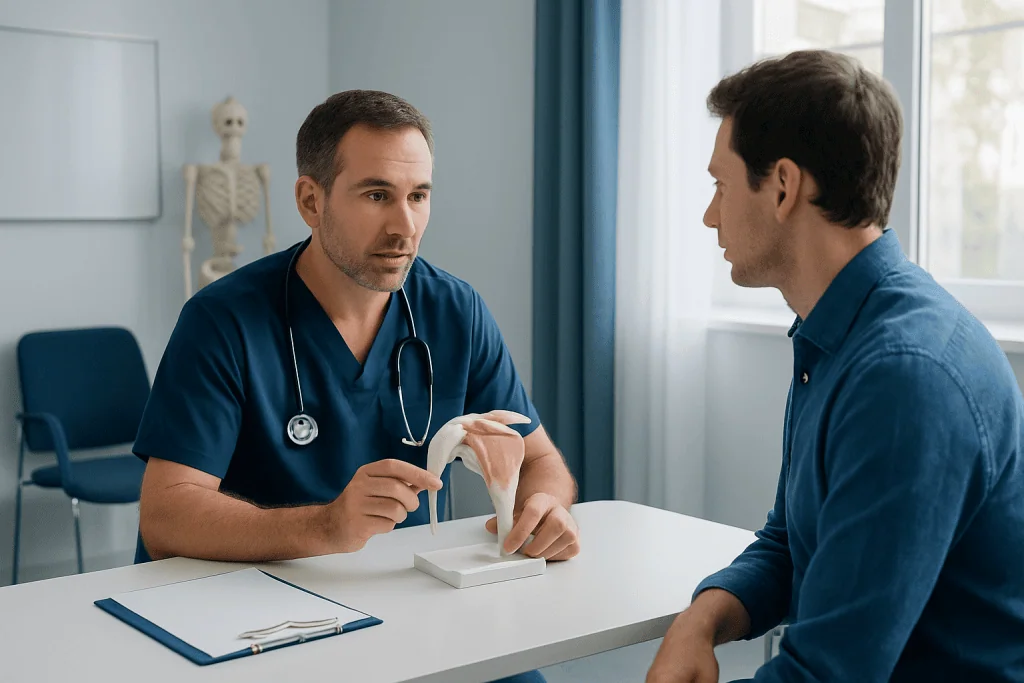
Bankart repair is usually carried out under general anesthesia, often with an additional regional nerve block to help control pain after surgery. The patient is positioned so the surgeon can examine and access the shoulder safely. Before beginning the repair, the surgeon may test the shoulder under anesthesia and inspect the joint with an arthroscope.
Several small incisions are made around the shoulder. Sterile fluid may be used to improve visibility inside the joint. The surgeon identifies the detached labrum, prepares the edge of the socket so healing can occur, and places small anchors in the glenoid bone. Sutures attached to the anchors are passed through the labrum and nearby capsule, then tightened to restore their position and tension.
At the end of the procedure, the incisions are closed and covered. The arm is placed in a sling or shoulder immobilizer. Procedures vary: some patients may also need treatment for additional damage, such as a rotator cuff injury or biceps-labrum problem. The treating surgeon explains which structures were repaired and whether any restrictions differ from the usual protocol.
For patients considering operative stabilization, arthroscopic shoulder surgery can be discussed with an orthopedic surgeon in the context of the injury pattern, expected activity level and imaging results.
Bankart Repair Recovery Timeline and Rehabilitation
Recovery is gradual because the labrum needs time to attach securely to the socket. Exact timelines differ between surgeons and depend on the repair, additional procedures and the patient’s healing progress. Follow-up appointments are used to review wounds, symptoms, movement and rehabilitation milestones.
During the first several weeks, the main goal is protection. A sling is commonly worn most of the day and night, removed only for hygiene and prescribed exercises. Hand, wrist and elbow movement is usually encouraged, while shoulder exercises are limited to the range specified by the surgeon or physiotherapist. Pain and swelling are typically managed with a personalized plan that may include cold packs, prescribed medication and positioning advice.
Over the next phase, supervised physiotherapy generally introduces progressive range-of-motion exercises while avoiding positions that can strain the front of the repair. Strengthening commonly begins later, focusing first on the rotator cuff, shoulder blade muscles and movement control. Functional exercises are added only when motion, strength and stability are progressing appropriately.
Many people resume desk-based work sooner than physical work, but timing depends on pain control, sling use and job duties. Driving should wait until the sling is no longer required, the person can safely control the vehicle and any sedating pain medication has been stopped. Return to heavy lifting, overhead work, contact sport and throwing is usually delayed for several months and should be cleared by the surgical team.
- Early phase: protect the repair, manage swelling and maintain movement in the hand, wrist and elbow.
- Middle phase: gradually restore guided shoulder movement and begin controlled muscle activation.
- Later phase: build strength, endurance, coordination and sport- or occupation-specific control.
- Return phase: progress activity only after functional testing and clearance from the care team.
What Not to Do After Bankart Repair?
After Bankart repair, patients should not test the shoulder’s limits before the repair has healed. In particular, they should avoid sudden pulling, pushing, lifting or weight-bearing through the operated arm during the protected phase. The combination of raising the arm outward and rotating it back is often restricted early because it can stress the front of the shoulder where the labrum was repaired.
Patients should not remove the sling routinely, sleep in an unprotected position, drive before they can safely control the vehicle, or return to sport based only on feeling better. They should also avoid unsupported online exercise plans that conflict with the surgeon’s instructions. Every repair is slightly different, and restrictions may be stricter when another procedure was performed at the same time.
Smoking and nicotine products can interfere with healing and should be discussed with the healthcare team. It is also important not to stop prescribed medicine or change a rehabilitation plan without professional advice. A physiotherapist can demonstrate safe ways to dress, wash, sleep and perform approved exercises while the arm is protected.
How Painful Is Bankart Repair Surgery?
Bankart repair can cause moderate pain and stiffness in the early recovery period, but pain management is an expected part of care. Discomfort is often most noticeable once the anesthetic or nerve block wears off and when swelling is greatest. It generally improves over days to weeks, although aching after therapy or at night can last longer as the shoulder recovers.
The healthcare team may recommend a combination of methods, such as prescribed pain medication, cold therapy, supportive positioning and gentle approved movement. Taking medication exactly as directed and starting it before pain becomes severe may be helpful. Patients should ask their surgeon which medicines are appropriate for their medical history and other prescriptions.
Pain should gradually trend downward rather than become progressively worse. Severe uncontrolled pain, new numbness that does not improve as expected, excessive swelling, fever or drainage from the incision should be reported promptly. These symptoms do not always indicate a complication, but they need clinical advice.
What Is the Worst Day After Shoulder Surgery?
There is no single “worst day” after Bankart repair. For many people, discomfort is greatest during the first few days, especially when the regional anesthetic wears off and before swelling settles. Sleep can also be difficult at first because the sling, restricted movement and shoulder position can make it hard to get comfortable.
Some patients notice a temporary increase in soreness after the first physiotherapy sessions or when activity increases. This should be manageable and settle with rest and the care plan. Persistent sharp pain, a major decline in function or pain that keeps worsening should be discussed with the surgeon or physiotherapist rather than pushed through.
Sleeping semi-upright in a recliner or supported by pillows may be more comfortable early on. Keeping commonly used items within reach, following sling instructions and arranging practical help at home can make the first days easier and safer.
How Successful Is Bankart Repair? Risks and When to Seek Medical Care
Bankart repair is designed to reduce recurrent shoulder instability and help people return to daily activities, work and sport. Many appropriately selected patients achieve a stable, functional shoulder, particularly when they follow rehabilitation guidance. However, no operation can eliminate the possibility of further instability, and outcomes depend on factors such as bone loss, tissue quality, age, activity type, repeat injury and adherence to rehabilitation.
Potential risks include infection, bleeding, stiffness, persistent pain, recurrent dislocation or subluxation, anchor-related problems, blood clots, and rare injury to nerves or blood vessels. Some loss of external rotation can occur, especially if the shoulder capsule is tightened substantially. Discussing individual risks and expected results with the surgeon supports informed decision-making.
When to seek medical care: patients should contact their surgical team urgently for fever, spreading redness, pus-like drainage, worsening incision swelling, uncontrolled pain, shortness of breath, chest pain, a cold or pale hand, or new severe weakness or numbness. A suspected redislocation, a fall onto the operated arm or a sudden pop with major pain also requires prompt assessment.
Acibadem International’s multidisciplinary specialists and JCI-accredited hospitals diagnose and treat shoulder instability for international patients, including rehabilitation planning after surgery. A follow-up plan should remain coordinated between the orthopedic surgeon, physiotherapist and the patient’s local healthcare professionals when needed.
Frequently asked questions
How long is the sling needed after Bankart repair?
Sling use commonly lasts several weeks, but the exact duration depends on the type of repair and the surgeon’s protocol. The sling protects the labrum while it begins to heal. Patients should follow their own surgeon’s instructions, including guidance for sleeping, bathing and exercise.
When can a person start physical therapy after Bankart repair?
Rehabilitation often starts early with carefully limited exercises, although the timing and permitted movements vary. Initial therapy focuses on protecting the repair while avoiding stiffness in nearby joints. More active shoulder motion and strengthening are introduced in stages.
Can the shoulder dislocate again after Bankart repair?
Yes, recurrent instability can occur even after a technically successful repair. The risk may be higher with new trauma, early return to high-risk sports, substantial bone loss, ligament laxity or failure to follow rehabilitation restrictions. New slipping, shifting or dislocation symptoms should be assessed by an orthopedic clinician.
When can someone return to the gym after Bankart repair?
Lower-body exercise and non-impact activity may sometimes be adapted earlier, but the operated arm must remain protected. Upper-body lifting, push-ups, pull-ups and overhead exercise are usually delayed until the surgeon and physiotherapist confirm adequate healing, motion and control. Return should be progressive rather than based on a fixed date alone.
Will Bankart repair leave scars?
Arthroscopic Bankart repair usually leaves several small scars around the shoulder. Their appearance often fades over time, although healing differs among individuals. Keeping incisions clean, following wound-care instructions and protecting healed scars from excessive sun exposure can support normal scar maturation.
How long does full recovery after Bankart repair take?
Many people need several months to regain comfortable daily use, strength and confidence in the shoulder. Return to demanding overhead, contact or throwing sports often requires a longer staged rehabilitation period. Full recovery depends on the repair, activity goals, healing and adherence to the prescribed program.
References
- American Academy of Orthopaedic Surgeons
- American Shoulder and Elbow Surgeons
- OrthoInfo
- National Institute of Arthritis and Musculoskeletal and Skin Diseases
This article is for general information only and is not a substitute for professional medical advice. Please consult a qualified doctor about your individual situation.
Joint and spine care in Turkey — expert assessment & treatment
JCI-accredited · board-certified surgeons · reply within 24h
Add us as a Preferred Source to see more of our trusted health content across Google Search, AI Overviews and Discover.