Is Knee Replacement Surgery Outpatient: Procedure, Recovery and Results

Same-day discharge is possible after knee replacement, but it is not appropriate or necessary for every patient. Outpatient surgery means going home on the day of surgery after meeting specific recovery and safety milestones.
Key Takeaways
- Same-day discharge is possible after knee replacement, but it is not appropriate or necessary for every patient.
- Outpatient surgery means going home on the day of surgery after meeting specific recovery and safety milestones.
- Early movement, tailored pain management and guided physiotherapy are central to recovery.
- Recovery discomfort is expected, especially in the first weeks, but it is managed with a multimodal plan and improves over time.
- Warning symptoms such as chest pain, breathing difficulty, fever or worsening calf swelling need urgent medical assessment.
Is knee replacement surgery outpatient? Yes. For carefully selected people having uncomplicated surgery with reliable support at home, knee replacement may be performed as same-day surgery; others benefit from an overnight or longer hospital stay. The safest plan is individualized, based on health, mobility, pain control and the home recovery environment.
Overview: Can Knee Replacement Be an Outpatient Procedure?
Is knee replacement surgery outpatient? Yes, it can be. In outpatient, or same-day, knee replacement, a person has surgery and returns home later that day after recovering from anesthesia, walking safely with assistance, drinking fluids, passing urine when appropriate, and having pain and nausea under reasonable control. This approach is most commonly considered for planned primary knee replacement in people with suitable medical and home circumstances.
Outpatient care does not mean that recovery is less important or that patients are left without support. It means that the early recovery plan happens at home, with clear instructions, prescribed medicines, mobility aids, physiotherapy arrangements and a responsible adult available to help. Some patients are observed overnight even when same-day discharge was initially planned, which is a normal safety decision rather than a complication.
Total knee replacement, also called total knee arthroplasty, replaces worn joint surfaces with artificial components. It is most often used for severe knee osteoarthritis that continues to limit daily life despite non-surgical treatment. The operation can reduce pain and improve function, but it requires active participation in rehabilitation.
How Knee Replacement Works and Who May Be a Candidate
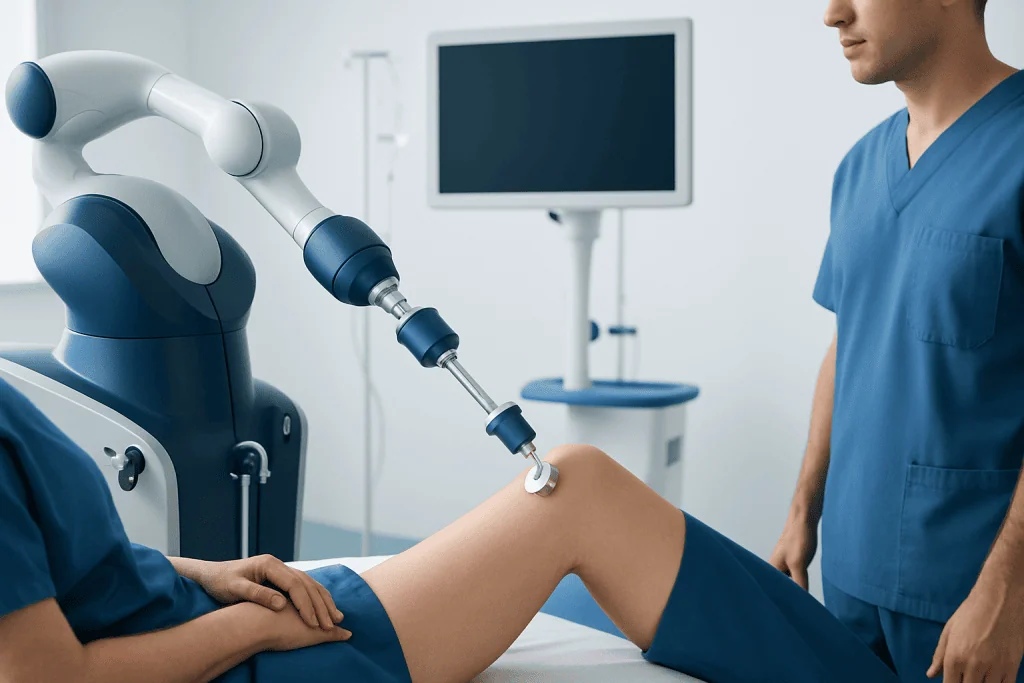
During a total knee replacement, the surgeon removes damaged cartilage and a small amount of underlying bone from the ends of the thighbone and shinbone. Metal components are placed on these prepared surfaces, with a smooth plastic spacer between them to allow controlled movement. In selected cases, the back surface of the kneecap is also resurfaced. The goal is to create a stable, well-aligned joint that moves more comfortably.
People may be considered for surgery when knee pain, stiffness or deformity significantly affects walking, sleep, work or independence, and measures such as exercise therapy, weight management where relevant, walking aids, medicines or injections no longer provide adequate relief. Decisions are based on symptoms and function rather than X-ray findings alone.
Suitability for outpatient surgery is assessed separately from suitability for knee replacement itself. Teams consider heart, lung and kidney health; diabetes control; sleep apnea; blood-thinning medicines; previous anesthesia issues; mobility before surgery; and the likelihood of needing extra medical monitoring. A safe home setting, transport, telephone access and an adult caregiver for the first day or two are also important. People with complex health conditions may be better served by an inpatient stay.
What Happens on the Day of an Outpatient Knee Replacement?

Before surgery, the orthopedic and anesthesia teams review the medical history, examination findings, imaging, medicines and discharge plan. Patients are given instructions about fasting, regular medicines, skin preparation and arrival time. Anesthesia may involve a spinal anesthetic, general anesthetic, or a combination, often alongside nerve-blocking techniques that can reduce pain after surgery.
The procedure usually follows a structured sequence: the knee is prepared and sterilized; an incision is made at the front of the knee; damaged joint surfaces are removed and shaped; the implant components are positioned and tested for fit, stability and motion; and the wound is closed and dressed. The precise technique and implant choice depend on the individual knee anatomy and surgeon’s assessment.
After surgery, the patient is monitored in the recovery area. Nurses check breathing, circulation, alertness, wound dressings, pain and nausea. Once stable, many patients begin gentle movement and walk with a physiotherapist using a walker or crutches. The knee replacement surgery care pathway should include written instructions for wound care, exercises, medicines, blood-clot prevention and follow-up before discharge.
How long do you stay in the recovery room after knee replacement surgery? This varies with the type of anesthesia, pain and nausea control, blood pressure, alertness and individual medical needs. Many people spend several hours moving through the post-anesthesia recovery area and the day-surgery unit before going home. The care team, rather than a fixed clock, determines when it is safe to leave.
Benefits, Limitations and Possible Risks
For the right patient, same-day discharge can allow recovery in familiar surroundings and may reduce time spent in hospital. It also encourages early, supported movement. However, outpatient surgery is not inherently better than an overnight stay; the best approach is the one that provides safe monitoring, effective pain control and enough support for the individual.
Most people have substantial improvement in knee pain and everyday function after successful replacement, although the new knee may not feel exactly like a natural knee. Kneeling, high-impact sports and some deep bending activities can remain difficult. Improvement is gradual, and strength, balance and confidence continue to develop for months.
All major surgery carries risks. These include infection, bleeding, blood clots in the leg or lungs, wound problems, stiffness, ongoing pain, nerve or blood vessel injury, anesthesia-related complications, fracture around the implant and, less commonly, implant loosening or the need for further surgery. Preventive measures may include early walking, leg exercises, compression methods and medication to lower clot risk, chosen according to the person’s health needs.
Patients should ask their surgeon what outcomes and risks are most relevant to them. A shared decision should account for the severity of symptoms, goals for activity, other health conditions and the practical support available after surgery.
Recovery Timeline and Managing Pain at Home
Recovery begins on the day of surgery. Most patients are encouraged to stand and take a few assisted steps as soon as it is safe. In the first days, swelling, bruising, tiredness and pain with movement are common. Elevating the leg as advised, using cold therapy with skin protection, taking prescribed medicines correctly and doing the recommended exercises can help control symptoms.
During the first two to six weeks, walking distance and knee movement generally increase, although progress is not always linear. Physiotherapy focuses on safely regaining knee straightening and bending, improving leg strength and returning to practical tasks such as transfers, stairs and daily activities. Driving, work and travel should only resume when a clinician confirms it is safe, based on mobility, medication use and the demands of the activity.
What is the hardest part of knee replacement recovery? Many people find the first several weeks the most demanding because pain, swelling, sleep disruption and the need for frequent exercises occur at the same time. Regaining full knee straightening and bending can also require consistent effort. The challenge is usually temporary, and following the rehabilitation plan helps support steady recovery.
How painful is a knee replacement on a scale of 1 to 10? Pain cannot be predicted accurately with one number because people experience pain differently and symptoms change from day to day. Pain can be moderate to severe soon after surgery, particularly during exercises, but modern care commonly uses several methods together to reduce it, such as regional anesthesia, non-opioid medicines when appropriate and limited stronger pain medicine if needed. Patients should tell the team if pain prevents sleep, walking or prescribed exercises.
How painful is knee replacement recovery? Knee replacement recovery is often uncomfortable at first, especially with movement and physiotherapy, but pain should become more manageable over the following weeks. Complete absence of pain is not expected immediately; the aim is comfortable enough movement to allow sleep, safe walking and rehabilitation. Sudden worsening pain, pain out of proportion to expectations or pain with concerning symptoms needs medical advice.
Preparing for Discharge and Supporting a Safer Recovery
Preparation can make home recovery more manageable. Before surgery, patients may arrange a walker or crutches, prepare easy meals, remove loose rugs and tripping hazards, organize frequently used items within reach and plan help with transport, bathing, meals and household tasks. A raised toilet seat or shower support may be advised for some people.
Following the prescribed rehabilitation plan is important, but overexertion can increase swelling and pain. Short, regular periods of walking and exercise are usually more helpful than trying to do too much at once. Patients should also follow instructions about dressings, bathing, compression garments and when to contact the surgical team.
Stopping smoking before surgery, maintaining balanced nutrition, managing long-term conditions and discussing all supplements and medicines with the clinical team can support healing and reduce avoidable risks. Rehabilitation is individualized; a physiotherapist can adapt exercises if there are difficulties with balance, movement, other painful joints or the home environment.
When to Seek Medical Care
Patients should contact their surgical team promptly for increasing redness, warmth or drainage from the wound; a fever; worsening rather than gradually improving pain; persistent vomiting; inability to take fluids or medicines; or concerns about the dressing, swelling or mobility. It is always appropriate to ask for advice when recovery does not feel as expected.
Emergency medical care is needed for chest pain, sudden shortness of breath, coughing blood, fainting, new confusion, or severe calf pain and swelling, as these can be signs of serious complications. New weakness, loss of sensation in the foot, or uncontrolled bleeding also requires urgent assessment.
Acibadem International’s multidisciplinary orthopedic, anesthesia, rehabilitation and nursing teams at JCI-accredited hospitals assess and treat knee conditions for international patients, including those considering outpatient or inpatient surgical pathways. The appropriate setting is selected through an individual clinical evaluation rather than a one-size-fits-all approach.
Frequently asked questions
Is knee replacement surgery outpatient for everyone?
No. Same-day discharge is suitable only for selected patients after an assessment of medical health, anesthesia risk, mobility and home support. An overnight or longer stay may be safer for people with complex health needs, significant pain or nausea, or limited help at home.
What must happen before a patient can go home after outpatient knee replacement?
The patient needs to be medically stable and awake enough after anesthesia, with pain and nausea controlled to a safe level. They also typically need to walk with an appropriate aid, understand discharge instructions and have support arranged at home. The exact discharge criteria vary by hospital and individual needs.
How soon can someone walk after knee replacement surgery?
Many patients begin standing and taking supported steps on the day of surgery, once the anesthesia and clinical condition allow it. A physiotherapist or trained staff member guides early walking and teaches safe use of a walker or crutches. Walking ability then improves gradually with regular rehabilitation.
How long does it take to recover from a knee replacement?
Early recovery takes weeks, with many people becoming more independent in daily activities during the first several weeks. Strength, flexibility, stamina and confidence often continue improving for several months. Recovery speed varies with health, pre-surgery mobility, rehabilitation participation and the demands of daily life.
Will I need help at home after same-day knee replacement?
Yes, most people need a responsible adult to accompany them home and provide practical help initially. Assistance may be needed for meals, medicines, personal care, household tasks and safe movement. The surgical team can advise how long support is likely to be needed in an individual situation.
Can severe pain after knee replacement be normal?
Significant discomfort can occur in the early days, particularly when moving or doing exercises, but it should be addressed with the care plan rather than simply endured. Contact the surgical team if pain is uncontrolled, suddenly worsens, or is associated with fever, wound changes, calf swelling, chest pain or shortness of breath. Urgent symptoms require emergency assessment.
References
- American Academy of Orthopaedic Surgeons
- National Institute for Health and Care Excellence
- Centers for Disease Control and Prevention
- American Association of Hip and Knee Surgeons
This article is for general information only and is not a substitute for professional medical advice. Please consult a qualified doctor about your individual situation.
Persistent digestive symptoms? Get evaluated in Turkey
JCI-accredited · board-certified surgeons · reply within 24h
Add us as a Preferred Source to see more of our trusted health content across Google Search, AI Overviews and Discover.
Check your numbers in seconds
BMI, calories, due date, blood pressure and 30+ more clinical calculators — free, instant, doctor-reviewed ranges.

More from the Health Library



Related Specialists

Embriyolog Seda Özkan
Vitro Fertilization and Reproductive Medicine Center
Prof. Dr. İsmail Cinel
Anesthesiology
Dr. Hicran Karaca Sönmezer
Anesthesiology
Dr. Mohammad Sevimli
Anesthesiology