Hydrogel Injection: How It Works, Results and What to Expect

Hydrogel injections are most commonly used to help manage symptoms of knee osteoarthritis. The injection does not rebuild lost cartilage or cure osteoarthritis, and response varies between individuals.
Key Takeaways
- Hydrogel injections are most commonly used to help manage symptoms of knee osteoarthritis.
- The injection does not rebuild lost cartilage or cure osteoarthritis, and response varies between individuals.
- Some people notice improvement within weeks, while others may have little or no meaningful benefit.
- Temporary soreness, swelling, warmth, or stiffness can occur after a gel knee injection.
- Most people can return to gentle daily activities soon after treatment but should avoid strenuous knee loading briefly.
A hydrogel injection, often called a gel knee injection or viscosupplementation, places a hyaluronic acid-based gel into the knee joint to support lubrication and cushioning. It may help some people with <a href="https://acibademinternational.com/diseases/knee-osteoarthritis/”>knee osteoarthritis manage pain and movement when exercise, weight management, and simple pain-relief measures have not provided enough benefit.
Hydrogel Injection: What It Is and How It Works
A hydrogel injection for the knee is usually an injection of hyaluronic acid, a gel-like substance found naturally in joint fluid. It is also known as viscosupplementation, a gel shot, or a hydrogel injectable. In osteoarthritis, the joint environment changes over time: cartilage becomes damaged, the lining may become irritated, and the natural joint fluid may not protect movement as effectively.
The injected gel is intended to improve the lubricating and shock-absorbing properties of fluid within the knee. This may reduce friction during movement and may also influence pain signals and inflammation in the joint. It is a symptom-management treatment rather than a cure: it does not regrow cartilage, reverse arthritis, or remove the need for an overall knee-care plan.
Hydrogel injections are most often considered for people with knee osteoarthritis whose symptoms continue despite appropriate non-surgical care. The product used, number of injections, technique, and expected response can differ, so a clinician should explain what is suitable for the individual knee and health situation.
Who May Be a Candidate for a Gel Knee Injection?
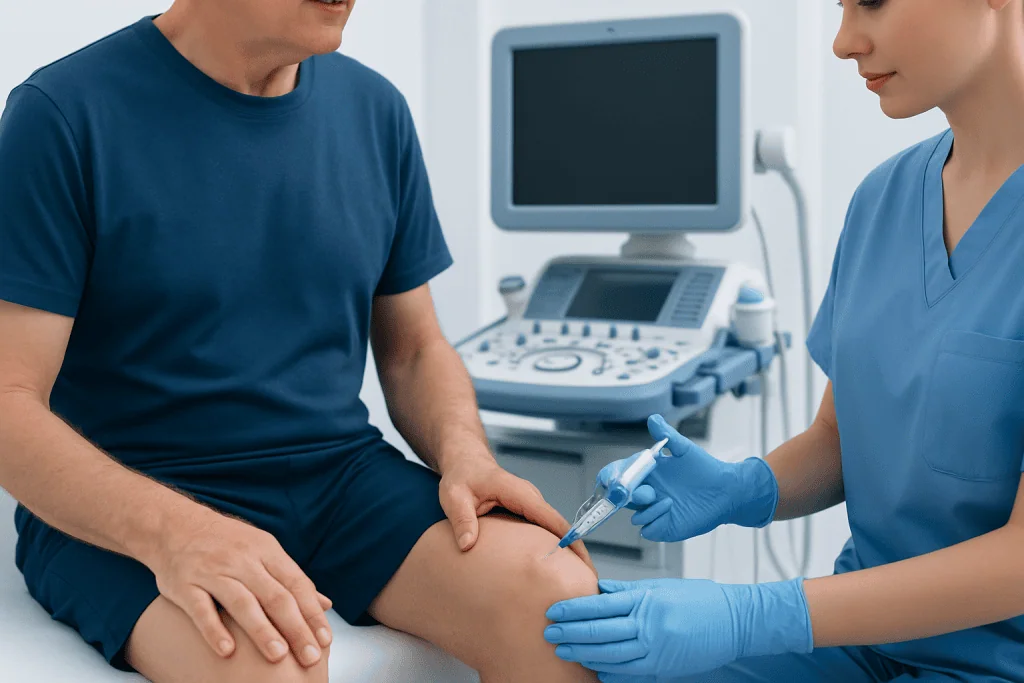
A clinician may discuss a hydrogel injection with an adult who has knee pain, stiffness, reduced walking tolerance, or activity limitations linked to osteoarthritis. It is usually considered alongside exercise therapy, strengthening, activity modification, supportive footwear or braces when appropriate, weight management where relevant, and medicines used safely under medical guidance.
Suitability depends on more than an X-ray result. The clinician considers the pattern and severity of symptoms, examination findings, previous treatments, goals for activity, and whether another problem could be causing knee pain. For example, sudden locking, a recent major injury, inflammatory arthritis, infection, or pain referred from the hip or back may need a different assessment and treatment approach.
A hydrogel injection may not be appropriate for someone with an active skin or joint infection, a known allergy to a component of the product, or significant swelling that needs assessment first. People who use blood-thinning medication, are pregnant, have a bleeding disorder, or have complex medical conditions should tell the treating clinician before any injection is planned.
What Happens During the Hydrogel Injection Procedure?

The procedure is usually performed in an outpatient setting. Before treatment, the clinician confirms the indication, reviews allergies and medications, examines the knee, and discusses expected benefits, alternatives, and possible side effects. Imaging is not always required, but ultrasound guidance may be used in some circumstances to support accurate needle placement.
The skin is cleaned carefully to reduce infection risk. A local anesthetic may be used, depending on the product and clinical approach. If there is a substantial build-up of fluid in the knee, the clinician may remove some fluid before injecting the gel. The hydrogel is then injected into the joint space using a fine needle.
The injection itself generally takes only a few minutes, although the appointment is longer because of preparation and discussion. Some products are delivered as one injection, while others are given as a short series over separate appointments. A clinician can explain the specific product schedule and whether non-surgical knee osteoarthritis treatment options may also be helpful.
How Long Does It Take for a Gel Injection to Start Working?
A gel knee injection does not usually provide immediate, predictable pain relief. Some people begin to notice improvement within several days, but it more commonly takes a few weeks for any benefit to become clear. Temporary soreness after the procedure can also make the knee feel worse for a short period before it settles.
Response differs widely. Factors such as the degree of osteoarthritis, inflammation, alignment of the leg, muscle strength, daily activity demands, and other sources of pain can affect the result. Clinical guidelines vary in how strongly they support routine use of hyaluronic acid injections because average benefits in studies are often modest and not everyone responds.
Keeping a simple record of pain, walking ability, sleep disturbance, and use of pain medicine can help a person and clinician judge whether the injection has made a meaningful difference. Continued exercise and rehabilitation, adjusted to symptoms, remain important for supporting knee function.
Benefits, Downsides and Hydrogel Injection Side Effects
The possible benefit of a hydrogel injection is reduced knee pain and improved ease of movement without surgery. For a person who responds well, this may make it easier to take part in strengthening exercises, walk more comfortably, or manage everyday tasks. It can be one part of a wider plan that may include physical therapy and rehabilitation to improve strength, flexibility, balance, and confidence in movement.
What are the downsides of gel knee injections? The main limitation is uncertainty: some people receive little or no relief, and the effect is temporary when it occurs. The treatment also does not correct advanced structural changes in the joint. Repeated injections may be considered in selected cases, but they should be based on previous response, symptoms, safety, and a clinician’s recommendation.
Hydrogel injections side effects are usually mild and short-lived. They can include pain at the injection site, temporary swelling, warmth, bruising, stiffness, or a feeling of pressure in the knee. Less commonly, a stronger inflammatory reaction can cause marked pain and swelling. Infection inside the joint is rare but serious, which is why sterile technique and prompt review of concerning symptoms are essential.
- Contact a clinician promptly for increasing redness, severe swelling, fever, chills, drainage, or worsening pain after the injection.
- Seek urgent medical assessment if there is severe pain with inability to bear weight, a rapidly swollen joint, or symptoms of a serious allergic reaction such as facial swelling or breathing difficulty.
How Long Do Hydrogel Injection Results Last?
When a hydrogel injection helps, improvement may last for several months, but the duration is not the same for every person. Some people experience a shorter period of relief, while others do not notice enough benefit to continue treatment. It is best to view the injection as a time-limited tool for symptom control rather than a permanent solution.
The best way to preserve knee function is usually to combine symptom relief with measures that address joint load and muscle support. This may include a tailored exercise program, gradual activity pacing, weight management if advised, treatment of sleep or mood difficulties that amplify pain, and appropriate use of supportive devices. If symptoms are severe and daily life remains significantly limited, a specialist may discuss other options, including knee replacement surgery for suitable patients.
A follow-up plan is useful because it allows the care team to assess function rather than pain alone. Decisions about another injection should take account of the previous response and whether other treatments could better support the person’s goals.
How Long Should You Rest Your Knee After Getting a Gel Shot?
Most people can walk and do gentle daily activities after a gel shot, unless their clinician gives different instructions. For the first day or two, it is commonly sensible to avoid high-impact exercise, deep squatting, heavy lifting, prolonged standing, running, jumping, or demanding sports that place extra load on the knee.
Brief rest, a cold pack wrapped in a cloth, and elevating the leg may help mild post-injection discomfort. The clinician may also give individual advice about usual pain medicines, especially for people who have stomach, kidney, heart, bleeding, or medication-related concerns. A person should not begin or stop medication without professional advice.
After the initial recovery period, gradual return to prescribed exercises and normal activities is generally encouraged. Strong thigh and hip muscles can reduce stress on the knee during everyday movement. If activity causes a major flare that does not settle, the person should contact their clinician for guidance rather than pushing through severe pain.
When to Seek Medical Care
Knee pain should be medically assessed when it is persistent, worsening, limits work or self-care, disrupts sleep, or prevents a person from remaining active. Assessment is also important after a significant twist, fall, or injury, particularly if the knee gives way, locks, becomes very swollen, or cannot bear weight.
After a hydrogel injection, mild localized discomfort can be expected, but medical advice is needed for symptoms that are increasing rather than improving. Fever, spreading redness, drainage, severe swelling, escalating pain, or difficulty moving the knee may indicate a complication that needs prompt evaluation.
Acibadem International’s multidisciplinary specialists and JCI-accredited hospitals assess and treat knee conditions for international patients, with care plans based on individual symptoms, imaging when needed, and functional goals. A qualified orthopedic clinician can help determine whether a hydrogel injection is appropriate or whether another approach is more likely to help.
Frequently asked questions
Is a hydrogel injection the same as a steroid injection?
No. A hydrogel injection usually contains hyaluronic acid, a gel-like substance intended to improve the properties of joint fluid. A steroid injection uses a corticosteroid medicine to reduce inflammation and may have a different onset, duration, benefits, and risks.
How long does it take for a gel injection to start working?
Some people notice changes within days, but it often takes several weeks to know whether the injection is helping. The response is variable, and some people do not experience meaningful improvement. Temporary soreness immediately after the injection can occur.
What are the downsides of gel knee injections?
The main downsides are that benefit is not guaranteed, results are temporary, and the injection does not repair damaged cartilage. Side effects can include short-term pain, swelling, warmth, or stiffness. Rarely, infection or a stronger inflammatory reaction may occur.
How long do hydrogel injection results last?
If it is effective, pain relief may last for several months, but there is no fixed duration for every person. The effect may be shorter, longer, or absent depending on the individual and the condition of the knee. Follow-up helps determine whether the treatment has provided worthwhile functional improvement.
How long should you rest your knee after getting a gel shot?
Gentle daily activity is often possible straight away, but strenuous exercise and heavy knee loading are commonly avoided for about one to two days. Individual instructions may vary depending on the injection, symptoms, and other medical factors. A clinician should be contacted if pain or swelling becomes severe or progressively worse.
Can hydrogel injections cure knee osteoarthritis?
No. Hydrogel injections do not cure osteoarthritis or restore lost cartilage. They may help some people manage pain and move more comfortably as part of a broader plan that includes exercise, activity adjustment, and other treatments when appropriate.
References
- American College of Rheumatology
- Osteoarthritis Research Society International
- National Institute for Health and Care Excellence
- Arthritis Foundation
This article is for general information only and is not a substitute for professional medical advice. Please consult a qualified doctor about your individual situation.
Joint and spine care in Turkey — expert assessment & treatment
JCI-accredited · board-certified surgeons · reply within 24h
Add us as a Preferred Source to see more of our trusted health content across Google Search, AI Overviews and Discover.