

Traveling to Turkey with Medical Devices

Keep essential medical devices, medications, chargers and documents in your cabin baggage whenever the airline allows, and contact the airline before booking to confirm battery and oxygen rules. Carry a signed medical letter in English, prescriptions or implant cards, and battery specifications. Turkey uses Type C and Type F outlets at 230V, so check your charger and adapter.
Will they let your machine through security? Where will you plug it in overnight? These are the questions that keep people awake before a flight, and they are easier to answer than they feel right now.
If you rely on a medical device, a calm and well-prepared travel plan can make your journey to Turkey much easier. This guide explains what to arrange before departure, how to handle airport security and batteries, and how Acibadem International can support you on arrival.
At a glance
- Best first step: Tell your care coordinator exactly which devices you use before booking travel.
- Carry-on rule: Keep essential medical devices, medications, chargers, and documents with you in cabin baggage whenever allowed.
- Key documents: Bring a medical letter, device prescription or report, manufacturer information, and battery details.
- Airport planning: Request mobility, oxygen, or security assistance from your airline and airport in advance.
- Hospital arrival: Share device information with your Acibadem team so your appointments, room needs, and interpreter support can be planned.
Start with a device-by-device travel plan
Traveling to Turkey with medical devices is usually manageable when every device is listed, documented, and packed with a purpose. Before you book flights, write down each item you use: for example a CPAP or BiPAP machine, insulin pump, glucose monitor, portable oxygen concentrator, mobility aid, implanted device card, external stimulator, feeding pump, nebulizer, hearing device, ostomy supplies, or wound care equipment.
For each device, note whether it is essential during the flight, whether it has batteries, whether it needs electricity overnight, and whether it requires sterile or temperature-sensitive supplies. This simple inventory helps your airline, hotel, and hospital team understand what you need without confusion at the last minute.
If you are coming for care at Acibadem International, share this list with your international patient representative as early as possible. They can help route your questions to the relevant hospital team, flag mobility or interpreter needs, and advise what information to bring for your first appointment without replacing guidance from your own doctor or device manufacturer.
Documents to carry with your device
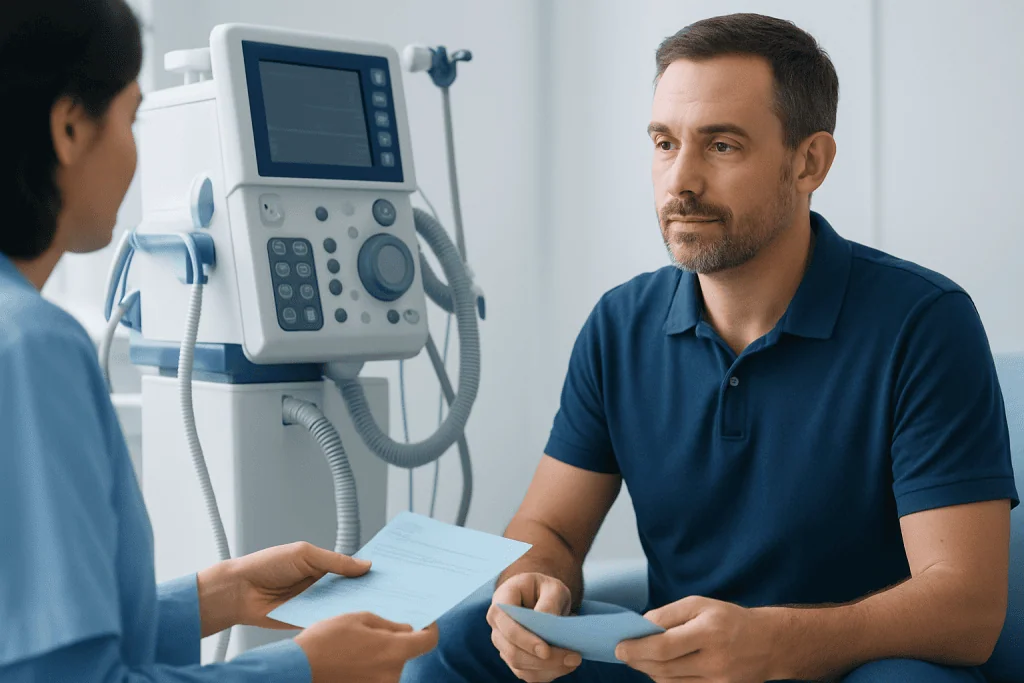
Good documentation helps at check-in counters, airport security, customs, hotels, and hospitals. Ask your treating doctor at home for a signed medical letter in English if possible. It should describe your diagnosis in general terms, the medical device you use, why it is medically necessary, and whether it must remain with you during travel.
Carry copies of prescriptions, recent medical summaries, implant cards, device model numbers, manufacturer manuals or quick reference sheets, and emergency contact details. If your device uses lithium batteries, bring the battery specifications showing watt-hours or lithium content, because airlines may ask for this information.
Keep these documents in your hand luggage and store digital copies securely on your phone or cloud account. It is wise to place one printed copy with the device itself and another with your passport and travel documents. If you do not speak Turkish, English documentation is commonly useful in international medical settings, and your Acibadem interpreter can help during hospital communication.
Flying with batteries, chargers, and electrical equipment
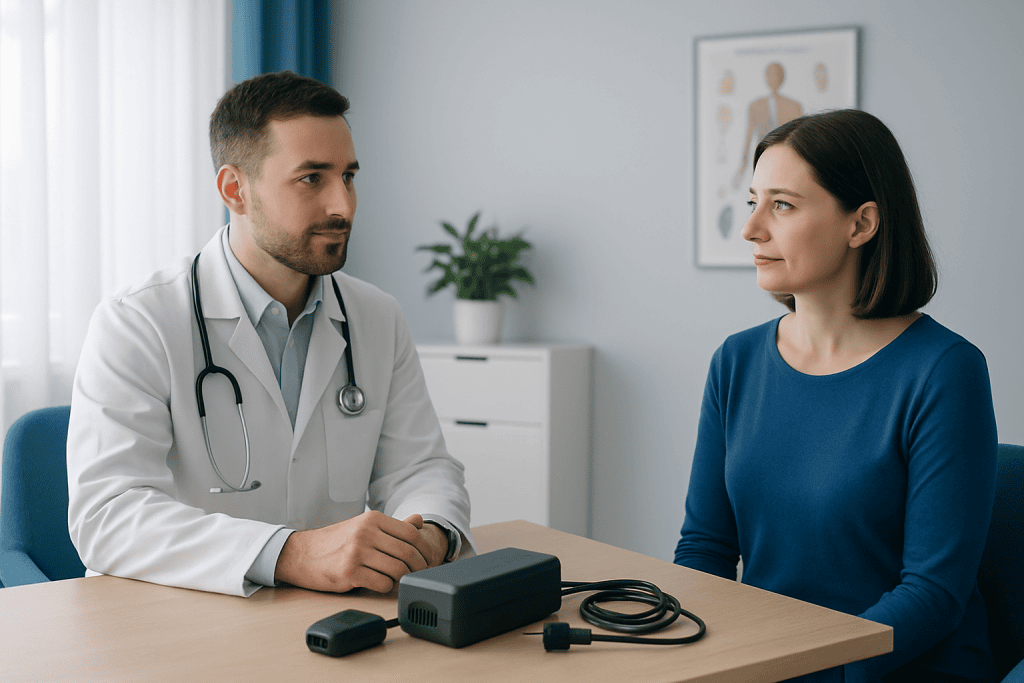
Battery rules are one of the most important parts of flying with medical equipment. Airlines and aviation authorities may restrict the size, number, and packing method for lithium batteries, especially spare batteries. Contact your airline before travel and ask how your specific device and batteries should be transported.
As a general safety principle, essential devices and approved spare batteries are usually best kept in carry-on luggage, not checked baggage, but you must follow the airline’s current policy. Protect battery terminals from contact with metal objects, keep batteries in original packaging or protective cases where possible, and avoid packing damaged or swollen batteries.
Turkey uses Type C and Type F electrical outlets, and the standard voltage is commonly 230V. Check whether your device charger is dual voltage and bring the correct plug adapter. If your device is life-supporting or must run overnight, ask your hotel in advance about reliable bedside outlets and consider bringing an approved extension solution recommended by your device provider.
Airport security, screening, and mobility support
Airport screening is smoother when you announce medical devices before the security process begins. Tell staff calmly that you use a medical device and show your medical letter or device card if needed. Some devices may need hand inspection instead of going through standard scanners, depending on manufacturer guidance and airport policy.
If you have an implanted device such as a pacemaker, neurostimulator, or insulin pump, follow the instructions from your physician and device manufacturer about metal detectors, body scanners, and handheld wands. Do not disconnect, silence, or modify a medical device unless your healthcare professional has specifically instructed you how to do so.
Request airport assistance early if you walk slowly, use a wheelchair, travel with oxygen equipment, or need extra time for boarding. Airlines can often arrange wheelchair service, priority boarding, or help between gates when notified in advance. On arrival in Istanbul or another Turkish airport, keep essential supplies accessible because baggage claim and ground transfers can take time.
Packing essentials for a safer journey
Your carry-on bag should be treated as your medical safety kit. Pack the device, power supply, chargers, adapters, batteries, consumables, medications, prescriptions, and troubleshooting information together. If the device has removable parts, label them clearly and use protective cases to reduce damage during travel.
Bring more consumables than you expect to need, especially if your stay may change because of tests, recovery, or follow-up appointments. This may include masks and tubing for PAP devices, infusion sets, glucose sensors, ostomy supplies, dressings, syringes or pen needles where permitted, filters, electrodes, or sterile accessories. Check airline and border rules for sharps, liquids, gels, and temperature-controlled items before you fly.
- Keep one day of essential supplies in a small personal bag under the seat.
- Separate backup supplies from your main bag in case one item is delayed or damaged.
- Use clear labeling, but avoid displaying private medical details unnecessarily.
- Bring manufacturer contact information and your home clinic’s after-hours number.
Coordinating your arrival, hotel, and hospital visit
Once you reach Turkey, your device needs continue beyond the airport. Your accommodation should know if you need a step-free entrance, elevator access, a refrigerator for medical supplies, nearby electrical outlets, extra space for mobility equipment, or a quiet bedside surface for overnight devices. Confirm these details in writing before arrival.
Acibadem International’s patient services can help international patients think through practical arrival needs such as airport transfer coordination, hotel options, interpreter arrangements, and appointment timing. If you travel with bulky equipment or limited mobility, tell your coordinator before arrival so your transfer and hospital check-in can be planned more comfortably.
At your first hospital visit, inform the nursing or physician team about every device you use, even if it seems unrelated to your appointment. Some devices may affect imaging, monitoring, surgery planning, infection precautions, or medication timing. The goal is not to create delays, but to help the multidisciplinary team plan safely around your normal medical routine.
What to do if something goes wrong
Even with careful planning, equipment can be delayed, damaged, or behave unexpectedly after travel. Before you leave home, ask your device provider what to do if your device alarms, stops charging, loses settings, or needs replacement parts abroad. Keep emergency instructions in simple language and know which situations require urgent medical care.
If a device problem occurs during your stay in Turkey, contact your care coordinator, your treating team, or local emergency services depending on urgency. Do not attempt repairs beyond the manufacturer’s instructions, and do not use damaged cables, batteries, or accessories. If your device is essential for breathing, heart rhythm, insulin delivery, nutrition, or medication infusion, treat any malfunction as time-sensitive.
For Acibadem patients, the international patient team can help you communicate the issue at the hospital and arrange appropriate next steps within the healthcare setting. They cannot guarantee replacement parts for every device brand, so bringing backups and manufacturer details remains one of the most important protections.
Step by step
- List every device and supply. Create a written inventory of your devices, accessories, batteries, and consumables. Include brand, model, serial number if relevant, and whether the item is needed during the flight or only at your destination.
- Ask your doctor for a travel letter. Request a clear medical letter explaining why the device is necessary and whether it must stay with you. If possible, bring it in English and keep both printed and digital copies.
- Confirm airline rules before booking. Contact the airline to ask about medical equipment, battery limits, oxygen policies, mobility assistance, and cabin baggage allowances. Get important approvals or instructions in writing when possible.
- Share details with your Acibadem coordinator. Send your device list and travel needs to your international patient representative before you arrive. This helps with interpreter planning, hospital access, transfers, and appointment coordination.
- Pack essential items in carry-on baggage. Keep your device, medications, chargers, documents, and at least a short reserve of supplies with you. Do not rely on checked baggage for anything you cannot safely be without.
- Prepare for airport screening. Arrive early and tell security staff about your device before screening begins. Follow the advice of your doctor and device manufacturer about scanners, metal detectors, and disconnection.
- Check hotel and transfer arrangements. Confirm elevators, room access, refrigeration, bedside electricity, and space for equipment. If you need wheelchair-friendly transfer or help with luggage, arrange it before your flight.
- Report device use at every appointment. Tell your hospital team about your devices during check-in and consultation. This is especially important before imaging, procedures, sedation, surgery, or medication changes.
Your checklist
- Medical letter in English, if possible
- Device prescription, implant card, or recent medical report
- Manufacturer manual or quick reference sheet
- Battery specifications and airline approval notes
- Chargers, adapters for Type C or Type F outlets, and approved spare batteries
- Extra consumables for delays or extended stay
- Emergency contacts for your home doctor and device provider
- Travel insurance documents and policy assistance number
- Accommodation confirmation with accessibility or refrigeration notes
- Acibadem appointment details and international patient contact information
Key takeaways
- Start planning early because airlines may need advance notice for medical devices, batteries, oxygen, or mobility assistance.
- Carry clear documentation, including a medical letter, device details, prescriptions, and battery specifications.
- Pack devices, medicines, chargers, and essential supplies in your carry-on rather than checked baggage whenever permitted.
- Tell airport security and hospital teams about your device before screening, imaging, procedures, or medication changes.
- Acibadem International can help coordinate practical arrival needs such as interpreters, transfers, accommodation guidance, and hospital communication.
Frequently asked questions
Can I bring my CPAP or BiPAP machine on a flight to Turkey?
In many cases, passengers can travel with PAP devices, but you should confirm your airline’s policy before flying. Ask whether the device counts toward your cabin baggage allowance and whether you need a medical letter. Bring the machine, mask, tubing, power supply, adapter, and enough filters or accessories for your stay.
What should I do if I use a portable oxygen concentrator?
Portable oxygen concentrators require careful airline approval, and not every model is accepted on every route. Contact the airline well in advance to confirm permitted models, battery requirements, paperwork, and whether oxygen use is allowed during boarding, flight, and landing. Also tell your hospital coordinator so arrival and transfer needs can be planned.
Can I pass through airport scanners with an implanted device?
This depends on the type of implanted device and the manufacturer’s instructions. Carry your implant card and medical letter, and tell security staff before screening begins. Follow the guidance from your cardiologist, neurologist, or device clinic about metal detectors, body scanners, and handheld wands.
Should I pack spare batteries in checked luggage?
Spare lithium batteries are often restricted in checked baggage and may need to be carried in the cabin with protected terminals. Rules vary by battery size, device type, and airline policy, so confirm before travel. Bring battery specifications and avoid traveling with damaged or swollen batteries.
Will my medical device work with Turkish electrical outlets?
Turkey commonly uses 230V electricity and Type C or Type F plugs. Many modern medical device chargers are dual voltage, but you should check the label or ask the manufacturer before travel. Bring the correct plug adapter and avoid unapproved converters or overloaded extension cords.
Can Acibadem International help if I travel with mobility equipment?
Acibadem International can help coordinate practical support such as hospital access guidance, interpreter services, transfer planning, and communication with your care team. Tell your coordinator if you use a wheelchair, walker, scooter, brace, or other mobility device. You should also arrange airline and airport assistance directly before travel.
What if my supplies run low while I am in Turkey?
Bring extra supplies because exact brands, sizes, or device-compatible parts may not be immediately available. If you are an Acibadem patient, inform your care coordinator or clinical team as soon as you notice a shortage. They can guide you on appropriate next steps, but availability of specific imported items cannot be guaranteed.
Do I need travel insurance if I use medical devices?
Travel insurance is strongly recommended, especially if you rely on essential equipment or have a complex medical condition. Review whether your policy covers pre-existing conditions, device loss or damage, trip changes, emergency care, and medical evacuation. Keep the insurer’s assistance number with your passport and device documents.
Add us as a Preferred Source to see more of our trusted health content across Google Search, AI Overviews and Discover.

Update history
- PublishedJune 9, 2026
- Medical review approvedAugust 25, 2026
- Last content updateAugust 24, 2026
References2
- CDC Travelers' Health: Travelers with Chronic Illnesses — wwwnc.cdc.gov
- MedlinePlus: Traveler's Health — medlineplus.gov
More Patient Guides

Medical Check-In at Istanbul Airport for Patients: What to Expect
Medical check-in at Istanbul Airport for patients: practical arrival, transfer, documents and support guidance for your Turkey treatment trip.
8 min read
Hospital Check-In in Turkey: Documents International Patients Should Bring
Hospital check-in in Turkey is smoother when you bring your passport, medical records, test results, payment documents and travel details.
8 min read
Mobile Internet and SIM Cards in Turkey for International Patients
Mobile internet and SIM cards in Turkey: practical options for international patients, including eSIMs, local SIMs, registration and hospital connectivity.
8 min read
Airport Arrival After an Overnight Flight: How to Pace Your First Medical Day
Airport arrival after an overnight flight: pace your first medical day in Istanbul with rest, hydration, transport planning and clear check-in steps.
8 min read