Red Eyelids Treatment: How It Works, Results and What to Expect

Red eyelids are a symptom rather than a single diagnosis, so treatment depends on the underlying cause. Warm compresses and careful eyelid hygiene can help some cases of blepharitis or blocked eyelid glands.
Key Takeaways
- Red eyelids are a symptom rather than a single diagnosis, so treatment depends on the underlying cause.
- Warm compresses and careful eyelid hygiene can help some cases of blepharitis or blocked eyelid glands.
- Redness after blepharoplasty is usually temporary and improves gradually as swelling and bruising settle.
- Red light therapy is not a proven treatment for sagging eyelids and cannot replace eyelid surgery when excess skin affects vision or appearance.
- Urgent assessment is important for severe pain, rapidly worsening swelling, fever, vision changes or difficulty moving the eye.
Red eyelids treatment starts with identifying why the eyelid is red, as irritation, allergy, eyelid inflammation, infection, skin conditions and recent surgery need different care. Mild symptoms may improve with gentle measures, but persistent, painful or vision-related symptoms should be assessed by an eye-care professional.
Red Eyelids Treatment: How It Works
Red eyelids treatment works by addressing the cause of the redness rather than treating redness alone. Common causes include irritation from cosmetics or skin-care products, allergies, dry eye, eyelid inflammation, blocked oil glands, eczema, infection and normal healing after eyelid surgery. A clinician may recommend simple self-care, prescription treatment, changes to skin products or, in selected cases, a procedure.
The eyelid skin is thin and easily irritated. For this reason, it is important not to apply steroid, antibiotic, whitening or cosmetic creams around the eyes unless a clinician has advised their use. Some products can worsen dermatitis, raise eye pressure when used incorrectly, or mask an infection.
Assessment usually includes asking when redness began, whether both eyes are involved, and whether there is itching, discharge, pain, swelling, crusting or vision change. The appearance of the eyelid margin, eyelashes, skin and eye surface helps distinguish between common conditions such as allergy, contact dermatitis, stye, blepharitis and post-surgical inflammation.
Causes, Symptoms and Candidacy for Treatment
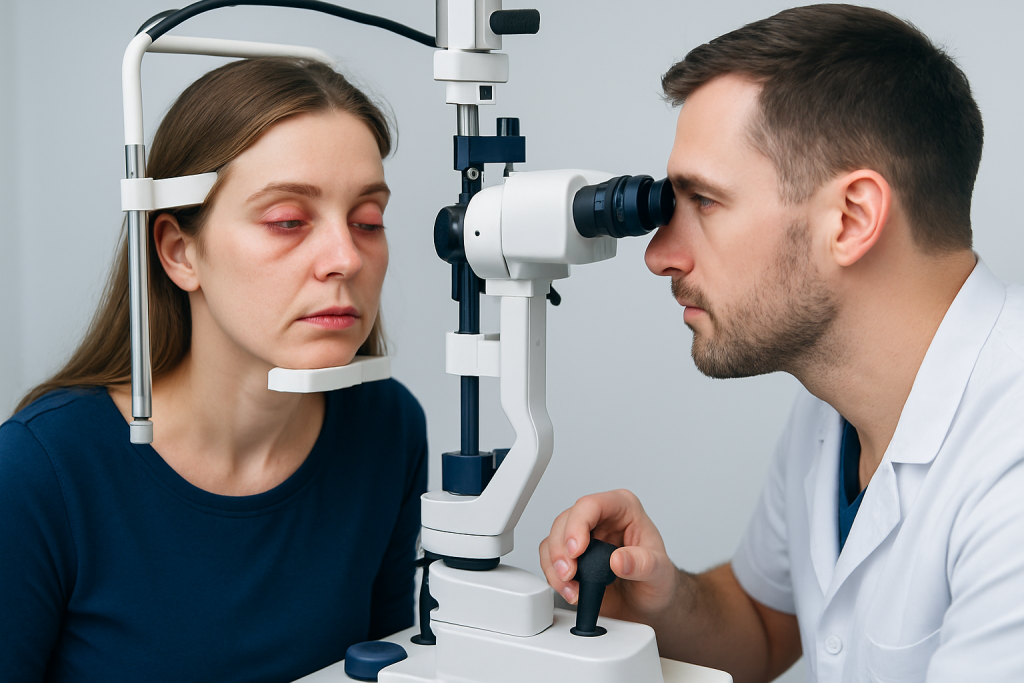
People may seek care because their eyelids look red, feel sore, itch, burn, swell or become flaky. Allergies often cause itching and watery eyes, while contact dermatitis may develop after exposure to makeup, nail products, eye drops, hair dye or facial creams. Blepharitis commonly causes crusting at the lash line, irritation and a gritty sensation.
Anyone with ongoing, recurring or troublesome eyelid redness may be a candidate for medical assessment. People who have a history of eczema, rosacea, allergies, dry eye, contact lens use or previous eye surgery may need a more tailored plan. A clinician will also consider medicines, recent cosmetic procedures and whether symptoms affect one eyelid or both.
For people considering cosmetic or functional eyelid surgery, active redness or inflammation should generally be evaluated and settled before surgery. Healthy skin, stable eye-surface symptoms and realistic expectations support safer planning. If drooping upper eyelid skin interferes with vision, an ophthalmic or plastic surgery assessment can clarify whether blepharoplasty may be appropriate.
Some redness occurs after a procedure and is part of expected healing. However, new redness before surgery should not be assumed to be cosmetic or harmless. A clinician can identify treatable eyelid disease and help protect eye comfort before any elective intervention.
Treatment Options and What Happens Step by Step
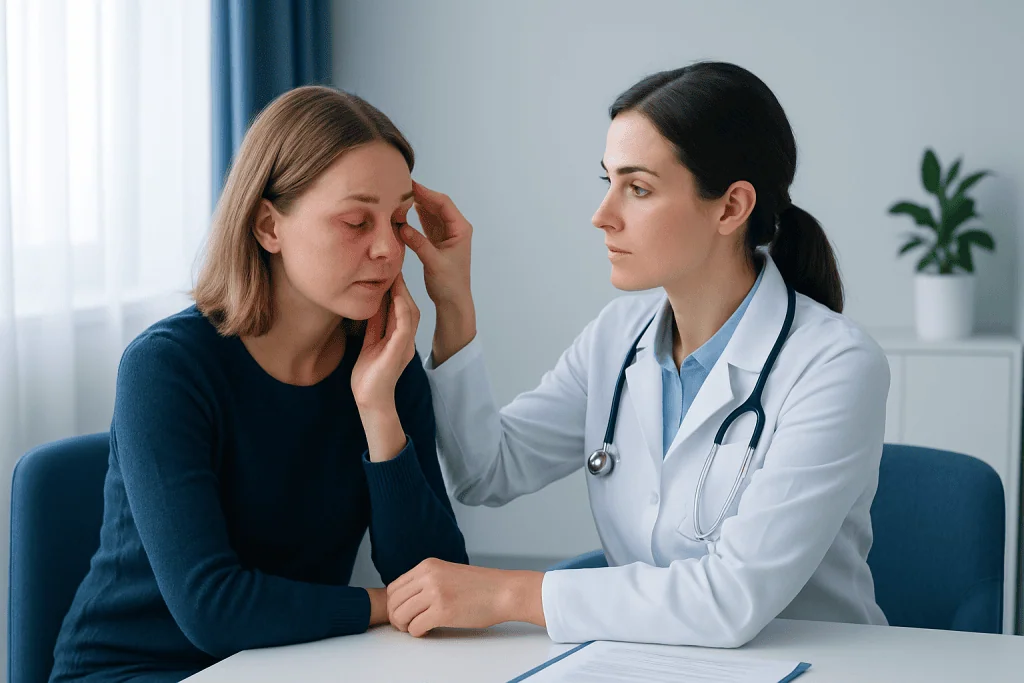
For mild irritation, treatment may begin with stopping suspected triggering products, avoiding eye makeup until symptoms settle, and using cool compresses for itching or warmth. In blepharitis or blocked oil glands, warm compresses followed by gentle lid cleaning may help loosen debris and improve oil flow. A clinician may recommend artificial tears, allergy treatment, prescription ointment, drops or other medication depending on the diagnosis.
If an infection is suspected, treatment should be guided by a qualified clinician. Antibiotics are not helpful for every red eyelid, and using leftover medication can delay correct diagnosis. A painful lump at the eyelid edge may be a stye, while a longer-lasting painless lump may need assessment for other causes.
When upper eyelid skin or fat contributes to a heavy, tired appearance or visual obstruction, blepharoplasty may be considered after a full eye and facial assessment. During the procedure, the surgeon marks the planned incision, uses local anaesthesia with or without sedation as appropriate, removes or reshapes selected skin and fat, and closes the incision with fine sutures. The aim is to preserve natural eyelid function while addressing the agreed concern.
Not all red eyelids need a procedure, and surgery does not treat allergy, eczema, dry eye or active infection. The most suitable approach depends on examination findings, overall health, eye-surface health and the person’s goals.
Does red light therapy help with saggy eyelids?
Red light therapy is sometimes marketed for skin rejuvenation, but evidence that it meaningfully lifts sagging eyelids or removes excess eyelid skin is limited. It should not be considered a substitute for a specialist assessment when eyelid skin is heavy, vision is affected, or there is true eyelid drooping.
Light-based devices used near the eyes require particular caution. The eyes should be protected, and products should not be used on inflamed, painful or unexplained red eyelids without medical advice. Home devices vary in quality and may not be suitable for all skin types, eye conditions or medications that increase light sensitivity.
For sagging caused by excess upper-lid skin, surgery may provide a more predictable structural correction than red light treatment. If the lid itself is drooping because of muscle weakness, a different eyelid procedure may be required. An ophthalmologist or appropriately trained surgeon can distinguish these concerns and discuss safe options.
Recovery Timeline, Results and Risks After Blepharoplasty
After blepharoplasty, swelling, bruising, tightness and redness around the incision are common early healing effects. Cold compresses as advised, head elevation while resting, prescribed eye care and avoiding strenuous activity during the initial recovery period can help limit swelling. Follow-up visits allow the surgical team to check wound healing and remove sutures when needed.
Most visible bruising and swelling improve over the first one to two weeks, although subtle swelling and redness can take longer to settle. Incision lines commonly look pink or red at first and gradually fade over weeks to months. Healing varies with skin type, the extent of surgery, smoking status, sun exposure and individual healing response.
Potential benefits include a less heavy upper eyelid appearance, improved comfort from excess skin, and improved visual field in selected functional cases. Risks can include temporary dryness, irritation, asymmetry, scarring, infection, bleeding, difficulty closing the eyes and, rarely, more serious eye complications. A detailed preoperative discussion helps people understand the balance of expected benefits and possible risks.
Acibadem International’s multidisciplinary specialists and JCI-accredited hospitals assess eyelid concerns and provide treatment planning for international patients, including ophthalmology and plastic surgery input where appropriate.
Why do older people get red eyelids?
Older adults may develop red eyelids for many of the same reasons as younger people, including allergy, irritation, eczema and infection. However, dry eye becomes more common with age, and changes in eyelid position, blinking, tear production and oil-gland function can make the eyelid margins more vulnerable to inflammation.
Blepharitis and meibomian gland dysfunction can cause persistent redness, crusting and fluctuating eye comfort. Rosacea, long-term use of topical products, contact with irritants and certain medicines may also contribute. In some people, loose eyelid skin or an eyelid that turns slightly inward or outward can worsen dryness and irritation.
Redness should not automatically be attributed to ageing. A new, one-sided, persistent or recurrent lesion, especially one that bleeds, loses eyelashes or does not heal, should be examined. This allows a clinician to rule out less common but important skin or eyelid conditions.
Will an inflamed eyelid go away on its own?
An inflamed eyelid may improve on its own when it is caused by a brief irritant exposure or a mild, self-limited viral illness. Removing the suspected trigger, avoiding rubbing, resting the eyes and using a cool or warm compress according to the likely cause may provide comfort. However, symptoms can persist if there is ongoing allergy, chronic blepharitis, eczema, dry eye or infection.
It is sensible to arrange medical advice if redness lasts more than a few days, repeatedly returns, becomes increasingly uncomfortable or is associated with discharge, a lump or eyelash crusting. A clinician can identify whether eyelid hygiene, allergy management, eye lubrication or prescription treatment is needed.
People should avoid squeezing eyelid lumps, sharing towels or eye makeup, and wearing contact lenses during active eye irritation unless their eye-care professional says it is safe. Makeup and contact lenses can be reintroduced only after the eyelid and eye surface are comfortable and any infection has resolved.
How long are eyelids red after blepharoplasty and when to seek medical care
Eyelids are often red and swollen for the first days after blepharoplasty. Noticeable bruising and redness generally improve during the first one to two weeks, while pinkness along the incision may remain visible for several weeks or months as the scar matures. The surgical team can provide an individual recovery plan because timelines differ between patients.
Medical advice should be sought promptly after surgery for worsening pain, rapidly increasing swelling, marked one-sided swelling, persistent bleeding, pus-like discharge, fever, new double vision, reduced vision or inability to close the eye. These symptoms do not necessarily mean a serious complication, but they need timely assessment.
Outside the surgical setting, urgent eye care is needed for vision loss, severe eye pain, pain with eye movement, fever with significant eyelid swelling, a severe headache with eye symptoms, or swelling that is rapidly spreading. Children, people with weakened immune systems and people with recent facial trauma should be assessed promptly when eyelid swelling or redness develops.
For non-urgent but persistent concerns, an ophthalmology review can help determine whether the problem is related to eyelid inflammation, skin disease, dry eye or another condition. Early, appropriate care can improve comfort and reduce unnecessary use of unsuitable eye products.
Frequently asked questions
What is the best treatment for red eyelids?
The best treatment depends on the cause. Irritation and allergy may improve by avoiding triggers and using clinician-recommended treatment, while blepharitis may benefit from regular warm compresses and eyelid hygiene. Infection, severe swelling or vision symptoms require professional assessment.
Can I use eye drops for red eyelids?
Lubricating drops may help if dryness contributes to eyelid and eye discomfort. Drops that temporarily reduce eye redness do not treat many eyelid causes and may not be suitable for repeated use. It is best to ask an eye-care professional which drops are appropriate.
Does red light therapy help with saggy eyelids?
Red light therapy has limited evidence for lifting saggy eyelids or removing excess skin. It cannot replace surgery where structural eyelid changes affect appearance or vision. Devices used near the eyes should only be used with appropriate eye protection and professional guidance.
Why do older people get red eyelids?
Age-related dry eye, reduced oil-gland function, blepharitis and eyelid-position changes can make redness more likely. Skin conditions, allergies and product irritation also remain common. New or persistent one-sided changes should be checked by a clinician.
Will an inflamed eyelid go away on its own?
A mild inflamed eyelid caused by temporary irritation may settle once the trigger is avoided. Persistent, recurrent or worsening symptoms may indicate blepharitis, allergy, eczema, dry eye or infection and may need treatment. Pain, vision changes or fever warrant prompt assessment.
How long are eyelids red after blepharoplasty?
Redness and swelling are common in the first days after surgery and usually improve substantially over one to two weeks. Pinkness at incision sites can take weeks or months to fade completely. The surgeon's follow-up plan is the best guide for an individual's recovery.
References
- American Academy of Ophthalmology
- American Society of Plastic Surgeons
- National Eye Institute
- Mayo Clinic
- NHS
This article is for general information only and is not a substitute for professional medical advice. Please consult a qualified doctor about your individual situation.
Explore treatments in Turkey — costs, top hospitals & a free quote
JCI-accredited · board-certified surgeons · reply within 24h
Add us as a Preferred Source to see more of our trusted health content across Google Search, AI Overviews and Discover.