Stricture in Esophagus Treatment: How It Works, Results and What to Expect

An esophageal stricture is a narrowing of the esophagus that can make swallowing difficult or uncomfortable. Endoscopic dilation is the most common treatment and can often improve swallowing without surgery.
Key Takeaways
- An esophageal stricture is a narrowing of the esophagus that can make swallowing difficult or uncomfortable.
- Endoscopic dilation is the most common treatment and can often improve swallowing without surgery.
- Biopsy, imaging, and endoscopy may be needed to identify the cause before or during treatment.
- Some strictures need repeated dilation sessions, especially when the underlying condition is ongoing or complex.
- Urgent medical assessment is important for food becoming stuck, inability to swallow liquids, chest pain, or signs of bleeding.
Stricture in esophagus treatment usually involves endoscopic dilation, a procedure that gently widens the narrowed part of the food pipe to help swallowing. Long-term care also focuses on treating the cause, such as acid reflux, inflammation, prior injury, or cancer, to lower the chance of the narrowing returning.
Overview: How Stricture in Esophagus Treatment Works
Stricture in esophagus treatment is designed to restore a safer, more comfortable passage for food and liquids. An esophageal stricture is a narrowed segment of the esophagus, the tube that carries food from the mouth to the stomach. The narrowing may cause food to feel as though it sticks in the chest or throat, especially with solid foods.
For many people, treatment begins with an upper endoscopy and dilation. During this procedure, a gastroenterologist passes a flexible camera through the mouth and uses carefully selected instruments to stretch or widen the narrowed area. The aim is not only to improve symptoms, but also to determine why the stricture developed and address that cause.
Care plans differ because strictures can result from acid reflux, swallowing-related inflammation, medication injury, prior radiation, surgery, caustic substances, or a growth in the esophagus. A new or worsening swallowing problem should always be assessed rather than treated as reflux alone.
Why Esophageal Strictures Develop
Long-standing gastroesophageal reflux disease is a common cause of benign, or non-cancerous, strictures. Repeated exposure to stomach acid can inflame and injure the lower esophagus. As healing occurs, scar tissue may form and gradually narrow the passage. In these cases, acid-reducing treatment is an important part of preventing recurrence after dilation.
Another cause is eosinophilic esophagitis, an immune-mediated condition that can make the esophagus inflamed, stiff, and narrow. Some people develop strictures after radiation therapy, surgery, severe vomiting, certain infections, or accidental ingestion of a corrosive substance. Large pills that lodge in the esophagus can also cause local injury in some circumstances.
Less commonly, a stricture may be caused by cancer or pressure from a nearby structure. This is why clinicians may take tissue samples during endoscopy, particularly if the narrowing is new, irregular, severe, or accompanied by weight loss. Related digestive conditions, including gastroesophageal reflux disease, may require ongoing management alongside the procedure.
Who May Be a Candidate for Dilation

People may be considered for esophageal dilation when a stricture causes troublesome swallowing difficulty, food sticking, repeated food impaction, or reduced ability to maintain hydration and nutrition. The decision depends on symptoms, the location and length of the narrowing, suspected cause, and the person’s overall health.
Before treatment, the clinical team reviews medications, allergies, heart and lung conditions, bleeding risks, and previous endoscopy results. Blood-thinning medication may need special planning; patients should not stop prescribed medicines without guidance from the clinician managing their care. Fasting instructions are provided because sedation is commonly used.
Not every narrowing should be dilated immediately. If cancer is suspected, biopsies and additional imaging may be needed. In eosinophilic esophagitis, anti-inflammatory treatment and dietary management can be important alongside dilation. Very complex, long, severely scarred, or repeatedly recurring strictures may need care from a specialist team.
Step by Step: The Esophageal Dilation Procedure
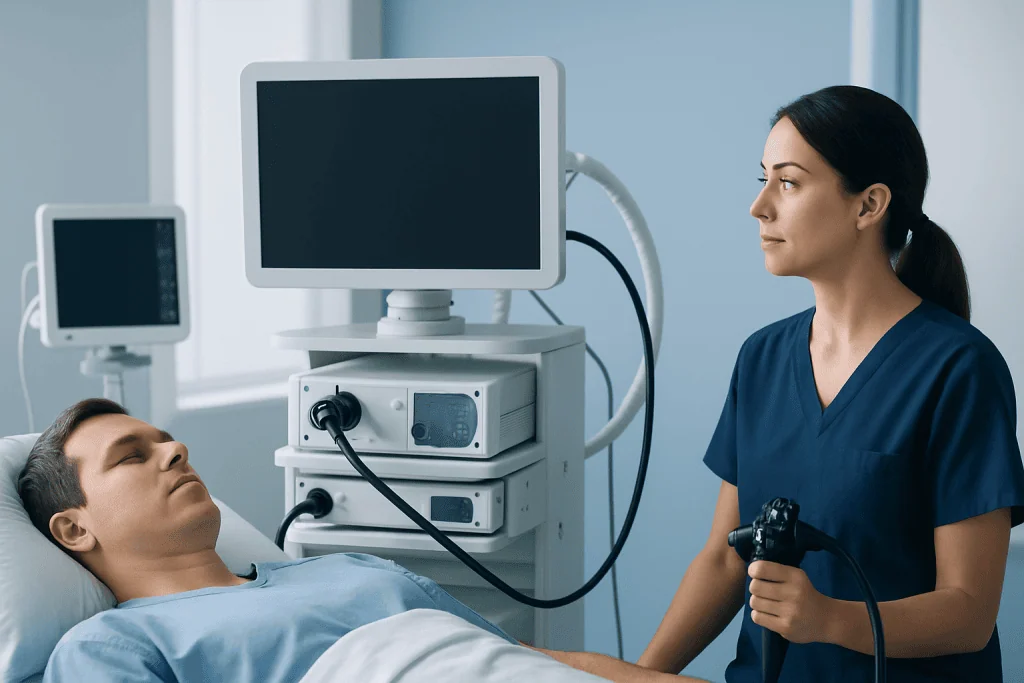
Esophageal dilation is usually performed during upper endoscopy. The patient receives sedation or anesthesia appropriate to the procedure and health needs. A thin, flexible endoscope with a camera is passed through the mouth into the esophagus, allowing the doctor to inspect the narrowed area and surrounding tissue.
The doctor may take biopsies to check for inflammation, infection, Barrett’s-related changes, or cancer. Dilation can then be performed with a balloon that is gradually inflated across the narrowing or with tapered dilators passed through the stricture. In some cases, X-ray guidance is used to assist with safe placement, especially for complex strictures.
The widening is performed carefully and may be done in stages rather than all at once. This approach helps reduce the risk of injury to the esophagus. If the passage is extremely narrow, the patient may need more than one session over weeks or months. For selected recurrent benign strictures, additional techniques such as local steroid injection, incision therapy, or temporary stenting may be considered by the treating specialist.
Patients can learn more about the approach through upper endoscopy and therapeutic endoscopy, which may be used for both diagnosis and treatment of swallowing disorders.
Benefits, Results and Recovery Timeline
The main expected benefit is easier swallowing. Some people notice improvement soon after the procedure, while others improve gradually as short-term irritation settles. Results depend on the type and severity of the stricture and whether the underlying cause can be effectively controlled.
After dilation, mild throat discomfort, bloating, or chest pressure can occur for a short time. Most patients return home the same day once the effects of sedation have worn off, provided there are no concerns. A responsible adult may be needed to accompany the patient home, and driving or making important decisions is usually avoided until the next day after sedation.
The care team gives individualized instructions about restarting liquids and foods. A soft diet may be recommended briefly, followed by gradual return to normal foods as tolerated. Acid-suppressing medicine, anti-inflammatory therapy, or other treatment may be prescribed depending on the cause. Follow-up is important because some benign strictures return and may require repeat dilation.
For people whose symptoms are linked to reflux, treatment may also include lifestyle measures and medical therapy. In selected cases, clinicians may discuss anti-reflux surgery when reflux remains difficult to control or causes repeated complications.
Risks and Safety Considerations
Esophageal dilation is a commonly performed procedure, but it has risks. The most important uncommon complication is a perforation, meaning a tear in the esophageal wall. Bleeding, aspiration of stomach contents into the lungs, infection, reactions to sedation, and temporary pain or discomfort can also occur.
The risk may be higher with very tight, long, angulated, radiation-related, or caustic strictures. A clinician balances this risk against the impact of untreated swallowing difficulty, which can include poor nutrition, dehydration, food impaction, and reduced quality of life. The technique and degree of dilation are selected to suit the individual situation.
After the procedure, patients should promptly report severe or worsening chest, neck, or abdominal pain; fever; shortness of breath; vomiting blood; black stools; or difficulty swallowing that is worse than before. These symptoms do not always mean a complication is present, but they require timely medical assessment.
Supporting Long-Term Esophageal Health
Preventing recurrence involves treating the reason for the stricture, not only widening the narrowed segment. People with reflux-related strictures may benefit from taking prescribed acid-reducing medication consistently, avoiding meals close to bedtime, maintaining a weight that supports overall health, and identifying foods that clearly worsen reflux symptoms.
Those with eosinophilic esophagitis may need coordinated care involving gastroenterology, allergy-focused assessment when appropriate, dietary changes, and prescribed anti-inflammatory treatment. Individuals should take pills with plenty of water and remain upright afterward when advised, particularly if they have had pill-related esophageal irritation before.
Eating slowly, chewing thoroughly, taking small bites, and choosing softer foods during recovery can reduce the chance of food sticking. However, dietary adjustments should not replace medical evaluation when swallowing changes persist. A registered dietitian can help protect nutritional intake if eating has become difficult.
Acibadem International’s multidisciplinary specialists and JCI-accredited hospitals evaluate and treat esophageal conditions for international patients, coordinating endoscopy, pathology, nutrition, and surgical care when needed.
When to Seek Medical Care
Medical review is appropriate for persistent difficulty swallowing, pain with swallowing, frequent regurgitation, recurrent heartburn with food sticking, or an unexplained change from eating solids normally to needing softer foods. Early assessment can identify a treatable narrowing and clarify its cause.
Urgent care is needed if food becomes lodged and does not pass, if a person cannot swallow saliva or liquids, or if swallowing difficulty is associated with breathing problems. Emergency evaluation is also important for severe chest pain, vomiting blood, black stools, fainting, fever after a procedure, or sudden worsening symptoms.
Unintentional weight loss, persistent vomiting, anemia, or new swallowing symptoms later in adulthood should be discussed promptly with a qualified doctor. These signs can have several causes, but they may warrant expedited endoscopy and further investigation.
Frequently asked questions
Can an esophageal stricture be cured?
Many benign esophageal strictures can be effectively managed with dilation and treatment of the underlying cause. Some resolve after one or a few procedures, while others can recur and need ongoing follow-up. The outlook depends on the cause, the length and severity of narrowing, and response to medical treatment.
How long does esophageal dilation take?
The dilation portion is often brief, but the total visit includes preparation, sedation, recovery, and monitoring. The exact duration varies according to the type of stricture, whether biopsies are needed, and whether additional techniques are used. Most uncomplicated procedures are performed on an outpatient basis.
Is esophageal dilation painful?
Sedation or anesthesia is commonly used, so patients generally do not feel pain during the procedure. Mild throat soreness, chest pressure, or discomfort with swallowing may occur afterward and often improves within a short period. Severe or increasing pain after dilation should be assessed urgently.
How many dilation sessions are needed for an esophageal stricture?
Some people need only one session, while others need several gradual dilations. Repeat treatment is more likely with complex strictures, extensive scar tissue, ongoing acid reflux, radiation-related injury, or eosinophilic esophagitis. The treating gastroenterologist plans follow-up based on symptoms and endoscopic findings.
What can someone eat after esophageal dilation?
The care team may recommend starting with liquids and soft foods, then returning to regular foods as swallowing feels comfortable. Instructions vary depending on the procedure and the cause of the stricture. Eating slowly, taking small bites, and chewing well can be helpful during recovery.
Can acid reflux cause an esophageal stricture?
Yes. Repeated acid exposure can inflame the lower esophagus and lead to scar formation, which may narrow the tube over time. Dilation can improve the narrowing, but controlling reflux with a clinician-guided treatment plan is important to reduce the likelihood of recurrence.
References
- American College of Gastroenterology
- American Society for Gastrointestinal Endoscopy
- National Institute of Diabetes and Digestive and Kidney Diseases
- Mayo Clinic
- Merck Manual Professional Edition
This article is for general information only and is not a substitute for professional medical advice. Please consult a qualified doctor about your individual situation.
Persistent digestive symptoms? Get evaluated in Turkey
JCI-accredited · board-certified surgeons · reply within 24h
Add us as a Preferred Source to see more of our trusted health content across Google Search, AI Overviews and Discover.

More from the Health Library



Related Specialists

Prof. Dr. Namik Demir
Gynecology & Obstetrics
Özge Bölükbaşı
Physical Medicine & Rehabilitation
Assoc. Prof. Dr. Ata Can
Orthopedic Surgery & Traumatology
Assoc. Prof. Dr. Ferda Çağavi
Neurosurgery