

Alcohol After Dental Implant Surgery: How Long Should You Wait?

Alcohol after dental implant surgery is best avoided for at least 48–72 hours, and longer if you had a graft, swelling or medicines. Follow your surgeon’s…
After dental implant surgery, you should generally avoid alcohol for at least 48–72 hours; many surgeons recommend waiting about one week, especially while you have swelling, bleeding, antibiotics or prescription pain medicine. If you have had a bone graft, sinus lift or more extensive surgery, your own surgeon may advise a longer alcohol-free period to support uncomplicated healing.
At a glance
- Usual minimum wait: At least 48–72 hours, unless your surgeon advises longer
- With a bone graft: Often around 1–2 weeks; confirm with your surgeon
- While taking medicines: Do not drink with prescription pain medicines; check antibiotics individually
- Travel consideration: Avoid alcohol during early recovery and before a planned review
- Call your clinic urgently: For worsening pain, fever, pus, uncontrolled bleeding or increasing swelling
When can I safely drink alcohol after dental implant surgery?
You should usually avoid alcohol for at least 48–72 hours after dental implant surgery. A more cautious approach is to wait around one week, particularly if you still have bleeding, swelling, significant soreness, stitches, a temporary restoration, or difficulty eating and drinking normally. Your implant surgeon’s instructions should always take priority because the right timeline depends on the procedure you had and your medical history.
Alcohol can irritate the surgical area indirectly by contributing to dehydration, disrupting sleep and making it harder to follow an aftercare routine. It may also increase bleeding in the early phase for some people and can interact dangerously with certain medicines. Avoid alcohol completely if you are taking opioid-type pain medicines, sedatives, sleeping tablets or any medication whose label or prescriber says not to combine it with alcohol.
If your recovery is uncomplicated and you have been cleared by your dental team, returning to alcohol should be gradual. Choose water alongside meals, avoid smoking, and do not use alcohol as a way to manage discomfort or anxiety. If you travelled to Turkey for treatment, ask your clinic for written aftercare guidance before you fly or leave Istanbul so you know exactly whom to contact if symptoms change after returning home.
Alcohol after implant surgery: a practical recovery timeline
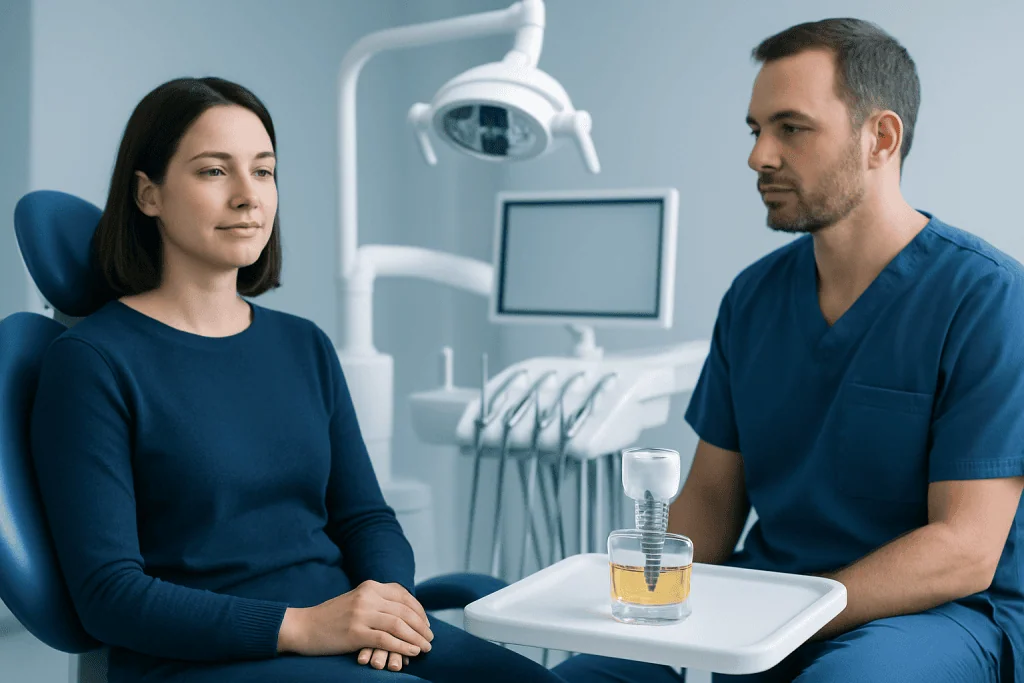
Healing varies, but this timeline can help you plan. It is a general guide rather than a substitute for personalised surgical advice. Procedures involving multiple implants, tooth extraction, bone grafting or a sinus lift commonly require a more conservative recovery plan.
- Day 0–2: Do not drink alcohol. Focus on rest, hydration, soft foods and prescribed medicines.
- Day 3–7: Continue to avoid alcohol if you have swelling, bruising, bleeding, pain requiring medicine, antibiotics with an alcohol warning, or any concern about healing.
- Week 2: Some people with straightforward implant placement may be cleared for limited alcohol if they feel well and are no longer taking interacting medicine. Check with your surgeon first.
- After bone grafting or sinus surgery: Your surgeon may recommend avoiding alcohol for 1–2 weeks or longer, depending on the graft and your progress.
- Until your review: If you are uncertain, wait until your planned post-operative check or message your dental team for confirmation.
Do not assume that feeling better means internal healing is complete. Implant integration and bone healing continue for months, even when the gum looks settled. The early alcohol restriction is mainly about protecting the surgical site and avoiding medication- and bleeding-related issues during the first days and weeks.
Can I drink alcohol 2 weeks after a bone graft?

At two weeks after a bone graft, some patients may be able to drink a small amount of alcohol if the surgical site is healing normally, there is no active bleeding or infection, and they are no longer taking medicines that interact with alcohol. However, this is not a universal clearance point. Bone grafts differ in size and location, and your surgeon may set a longer restriction after a graft, sinus lift, multiple extractions or implant placement.
Before drinking, consider whether you still have swelling, tenderness, a bad taste, discharge, loose stitches, persistent numbness or difficulty maintaining good oral hygiene. Any of these reasons is a good reason to pause and contact your clinic. Alcohol is also best avoided if you are using chlorhexidine mouthwash in a way that causes irritation, as some formulations contain alcohol; your clinician can advise on the product you have been given.
If you received dental care through Acibadem International, the international patient services team can help you reconnect with your treating dental team, including after you return home. A brief message describing the date and type of graft, current symptoms and medicines is usually more useful than relying on a generic timeline.
How long after dental surgery can I drink alcohol?
For minor dental surgery, many clinicians advise avoiding alcohol for at least 24–48 hours. After dental implant surgery, extraction with grafting, periodontal surgery or a sinus lift, 48–72 hours is generally the minimum, with a week or more often being the safer choice. The more extensive the surgery, the more important it is to follow the specific restriction provided by your surgeon.
Alcohol should be postponed if it could interfere with medication. Combining alcohol with opioid pain relievers, benzodiazepines, sedating anti-nausea medicines or sleep medicines can cause dangerous drowsiness and breathing problems. Some antibiotics also have important alcohol warnings, so read the label and ask your pharmacist, dentist or surgeon rather than making assumptions.
Alcohol can also make it easier to forget aftercare measures such as gentle rinsing when advised, taking medicines on schedule, eating appropriately and avoiding strenuous exercise. During the first few days, prioritise water, non-alcoholic drinks at a comfortable temperature and nutritionally balanced soft foods. Do not drink through a straw unless your clinician says it is appropriate, especially if you also had an extraction.
Is pain 5 days after dental implant surgery normal?
Mild to moderate soreness five days after dental implant surgery can be normal, particularly if you had an extraction, bone graft or several implants placed. Many people notice that swelling peaks around day two or three and then gradually improves; tenderness when chewing, brushing near the area or opening your mouth may take longer to settle. Pain should generally be stable or gradually improving, rather than becoming significantly worse.
Contact your dental surgeon promptly if pain is increasing after initially improving, is severe or not controlled by the medication plan you were given, or comes with fever, worsening facial swelling, pus, a persistent bad taste or smell, heavy bleeding, difficulty swallowing, breathing difficulty, or a rash after medicine. These symptoms need professional assessment and should not be managed with alcohol or by increasing medication on your own.
Use pain relief exactly as directed, keep the area clean according to your post-operative instructions, and choose soft foods that do not put pressure on the implant site. If you are abroad or have already travelled home from Turkey, keep your discharge summary and radiographs accessible and contact your treating clinic or local dentist promptly if you develop concerning symptoms.
Planning recovery while travelling from Turkey
International patients benefit from treating the first days after implant surgery as recovery time rather than sightseeing time. Build in rest, easy access to soft food, drinking water, your prescribed medicines and reliable transport to follow-up appointments. Avoid alcohol in hotel minibars, airport lounges and social meals until the restriction period set by your surgeon has passed.
Before departure, confirm your review schedule, flight timing and contact route for questions. Ask whether your procedure involved a bone graft or sinus lift, whether there are restrictions on flying or physical activity, and when alcohol can safely be reintroduced in your individual case. Acibadem International can support patients with practical coordination, interpreters and communication with the multidisciplinary care team where needed.
Once home, do not delay seeking local urgent care for red-flag symptoms because you are waiting to speak with the original clinic. Your treating dental team can provide records and guidance, but urgent problems such as breathing difficulty, rapidly spreading swelling or uncontrolled bleeding need immediate local assessment.
Step by step
- Confirm what procedure you had. Ask whether your treatment included only implant placement or also extraction, bone grafting, a sinus lift or multiple surgical sites. These details can change the recommended alcohol-free period.
- Avoid alcohol for the first 48–72 hours. Use this as a minimum precaution after implant surgery unless your surgeon has instructed a longer interval. Focus on hydration, rest and the food plan given to you.
- Check every medicine before drinking. Do not drink alcohol with opioid pain medicine, sedatives or any medicine carrying an alcohol warning. If you are taking antibiotics, ask your dentist, surgeon or pharmacist whether alcohol is safe with that specific medicine.
- Assess your recovery before reintroducing alcohol. Wait if you still have bleeding, increasing swelling, significant pain, nausea, discharge or difficulty eating. A healing gum surface does not necessarily mean the deeper surgical area has fully recovered.
- Be more cautious after grafting. If you had a bone graft or sinus procedure, ask your surgeon directly about the timeline. A wait of one to two weeks or longer may be appropriate depending on the surgery and healing progress.
- Reintroduce only after clearance. Once cleared, keep any alcohol intake modest and drink water as well. Stop and seek advice if you notice renewed bleeding, increased throbbing, stomach upset or any unexpected symptom.
- Keep follow-up contact details available. Save your clinic’s out-of-hours contact route before travelling home. International patient teams can often help direct your question to the treating surgeon, but urgent symptoms require local emergency care.
Your checklist
- Written post-operative instructions from your implant surgeon
- A current list of all prescribed and over-the-counter medicines
- Confirmation of whether a bone graft or sinus lift was performed
- Enough water and suitable soft foods for the first days
- Your scheduled follow-up date and clinic contact details
- A plan to avoid alcohol for at least 48–72 hours, or longer if instructed
- No alcohol while taking opioid pain relief, sedatives or medicines with alcohol warnings
- A plan for local urgent dental or medical care after returning home, if needed
Key takeaways
- Avoid alcohol for at least 48–72 hours after dental implant surgery; around one week is often the more cautious choice.
- After a bone graft or sinus lift, ask your surgeon about a longer alcohol-free period, commonly one to two weeks or more.
- Never combine alcohol with opioid pain medicines, sedatives or any medication carrying an alcohol warning.
- Pain at day five can be normal if it is mild to moderate and improving, but worsening pain or infection signs need review.
- Your own surgeon’s instructions override generic timelines, especially when you are recovering after treatment abroad.
Frequently asked questions
Can I have one glass of wine 3 days after dental implant surgery?
Three days may meet the minimum waiting period for some uncomplicated cases, but it is only appropriate if your surgeon has not advised a longer wait. Do not drink if you still have bleeding, notable swelling, increasing pain or medicines that interact with alcohol. If you are unsure, wait until your clinic confirms it is safe.
Why is alcohol discouraged after a dental implant?
Alcohol may contribute to dehydration, interfere with sleep and make it harder to follow your medication and aftercare plan. In the early recovery period, it may also aggravate bleeding or irritation for some patients. The biggest immediate concern can be unsafe interactions with prescription pain relief or sedating medicines.
Can I drink alcohol 2 weeks after a bone graft?
Possibly, but only if your surgeon has cleared you and healing is uncomplicated. Two weeks is not the same for every graft, particularly if your treatment included a sinus lift, extraction or multiple implants. Avoid alcohol and contact your clinic if you have ongoing swelling, discharge, bleeding or worsening pain.
How long after dental surgery can I drink alcohol?
After minor dental surgery, the advice is often at least 24–48 hours. After implant surgery, 48–72 hours is commonly the minimum, while one week or longer may be recommended for more extensive surgery. Always follow the instructions for your specific procedure and medicines.
Is pain 5 days after dental implant surgery normal?
Some soreness at day five can be normal, especially after a graft, extraction or multiple implants, provided it is gradually improving. Contact your surgeon if pain is increasing, severe, accompanied by fever, pus, a bad taste, worsening swelling or uncontrolled bleeding. Seek urgent help for trouble breathing or swallowing.
Does alcohol cause dental implant failure?
A single drink after the allowed recovery period is not automatically expected to cause implant failure. However, drinking too early can complicate early healing and may interfere with medication or aftercare. Regular heavy alcohol use can also affect general health and oral health, so discuss this openly with your implant team.
Can I drink beer after dental implant surgery if I am not taking painkillers?
Not taking pain medicine removes one potential interaction, but it does not necessarily mean alcohol is appropriate immediately after surgery. You should still wait for the minimum period and longer if you had a graft, ongoing symptoms or specific restrictions from your surgeon. Carbonated drinks may also be uncomfortable during early recovery for some people.
Add us as a Preferred Source to see more of our trusted health content across Google Search, AI Overviews and Discover.
More Patient Guides

Flying After Surgery: How Soon Is Safe, Procedure by Procedure
Flying after surgery is often delayed from days to weeks depending on your procedure and clot risk; follow your surgeon’s advice before…
8 min read
What to Eat After Dental Implant Surgery: Day-by-Day Diet Guide
What to eat after dental implant surgery: follow a soft, cool-to-lukewarm diet, hydrate well and avoid chewing near the site while healing…
8 min read
Hair Transplant Results Timeline: 1 Month, 3 Months, 1 Year and Beyond
Hair transplant results usually begin growing at 3–4 months, look fuller by 6–9 months and mature around 12–18 months after treatment in…
8 min read