Lu177 Treatment: How It Works, Results and What to Expect

Lu177 treatment is most commonly used for PSMA-positive metastatic castration-resistant prostate cancer. A PSMA PET scan and blood tests help determine whether a person may be suitable for treatment.
Key Takeaways
- Lu177 treatment is most commonly used for PSMA-positive metastatic castration-resistant prostate cancer.
- A PSMA PET scan and blood tests help determine whether a person may be suitable for treatment.
- Treatment is usually given as several outpatient intravenous infusions spaced weeks apart.
- Response is assessed with symptoms, PSA trends, scans and blood tests rather than one result alone.
- Possible side effects include fatigue, dry mouth, nausea and lowered blood counts, so regular monitoring is important.
Lu177 treatment, also called lutetium-177 radioligand therapy, is a targeted form of radiation treatment used mainly for certain advanced prostate cancers. It combines a cancer-targeting molecule with a radioactive isotope, allowing radiation to be delivered primarily to cells that carry a chosen target such as prostate-specific membrane antigen (PSMA).
Overview: What Is Lu177 Treatment?
Lu177 treatment is a type of targeted radionuclide therapy. It uses lutetium-177, a radioactive isotope, attached to a molecule designed to find a particular feature on cancer cells. Once the medicine reaches these cells, lutetium-177 releases short-range beta radiation that can damage cancer-cell DNA and slow or shrink tumor growth while limiting exposure to nearby healthy tissue.
For prostate cancer, the best-known form is lutetium-177 vipivotide tetraxetan, often called Lu-177 PSMA therapy or Pluvicto. The targeting molecule binds to prostate-specific membrane antigen (PSMA), a protein commonly present at high levels on prostate cancer cells. It is generally considered for people with metastatic castration-resistant prostate cancer whose disease has progressed despite standard hormone-based treatment and other appropriate therapies.
Lu177 treatment is not the same as external beam radiotherapy, where radiation is directed at the body from a machine. It is a systemic treatment, meaning it travels through the bloodstream and can reach cancer deposits in different areas. The treatment plan is individualized by oncology, nuclear medicine, radiology and other relevant specialists.
How Lu177 Treatment Works in Prostate Cancer
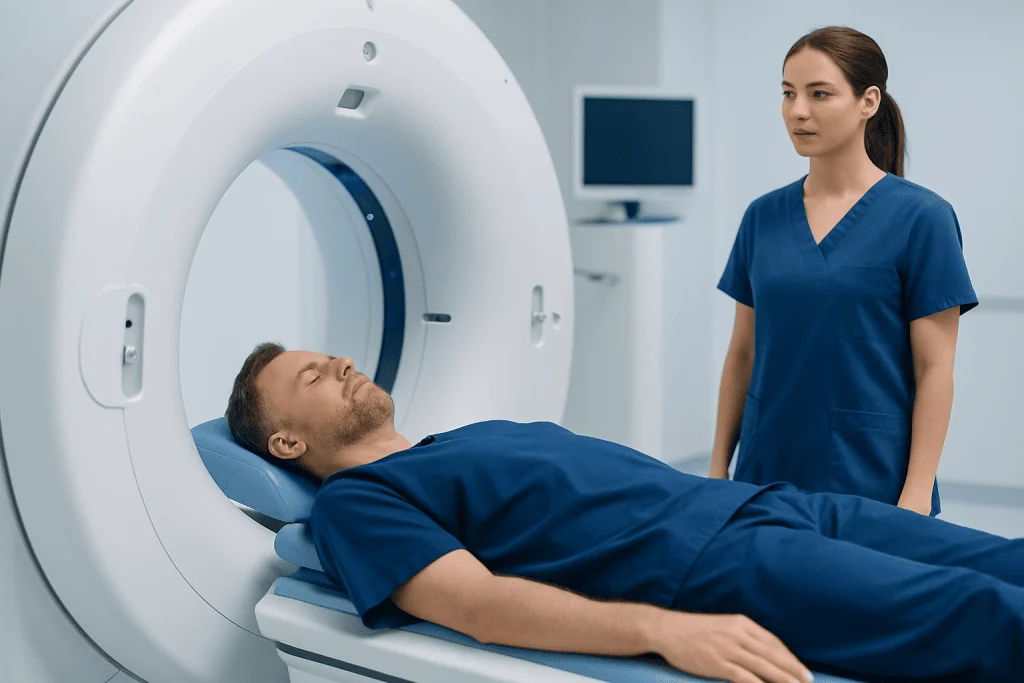
Before treatment, clinicians usually perform a PSMA PET scan. This imaging test shows whether cancer sites have enough PSMA expression to take up the radioligand. A strong match between the scan findings and the planned therapy is important, because the treatment needs to reach tumor cells effectively.
After intravenous administration, the PSMA-targeting compound circulates and attaches to PSMA-positive cancer cells. Lutetium-177 then emits radiation over time. Its radiation travels only a limited distance, which helps concentrate the treatment effect close to the targeted cells. However, some normal tissues, particularly salivary glands, kidneys and bone marrow, may also receive radiation exposure.
This approach is a form of precision nuclear medicine, but it does not eliminate the need for comprehensive cancer care. Depending on the person’s history and current health, the wider plan may include androgen-deprivation therapy, medicines that affect androgen signaling, chemotherapy, supportive care, localized radiation for symptoms, or participation in lu 177 clinical trials.
Who May Be a Candidate for Lu177 Treatment?

Lu177 treatment for prostate cancer is usually considered for adults with metastatic castration-resistant prostate cancer. This means the cancer has spread beyond the prostate and continues to grow despite treatment to lower testosterone. In many treatment pathways, people have also received or are not suitable for certain androgen-receptor pathway medicines and chemotherapy, although the exact sequence depends on local approvals, prior treatment and clinical judgment.
Candidacy is based on more than the cancer diagnosis. The care team reviews PSMA PET imaging, previous therapies, symptoms, kidney and liver function, blood counts, bone marrow reserve, overall fitness and personal treatment goals. People with very low blood counts, significant kidney impairment, poor PSMA uptake, or extensive disease that is not PSMA-positive may need another approach.
Evaluation also considers whether another treatment may provide greater benefit at that point in care. A specialist may discuss chemotherapy, targeted medicines, immunotherapy for selected molecular profiles, external radiation for painful bone metastases, or clinical trial options. The aim is to select treatment based on the biology and behavior of the individual cancer, not on a single test alone.
What Happens During the Procedure and Recovery?
Lu177 treatment is given at a licensed nuclear medicine center. Before each cycle, the team commonly checks blood tests, reviews current medicines, asks about symptoms and confirms that treatment remains appropriate. The infusion itself is delivered through a vein and is generally short, although the total visit may take several hours because of preparation, observation and radiation-safety procedures.
Many people receive multiple cycles separated by several weeks. The exact number and timing depend on the specific medicine, response, tolerance, local regulations and the treating team’s protocol. Imaging and laboratory results are reviewed during treatment to help decide whether additional cycles are advisable.
Most patients return home the same day. Lutetium-177 leaves the body mainly through urine, so patients receive practical instructions about hydration, handwashing, toilet use, laundering and temporary distance from others, especially children and pregnant people. These precautions are usually time-limited and should be followed exactly as provided by the nuclear medicine department.
During recovery, tiredness may occur for several days. Some people experience dry mouth, altered taste, nausea or reduced appetite. Follow-up blood tests are important because changes in blood counts can develop after treatment. Promptly reporting new symptoms allows the team to provide supportive care and adjust the plan if needed.
Benefits, Risks and Monitoring of Lu177 Treatment
Lu177 treatment can reduce tumor burden and improve disease control for some appropriately selected people with advanced prostate cancer. In clinical studies of PSMA-positive metastatic castration-resistant prostate cancer, it has delayed disease progression and helped some patients live longer compared with standard care alone. Individual results vary substantially, and treatment is not a cure for metastatic prostate cancer.
Common side effects can include fatigue, dry mouth, nausea, constipation, changes in taste and temporary loss of appetite. Blood counts may fall, causing anemia, increased infection risk from low white blood cells, or easier bruising and bleeding from low platelets. Less commonly, kidney function may worsen, and significant bone marrow suppression can occur.
Monitoring usually includes PSA testing, complete blood counts, kidney and liver tests, symptom review and periodic imaging. PSA can fluctuate, particularly early in treatment, so it is interpreted alongside scans and clinical wellbeing. The team may delay, reduce or stop treatment when side effects are significant or when the cancer is no longer benefiting.
For people seeking coordinated assessment and treatment planning, Acibadem International’s multidisciplinary specialists and JCI-accredited hospitals provide cancer care for international patients, including evaluation for appropriate nuclear medicine therapies.
What Is the Life Expectancy of Someone Treated With Lutetium 177?
Life expectancy after lutetium-177 therapy cannot be predicted accurately for one person. It depends on cancer extent, tumor biology, PSMA PET findings, prior treatments, blood counts, organ function, symptoms, response to therapy and access to further treatment options. Lu177 therapy is used in advanced disease, where prognosis is naturally variable.
Clinical trials have shown that Lu-177 PSMA therapy can extend survival for selected patients with metastatic castration-resistant prostate cancer compared with standard care alone. However, trial averages do not tell an individual patient how long they will live. Some people have a meaningful response for many months or longer, while others have limited benefit.
The treating oncologist is best placed to discuss outlook using the person’s scan findings, laboratory results and overall condition. It can also be helpful to ask about goals of care, expected benefits, uncertainty, symptom control and what treatments could be considered next.
How Do You Know if Pluvicto Is Working?
Pluvicto may be working when there is improvement in cancer-related symptoms, stable or falling PSA levels, reduced or stable disease on imaging, or a combination of these findings. For example, some people notice less bone pain, need fewer pain medicines, have more energy, or find daily activities easier. These changes should be discussed with the care team rather than judged in isolation.
PSA is useful but is not a perfect measure of response. A PSA rise early in the course does not always prove that treatment has failed, and a falling PSA does not replace imaging or clinical assessment. Doctors usually look at PSA patterns over time, blood tests, symptoms and scheduled CT, MRI, bone scan or PSMA PET imaging.
The team also monitors whether side effects are manageable. Benefit means balancing cancer control with quality of life and safety. If scans show progression, symptoms worsen, or blood counts do not recover adequately, the team may recommend changing treatment or considering another suitable option.
What Is the Success Rate of Lutetium 177?
There is no single success rate for lutetium-177 because studies use different definitions of success, such as PSA reduction, imaging response, delayed progression, symptom improvement or survival. Results also differ according to the cancer type, PSMA expression, previous therapies and the patient’s general health. For this reason, a percentage quoted without context can be misleading.
In appropriately selected patients with PSMA-positive metastatic castration-resistant prostate cancer, clinical trials have shown that many people experience a PSA decline or evidence of disease control, while others do not respond. Lu177 treatment has also improved progression-related outcomes and survival compared with standard care in certain trial populations.
A person’s own likely benefit should be discussed after PSMA PET imaging and review by a prostate cancer team. The most useful questions are whether the cancer has a suitable target, what response is realistically hoped for, how response will be measured, and what alternatives are available if the treatment does not work.
What Is the Most Successful Prostate Cancer Treatment?
There is no one most successful prostate cancer treatment for everyone. The best approach depends on whether cancer is localized, locally advanced, recurrent or metastatic; how quickly it is growing; the person’s age and health; and their preferences. Many localized prostate cancers can be cured with surgery or radiation, while some low-risk cancers can be safely monitored with active surveillance.
For advanced prostate cancer, treatment commonly starts with androgen-deprivation therapy and may include androgen-receptor pathway medicines, chemotherapy, targeted therapy for certain inherited or tumor mutations, immunotherapy for selected cancers, and radiation for specific symptoms or sites. Lu177 treatment is a targeted option for a defined group of people with PSMA-positive metastatic castration-resistant disease.
Multidisciplinary review helps ensure treatment is matched to the stage and biology of the cancer. A urologist, medical oncologist, radiation oncologist, nuclear medicine physician, radiologist and supportive-care team may all contribute to a plan that aims to control cancer while protecting quality of life.
When to Seek Medical Care
People receiving Lu177 treatment should contact their oncology or nuclear medicine team promptly for fever, chills, new shortness of breath, unusual bleeding or bruising, severe weakness, persistent vomiting, inability to drink fluids, a marked reduction in urine, or rapidly worsening pain. These symptoms may need urgent assessment, particularly when blood counts are low.
Medical advice is also important if dry mouth, nausea, constipation, fatigue or appetite changes interfere with eating, drinking or daily life. Supportive treatments can often help. Patients should not wait for the next scheduled appointment if they are worried about a new symptom.
Anyone with urinary difficulties, persistent bone pain, unexplained weight loss, blood in the urine or semen, or new neurologic symptoms should seek medical evaluation. These symptoms have many possible causes, but early assessment helps clinicians determine the appropriate next step.
Frequently asked questions
Is Lu177 treatment chemotherapy?
No. Lu177 treatment is targeted radionuclide therapy, not conventional chemotherapy. It delivers radiation from within the body using a targeting molecule, although it may be used after chemotherapy or alongside other parts of a prostate cancer care plan.
How long does a Lu177 treatment session take?
The intravenous administration is usually relatively brief, but the full visit may take several hours. Preparation, blood tests, treatment checks, observation and radiation-safety instructions all add time, and practices vary between treatment centers.
Is Lu177 treatment painful?
The infusion itself is usually similar to receiving other intravenous medicines and should not be painful beyond placement of the IV line. Some people have temporary side effects such as fatigue, nausea or dry mouth afterward, which the clinical team can help manage.
Can Lu177 treatment cure metastatic prostate cancer?
Lu177 treatment is not generally considered a cure for metastatic prostate cancer. Its goals are to control cancer growth, potentially relieve symptoms, delay progression and, for selected patients, improve outcomes.
Why is a PSMA PET scan needed before Pluvicto?
A PSMA PET scan helps show whether prostate cancer deposits express enough PSMA to be targeted by the treatment. It can also identify disease sites that may not be suitable for PSMA-directed therapy, helping clinicians choose the most appropriate treatment plan.
Are Lu177 clinical trials available for prostate cancer?
Clinical trials may study Lu177 therapy at different stages of prostate cancer or in combination with other medicines. Availability varies by country and center, so an oncologist can advise whether a current trial may be appropriate and safe for the individual.
References
- National Cancer Institute
- U.S. Food and Drug Administration
- European Association of Urology
- Society of Nuclear Medicine and Molecular Imaging
- American Cancer Society
This article is for general information only and is not a substitute for professional medical advice. Please consult a qualified doctor about your individual situation.
Oncology care in Turkey — second opinion and treatment plan
JCI-accredited · board-certified surgeons · reply within 24h
Add us as a Preferred Source to see more of our trusted health content across Google Search, AI Overviews and Discover.