Mastitis Medical Procedure: An Evidence-Based Patient Guide

Mastitis is breast inflammation that may occur during breastfeeding or for other reasons, and infection is not present in every case. Modern mastitis evidence-based practice avoids deep massage and excessive pumping, which can worsen swelling and tissue injury.
Key Takeaways
- Mastitis is breast inflammation that may occur during breastfeeding or for other reasons, and infection is not present in every case.
- Modern mastitis evidence-based practice avoids deep massage and excessive pumping, which can worsen swelling and tissue injury.
- Ultrasound is commonly used when symptoms are severe, persistent or suggest an abscess.
- A breast abscess usually requires image-guided needle aspiration or drainage in addition to appropriate medical treatment.
- Rapid worsening, high fever, confusion, breathing difficulty or faintness needs urgent medical assessment because severe infection can lead to sepsis.
A mastitis medical procedure is not always needed: many cases improve with breast support, effective milk removal when breastfeeding, pain relief and, when indicated, antibiotics. If an abscess or another breast condition is suspected, clinicians may use ultrasound and perform needle or surgical drainage to treat the collection safely.
Overview: What is a mastitis medical procedure?
A mastitis medical procedure refers to the medical evaluation and, when necessary, interventions used to diagnose and treat inflammation of breast tissue. Mastitis most often develops during lactation, when milk production and breast inflammation overlap, but it can also occur outside breastfeeding. Symptoms may include localized breast pain, warmth, swelling, redness and flu-like illness.
Most people do not need an invasive procedure. A clinician first reviews symptoms, examines the breast and considers whether the problem is inflammatory mastitis, bacterial infection, a blocked duct-like area, a milk collection or a breast abscess. Supportive treatment and selective antibiotic use are often enough; imaging and drainage are reserved for situations where they are likely to help.
The purpose of assessment is also to avoid missing other causes of breast symptoms. Persistent redness, a lump that does not improve, recurrent symptoms or symptoms outside lactation may require further breast evaluation.
How mastitis is assessed and when a procedure is needed
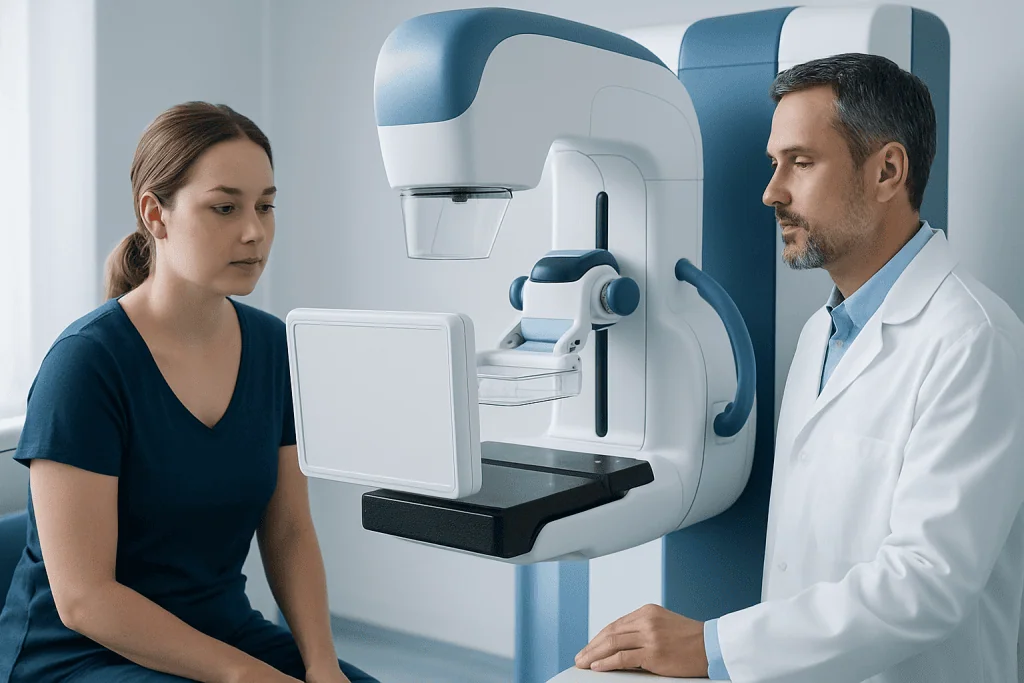
Clinicians usually diagnose uncomplicated mastitis from the history and physical examination. They may ask about timing of symptoms, breastfeeding or pumping patterns, nipple damage, prior mastitis, medications, immune conditions and any previous breast surgery. They also assess general wellbeing, temperature, hydration and the appearance of the affected breast.
Breast ultrasound may be recommended when there is a distinct or enlarging lump, severe pain, pus-like nipple discharge, symptoms that fail to improve with initial management, or concern for an abscess. Ultrasound can show whether fluid has collected and can guide a needle accurately into the area if drainage is needed. Imaging may also be useful for non-lactational mastitis or recurrent symptoms.
A sample of milk, wound fluid or aspirated fluid may be sent for culture in selected cases, especially if symptoms are severe, recur, do not respond to initial antibiotics, or there is concern for resistant bacteria. Results can help the clinician choose the most appropriate antibiotic rather than relying on broad treatment unnecessarily.
People are potential candidates for a procedure when an abscess, infected fluid collection or persistent phlegmon is suspected. A phlegmon is an inflamed, firm area of tissue that may resemble an abscess but does not contain a drainable pocket of fluid. It is usually managed with clinical follow-up and may need repeat imaging.
Step-by-step: ultrasound, aspiration and abscess drainage

If imaging identifies a breast abscess, the preferred approach in many cases is ultrasound-guided needle aspiration. After the skin is cleaned and numbed with local anesthetic, a clinician inserts a fine needle into the collection using ultrasound for guidance. Fluid is removed, often sent for laboratory testing, and the breast is reassessed. Some larger or complex abscesses need more than one aspiration over several days.
When aspiration is not suitable or has not resolved the abscess, incision and drainage may be considered. This involves making a small opening to release pus and may require a drain or temporary packing. The approach depends on the size and position of the abscess, skin condition, the person’s overall health and whether they are breastfeeding.
These procedures aim to relieve pressure, control infection and preserve breast function. Antibiotics may be prescribed when bacterial infection is likely or confirmed, particularly with systemic symptoms or an abscess. The selected medicine should take allergies, local resistance patterns, culture results and breastfeeding compatibility into account.
People seeking specialist evaluation can discuss mastitis treatment with a qualified breast or obstetric care team. The most appropriate procedure is individualized; it should not be attempted at home by squeezing, puncturing or trying to drain a breast lump.
What are the new guidelines for mastitis treatment?
Current mastitis clinical practice guidelines describe mastitis as a spectrum of breast inflammation rather than a condition that is always caused by infection. The emphasis is on reducing swelling and pain, maintaining physiologic milk removal during lactation and using antibiotics when clinical findings indicate bacterial mastitis rather than automatically for every painful, red area.
In mastitis evidence-based practice, gentle measures are preferred. These include rest, fluids, cold packs for comfort, anti-inflammatory pain relief when safe for the individual, and a supportive bra. If breastfeeding, feeding responsively or expressing only the amount needed for comfort may help. Lactation support can improve positioning and address oversupply, pumping technique or nipple injury.
Updated guidance discourages deep breast massage, forceful vibration, aggressive attempts to “break up” a lump and excessive pumping. These actions can increase inflammation, tissue trauma and swelling. A clinician may advise brief, very light lymphatic-style skin strokes only when appropriate, but this is different from deep massage.
Reliable mastitis patient education should be individualized rather than replaced by an unreviewed mastitis patient education PDF or mastitis patient handout PDF found online. A doctor, midwife or lactation professional can adapt advice to symptoms, feeding goals, medical history and ultrasound findings.
How to flush out mastitis?
Mastitis cannot be safely “flushed out.” The idea that a person must empty the breast repeatedly or forcefully massage a plugged area is not supported by current mastitis evidence-based guidance. Inflammatory swelling narrows milk channels, so over-stimulation may increase milk production and worsen the cycle of congestion and inflammation.
For lactational mastitis, it is generally reasonable to continue breastfeeding if it is comfortable and the person wishes to do so. Milk does not usually need to be discarded simply because of mastitis or a compatible antibiotic. Feeding can continue according to the infant’s usual cues; if direct feeding is too painful, gentle expression for comfort may be discussed with a lactation professional.
Cold compresses between feeds, rest, hydration and a well-fitting supportive bra can ease symptoms. Pain medicines or anti-inflammatory medicines may be useful for some people, but suitability depends on allergies, other health conditions, pregnancy status and concurrent medicines. A clinician can advise on safe options.
Medical evaluation is important if symptoms are worsening, fever persists, a focal lump develops or there is no meaningful improvement within about 24 to 48 hours of supportive measures. Antibiotics or ultrasound may then be appropriate.
Recovery, benefits and possible risks
With timely treatment, uncomplicated mastitis often begins to improve within one to two days, although tenderness and a firm area can take longer to settle. If antibiotics are prescribed, they should be taken exactly as directed, and the prescribing clinician should be contacted if symptoms do not improve or side effects occur. Follow-up is particularly important after an abscess aspiration because another collection can occasionally form.
The benefit of ultrasound-guided aspiration is that it can treat a confirmed fluid collection with a small puncture, often allowing a quicker return to normal activities than open drainage. Incision and drainage can be highly effective for an abscess that cannot be managed by aspiration, but it may involve wound care and a longer healing period.
Possible risks of procedures include pain, bruising, bleeding, infection, scarring, incomplete drainage and recurrence. Rarely, a milk fistula, meaning persistent milk leakage through a skin opening, can occur in people who are lactating. The treating team can explain how the chosen approach may affect breastfeeding and what follow-up is needed.
Persistent or recurring breast symptoms need reassessment. While mastitis is common and usually treatable, conditions such as inflammatory breast cancer can occasionally resemble infection, particularly when redness and swelling do not resolve as expected. This is why ongoing symptoms should not be managed with repeated home treatment alone.
Is it better to go braless with mastitis?
There is no universal requirement to go braless with mastitis. Many people feel more comfortable in a soft, supportive bra that does not compress the breast, while others prefer no bra for short periods because pressure is uncomfortable. The practical goal is to avoid tight underwires, restrictive clothing and anything that leaves deep marks or increases pain.
A comfortable bra can reduce movement-related discomfort and may make cold packs easier to hold in place. However, it should not be used to tightly bind the breasts, as tight compression can worsen pain and swelling. Comfort and symptom response are useful guides.
During recovery, avoid vigorous exercise or activities that cause breast trauma until pain and systemic symptoms have improved. Gentle daily activity is usually acceptable if the person feels well enough. Adequate rest is particularly valuable when fever, chills or fatigue are present.
When to seek medical care
Medical advice should be sought promptly for fever, chills, a painful red breast area, worsening swelling, a new breast lump, pus-like drainage or symptoms that do not begin improving after 24 to 48 hours of supportive care. People who are not breastfeeding, are pregnant, have diabetes, are immunocompromised or have a history of breast disease should have a lower threshold for evaluation.
Emergency assessment is needed for signs of severe illness, such as confusion, severe weakness, fainting, shortness of breath, rapid breathing, a racing heartbeat, cold or clammy skin, or inability to keep fluids down. These symptoms may indicate sepsis or another urgent medical problem. Mastitis does not follow a predictable timetable for becoming severe; serious deterioration can occur over hours in a small number of cases, so changes in overall condition matter more than counting hours.
At Acibadem International, multidisciplinary specialists in breast health, obstetrics, radiology and infectious diseases can assess mastitis and arrange imaging or drainage when indicated for international patients in JCI-accredited hospitals. Ongoing symptoms can also be evaluated through breast abscess assessment when a fluid collection is suspected.
Frequently asked questions
What is the mastitis medical procedure?
A mastitis medical procedure usually begins with a clinical examination and may include breast ultrasound. If an abscess is found, a clinician may drain it with ultrasound-guided needle aspiration or, less commonly, incision and drainage. Most uncomplicated mastitis cases do not require an invasive procedure.
What are the new guidelines for mastitis treatment?
Current guidance views mastitis as a spectrum of inflammation, with infection present in some but not all cases. It supports rest, cold packs, pain relief when appropriate, comfortable breast support and normal, non-forceful milk removal during lactation. Deep massage, aggressive pumping and routine antibiotics for every case are generally discouraged.
How to flush out mastitis?
Mastitis should not be flushed out with forceful massage, repeated pumping or attempts to empty the breast beyond normal feeding needs. These measures can aggravate inflammation. Gentle, responsive feeding or expression for comfort, together with clinical guidance, is safer.
How quickly does mastitis turn into sepsis?
There is no fixed timeline for mastitis to progress to sepsis, and most cases do not do so. However, serious infection can worsen rapidly, sometimes over hours, particularly when a person is very unwell or has other health risks. Urgent care is needed for confusion, fainting, breathing difficulty, severe weakness or rapidly worsening fever and chills.
Is it better to go braless with mastitis?
Either approach can be appropriate if it improves comfort. A soft, supportive bra that does not compress the breast is helpful for many people, while others feel better without one temporarily. Tight bras, underwires and breast binding should be avoided if they increase pain or leave pressure marks.
Can a person continue breastfeeding with mastitis or after abscess drainage?
In many cases, breastfeeding can continue during mastitis and after an abscess procedure, depending on comfort and the location of any wound. Most commonly used treatments can be selected with breastfeeding in mind. The treating clinician and a lactation professional can provide advice tailored to the procedure, medication and infant’s needs.
References
- Academy of Breastfeeding Medicine
- American College of Obstetricians and Gynecologists
- Centers for Disease Control and Prevention
- National Health Service
- World Health Organization
This article is for general information only and is not a substitute for professional medical advice. Please consult a qualified doctor about your individual situation.
Explore treatments in Turkey — costs, top hospitals & a free quote
JCI-accredited · board-certified surgeons · reply within 24h
Add us as a Preferred Source to see more of our trusted health content across Google Search, AI Overviews and Discover.