Light Amplification by Stimulated Emission of Radiation: How It Works, Results and What to Expect
Light amplification by stimulated emission of radiation is commonly known as LASER. A laser produces a focused beam by stimulating atoms or molecules to release matching particles of light.
Key Takeaways
- Light amplification by stimulated emission of radiation is commonly known as LASER.
- A laser produces a focused beam by stimulating atoms or molecules to release matching particles of light.
- Different laser wavelengths and settings are chosen according to the tissue and medical purpose.
- Laser procedures range from noninvasive treatments to surgery, so preparation and recovery vary widely.
- Benefits, limitations, and risks depend on the condition, the laser type, and the clinician’s expertise.
Light amplification by stimulated emission of radiation is the full scientific name for laser technology. In healthcare, lasers create controlled, concentrated light that can help diagnose or treat selected eye, skin, dental, surgical, and other medical conditions.
Overview: Light Amplification by Stimulated Emission of Radiation
Light amplification by stimulated emission of radiation is the scientific term behind the word “laser.” A laser produces a highly organized, concentrated beam of light that can be directed precisely at a target. In medicine, this precision allows clinicians to treat or alter selected tissue while aiming to limit effects on surrounding areas.
Laser technology is not one single treatment. Different devices generate different wavelengths, pulse durations, and energy levels. A laser may be used to reshape the cornea, remove or reduce unwanted skin lesions or hair, treat certain blood vessels, break up stones, support dental care, or assist in surgery. The appropriate use depends on the person’s diagnosis and the clinical goal.
Although lasers are often associated with cosmetic procedures, they are also established medical tools. A qualified clinician should explain why a laser is being considered, which alternatives are available, and what results are realistic for the individual situation.
What does Light Amplification by Stimulated Emission of Radiation mean?
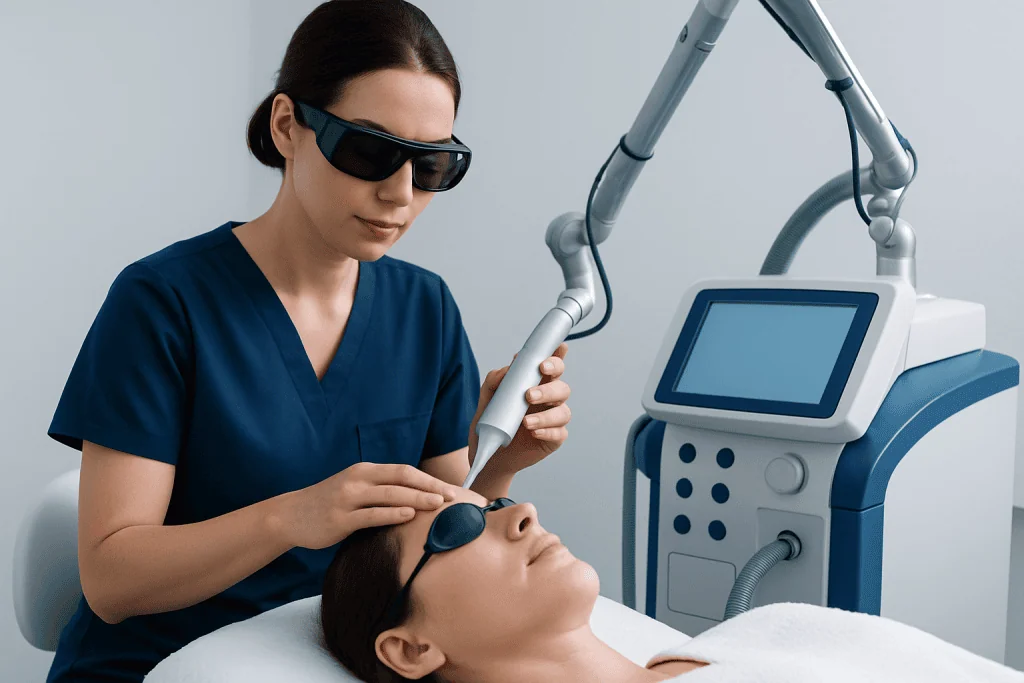
The phrase can be understood in four parts. “Light” refers to electromagnetic energy. “Amplification” means increasing the amount of light. “Stimulated emission” is the physical process that creates additional light particles with the same characteristics as the original particle. “Radiation” in this context means energy traveling as waves or particles; it does not automatically mean ionizing radiation such as X-rays.
Laser light differs from ordinary light in several useful ways. It can be concentrated into a narrow beam, it is relatively uniform in wavelength, and its waves are aligned in an organized pattern. These properties enable clinicians to deliver energy to a small or carefully defined area.
The word laser describes the technology rather than a diagnosis. Whether a laser is suitable depends on the health concern being treated. For example, an eye specialist, dermatologist, dentist, urologist, or surgeon may use different laser systems for very different purposes.
What is stimulated emission of radiation and how does it work?
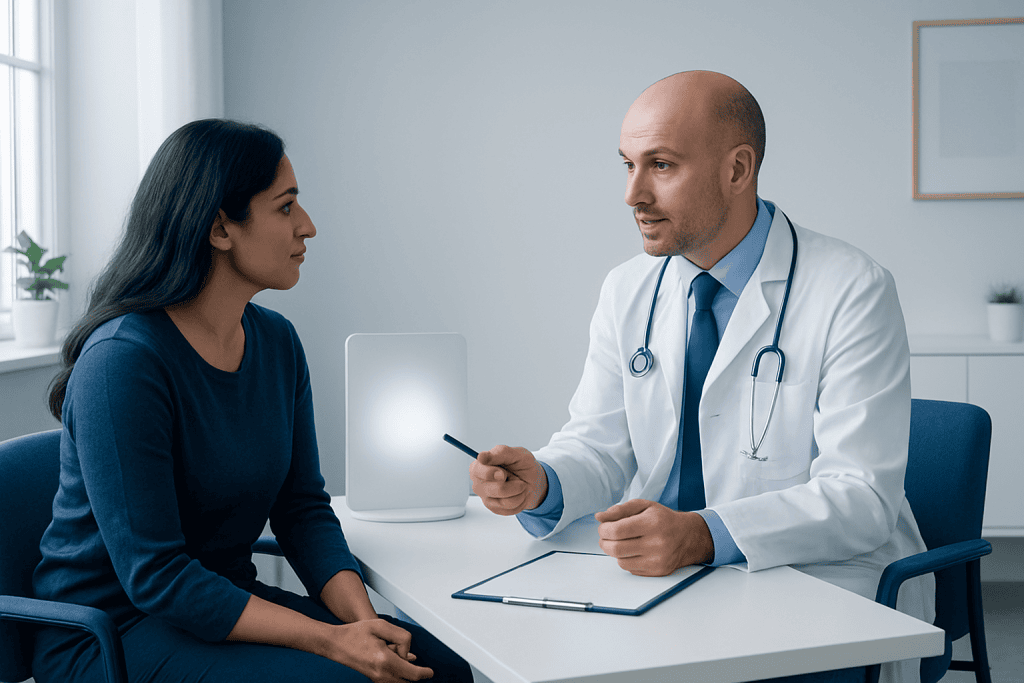
Inside a laser device is a material called the gain medium. Depending on the device, this may be a gas, crystal, liquid dye, semiconductor, or optical fiber. Energy is supplied to the gain medium through a process called pumping, such as an electrical current or another light source.
When energy is added, some atoms or molecules move into a higher-energy state. As they return to a lower-energy state, they can release a particle of light called a photon. If an incoming photon of the right energy passes nearby, it can stimulate the excited atom or molecule to release a second photon that closely matches the first in energy, direction, and timing.
Two mirrors at either end of the laser chamber help the light pass repeatedly through the gain medium. This increases the number of matching photons. A portion of the amplified light leaves through one partially transmitting mirror, creating the laser beam used by the medical device.
What happens in a stimulated emission process?
In stimulated emission, an atom or molecule has already absorbed energy and is in an excited state. A passing photon with an appropriate amount of energy interacts with it. Rather than releasing light at a random time and in a random direction, the excited particle releases another photon that matches the incoming photon.
The two photons then travel together with the same wavelength, direction, phase, and energy. As this happens repeatedly among many excited particles, the light becomes stronger and more ordered. This is the amplification at the center of laser operation.
Medical laser systems control this energy carefully. The wavelength determines which substances in tissue absorb the light most effectively, such as water, pigment, or blood. Pulse length, spot size, and energy settings are then selected to achieve a desired effect, such as heating, cutting, vaporizing, coagulating, or breaking apart tissue.
What is light amplification and how is it performed?
Light amplification is the repeated creation of matching photons through stimulated emission. It takes place inside the laser machine, not inside the patient’s body. The clinician selects a device and settings that suit the tissue target and the intended medical outcome.
During a clinical procedure, the amplified beam may be delivered through a handheld instrument, microscope, fiber-optic cable, endoscope, or computer-guided platform. Some treatments use a brief pulse of energy, while others use longer applications. Cooling systems, topical numbing medicine, local anesthesia, sedation, or general anesthesia may be used depending on the procedure.
For example, laser-based eye procedures require careful measurements of the eye and cornea before treatment. Patients considering vision correction may learn more about laser eye surgery after a full ophthalmic assessment. In dermatology, distinct lasers may be selected for pigment, vascular lesions, scars, hair reduction, or other concerns; these are not interchangeable treatments.
Candidacy, preparation and the procedure experience
Candidacy begins with an accurate diagnosis. A clinician reviews the person’s symptoms, medical history, medicines, skin type or tissue characteristics where relevant, prior procedures, and treatment expectations. Pregnancy, active infection, poor wound healing, certain medicines, photosensitivity, uncontrolled chronic illness, or a history of scarring may affect the timing or suitability of some laser procedures.
Preparation may include stopping selected topical products, avoiding sun exposure, arranging transport after sedation, completing imaging or laboratory tests, or using prescribed eye drops or skin-care products. Patients should not stop prescription medicines without instructions from the clinician managing their care.
The exact steps vary, but many laser procedures follow a similar pattern: the treatment area is confirmed and cleaned, appropriate anesthesia or numbing is provided, and protective eyewear is used when needed. The clinician delivers the laser in planned passes while monitoring the tissue response. Afterwards, the area may be cooled, covered, lubricated, or treated with medicines to support healing.
Some procedures are completed in an outpatient setting, while others form part of hospital-based surgery. A multidisciplinary assessment can be important when laser treatment is being considered alongside other medical or surgical care.
Results, recovery timeline, benefits and risks
Results depend on the condition being treated and the type of laser used. Some people notice an immediate change, while others need several sessions or wait weeks to months for tissue remodeling and healing. A clinician can explain whether the goal is symptom relief, functional improvement, removal of tissue, reduction of a visible concern, or management rather than cure.
Recovery may range from little or no downtime to several weeks of healing. Temporary redness, swelling, warmth, tenderness, crusting, dryness, sensitivity to light, or changes in skin color can occur after certain treatments. Procedures involving the eye, airway, urinary tract, or surgery may have different aftercare needs and should be followed closely.
Potential benefits include precision, the ability to treat difficult-to-reach areas, reduced bleeding in some surgical settings, and less disruption of surrounding tissue for selected procedures. Risks can include pain, burns, infection, scarring, pigment changes, incomplete response, recurrence of the underlying condition, or injury to nearby structures. Eye protection is essential because direct laser exposure can harm vision.
Patients should follow aftercare instructions, protect treated skin from sun exposure when advised, attend follow-up appointments, and report unexpected symptoms promptly. Acibadem International’s multidisciplinary specialists and JCI-accredited hospitals diagnose and treat laser-appropriate conditions for international patients.
When to seek medical care
A person should seek medical assessment before pursuing a laser procedure for a new, changing, painful, bleeding, infected, or nonhealing skin lesion. Laser treatment should not replace evaluation of a possible cancer, infection, or other condition requiring a different approach. Sudden changes in vision, severe eye pain, flashing lights, or a curtain-like shadow over vision require urgent eye care rather than routine laser consultation.
After any laser procedure, urgent medical advice is appropriate for worsening pain, rapidly increasing redness or swelling, fever, pus-like drainage, significant bleeding, breathing difficulty, sudden loss of vision, or other symptoms that feel severe or unusual. Prompt evaluation can help identify complications early.
For nonurgent questions, patients can discuss their goals and options with the relevant specialist. They should ask about expected recovery, alternatives, likely number of sessions, safety measures, and the signs that would require contacting the treatment team.
Frequently asked questions
Is light amplification by stimulated emission of radiation the same as a laser?
Yes. LASER is an acronym for light amplification by stimulated emission of radiation. The phrase describes the physical process used to create a controlled, concentrated beam of light.
Does laser radiation mean exposure to X-rays?
No. The term radiation broadly describes energy that travels in waves or particles. Most medical lasers use non-ionizing light, which is different from ionizing radiation used in X-rays or CT scans.
Are laser treatments painful?
Comfort varies according to the procedure, the body area, and the laser settings. Many treatments use cooling, topical numbing medicine, local anesthesia, sedation, or general anesthesia when appropriate.
How long does recovery after a laser procedure take?
Recovery can range from minimal downtime after a superficial treatment to weeks after a more invasive procedure. The treating clinician can provide a more accurate timeline based on the specific laser and condition being treated.
Are all laser procedures permanent?
Not always. Some laser treatments provide long-lasting changes, while others require maintenance sessions or may not prevent an underlying condition from returning. Outcomes depend on the medical indication, tissue response, and aftercare.
Who should avoid laser treatment?
Suitability depends on the procedure. Active infection, certain medications, recent sun exposure, pregnancy for some elective treatments, a history of poor healing, and particular skin or eye conditions may require postponement, modification, or an alternative treatment.
References
- U.S. Food and Drug Administration
- National Institute of Standards and Technology
- American Academy of Ophthalmology
- American Society for Laser Medicine and Surgery
- World Health Organization
This article is for general information only and is not a substitute for professional medical advice. Please consult a qualified doctor about your individual situation.
Explore treatments in Turkey — costs, top hospitals & a free quote
JCI-accredited · board-certified surgeons · reply within 24h
Add us as a Preferred Source to see more of our trusted health content across Google Search, AI Overviews and Discover.