

After Prostate Surgery Bladder Control: Procedure, Recovery and Results

Urinary leakage after prostate surgery is common, particularly after radical prostatectomy, and usually improves with time. Pelvic floor muscle training can help strengthen the muscles involved in bladder control.
Key Takeaways
- Urinary leakage after prostate surgery is common, particularly after radical prostatectomy, and usually improves with time.
- Pelvic floor muscle training can help strengthen the muscles involved in bladder control.
- Recovery varies according to the type of surgery, baseline urinary function, age, healing and whether cancer treatment is needed.
- Severe, persistent or worsening leakage should be assessed because effective non-surgical and surgical treatments are available.
- Driving, sitting and activity should be resumed according to the surgeon's instructions and comfort level.
After prostate surgery, temporary urine leakage is common because the bladder outlet and pelvic floor need time to recover. Most people see steady improvement over weeks to months, supported by pelvic floor rehabilitation, healthy habits and follow-up with their urology team.
Overview: bladder control after prostate surgery
After prostate surgery bladder control may be temporarily reduced, especially after radical prostatectomy, an operation that removes the prostate gland for prostate cancer. The prostate surrounds part of the urethra, the tube that carries urine from the bladder. Removing it changes the support around the bladder outlet, and the muscles that close the urethra need time to adapt.
Leakage may occur when standing up, coughing, laughing, lifting or exercising. This pattern is called stress urinary incontinence. Some people also experience urgency, meaning a sudden strong need to urinate, or need to pass urine more often while the bladder heals.
For many patients, bladder control gradually returns with healing and pelvic floor rehabilitation. The experience can still feel disruptive or embarrassing, so it is important to discuss symptoms openly with a urologist or continence specialist. Persistent leakage is treatable and should not simply be accepted as an unavoidable long-term result.
How prostate surgery affects continence
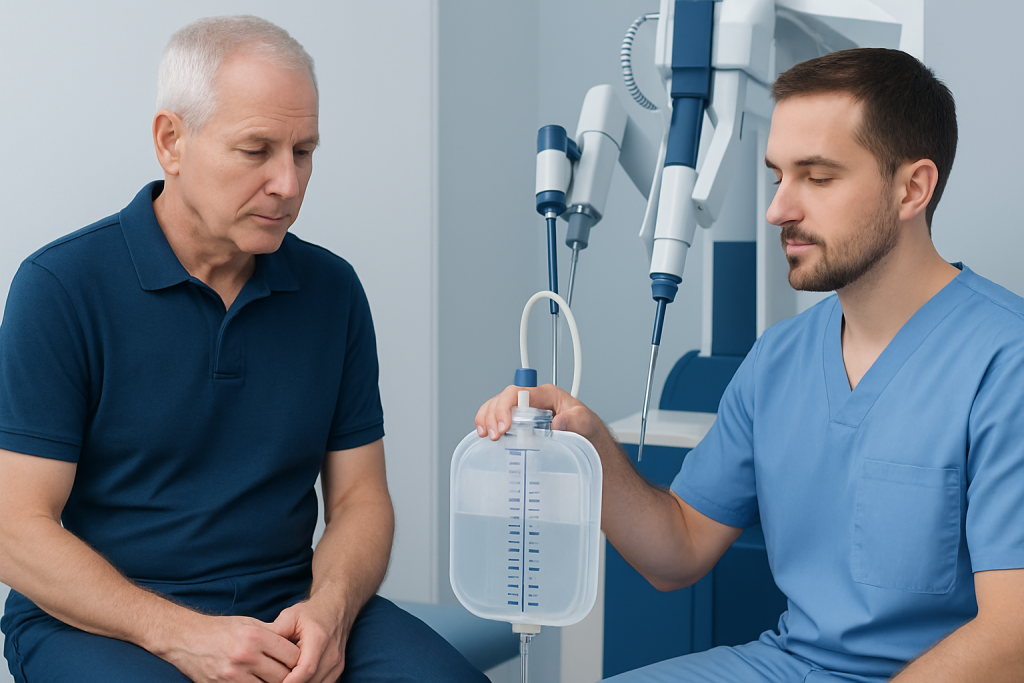
Urinary continence depends on coordinated bladder function, a healthy urethral sphincter and supportive pelvic floor muscles. During prostate removal, the surgeon separates the prostate from the bladder and reconnects the bladder neck to the urethra. This necessary reconstruction can temporarily weaken the continence mechanism.
Modern surgical planning aims to preserve urinary control whenever it is medically safe. The approach may involve careful preservation of the bladder neck and supporting tissues, as well as nerve-sparing techniques when appropriate. However, the priority of cancer surgery is complete and safe treatment of the disease, and the operation must be tailored to each person.
Other procedures for enlarged prostate, such as transurethral resection or laser procedures, can also cause short-term urgency or leakage, though the pattern and duration may differ from radical prostatectomy. People considering treatment for prostate disease can discuss their individual risks and expected recovery with a urology specialist.
Candidacy, preparation and the procedure step by step

Radical prostatectomy may be considered for people with prostate cancer that is confined to the prostate or selected cases with nearby spread. Candidacy depends on cancer features, general health, urinary symptoms before surgery, prior treatments and personal preferences. Before surgery, the clinical team may assess urinary function, medications, medical conditions and fitness for anesthesia.
Preparation often includes learning pelvic floor muscle exercises before the operation. A physiotherapist or continence nurse can help a person identify the correct muscles and develop a realistic practice routine. This preparation may make it easier to begin rehabilitation after the urinary catheter is removed.
During surgery, performed through open, laparoscopic or robotic-assisted techniques, the prostate and usually the seminal vesicles are removed. The bladder is then joined to the urethra. A urinary catheter remains in place for a short period to protect the new connection while it heals, and it is removed after the surgeon confirms that recovery is progressing appropriately.
Recovery planning includes pain control, early gentle movement, prevention of constipation, catheter care and a clear contact plan for concerns. The team will also explain restrictions on lifting, work, driving and sexual activity, which can vary according to the operation and the individual recovery.
How long does it take to regain bladder control after prostate surgery?
Many people notice gradual improvement in bladder control during the first weeks and months after catheter removal. Some regain continence relatively quickly, while others need several months or longer. It is common for progress to be uneven: leakage may be less noticeable in the morning and increase later in the day when the pelvic floor is tired.
Recovery is influenced by age, urinary control before surgery, prostate size, surgical factors, other health conditions and the strength and coordination of pelvic floor muscles. Men who have had radiation therapy or previous prostate procedures may have a different recovery pattern. The surgeon can offer the most relevant estimate based on the individual situation.
Continence is often measured by the number of pads used and the degree to which leakage affects daily activities. Keeping a short bladder diary can help identify patterns and show progress over time. If leakage remains troublesome, a urology team can recommend structured pelvic floor therapy, medication for urgency when suitable, or further treatments for persistent stress incontinence.
Recovery timeline, self-care and expected results
Immediately after surgery, a catheter drains urine while the bladder-to-urethra connection heals. After catheter removal, temporary leakage is expected for many people. Absorbent pads, protective underwear and a change of clothing can make this period more manageable. It is helpful to use products designed for urinary leakage rather than restricting fluids excessively.
Pelvic floor muscle training is a central part of recovery. These exercises involve gently contracting and relaxing the muscles used to stop urine flow, but they should be learned correctly rather than practiced while urinating. A pelvic health physiotherapist can adjust the programme, check technique and help prevent over-tightening or straining.
Regular water intake, gradual walking, adequate fibre and treatment of constipation can support recovery. Caffeine, alcohol, fizzy drinks and spicy foods may worsen urgency for some people, so reducing personal triggers may help. Heavy lifting and high-impact exercise should be avoided until the surgeon confirms they are safe.
Most patients can expect improvement, but no timeline can be guaranteed. In people with persistent bothersome stress incontinence, options may include a male sling or an artificial urinary sphincter after careful assessment. These treatments are selected based on the severity of leakage, prior radiation, bladder function and personal goals.
Is it painful to sit after prostate surgery?
Some soreness, pressure or fatigue when sitting is common in the early recovery period, particularly after open surgery or when abdominal incisions are still healing. Catheter discomfort, constipation and prolonged time in one position can also contribute. Pain should generally become easier to manage as healing progresses.
Short periods of sitting, gentle walking and changing position regularly may improve comfort. A supportive chair or cushion can be useful, but people should avoid putting direct pressure on wounds or using any device that causes discomfort. Pain medicines should be taken only as directed by the surgical team.
Severe pain, pain that is getting worse, marked swelling, fever, redness or drainage from an incision should be reported promptly. These symptoms may need assessment rather than self-treatment.
Is nerve damage common after prostate surgery?
Nerves that contribute to erections run close to the prostate, so erectile function can be affected after radical prostatectomy. Whether nerves can be preserved depends mainly on the location and extent of the cancer, as well as the person’s function before surgery. Nerve-sparing surgery is considered when it can be performed without compromising cancer control.
Changes in erectile function are not the same as bladder nerve damage. Most urinary leakage after prostatectomy is related to temporary weakness or altered support of the urinary sphincter and pelvic floor, rather than permanent nerve injury. Bladder urgency can also occur during healing and may improve with time and treatment.
Recovery of erections can take months or longer, and outcomes vary. Urologists may discuss rehabilitation options, including lifestyle measures, medicines or devices, based on medical suitability. Honest discussion before surgery helps patients understand the balance between cancer treatment and functional recovery.
Can I drive a car after prostate surgery?
A person should drive only when they can sit comfortably, move safely, perform an emergency stop without hesitation and are no longer taking opioid pain medicines or other medicines that cause drowsiness. The exact timing varies by surgery type, pain level, catheter status and the surgeon’s instructions.
After major prostate surgery, many people need at least a short period before driving is safe. Travel should begin with a brief journey when the person feels well enough, and they should avoid driving if tired, dizzy, in significant pain or concerned about urgent leakage. Insurance requirements and local driving rules may also apply.
It is sensible to arrange help with transport for follow-up appointments and the journey home after surgery. The surgical team should be asked for individual advice, particularly after complications or when recovery is slower than expected.
When to seek medical care
Contact the surgical or urology team urgently for fever, chills, increasing abdominal or pelvic pain, inability to pass urine after catheter removal, heavy bleeding or blood clots in the urine, worsening redness or discharge from a wound, or a catheter that is not draining. Sudden shortness of breath, chest pain or one-sided leg swelling requires emergency medical assessment.
A non-urgent appointment is appropriate for leakage that is not improving, severe urgency, burning when urinating, recurrent urinary tract infection symptoms, difficulty performing pelvic floor exercises or emotional distress related to continence. Early support can improve comfort, confidence and rehabilitation.
Acibadem International’s multidisciplinary urology and rehabilitation specialists can assess urinary symptoms and discuss individualized recovery options for international patients at JCI-accredited hospitals. A urologist can also review whether persistent leakage may benefit from specialist continence treatment.
Frequently asked questions
Is urinary leakage normal after prostate surgery?
Temporary leakage is common after prostate surgery, especially after radical prostatectomy. It often occurs with movement, coughing or lifting and usually improves as tissues heal and pelvic floor muscles recover. Persistent or severe leakage should be discussed with a urologist because treatment options are available.
Should pelvic floor exercises start before or after prostate surgery?
Many people benefit from learning pelvic floor exercises before surgery, then restarting them after catheter removal when the surgeon advises it is safe. Correct technique matters, so guidance from a pelvic health physiotherapist or continence specialist can be helpful. Exercises should not be performed by repeatedly stopping urine flow during normal urination.
How many pads are normal after prostatectomy?
Pad use varies widely and can change from day to day during recovery. Using fewer pads over time is often a useful sign of improvement, but the number alone does not define recovery. A bladder diary and discussion with the clinical team can provide a clearer picture of progress.
Can drinking less water stop urine leakage after surgery?
Restricting fluids too much is usually not helpful and may lead to dehydration, constipation or bladder irritation. Regular water intake is generally preferred, while limiting personal triggers such as excess caffeine or alcohol may reduce urgency in some people. The surgical team can provide guidance if there are heart, kidney or other conditions that affect fluid intake.
What happens if bladder control does not return after prostate surgery?
A urologist can assess the type and severity of incontinence, bladder function, infection risk and factors that may be delaying recovery. Treatment may include supervised pelvic floor therapy, lifestyle changes, medicines for urgency or procedures for persistent stress incontinence. The most suitable option depends on the individual’s symptoms and medical history.
When can a person return to work after prostate surgery?
Return-to-work timing depends on the type of surgery, the physical demands of the job, pain control, fatigue and catheter removal. Desk-based work may be possible sooner than work involving lifting or strenuous activity. The surgeon should provide individualized clearance and restrictions.
References
- European Association of Urology
- American Urological Association
- National Institute of Diabetes and Digestive and Kidney Diseases
- National Health Service
- American Cancer Society
This article is for general information only and is not a substitute for professional medical advice. Please consult a qualified doctor about your individual situation.
Oncology care in Turkey — second opinion and treatment plan
JCI-accredited · board-certified surgeons · reply within 24h
Add us as a Preferred Source to see more of our trusted health content across Google Search, AI Overviews and Discover.

More from the Health Library



Related Specialists

Assoc. Prof. Dr. Selim Ergün
Orthopedic Surgery & Traumatology
Dr. Gökan Güler
Emergency Service
Dt. Ceren Güney Güleç
Oral & Dental Health
Assoc. Prof. Dr. Bahadır Osman Bozkırlı
General Surgery