Normal Voice Cancer Therapy: How It Works, Results and What to Expect

Many early vocal cord cancers can be treated while preserving the larynx and useful speaking ability. Radiation therapy and endoscopic surgery are common voice-preserving options for selected early cancers.
Key Takeaways
- Many early vocal cord cancers can be treated while preserving the larynx and useful speaking ability.
- Radiation therapy and endoscopic surgery are common voice-preserving options for selected early cancers.
- Treatment planning depends on tumor stage, vocal cord movement, lymph node involvement and a person’s general health.
- Voice, swallowing, nutrition and breathing should be assessed before and after treatment.
- A total laryngectomy changes how a person speaks and breathes, but rehabilitation can support communication and quality of life.
Normal voice cancer therapy refers to voice-preserving treatment approaches for cancers affecting the vocal cords or larynx. Depending on the cancer stage, location and overall health, treatment may include radiation therapy, endoscopic laser surgery, partial laryngeal surgery, chemotherapy with radiation, or—when necessary—laryngectomy.
Overview: what is normal voice cancer therapy?
Normal voice cancer therapy is a commonly used search term for treatment that aims to remove or control cancer of the vocal cords while preserving the larynx and as much natural speech as possible. It is not the name of one specific treatment. Instead, it describes a care goal: achieving effective cancer control while considering voice, swallowing and breathing.
Most cancers involving the vocal cords are laryngeal cancers, often a type called squamous cell carcinoma. They may cause persistent hoarseness early, which can allow some tumors to be diagnosed at a curable stage. Treatment is individualized by a head and neck cancer team after careful staging.
For small, early tumors, radiation therapy or transoral endoscopic surgery may provide excellent local control while keeping the voice box intact. More advanced disease may require combined chemotherapy and radiation, partial removal of the larynx, or total laryngectomy. The appropriate option depends on the tumor rather than on a promise that every voice can be fully preserved.
How voice-preserving treatment works
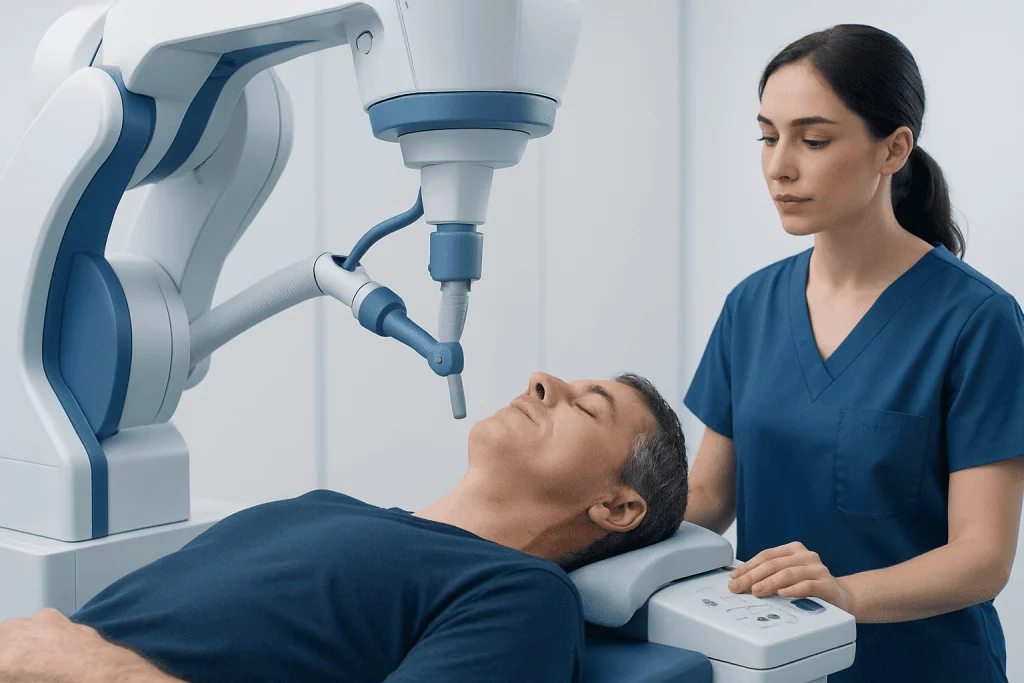
Voice-preserving care attempts to eradicate cancer without removing the entire larynx. External-beam radiation therapy directs high-energy radiation at the tumor and nearby areas at risk, damaging cancer-cell DNA so the cells can no longer continue growing. Treatments are typically delivered on weekdays over several weeks, with the exact plan based on the diagnosis and treatment intent.
For selected small tumors, a surgeon may use a laryngoscope passed through the mouth while the person is under general anesthesia. Specialized instruments, sometimes including a laser, can remove the visible cancer while limiting removal of healthy laryngeal tissue. This approach is often called transoral laser microsurgery or endoscopic cordectomy.
For some locally advanced cancers, chemotherapy may be given with radiation to increase the cancer-killing effect. This can help avoid immediate laryngectomy for appropriately selected individuals, but it also increases side effects and requires close monitoring. Surgery may still be recommended if treatment does not control the cancer or if the larynx is not functioning safely.
Speech-language pathologists are an important part of care. They assess baseline voice and swallowing, teach protective exercises when appropriate, and help people manage changes during recovery. Nutritional support and dental evaluation are also commonly included before head and neck radiation.
Who may be a candidate for normal voice cancer therapy?

People with early-stage cancer limited to one or both vocal cords are often considered for larynx-preserving treatment. Important features include the tumor’s size and depth, whether the vocal cords still move normally, involvement of nearby laryngeal structures, and whether cancer has spread to lymph nodes or distant organs.
Both radiation and endoscopic surgery can be reasonable options for many early glottic cancers. The choice may be influenced by the precise location of the tumor, expected voice outcome, previous radiation exposure, anesthesia considerations, work or travel needs, and the individual’s preferences. A multidisciplinary review helps explain the trade-offs clearly.
For larger cancers, organ-preservation chemoradiation may be considered when the larynx can still function adequately and the person is medically fit for treatment. However, a severely damaged larynx, extensive cartilage involvement, major swallowing impairment, or certain patterns of tumor spread may make surgery the safer or more effective strategy.
Smoking status, alcohol use, nutrition, lung and kidney function, hearing, dental health and other medical conditions can affect planning. Stopping tobacco use is beneficial at every stage because it can improve treatment tolerance, healing and long-term health.
What happens during treatment and the recovery timeline
Before treatment begins, the team confirms the diagnosis with a biopsy and examines the larynx with flexible or direct laryngoscopy. Imaging such as CT, MRI or PET/CT may be used to define the cancer stage. For radiation, a custom mask helps keep the head and neck still during planning scans and each treatment session.
Radiation sessions themselves are usually brief and painless. Side effects generally build gradually over the course of treatment and can include throat soreness, hoarseness, dry mouth, skin irritation, altered taste, fatigue and difficulty swallowing. The cancer team may recommend pain relief, nutritional drinks, swallowing support and regular weight checks.
Following endoscopic surgery, temporary hoarseness and throat discomfort are common. Voice rest or reduced voice use may be advised for a short time, but instructions vary with the extent of surgery. Follow-up laryngoscopy is essential because the vocal cords need to be observed for healing and for any sign of recurrent disease.
After radiation or combined treatment, the larynx can remain irritated for weeks. Follow-up visits evaluate cancer response, voice, swallowing, thyroid function and possible late effects such as persistent dryness, stiffness or swelling. Recovery is often gradual rather than immediate.
How long does it take to recover from radiation therapy for throat cancer?
Recovery from radiation therapy for throat cancer commonly continues for several weeks after the final session because treatment effects may peak shortly after therapy ends. Many people begin to notice improvement in fatigue, skin reactions and throat discomfort over the following four to eight weeks, although the timeline varies considerably.
Swallowing, taste, saliva production and voice may take months to improve. Some people have longer-lasting dry mouth, fibrosis or swallowing changes, particularly after radiation to larger areas of the head and neck or after chemotherapy is given at the same time. Regular follow-up with oncology, ENT, nutrition and speech-language specialists can help address these effects early.
People should contact their treatment team promptly if they cannot maintain fluids, have worsening pain despite prescribed support, experience breathing difficulty, have fever, or lose weight rapidly. These symptoms can often be managed, but should not be handled alone.
Benefits, risks and realistic expectations
The main benefit of voice-preserving treatment is the possibility of controlling cancer while retaining the natural larynx. Many people continue to speak with their own voice, although it may sound hoarse, weaker, breathier or tire more easily than before. Voice quality depends on the tumor, the amount of tissue affected and the treatment used.
Radiation avoids an operation on the vocal cords, but it can cause short- and long-term tissue effects. Surgery provides direct removal and pathology information, but it may leave scarring or reduce vibratory function of the cord. Chemoradiation may preserve the organ in selected cases but can have substantial effects on swallowing, nutrition, hearing, kidneys or blood counts, depending on the medicines used.
There is also a risk that cancer can persist or return after any treatment. Ongoing laryngoscopic examinations are therefore a central part of care. If a recurrence occurs, salvage surgery may sometimes be recommended to achieve cancer control.
Acibadem International’s multidisciplinary specialists and JCI-accredited hospitals support diagnosis and treatment planning for international patients with head and neck cancers, including coordinated oncology, ENT, radiology, nutrition and rehabilitation care.
What is the survival rate for cancer on the vocal cords?
Survival for cancer on the vocal cords depends strongly on stage at diagnosis, tumor location, lymph node involvement, response to treatment and overall health. Cancers confined to the vocal cords are often detected earlier than some other throat cancers because persistent hoarseness can appear at an early stage.
It is not possible to give one survival figure that accurately predicts an individual outcome. Population statistics describe groups of people treated in previous years and do not account fully for a person’s specific tumor biology, treatment plan or response. The treating oncology team can discuss stage-specific outlook using the most appropriate current data.
Regular follow-up matters because early detection of recurrence or a second head and neck cancer can expand treatment options. Avoiding tobacco and limiting alcohol are important parts of long-term risk reduction.
What is life like after a laryngectomy?
A total laryngectomy removes the larynx and creates a permanent opening in the neck, called a stoma, for breathing. Air no longer passes through the nose and mouth into the lungs, so stoma care, humidification and protection from water during bathing become part of daily life.
Natural vocal-cord speech is no longer possible after total laryngectomy, but several communication options are available. These include a voice prosthesis placed through the wall between the windpipe and esophagus, an electrolarynx device, or esophageal speech. A speech-language pathologist helps select and practice the most suitable method.
Many people return to meaningful daily activities, work, social life and travel after rehabilitation. Adjustment can take time, and emotional support, peer support groups, nutritional guidance and training in stoma care can be valuable. A laryngectomy may also provide the best chance of disease control when organ-preservation treatment is not suitable or has not worked.
How successful is throat cancer treatment?
Throat cancer treatment can be highly successful, especially when cancer is diagnosed at an early stage and treated by an experienced multidisciplinary team. Success may mean different things to different people: eliminating detectable cancer, preventing recurrence, preserving speech and swallowing, or maintaining comfort and function.
Outcomes differ by the exact cancer site, stage, HPV status for some oropharyngeal cancers, smoking history, general health and chosen treatment. Vocal cord cancers often have favorable treatment outcomes when found early, while more advanced cancers require more complex treatment and closer rehabilitation.
The most useful discussion is an individualized one with the treating team after staging is complete. They can explain the purpose of treatment, likely functional changes, alternatives, follow-up schedule and what support services are available throughout recovery.
When to seek medical care
A hoarse voice that lasts more than two to three weeks should be assessed by a doctor, particularly in people who smoke, have smoked in the past, drink alcohol heavily, or have prior head and neck cancer. Evaluation is also important for persistent throat pain, pain when swallowing, a neck lump, unexplained weight loss, coughing up blood, ear pain without an ear infection, or difficulty breathing.
Urgent medical attention is needed for severe breathing difficulty, noisy breathing that is getting worse, inability to swallow liquids, or significant bleeding. These symptoms do not always mean cancer, but prompt assessment can identify the cause and provide appropriate care.
People already treated for laryngeal cancer should attend all scheduled surveillance visits, even if they feel well. New or worsening hoarseness, swallowing changes, pain, a neck lump or unexplained weight loss between appointments should be reported to the care team.
Frequently asked questions
Can vocal cord cancer be treated without removing the voice box?
Yes. Many early vocal cord cancers can be treated with radiation therapy or endoscopic surgery while preserving the larynx. Whether this is appropriate depends on the size and spread of the cancer, vocal cord movement and other clinical factors.
Will the voice return to normal after vocal cord cancer treatment?
Some people regain a voice that is close to their pre-treatment voice, while others have lasting hoarseness, reduced volume or vocal fatigue. Voice outcome depends on the tumor and the amount of tissue affected by radiation or surgery. Speech-language therapy can support recovery and communication.
Is radiation or surgery better for early vocal cord cancer?
Both radiation therapy and endoscopic surgery can be effective for selected early cancers. The best choice is individualized according to tumor features, expected voice results, medical factors and personal priorities. A head and neck cancer team can explain the likely benefits and limitations of each option.
Can throat cancer come back after radiation therapy?
Yes, recurrence is possible after radiation therapy, which is why regular follow-up examinations are important. If cancer returns, further treatment may include surgery, systemic therapy or other approaches depending on the location and extent of recurrence.
Does a laryngectomy affect swallowing?
Swallowing is often possible after healing from a total laryngectomy because the airway and food pathway are separated. However, some people experience swallowing changes due to scar tissue, prior radiation or narrowing of the esophagus. A swallowing assessment can identify helpful treatments.
What follow-up is needed after treatment for vocal cord cancer?
Follow-up usually includes regular examination of the larynx with laryngoscopy, particularly during the first years after treatment. The care team may also monitor swallowing, nutrition, thyroid function after neck radiation and tobacco cessation. The schedule is tailored to the original cancer stage and treatment received.
References
- National Cancer Institute
- American Cancer Society
- National Comprehensive Cancer Network
- American Society of Clinical Oncology
- World Health Organization
This article is for general information only and is not a substitute for professional medical advice. Please consult a qualified doctor about your individual situation.
Oncology care in Turkey — second opinion and treatment plan
JCI-accredited · board-certified surgeons · reply within 24h
Add us as a Preferred Source to see more of our trusted health content across Google Search, AI Overviews and Discover.