Discomfort in Chest after Endoscopy: Preparation, Procedure and Results
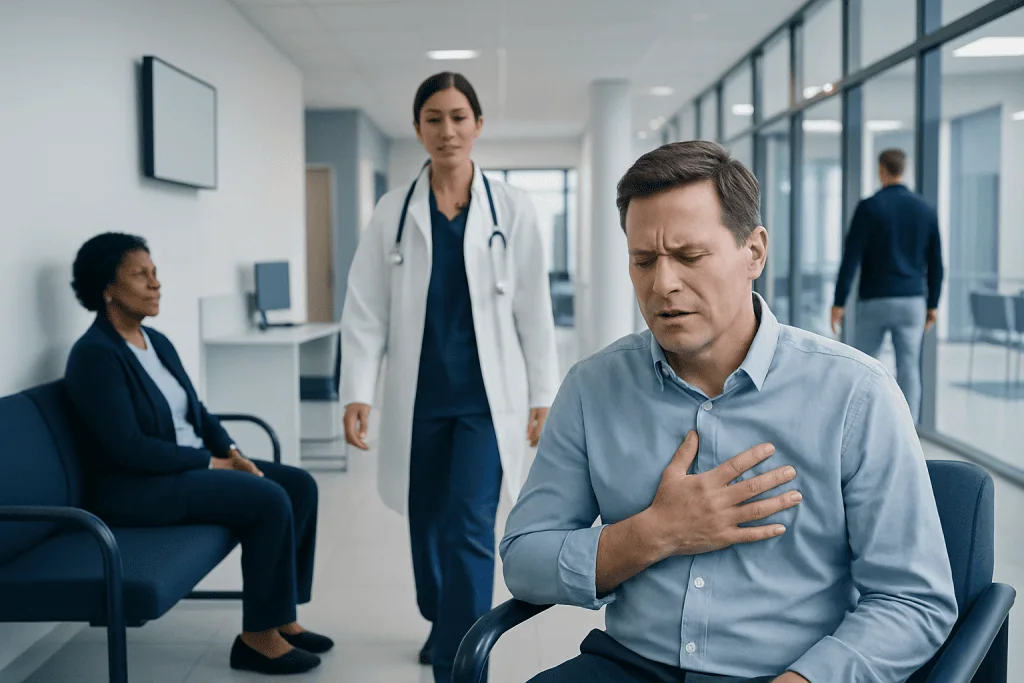
Mild chest, throat, or upper-abdominal pressure can occur after an upper endoscopy and commonly improves within hours to a day. Air introduced during the procedure can cause temporary bloating, belching, pressure, and discomfort behind the breastbone.
Key Takeaways
- Mild chest, throat, or upper-abdominal pressure can occur after an upper endoscopy and commonly improves within hours to a day.
- Air introduced during the procedure can cause temporary bloating, belching, pressure, and discomfort behind the breastbone.
- Sedation can leave some people feeling tired, achy, or mildly uncomfortable, but it should not cause severe or progressive chest pain.
- Rare complications, including bleeding, infection, aspiration, or a tear in the digestive tract, require prompt medical evaluation.
- Following discharge instructions, resting, eating as advised, and contacting the endoscopy team about new symptoms support a safe recovery.
Discomfort in chest after endoscopy is usually temporary and may result from air used during the test, mild irritation of the throat or esophagus, or muscle tension after positioning. However, severe, persistent, or worsening chest pain—especially with breathing difficulty, fever, vomiting, or bleeding—should be assessed urgently.
Overview: discomfort in chest after endoscopy
Discomfort in chest after endoscopy is commonly mild, temporary, and related to air introduced into the digestive tract, irritation from the endoscope passing through the throat and esophagus, or tension in the chest and upper abdominal muscles. It may feel like pressure, fullness, burning, a sore throat extending into the upper chest, or discomfort when swallowing.
An upper endoscopy, also called esophagogastroduodenoscopy (EGD), allows a specialist to examine the esophagus, stomach, and first part of the small intestine using a flexible camera. It can help investigate symptoms such as swallowing difficulty, persistent indigestion, nausea, upper abdominal pain, anemia, or bleeding, and it may also allow biopsies or treatments to be performed.
Although serious complications are uncommon, chest pain after the procedure should not simply be ignored if it is severe, worsening, persistent, or accompanied by other concerning symptoms. The healthcare team that performed the procedure should provide individual recovery guidance, particularly if a biopsy, dilation, removal of a growth, or another intervention was performed.
How upper endoscopy works and who may need it
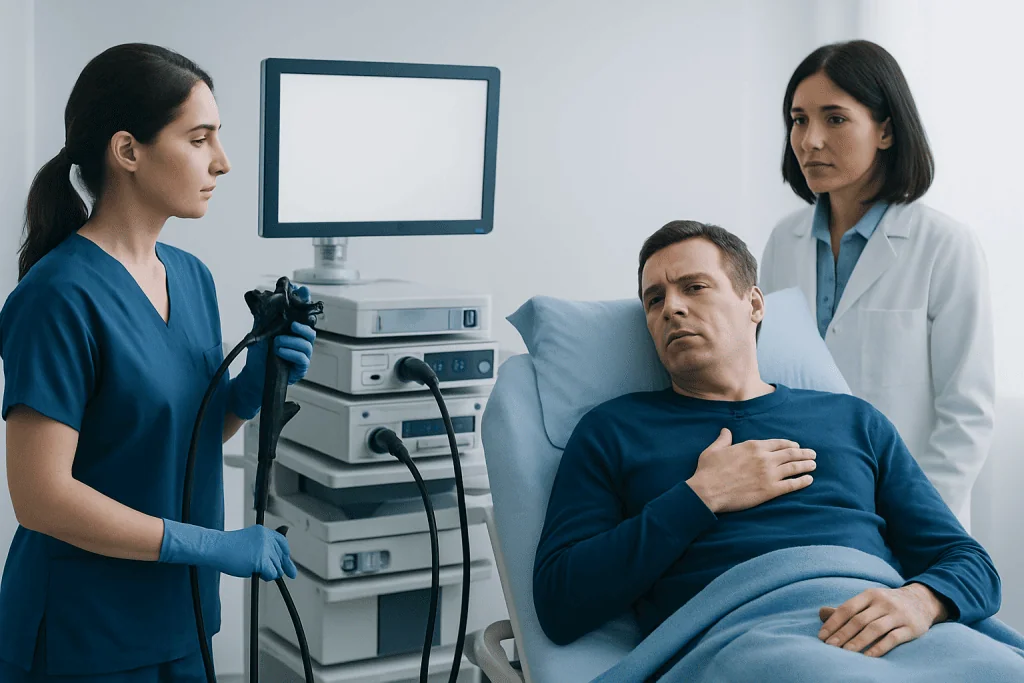
During upper endoscopy, a thin, flexible tube with a light and camera is gently passed through the mouth, throat, and esophagus into the stomach and duodenum. The camera sends images to a monitor, allowing the clinician to inspect the lining of the upper digestive tract. Small instruments can be passed through the endoscope when tissue samples, bleeding control, stretching of a narrowed area, or removal of certain lesions is needed.
Doctors may recommend this examination when symptoms suggest a problem affecting the upper digestive tract. These can include ongoing reflux symptoms, pain or burning behind the breastbone, unexplained vomiting, trouble swallowing, suspected ulcers, black stools, or unexplained iron-deficiency anemia. It may also be used to monitor some known digestive conditions.
Not everyone with heartburn or chest discomfort needs an endoscopy. A clinician considers a person’s symptoms, age, medical history, medications, and warning signs before recommending testing. Chest pain can also arise from the heart, lungs, muscles, or anxiety, so urgent causes should be considered before attributing symptoms to the digestive system.
Preparation and the procedure: what happens step by step

Preparation usually includes fasting for a specified period so that the stomach is empty. Patients should tell the clinical team about allergies, pregnancy, heart or lung conditions, diabetes, sleep apnea, and all medicines or supplements. Instructions about blood thinners, diabetes medicines, and other regular treatments should be followed carefully; people should not stop prescribed medicines without advice from the clinician managing their care.
At the appointment, the team reviews consent, medical history, and vital signs. A throat-numbing spray may be used, and many patients receive sedative medicine through a vein to help them relax. In some settings, deeper anesthesia is used, depending on the procedure, the patient’s health, and local practice. A mouth guard protects the teeth and endoscope.
Once the patient is positioned, the clinician advances the endoscope while carefully viewing the digestive tract. Air or carbon dioxide is introduced to expand the area and improve visibility; this is a frequent reason for temporary pressure or bloating afterward. The examination itself often takes a short time, though additional treatment may make it longer.
Afterward, the patient is monitored until alert enough to leave. If sedation or anesthesia was used, a responsible adult usually needs to accompany the patient home. Driving, operating machinery, signing important documents, or drinking alcohol should be avoided for the period advised by the care team.
Is it normal to have chest discomfort after an endoscopy?
Mild chest discomfort can be normal after an upper endoscopy, particularly during the first several hours. The most common explanation is trapped air or gas, which may create pressure in the upper abdomen or behind the breastbone. Belching, passing gas, gentle walking, and time often help this settle.
The throat and esophagus can also feel mildly sore after the instrument passes through them. Some people notice discomfort on swallowing, a scratchy throat, or a brief sensation of tightness in the upper chest. These symptoms should gradually improve rather than become more intense.
Chest discomfort is more important to report if the endoscopy included esophageal dilation, removal of a lesion, treatment of bleeding, or another therapeutic procedure. These interventions can involve a somewhat different recovery profile, and the endoscopy team can explain what symptoms are expected. People with known gastroesophageal reflux disease (GERD) may also have symptoms that overlap with post-procedure irritation.
How long does discomfort last after an endoscopy?
For most people, mild pressure, bloating, belching, throat soreness, or minor chest discomfort improves within a few hours and is usually gone by the next day. If biopsies were taken, there may still be mild temporary irritation, but biopsies themselves do not usually cause prolonged pain.
Recovery can vary according to the reason for the examination, whether treatment was performed, the amount of air used, and a person’s underlying digestive or medical conditions. Carbon dioxide, when used to inflate the digestive tract, is absorbed more quickly than room air and may reduce post-procedure bloating for some patients.
A person should contact the endoscopy unit or their doctor if discomfort does not begin to improve, lasts longer than expected, returns after initially improving, or interferes with drinking fluids or eating as instructed. The team can determine whether reassurance, a medication adjustment, or further assessment is appropriate.
How long does your chest hurt after anesthesia?
Anesthesia or sedation does not usually directly cause localized chest pain. It can cause drowsiness, dizziness, nausea, fatigue, and occasionally generalized muscle aches or a dry throat, depending on the medicines and airway support used. These effects generally fade over the rest of the day or by the following day.
After deeper anesthesia, some people may have throat or upper-chest soreness if an airway device was used. This should be mild and improve steadily. Coughing or muscle strain around the chest after the procedure can also contribute to temporary soreness.
New chest pain should not automatically be assumed to be an anesthesia effect. Pain that is heavy, crushing, severe, associated with shortness of breath, sweating, fainting, palpitations, or pain spreading to the arm, jaw, back, or shoulder needs urgent medical assessment, as these symptoms may have causes unrelated to the endoscopy.
Benefits, risks, and when to seek medical care
Upper endoscopy can provide direct information that scans and blood tests may not show. It can identify inflammation, ulcers, narrowing, bleeding, and abnormal tissue, while biopsies can help clarify a diagnosis. It can also enable treatment during the same procedure, potentially avoiding separate testing or surgery in selected situations.
Most people recover without significant problems. Possible short-term effects include sore throat, bloating, nausea, and mild discomfort. Less common risks include a reaction to sedation, bleeding after a biopsy or treatment, aspiration of stomach contents into the lungs, infection, and perforation, which is a tear in the wall of the esophagus, stomach, or intestine. The likelihood of complications depends in part on the intervention performed and the individual’s health.
When to seek medical care: Patients should contact the endoscopy team promptly for worsening or persistent chest pain, fever, severe abdominal pain, repeated vomiting, trouble swallowing, shortness of breath, or new weakness. Emergency care is appropriate for severe chest pain, difficulty breathing, fainting, vomiting blood, black tar-like stools, or signs of a serious allergic reaction such as swelling of the face or throat.
For people needing assessment or treatment for upper digestive symptoms, Acibadem International’s multidisciplinary specialists and JCI-accredited hospitals support diagnosis and care for international patients. Further evaluation may include upper endoscopy when a gastroenterologist considers it clinically appropriate.
Recovery and self-care after endoscopy
After discharge, patients should follow the instructions provided by their endoscopy unit, especially regarding food, drink, medicines, and activity. Once the numbness in the throat has worn off and swallowing feels safe, many people can begin with sips of water and then return to food as advised. A softer diet may feel more comfortable temporarily if the throat is sore.
Resting for the remainder of the day is sensible after sedation. Gentle walking can help relieve bloating and trapped air. People should avoid strenuous activity until the care team says it is safe, particularly after therapeutic procedures. Over-the-counter symptom relief should only be used if it is compatible with the person’s health conditions and discharge instructions.
It is helpful to keep the contact number for the endoscopy service available after returning home. If a biopsy was taken, results are often reviewed after laboratory analysis, and the clinician will explain what follow-up is needed. A normal recovery should show gradual improvement, not escalating pain or new systemic symptoms.
Frequently asked questions
What symptoms are concerning after an endoscopy?
Concerning symptoms include severe or worsening chest or abdominal pain, fever, shortness of breath, persistent vomiting, difficulty swallowing, vomiting blood, black stools, fainting, or marked weakness. These may indicate a complication or another urgent medical problem. The endoscopy team should be contacted promptly, and emergency care is appropriate for severe symptoms.
Can air used during endoscopy cause chest pressure?
Yes. Air or carbon dioxide is introduced to open the digestive tract so the clinician can see its lining clearly. Residual air can cause bloating, belching, upper abdominal pressure, and a mild pressure sensation in the chest that usually passes within hours.
Is a sore throat after upper endoscopy expected?
A mildly sore, dry, or scratchy throat is common after an upper endoscopy because the scope passes through the throat. It usually improves within a day or two. Severe pain, increasing trouble swallowing, or breathing problems should be assessed urgently.
Can endoscopy cause heart problems or a heart attack?
Upper endoscopy does not usually cause a heart attack, but sedation and the procedure can place stress on the body in people with certain underlying medical conditions. Any symptoms suggestive of a heart problem, such as heavy chest pressure, shortness of breath, sweating, or pain spreading to the jaw or arm, require urgent evaluation.
Can I eat after an endoscopy?
Patients should wait until throat numbness has worn off and follow the specific instructions from their care team. Many people can start with fluids and light food, while others may need temporary dietary restrictions after a treatment procedure. It is important to ask the endoscopy team if there are individualized instructions.
When can I return to normal activities after endoscopy?
Many people return to usual activities the next day after a straightforward diagnostic endoscopy. Sedation can impair coordination and judgment for the rest of the day, so driving and important decisions should be avoided as instructed. Recovery may take longer when a therapeutic procedure has been performed.
References
- American Society for Gastrointestinal Endoscopy
- National Institute of Diabetes and Digestive and Kidney Diseases
- National Health Service
- Mayo Clinic
This article is for general information only and is not a substitute for professional medical advice. Please consult a qualified doctor about your individual situation.
Explore treatments in Turkey — costs, top hospitals & a free quote
JCI-accredited · board-certified surgeons · reply within 24h
Add us as a Preferred Source to see more of our trusted health content across Google Search, AI Overviews and Discover.

More from the Health Library


Related Specialists
Dr. Abulfaz Abbasli
Andrology
Dr. Salim Sırrı Türker
Orthopedic Surgery & Traumatology
Prof. Dr. Yurtkuran Sadıkoğlu
Interventional Radiology
Dr. Hülya Yüksel
Physical Medicine & Rehabilitation