

Chemo Headache: How It Works, Results and What to Expect

Chemo headaches can have several causes, including chemotherapy itself, dehydration, nausea medicines, infection, anemia and changes in sleep or caffeine intake. A new, severe or unusual headache during cancer treatment should be reported promptly because people receiving chemotherapy may have a higher risk of infection or bleeding.
Key Takeaways
- Chemo headaches can have several causes, including chemotherapy itself, dehydration, nausea medicines, infection, anemia and changes in sleep or caffeine intake.
- A new, severe or unusual headache during cancer treatment should be reported promptly because people receiving chemotherapy may have a higher risk of infection or bleeding.
- Relief may involve fluids, rest, treating nausea, adjusting supportive medicines and using pain medicines approved by the oncology team.
- The timing and intensity of side effects vary widely between regimens and individuals; there is no single hardest week of chemotherapy.
- Headache improvement alone is not a reliable sign that chemotherapy is working; scans, examinations and laboratory tests are used to assess response.
A chemo headache is a headache that develops during or after cancer treatment. It can be related to chemotherapy medicines, dehydration, nausea, anemia, sleep changes, stress or other treatment effects, and should be discussed with the oncology team so that serious causes can be excluded and symptoms managed safely.
Chemo Headache: What It Is and How It Works
A chemo headache is head pain that occurs during or after chemotherapy. It may feel like pressure, throbbing, tightness around the head, or pain on one or both sides. Some people have headaches only on infusion day, while others notice them for several days after treatment.
Chemotherapy can contribute to headaches directly, but the symptom often has more than one cause. Treatment may lead to dehydration, reduced food intake, nausea, fatigue, disturbed sleep or changes in blood counts. Medicines given alongside chemotherapy, including some anti-sickness medicines, steroids or pain medicines, can also play a role.
Not every headache during cancer care is caused by chemotherapy. Migraine, tension-type headache, infection, high blood pressure, anemia, medication withdrawal and the cancer itself can sometimes be relevant. For this reason, the oncology team should know about new chemo headaches, especially when they are different from a person’s usual headaches.
Chemo Headache Symptoms and Possible Causes
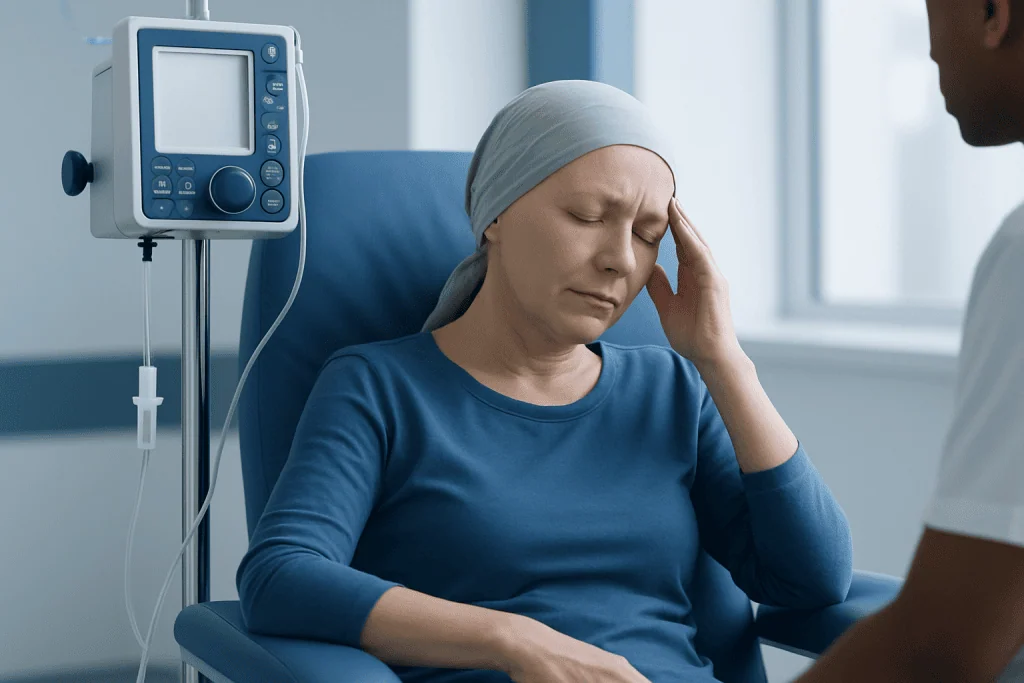
Chemo headache symptoms vary. A person may have dull, persistent pressure, a throbbing headache with nausea, sensitivity to light or sound, neck and scalp tension, or headache that worsens when they are tired or have not been drinking enough. Keeping a simple symptom diary can help identify patterns around infusion days, meals, sleep, medicines and fluid intake.
Common contributors include dehydration from vomiting, diarrhea or low appetite; low blood counts such as anemia; fatigue; emotional strain; and reduced or suddenly stopped caffeine intake. Some treatments may trigger headache through effects on blood vessels, inflammation or the nervous system. People who had migraine before cancer treatment may find that their usual pattern changes.
Less commonly, headache can signal a complication that needs urgent assessment. Infection may become serious more quickly when white blood cell counts are low. A very low platelet count can increase bleeding risk, and some cancer treatments can affect blood pressure or clotting. The care team may check for these causes rather than assuming that the headache is simply a routine chemotherapy side effect.
- Record when the headache begins, its severity and what improves or worsens it.
- Note associated symptoms such as fever, vomiting, blurred vision, weakness or confusion.
- Bring an up-to-date list of chemotherapy and supportive medicines to appointments.
Who May Be More Likely to Develop Chemo Headaches

Anyone receiving chemotherapy can develop a headache, but risk may be greater when treatment causes nausea, vomiting, diarrhea, poor intake or marked fatigue. Individuals with a personal history of migraine or recurrent headaches may also be more sensitive to treatment-related triggers.
Headache can be more likely when several treatments are given together, such as chemotherapy combined with steroids, immunotherapy, targeted therapy, radiation treatment or medicines that prevent nausea. This does not mean a person should stop prescribed medicines. Instead, the oncology team can review the schedule and consider whether a specific medicine may be contributing.
People should not try to determine candidacy for a particular chemo headache remedy on their own. The safest options depend on the chemotherapy regimen, liver and kidney function, platelet level, other medicines and whether there is any concern for infection or bleeding. A clinician or oncology pharmacist can recommend an appropriate plan.
Chemo Headache Treatment: Step-by-Step Supportive Care
Chemo headache treatment usually begins with an assessment of the symptom and its likely causes. The oncology team may ask about the timing of chemotherapy, fluid intake, nausea, sleep, caffeine use, blood pressure and other symptoms. Depending on the situation, they may arrange blood tests, review medicines, check for infection or recommend imaging if the headache has concerning features.
For mild headaches without warning signs, supportive care may include regular sips of fluid, small frequent meals, a quiet dark room, rest, a cool or warm compress and gentle relaxation techniques. Treating nausea and maintaining hydration can be important chemo headache relief measures when poor intake is a trigger. If caffeine withdrawal may be contributing, the care team can advise on a safe, consistent approach.
Medicines for pain or nausea should be taken only as advised by the oncology team. Some common non-prescription pain relievers may not be suitable during chemotherapy because they can affect bleeding risk, kidney function, stomach irritation or interactions with other medicines. The team may recommend an approved pain medicine, adjust anti-nausea treatment, give fluids or address anemia or another underlying issue.
A useful chemo headache remedy is therefore not one universal product but a plan matched to the person and their treatment. Contacting the cancer team early can prevent symptoms from becoming harder to control and can identify situations that need medical attention.
How Long Does Chemo Headache Last?
Many chemo headaches are temporary and improve within hours to a few days as hydration, sleep and appetite recover after an infusion. However, the duration depends on the medicine used, the treatment schedule and contributing factors such as nausea, low blood counts or an ongoing medication effect.
A headache that lasts longer than expected, returns with every cycle, becomes progressively more severe or does not respond to the plan provided by the oncology team should be reviewed. Persistent headache may need a medication adjustment or investigation for causes unrelated to chemotherapy.
It can help to report the exact pattern: whether pain starts during the infusion, later that day, on days two or three, or near the next cycle. This information allows the care team to plan preventive measures before future treatments when appropriate.
What Are Good Signs That Chemo Is Working?
Feeling better, having fewer symptoms or noticing a reduction in a tumor-related lump can be encouraging, but these changes alone cannot reliably show whether chemotherapy is working. Likewise, side effects such as a chemo headache do not prove that treatment is effective, and having few side effects does not mean that treatment is failing.
The oncology team evaluates response through the type and stage of cancer, physical examinations, blood tests and imaging such as CT, MRI or PET scans when indicated. For some blood cancers, specialized laboratory or bone marrow tests may also be used. The timing of these assessments is planned around the treatment regimen.
Patients are encouraged to ask how and when their response will be assessed. Understanding the purpose of each treatment cycle and the planned monitoring can make changes in symptoms easier to interpret without drawing conclusions from side effects alone.
What Week of Chemo Is the Hardest?
There is no single hardest week of chemotherapy. Some people feel the strongest effects in the first few days after an infusion, when fatigue, nausea, body aches or headache may be more noticeable. Others experience more difficulty later in the cycle, particularly if blood counts reach their lowest point before beginning to recover.
The most difficult period can also change from one cycle to the next. Effects may accumulate over time, while supportive medicines, dose changes and practical adjustments can improve tolerability. Each chemotherapy regimen has its own expected pattern, so the treating team is the best source of guidance about what to anticipate.
Planning ahead can help: arrange support on expected lower-energy days, keep approved drinks and easy-to-eat foods available, and tell the oncology team early about symptoms that interfere with eating, drinking, sleeping or daily activities.
When to Seek Medical Care
People receiving chemotherapy should contact their oncology team promptly for a new, persistent or worsening headache. They should seek urgent medical care for a sudden severe headache, headache with fever or chills, repeated vomiting, confusion, fainting, seizure, stiff neck, new weakness or numbness, difficulty speaking, vision changes, trouble walking, chest pain or shortness of breath.
Urgent advice is also important if a headache occurs after a fall or injury, if there is unusual bruising or bleeding, or if the person has been told that their platelet count or white blood cell count is low. These symptoms do not always indicate a serious problem, but they need timely assessment during cancer treatment.
Acibadem International’s multidisciplinary specialists and JCI-accredited hospitals support international patients with cancer diagnosis, chemotherapy care and treatment-related symptom management. A patient should always follow their own oncology team’s emergency contact instructions and treatment plan.
Frequently asked questions
How to get rid of chemo headache?
The safest approach is to tell the oncology team about the headache so they can identify likely causes and recommend appropriate treatment. Hydration, rest, nausea control, regular small meals and clinician-approved pain medicine may help, but people should not start or combine pain medicines without advice during chemotherapy.
Can dehydration cause chemo headaches?
Yes. Vomiting, diarrhea, reduced appetite and difficulty drinking can all lead to dehydration, which is a common headache trigger during chemotherapy. The care team may recommend a hydration plan or provide intravenous fluids if needed.
Should a person take ibuprofen for a chemo headache?
Ibuprofen and similar anti-inflammatory medicines are not suitable for everyone receiving chemotherapy. They can increase bleeding risk or affect kidney function in some situations, so the oncology team should approve any pain medicine before it is used.
Are chemo headaches a sign that cancer is spreading?
Most headaches during chemotherapy are related to treatment effects or common triggers such as dehydration, fatigue or medication changes. However, a new, severe, persistent or unusual headache needs medical review so the team can rule out important causes.
Can chemotherapy trigger migraines?
Chemotherapy and supportive medicines can trigger migraine-like headaches in some people, particularly those with a prior migraine history. The oncology team can help distinguish migraine from other causes and recommend treatment that is compatible with the cancer care plan.
When should chemo headache be treated as an emergency?
Emergency assessment is needed for a sudden severe headache or one accompanied by fever, confusion, seizure, fainting, stiff neck, weakness, speech difficulty, vision changes or repeated vomiting. During chemotherapy, these symptoms should not be managed at home without medical advice.
References
- American Cancer Society
- National Cancer Institute
- American Society of Clinical Oncology
- Centers for Disease Control and Prevention
- National Comprehensive Cancer Network
This article is for general information only and is not a substitute for professional medical advice. Please consult a qualified doctor about your individual situation.
Persistent digestive symptoms? Get evaluated in Turkey
JCI-accredited · board-certified surgeons · reply within 24h
Add us as a Preferred Source to see more of our trusted health content across Google Search, AI Overviews and Discover.
Check your numbers in seconds
BMI, calories, due date, blood pressure and 30+ more clinical calculators — free, instant, doctor-reviewed ranges.

More from the Health Library



Related Specialists

Dr. Selin Alponat
Breast Clinic Clinical Service
Dr. Atilay Büker
Radiology
Dr. Zeynep Sağırkaya
Occupational Medicine
Dr. Ali Riza Özdurmuş
Oral and Dental Health