

Operation for Hypospadias: Procedure, Recovery and Results

Hypospadias surgery is individualized according to the position of the urinary opening, penile curvature and available tissue. Many repairs are completed in one operation, although more complex forms may need staged surgery.
Key Takeaways
- Hypospadias surgery is individualized according to the position of the urinary opening, penile curvature and available tissue.
- Many repairs are completed in one operation, although more complex forms may need staged surgery.
- Healing typically takes several weeks, while the final appearance and urinary stream are assessed over months.
- A temporary urinary catheter or stent is commonly used after repair and requires careful home care.
- Potential complications include a urinary fistula, narrowing of the new opening, infection or persistent curvature, but many can be treated successfully.
- Long-term review is important, especially through puberty, because growth can reveal urinary or curvature concerns.
An operation for hypospadias is a reconstructive procedure that places the urinary opening closer to the tip of the penis and may straighten penile curvature. It is usually performed in early childhood, with the approach tailored to the location and severity of the hypospadias.
Overview: What Is an Operation for Hypospadias?
An operation for hypospadias is a reconstructive procedure used to move the urinary opening (urethral meatus) to a more typical position near the tip of the penis. It can also correct downward curvature of the penis, known as chordee, and create a urinary channel that supports a forward-directed stream.
Hypospadias is a congenital condition, meaning it is present at birth. The opening may be just below the tip of the penis or farther down the underside, including near the scrotum in more extensive forms. Some children with a mild form may not require surgery; however, repair may be recommended when the urinary stream is difficult to direct, curvature is present, or future sexual function could be affected.
Paediatric urologists generally plan surgery after examining the child carefully and discussing the family’s goals. The planned operation depends on anatomy rather than on a single standard technique. Hypospadias can vary substantially in severity, so an individual assessment is essential.
Who May Be a Candidate and How the Procedure Works
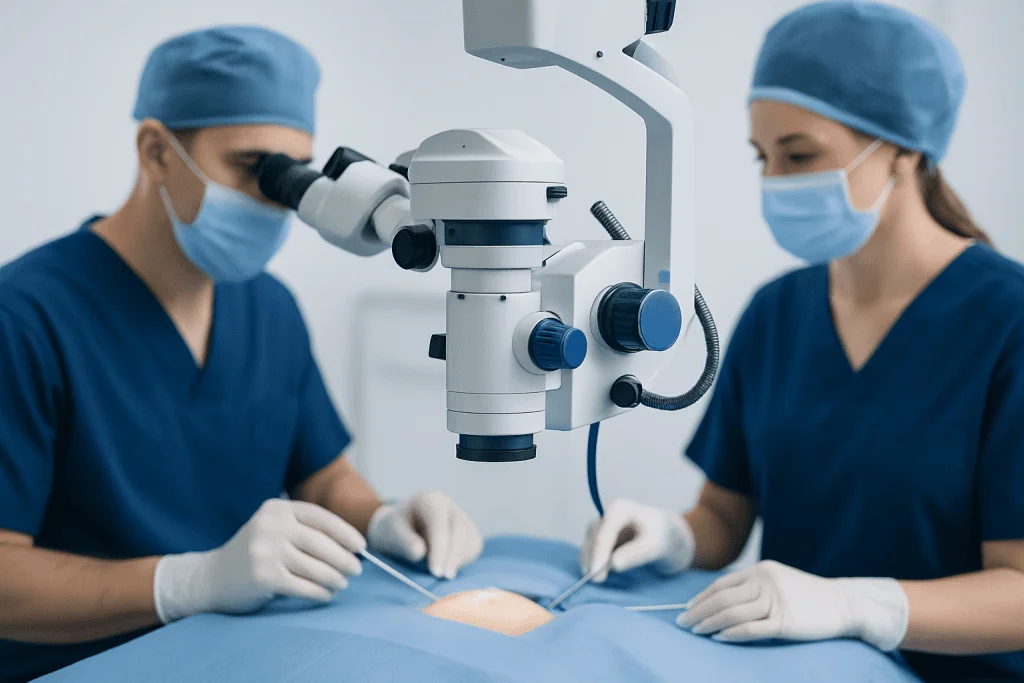
Hypospadias repair is often considered between 6 and 18 months of age, although surgery can be performed later in childhood and, less commonly, in adolescence or adulthood. Timing is influenced by the child’s health, anatomy, previous procedures and the experience of the surgical team. Children who have an undescended testicle, unusually small penis or more complex genital anatomy may need further assessment before surgery.
The central aim is functional reconstruction. The surgeon may straighten the penis first, then create or reconstruct a tube for urine using nearby penile skin and tissue. In some cases, tissue grafts may be needed. Distal hypospadias near the tip is frequently suitable for a single-stage repair, while proximal or severe hypospadias may require a staged approach with more than one operation.
Before surgery, the care team reviews medical history, current medicines, allergies and anaesthetic safety. Parents or caregivers receive instructions about eating and drinking before anaesthesia, bathing, transport home and the expected use of a dressing or urinary stent afterward.
Step by Step: What Happens During Hypospadias Surgery

Hypospadias surgery is performed under general anaesthesia, so the child is asleep and does not feel pain during the procedure. A caudal block or another regional pain-relief technique may also be used to reduce discomfort in the first hours after surgery. The operation is usually an outpatient procedure, although an overnight stay may be appropriate for some children or more complex repairs.
The surgeon examines the penis under anaesthesia and assesses whether curvature is present. If needed, the penis is straightened before the urinary channel is reconstructed. The surgeon then uses carefully selected local tissue to form a new urethra, positions the opening near the tip, and reshapes the glans and skin where appropriate.
A small catheter or stent may be left in place to keep urine away from the healing repair. A protective dressing may also be applied. The operation length varies with the complexity of the condition, whether curvature needs correction and whether the repair is being completed in one or more stages.
Families should ask the surgeon which technique is planned, how long the catheter is expected to remain, and which signs after discharge should prompt a call. Hypospadias surgery should be carried out by an experienced paediatric urology team with structured postoperative follow-up.
How Long Is the Recovery After Hypospadias Surgery?
Initial recovery after hypospadias surgery usually takes about one to two weeks, when the catheter, stent or dressing may still be in place. The penis can look swollen, bruised or darker in colour during the first days; this often improves as healing progresses. The child may be tired or uncomfortable for a short time after anaesthesia, but many return gradually to usual light activities within several days.
The stent or catheter is commonly removed after approximately one to two weeks, depending on the repair. Full tissue healing continues over several weeks, and the final cosmetic appearance may take several months to settle. Follow-up appointments allow the surgeon to check the urinary stream, healing of the new opening and penile straightness.
Children should avoid straddle activities, rough play, cycling and contact sports until the surgeon confirms that these are safe. The exact timetable differs by procedure and age. Caregivers should follow the individual discharge plan rather than relying on a fixed schedule from another child’s experience.
Longer-term review can be valuable through toilet training and puberty. These stages may reveal spraying of urine, narrowing of the opening or recurrent curvature that was not obvious earlier in childhood.
What Not to Do After Hypospadias Surgery
After hypospadias surgery, caregivers should not remove, pull, clamp or reposition the catheter, stent or dressing unless the surgical team has specifically instructed them to do so. The child should not take baths, swim or use any topical cream, powder or antiseptic on the wound unless it has been approved by the surgeon. Medicines should be given only as prescribed or recommended for the child.
For the period advised by the care team, children should avoid pressure or impact to the surgical area. This commonly means avoiding bicycles, ride-on toys, climbing frames, straddle toys, vigorous running, wrestling and contact sports. Loose clothing and careful nappy or diaper changes can help reduce friction and discomfort.
Constipation can cause straining and discomfort, so caregivers should follow advice about fluids, age-appropriate diet and any prescribed stool-softening treatment. If urine stops draining from the catheter, the dressing becomes displaced, or pain is not controlled with the agreed plan, the surgical team should be contacted promptly.
How Serious Is Hypospadias Surgery? Benefits and Possible Risks
Hypospadias repair is a planned reconstructive operation that is commonly performed by specialist paediatric urologists. General anaesthesia and surgery always carry some risk, but children are assessed carefully beforehand and monitored throughout the procedure and recovery. For many families, the potential benefits include improved direction of urination, correction of curvature and support for future sexual function.
The likelihood of complications depends on the type of hypospadias, the degree of curvature, tissue quality and whether there have been previous repairs. Possible complications include bleeding, infection, wound separation, narrowing of the urethral opening, a split or spraying urine stream, and a urethrocutaneous fistula, which is an unintended small opening through which urine leaks.
Some children require a further procedure if a complication develops or if the original hypospadias was severe. This does not necessarily mean that the initial surgery was unsuccessful; complex anatomy can make staged care the safest approach. A surgeon can explain the expected benefits and risks in the child’s specific case before consent is given.
Can Hypospadias Cause Problems Later in Life?
Some people with mild hypospadias have no significant problems later in life, particularly if the urinary stream is straight and the penis is not curved. Others may experience urine spraying or difficulty urinating while standing, penile curvature during erections, concerns about appearance, or difficulties with sexual function. These concerns can vary widely from person to person.
After successful repair, many children grow up without major urinary or sexual difficulties. Nevertheless, a small number may develop issues later, such as narrowing of the urethra, persistent curvature, fistula formation or dissatisfaction with appearance. Puberty is an especially useful time to reassess function because penile growth may make curvature more noticeable.
Adolescents and adults who had hypospadias, whether repaired or not, should seek a urologic review if they notice pain with erections, a marked bend, weak stream, repeated urinary infections, straining to pass urine, urine leakage from an additional opening or concerns about sexual wellbeing. Timely assessment can identify options for treatment or support.
When to Seek Medical Care
Parents and caregivers should contact the surgical team urgently if the child develops fever, increasing redness or swelling, pus-like drainage, worsening pain, repeated vomiting, unusual sleepiness, or difficulty drinking after surgery. They should also seek advice if urine is not draining into the nappy or diaper as expected, the catheter has come out, or the dressing causes concern.
Once the early healing period has passed, medical review is advisable if urine leaks from somewhere other than the new opening, the stream is persistently weak or sprays significantly, urination appears painful, or the penis appears to curve noticeably during erections. These signs are not always emergencies, but they should be assessed by a qualified urologist.
Acibadem International’s multidisciplinary specialists and JCI-accredited hospitals provide assessment and treatment for international patients with hypospadias and related paediatric urology needs. A paediatric urology consultation can help families understand whether observation, a single repair or staged surgery is most appropriate.
Frequently asked questions
How long does hypospadias surgery take?
The duration depends on the location of the urinary opening, the presence of penile curvature and the reconstruction technique. A straightforward distal repair may take a few hours, while complex or staged repairs can take longer. The surgical team can provide an estimate after assessing the child’s anatomy.
At what age is hypospadias surgery usually done?
Repair is often performed in infancy or early toddlerhood, commonly between 6 and 18 months of age. However, the best timing is individualized and may be later when a child has other health needs or more complex anatomy. Hypospadias can also be evaluated and treated in older children and adults.
How long is the recovery after hypospadias surgery?
The first phase of healing generally lasts one to two weeks, often until the catheter or stent is removed. Swelling and changes in appearance can take several weeks to improve, and the final result may continue to settle over months. Follow-up is important to assess healing and urination.
How serious is hypospadias surgery?
Hypospadias surgery is a specialised reconstructive procedure performed under general anaesthesia. It is commonly carried out safely, but it has potential risks such as infection, fistula, narrowing of the opening and the possible need for another repair. The degree of risk depends mainly on the severity and location of the hypospadias.
What not to do after hypospadias surgery?
Do not disturb the catheter, stent or dressing, and do not apply products to the area unless the surgeon recommends them. Children should avoid cycling, straddle toys, rough play, swimming and contact activities until cleared by the surgical team. Caregivers should also follow specific instructions about bathing, nappy changes and medicines.
Can hypospadias cause problems later in life?
It can, especially when there is untreated curvature, a difficult urinary stream or more severe hypospadias. Some people may have spraying of urine, discomfort or curvature with erections, or sexual-function concerns. Many people do well after repair, but review during puberty or adulthood is sensible if symptoms arise.
References
- American Urological Association
- European Association of Urology
- Urology Care Foundation
- National Health Service
- MedlinePlus, U.S. National Library of Medicine
This article is for general information only and is not a substitute for professional medical advice. Please consult a qualified doctor about your individual situation.
Hypospadias in Turkey — costs, top hospitals & a free quote
JCI-accredited · board-certified surgeons · reply within 24h
Add us as a Preferred Source to see more of our trusted health content across Google Search, AI Overviews and Discover.

Urology
Treatment of the urinary system and male reproductive health, including robotic and laser procedures.
63 specialists in this unitMore from the Health Library



Related Specialists

Assoc. Prof. Dr. Özlem Özgür Gürsoy
Gynecology & Obstetrics
Prof. Dr. Tunç Ovali
Ophthalmology
Dr. Deniz Bülent Kalay
Emergency Service
Dr. Erdal Demirel
Anesthesiology