Venous Malformations Treatment: How It Works, Results and What to Expect

Venous malformations are congenital low-flow vascular malformations that may become more noticeable over time. Treatment is not always needed; the main goals are symptom relief, improved function and prevention of complications.
Key Takeaways
- Venous malformations are congenital low-flow vascular malformations that may become more noticeable over time.
- Treatment is not always needed; the main goals are symptom relief, improved function and prevention of complications.
- Image-guided sclerotherapy is a common treatment that closes abnormal venous spaces from within.
- Surgery may be considered for selected, well-defined malformations or as part of combined treatment.
- Long-term follow-up is important because venous malformations can persist, recur or change over time.
Venous malformations treatment is tailored to the malformation’s location, size, symptoms and effect on daily life. Many people benefit from monitoring and compression, while sclerotherapy, surgery or combined care may reduce pain, swelling, bleeding and functional limitations.
Overview: how venous malformations treatment works
Venous malformations treatment aims to reduce symptoms and protect function rather than applying one identical procedure to every person. These are congenital abnormalities of veins, meaning they develop before birth, although they may not become apparent until childhood or adulthood. They are not the same as infantile hemangiomas, which are vascular tumors that typically grow and later shrink.
A venous malformation consists of enlarged, irregular venous channels that allow blood to pool slowly. It may appear as a soft bluish or skin-colored swelling, often in the head and neck, limbs, trunk, mouth or internal tissues. Some lesions cause little difficulty, while others cause pain, swelling, reduced movement, clotting within the malformation, skin changes or bleeding.
Care is usually planned by a vascular anomalies team. Depending on the individual situation, this may include interventional radiology, vascular surgery, dermatology, plastic and reconstructive surgery, hematology, radiology, pain management and other specialists. The most appropriate approach may be observation, compression therapy, image-guided sclerotherapy, surgery, medicines for selected complex cases, or a combination of these options.
Who may benefit from treatment and how candidacy is assessed
Treatment is generally considered when a venous malformation causes persistent pain, recurrent swelling, repeated clotting episodes, bleeding, skin breakdown, infection, cosmetic concerns with a meaningful effect on wellbeing, or interference with movement, speaking, eating, vision or other body functions. A lesion near an airway, joint, nerve, eye or internal organ may require particularly careful assessment.
Not every venous malformation needs an intervention. A small, stable lesion without symptoms can often be observed with regular clinical review. For people with symptoms, the decision depends on the lesion’s depth and extent, whether it involves muscle, bone or important structures, and whether treatment benefits are likely to outweigh risks.
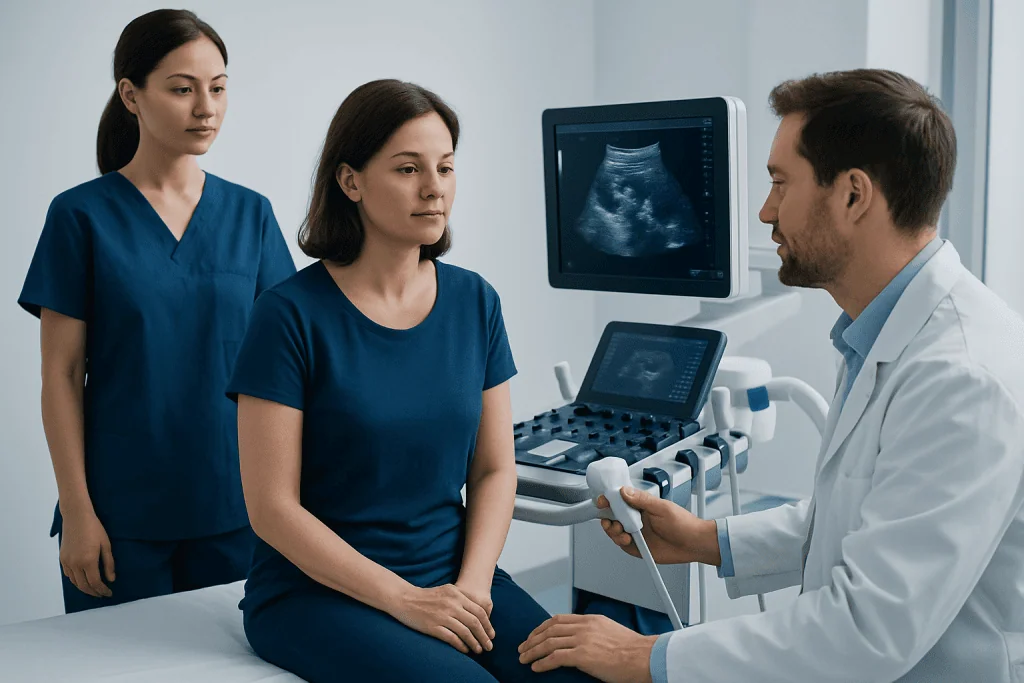
Assessment commonly includes a medical history, physical examination and imaging. Ultrasound with Doppler can help assess blood flow, while magnetic resonance imaging (MRI) often maps the full extent of the malformation and its relationship to nearby tissues. Blood tests may be recommended for larger lesions because slow blood flow can sometimes lead to localized clotting changes.
- Symptoms and their impact on daily activities
- Location, size and involvement of nearby nerves, joints or organs
- Previous procedures and response to treatment
- Risk of bleeding, clotting or treatment-related tissue injury
- Personal goals, including comfort, function and appearance
Sclerotherapy: the most common minimally invasive procedure

Sclerotherapy is frequently used for venous malformations because it can treat abnormal venous spaces without making a large surgical incision. During the procedure, an interventional radiologist uses ultrasound and/or X-ray guidance to place a fine needle into the malformation. Contrast material may be used to outline the channels, followed by a carefully selected sclerosant medicine that irritates the lining of the abnormal veins and causes them to close and shrink over time.
The procedure is often performed with sedation or general anesthesia, especially for children, extensive lesions or areas that are difficult to treat comfortably. The type and amount of sclerosant, number of injections and monitoring plan are individualized. Some malformations need more than one session, usually spaced apart to allow swelling to settle and response to be evaluated.
Following treatment, inflammation inside the treated venous spaces is expected and is part of how sclerotherapy works. This can cause temporary pain, firmness, bruising and swelling. Improvement is often gradual rather than immediate, as the body absorbs and remodels the treated tissue over weeks to months.
People considering a catheter-based approach may discuss vascular malformations treatment with a specialist team, including the likely number of sessions and the expected goals for their particular lesion.
Surgery, medicines and combined treatment options
Surgery may be an option when a venous malformation is localized and can be removed without unacceptable effects on nearby tissues. It may also be used after sclerotherapy has reduced the size or blood-filled component of a lesion. Complete removal is not always possible or advisable, particularly when the malformation extends through muscle, nerves, joints or sensitive areas of the face and neck.
In selected cases, surgery can improve function, reduce recurrent bleeding or remove residual tissue that remains bothersome after other treatment. Reconstructive procedures may sometimes be needed when a malformation has affected skin, soft tissue or body shape. The surgical plan should account for scarring, nerve injury, bleeding and the possibility of recurrence.
Compression garments can be useful for venous malformations in the limbs. They may lessen swelling, aching and blood pooling, and are often recommended alongside other treatments. Simple pain-relief measures may be advised, while a clinician may assess whether anti-inflammatory medicines or other treatment is appropriate for acute painful clotting episodes.
For extensive, complex or difficult-to-treat malformations, specialists may consider targeted medical therapies. These treatments require careful selection, monitoring and discussion of potential side effects. A combined plan may include medication, sclerotherapy and surgery over time rather than relying on one procedure alone.
What happens before, during and after the procedure
Before sclerotherapy or surgery, the care team reviews imaging, medicines, allergies, medical conditions and anesthesia needs. Patients may be asked to stop or adjust certain medicines only under medical guidance. The clinician will explain the intended benefit, alternatives, likely recovery, possible need for further treatment and site-specific risks before consent is obtained.
During sclerotherapy, imaging guides needle placement and treatment delivery. The length of the procedure varies with the malformation’s complexity and the number of areas being treated. Afterward, patients are observed until it is safe to go home or, less commonly, until overnight monitoring is complete. A compression dressing or garment may be used when appropriate.
Recovery commonly includes localized soreness, bruising, swelling and firmness for several days or longer. The treated area may initially look more swollen before it begins to improve. Most people can return to light daily activities relatively soon, but the timing for exercise, work, school and travel should follow the treating team’s instructions.
Follow-up visits and imaging assess whether symptoms have improved and whether additional treatment would be helpful. Results develop gradually and can differ depending on the size, location and tissue involvement of the malformation. A multidisciplinary service such as Acibadem International can coordinate diagnosis and treatment for international patients through its JCI-accredited hospitals.
Benefits, risks and expected results
The potential benefits of venous malformations treatment include less pain and swelling, fewer painful clotting episodes, improved mobility or use of the affected body part, reduced bleeding, and improved appearance when this is an important concern. Treatment can also help preserve function where a lesion affects movement, speech, swallowing or other activities.
All procedures carry risks. With sclerotherapy, possible complications include pain, swelling, skin blistering or ulceration, infection, bleeding, temporary nerve irritation, allergic reactions and damage to nearby tissues. Rare but serious complications can occur depending on the treatment site and sclerosant used. Surgery may involve bleeding, infection, scarring, wound problems, nerve injury and recurrence.
Can a venous malformation be completely cured? Some small, well-defined malformations can be removed or treated very successfully, but many are diffuse and cannot be permanently eliminated with a single procedure. The more realistic goal is often durable control of symptoms and improvement in function. Ongoing review is useful because residual abnormal veins may enlarge or become symptomatic later.
What is the prognosis for venous malformation? Prognosis is usually good when care is individualized and complications are identified early. Many people manage symptoms effectively with conservative measures and, when needed, staged procedures. The outlook depends mainly on location, extent, involvement of vital structures and response to treatment rather than on the visible size alone.
Growth, self-care and when to seek medical care
How fast do vascular malformations grow? Venous malformations generally grow slowly and proportionally as a child grows, but their course is variable. They can become more noticeable during puberty, pregnancy, after trauma, with hormonal changes or after incomplete treatment. Sudden enlargement may reflect bleeding or clotting within the lesion and should be assessed by a clinician.
Self-care depends on the location and symptoms. A clinician may recommend properly fitted compression garments for an affected arm or leg, regular gentle movement, skin protection and avoiding trauma to a superficial lesion where possible. People should not attempt to puncture, drain or tightly bind a malformation themselves. Any pain, swelling or medicine plan should be discussed with a qualified healthcare professional.
When to seek medical care: medical review is appropriate for a new or changing bluish swelling, persistent pain, increasing swelling, recurrent bleeding, impaired movement or symptoms affecting eating, speaking, breathing or vision. Urgent medical assessment is needed for heavy bleeding, sudden severe pain or swelling, skin turning dark or cold, breathing difficulty, chest pain, fainting, or signs of infection such as fever and spreading redness.
How serious is a venous malformation? Many are not life-threatening and can be monitored or managed successfully. However, some can be serious because of their size, location or effect on nearby structures, and complications such as bleeding, clotting, infection or functional impairment can occur. Specialist assessment helps determine the individual level of risk and the safest treatment plan.
Frequently asked questions
Is sclerotherapy painful for venous malformations?
Sclerotherapy is usually performed with local anesthesia, sedation or general anesthesia depending on the person’s age, the lesion and the treatment area. Soreness, swelling and tenderness after treatment are common and usually temporary. The care team can provide an individualized plan for comfort and pain control.
How many sclerotherapy sessions are needed?
The number of sessions varies widely. Small, localized venous malformations may respond after one treatment, while larger or diffuse lesions often require staged procedures. Follow-up examination and imaging help determine whether further treatment is likely to be beneficial.
Can venous malformations return after treatment?
A treated area may improve substantially, but venous malformations can persist or become symptomatic again because they are structural abnormalities of veins. Recurrence is more likely when a lesion is extensive or cannot be completely treated. Long-term follow-up helps identify changes early.
Are venous malformations cancerous?
No. Venous malformations are benign vascular abnormalities and do not turn into cancer. Even so, they may cause important symptoms or complications depending on where they occur and how extensive they are.
Can exercise make a venous malformation worse?
Appropriate movement is often beneficial, particularly for lesions in the limbs, because it can support circulation and general health. However, activities that cause repeated trauma, pain or marked swelling may need adjustment. A treating specialist can offer guidance based on the lesion’s location and symptoms.
What is the difference between a venous malformation and varicose veins?
A venous malformation is a congenital abnormality of venous development that may involve skin, muscle or deeper tissues. Varicose veins are enlarged superficial veins that commonly develop later in life, often due to valve problems in leg veins. Their causes, assessment and treatment approaches are different.
References
- International Society for the Study of Vascular Anomalies
- American College of Radiology
- National Organization for Rare Disorders
- Johns Hopkins Medicine
- Cleveland Clinic
This article is for general information only and is not a substitute for professional medical advice. Please consult a qualified doctor about your individual situation.
Explore treatments in Turkey — costs, top hospitals & a free quote
JCI-accredited · board-certified surgeons · reply within 24h
Add us as a Preferred Source to see more of our trusted health content across Google Search, AI Overviews and Discover.