Femoral Anteversion Physical Therapy Treatment: How It Works, Results and What to Expect
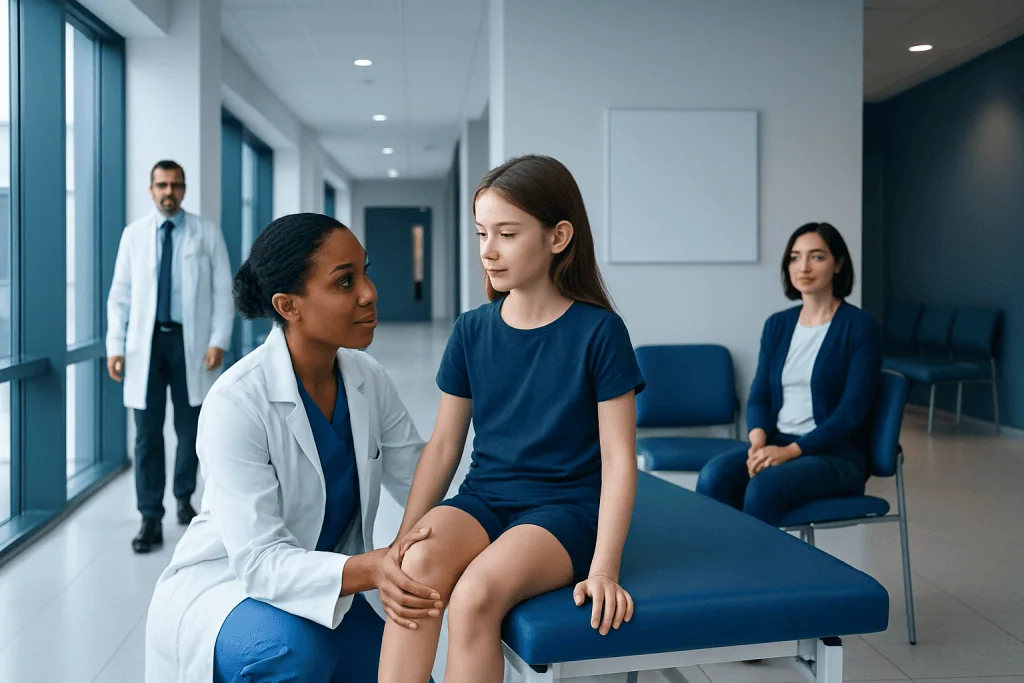
Femoral anteversion is an inward twist of the femur that can contribute to in-toeing, especially in children. Physical therapy does not usually change the underlying bone angle, but it can improve movement control, strength and confidence.
Key Takeaways
- Femoral anteversion is an inward twist of the femur that can contribute to in-toeing, especially in children.
- Physical therapy does not usually change the underlying bone angle, but it can improve movement control, strength and confidence.
- Most children improve naturally as they grow, and surgery is rarely needed.
- Persistent pain, limping, frequent falls, marked asymmetry or reduced activity should be assessed by a clinician.
- A treatment plan is individualized and may involve orthopedics, physiotherapy and, when appropriate, pediatric care.
Femoral anteversion physical therapy treatment focuses on helping a child or adult move more comfortably and safely by improving strength, coordination, balance and functional movement. Therapy generally cannot rotate the femur bone into a different position, but it may reduce symptoms and support daily activities when in-toeing, tripping or pain is present.
Overview: How femoral anteversion physical therapy treatment works
Femoral anteversion physical therapy treatment is a conservative rehabilitation approach for people whose thighbone (femur) turns inward more than usual. This rotational alignment may make the knees and feet point inward during walking, commonly called in-toeing. It is often noticed in early childhood, although some people continue to have inward rotation into adolescence or adulthood.
Physical therapy is designed to improve how the body uses the available hip and leg movement. A physiotherapist may work on hip and trunk strength, balance, coordination, walking mechanics and activities that are difficult in everyday life. The aim is not to force the legs into a particular position or promise a change in bone shape; rather, it is to support comfortable, efficient movement and reduce problems such as tripping or fatigue.
Many children with femoral anteversion have no pain and need only observation and reassurance. Therapy is more likely to be useful when symptoms affect participation in play, sports, school or daily routines, or when another movement issue is also present. An orthopedic assessment can help distinguish femoral anteversion from other causes of in-toeing, such as rotation of the lower leg or inward-curving feet.
Who may benefit from therapy and how assessment is performed
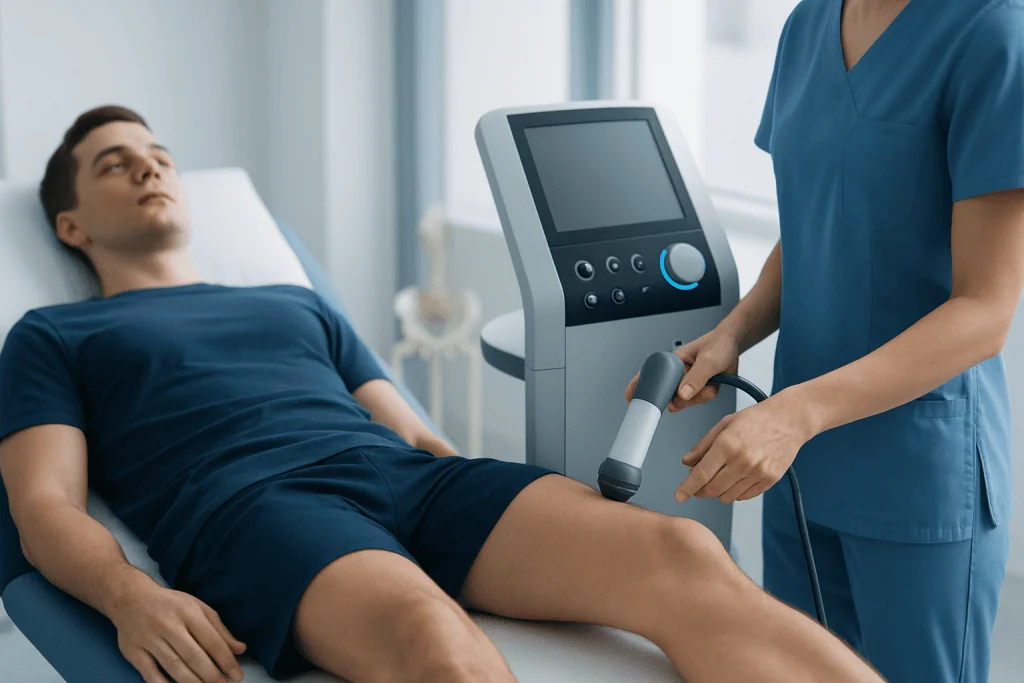
Children may be referred for physiotherapy if they frequently trip, struggle with balance, avoid running or sports, have pain, or have an unusual walking pattern that concerns their family or clinician. Adolescents and adults may seek assessment when inward hip rotation is associated with hip, knee or lower-back discomfort, reduced exercise tolerance or a feeling of instability. However, pain should not automatically be attributed to femoral anteversion without a full evaluation.
The first visit usually includes a discussion of symptoms, developmental history, activity levels and goals. The clinician observes standing posture, walking, running, stair use, sit-to-stand movements and, for children, play-based movements. They may gently measure hip rotation, leg alignment, muscle strength, flexibility, balance and coordination.
Imaging is not routinely necessary for a typical child with painless in-toeing. X-rays, CT scans or other imaging may be considered by an orthopedic specialist when the presentation is unusual, symptoms are significant, there is a concern about another condition, or surgery is being discussed. A specialist may also assess related hip alignment conditions when clinical findings suggest they could be relevant.
- Therapy may be appropriate when movement difficulties are meaningful to the individual.
- Observation is often appropriate for painless, typical childhood in-toeing.
- Severe, one-sided, worsening or painful symptoms need medical review rather than self-directed exercises alone.
What happens during a physical therapy programme
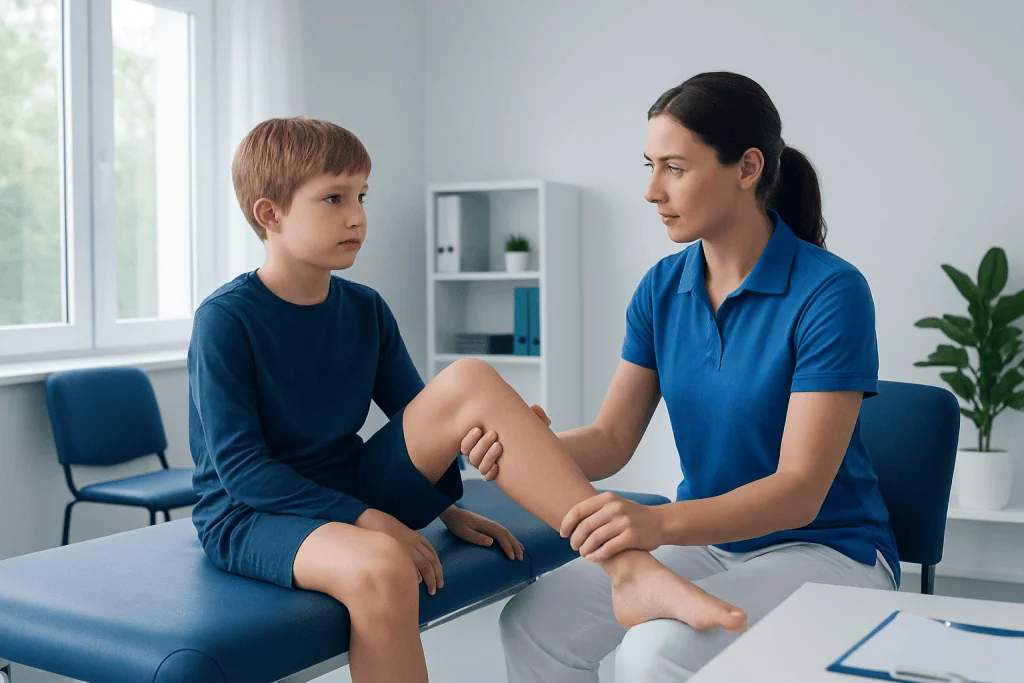
A femoral anteversion physical therapy treatment plan starts with practical goals. For a young child, these may include safer running, fewer trips during play or more confidence on stairs. For an adult, goals may include returning to exercise, improving walking tolerance or managing discomfort during work and recreational activities. Sessions are adapted to age, abilities and the specific movement findings.
Therapy commonly uses play-based or functional exercises to build hip, pelvic and core control. Depending on the assessment, this can include stepping tasks, squats within a comfortable range, balance games, climbing, controlled running drills and strengthening for the hip and leg muscles. The therapist may also teach strategies for turning, landing, stairs or sport movements. Exercises should be comfortable and should not involve painful forcing of the hips or feet into an outward position.
Home activities are often a central part of the plan. A therapist may recommend short, realistic activities to practise several times a week, then review progress and adjust the programme. Family members can support participation without repeatedly correcting a child’s foot position, which can be frustrating and is unlikely to alter the natural rotational development of the femur.
Some people benefit from a broader rehabilitation plan when pain or functional limitations are present. physical therapy and rehabilitation can be coordinated with orthopedic evaluation, activity guidance and treatment for any separate injury or musculoskeletal condition identified during assessment.
Benefits, limits and possible risks
The potential benefits of physical therapy include better strength, balance, coordination and confidence in movement. It may help a person participate more comfortably in school, work, exercise or sports, especially if deconditioning, poor movement control or pain is contributing to limitations. Progress is usually judged by function and symptoms rather than by whether the feet appear perfectly straight.
It is important to set realistic expectations. Standard exercises, special shoes, braces and sitting-position reminders generally do not correct the bony rotational angle of true femoral anteversion. In children, the angle often decreases naturally as growth continues. In older adolescents and adults, the bone alignment is less likely to change, but symptoms and function can still improve with individualized management.
Physical therapy is generally low risk when prescribed and supervised appropriately. Temporary muscle soreness can occur after new strengthening or activity drills. Pain that is sharp, persistent, increasing or associated with swelling, locking, giving way, fever or inability to bear weight should be reported promptly, as it may indicate a problem that needs medical assessment rather than exercise progression.
Recovery timeline and what results to expect
There is no single recovery timeline because femoral anteversion is an alignment variation rather than an injury with a fixed healing period. Children with typical, painless in-toeing often improve gradually over years as their walking pattern matures and the femur naturally remodels during growth. The timing differs from one child to another.
When therapy is used for functional concerns, improvements in balance, strength, confidence or activity tolerance may become noticeable over several weeks to months of consistent practice. Follow-up visits allow the therapist to reassess goals, refine exercises and determine whether ongoing therapy is useful. If a person is not progressing as expected, the care team can reconsider the diagnosis and check for factors such as pain, joint laxity, neuromuscular differences or a separate orthopedic issue.
For the small number of older children, teenagers or adults with severe rotation and substantial functional limitations, orthopedic surgeons may discuss a corrective procedure called femoral derotation osteotomy. This is not a routine treatment for cosmetic concerns or uncomplicated in-toeing. If surgery is appropriate, rehabilitation is an important part of recovery and is planned around the individual procedure and healing progress.
Does femoral anteversion get worse?
Femoral anteversion does not usually worsen in the typical child. It is common for young children to have more inward femoral rotation than adults, and the alignment often becomes less pronounced as growth and walking development continue. A child may appear more in-toed at certain stages because of changes in coordination, growth or activity, without the underlying condition truly becoming progressively worse.
New or increasing symptoms deserve attention. Pain, a limp, loss of previously gained abilities, marked differences between the two legs, repeated falls beyond what is expected for age, or difficulty keeping up with peers should be assessed by a qualified clinician. These features may suggest that another condition is contributing and should not simply be assumed to be femoral anteversion.
Adults may become more aware of longstanding rotational alignment when activity demands change or when another hip, knee or back condition develops. A clinical review can clarify whether femoral anteversion is relevant to the symptoms and whether rehabilitation, activity changes or further assessment is appropriate.
Can you fix femoral anteversion?
In many children, no active correction is needed because femoral anteversion commonly improves naturally with growth. Physical therapy can help address symptoms or functional challenges, but it does not usually “fix” the femur by changing its structural rotational angle. Exercises are most useful when they are tailored to the person’s movement needs rather than used to force the feet outward.
For a small group of people with severe persistent femoral anteversion and major functional impairment, surgery may be considered after detailed orthopedic evaluation. A femoral derotation osteotomy changes the bone’s alignment, but it is a significant operation with a recovery period and potential complications. The decision is based on symptoms, examination findings, imaging when needed, age and the impact on daily function.
Supportive measures, including sensible footwear, gradual activity progression and therapy-led strengthening, may improve comfort and confidence even when the underlying alignment remains. Families should avoid unproven devices or restrictive methods marketed as quick corrections, particularly if they cause discomfort or interfere with normal play and movement.
Is femoral anteversion a disability?
Femoral anteversion is not automatically considered a disability. Many people have no pain, no meaningful activity restriction and no need for treatment. In these situations, it is best understood as an anatomic alignment variation that may be visible in the walking pattern.
Whether it is disabling depends on its real-world effects. Significant difficulty walking, running, climbing stairs, participating in education or work, or managing daily activities may warrant formal assessment and supportive services. The definition of disability can also vary by country, school system, workplace and legal framework.
A healthcare professional can document functional limitations and identify treatable contributors. In children, a coordinated assessment may involve pediatric, orthopedic and rehabilitation professionals. The focus should remain on supporting comfort, participation and independence, rather than on appearance alone.
What is the prognosis for femoral anteversion and when to seek medical care
The prognosis for femoral anteversion is generally very good. Most children with typical in-toeing remain active and develop normally, and many improve without surgery. Long-term treatment is not usually required when there is no pain or functional difficulty. Even when the rotational alignment persists, many adolescents and adults function well without major limitations.
Medical care should be sought when in-toeing starts suddenly, affects only one side noticeably, becomes associated with pain or limping, follows an injury, or limits normal activities. Urgent assessment is appropriate for severe pain, inability to bear weight, fever with joint pain, a red or swollen joint, or new weakness or numbness. These symptoms are not typical features of uncomplicated femoral anteversion.
An orthopedic specialist or physiotherapist can advise on the most appropriate next step after examining the person. Acibadem International’s multidisciplinary specialists and JCI-accredited hospitals can assess femoral anteversion and related mobility concerns for international patients, with treatment plans based on individual clinical needs.
Frequently asked questions
Can physical therapy correct femoral anteversion?
Physical therapy usually cannot change the structural rotational angle of the femur. It can improve strength, balance, coordination and movement skills, which may reduce tripping, discomfort or activity limitations. A therapist tailors treatment to the person’s symptoms and goals.
What exercises are used for femoral anteversion?
Exercises may include age-appropriate hip and trunk strengthening, balance activities, step-ups, squatting patterns, climbing and controlled walking or running drills. The exact programme depends on the examination and should remain comfortable. Exercises that forcibly twist the legs outward are not generally recommended.
Do braces or special shoes help femoral anteversion?
Braces, special shoes and corrective shoe inserts have not been shown to change true femoral anteversion in most children. A clinician may recommend supportive footwear for comfort or a separate foot issue, but it should not be viewed as a way to rotate the femur. Typical painless in-toeing often needs observation rather than devices.
At what age does femoral anteversion improve?
Femoral rotation commonly reduces gradually throughout childhood, with many children improving by late childhood or early adolescence. The pace varies, and some degree of inward rotation can remain without causing problems. A clinician can monitor progress when there are concerns about function or symptoms.
When is surgery considered for femoral anteversion?
Surgery is considered only rarely, usually for severe persistent rotation that causes substantial functional limitations or symptoms after careful orthopedic assessment. The procedure is not routinely performed for appearance alone. Non-surgical management and the individual’s overall function are considered first.
Can adults benefit from treatment for femoral anteversion?
Adults can benefit from assessment when they have pain, instability, reduced activity tolerance or concerns about movement. Physical therapy may address strength, coordination, load management and contributing musculoskeletal issues. Persistent or significant symptoms may require orthopedic evaluation to determine whether another condition is present.
References
- American Academy of Orthopaedic Surgeons
- American Academy of Pediatrics
- OrthoInfo by the American Academy of Orthopaedic Surgeons
- National Institute of Arthritis and Musculoskeletal and Skin Diseases
- Royal College of Paediatrics and Child Health
This article is for general information only and is not a substitute for professional medical advice. Please consult a qualified doctor about your individual situation.
Joint and spine care in Turkey — expert assessment & treatment
JCI-accredited · board-certified surgeons · reply within 24h
Add us as a Preferred Source to see more of our trusted health content across Google Search, AI Overviews and Discover.

More from the Health Library

Related Specialists

Prof. Dr. Mehmet Veli Karaaltın
Aesthetic Plastic & Reconstructive Surgery
Dyt. Ezgi Hazal Çelik
Nutrition & Diet
Assoc. Prof. Dr. Çetin Kılıççı
Gynecology & Obstetrics
Assoc. Prof. Dr. Rıza Gürhan Işıl
General Surgery