Esotropia Surgery: Procedure, Recovery and Results

Esotropia surgery adjusts the muscles on the outside of the eye; it does not remove the eye or usually involve surgery inside the eyeball. The procedure is considered when glasses, prism lenses, patching, vision therapy, or treatment of an underlying cause do not provide adequate alignment.
Key Takeaways
- Esotropia surgery adjusts the muscles on the outside of the eye; it does not remove the eye or usually involve surgery inside the eyeball.
- The procedure is considered when glasses, prism lenses, patching, vision therapy, or treatment of an underlying cause do not provide adequate alignment.
- Most people have redness, scratchiness, tearing, and mild discomfort initially, with visible healing continuing for several weeks.
- Eye alignment commonly improves after surgery, but some people need glasses, further treatment for amblyopia, or an additional operation.
- Sudden new eye crossing, double vision, vision loss, severe pain, or neurological symptoms require prompt medical assessment.
Esotropia surgery is an eye muscle procedure used to improve inward eye turning, also called crossed eyes. It is usually performed under anesthesia, often on the same day as discharge, and may improve eye alignment, appearance, comfort, and in some cases binocular vision.
Esotropia Surgery Overview
Esotropia surgery is a procedure that changes the tension or position of selected eye muscles to correct an inward-turning eye. The goal is to bring the eyes into better alignment. Depending on the person’s age, type of esotropia, vision in each eye, and underlying cause, better alignment may support binocular vision, reduce troublesome double vision, improve head posture, or improve the appearance of the eyes.
The operation is also called strabismus surgery or eye muscle surgery. It is performed on the muscles attached to the outside surface of the eye, rather than on the part of the eye responsible for sight. For many children and adults, it is a day procedure. Strabismus surgery is planned individually after a detailed assessment by an ophthalmologist with experience in eye alignment conditions.
Esotropia can be present from infancy, develop during childhood, or arise in adulthood. Surgery may be helpful at different ages, but the right timing depends on the diagnosis and whether another condition needs treatment first. A careful evaluation is particularly important when eye turning starts suddenly in an adult.
Who May Be a Candidate for Esotropia Surgery?
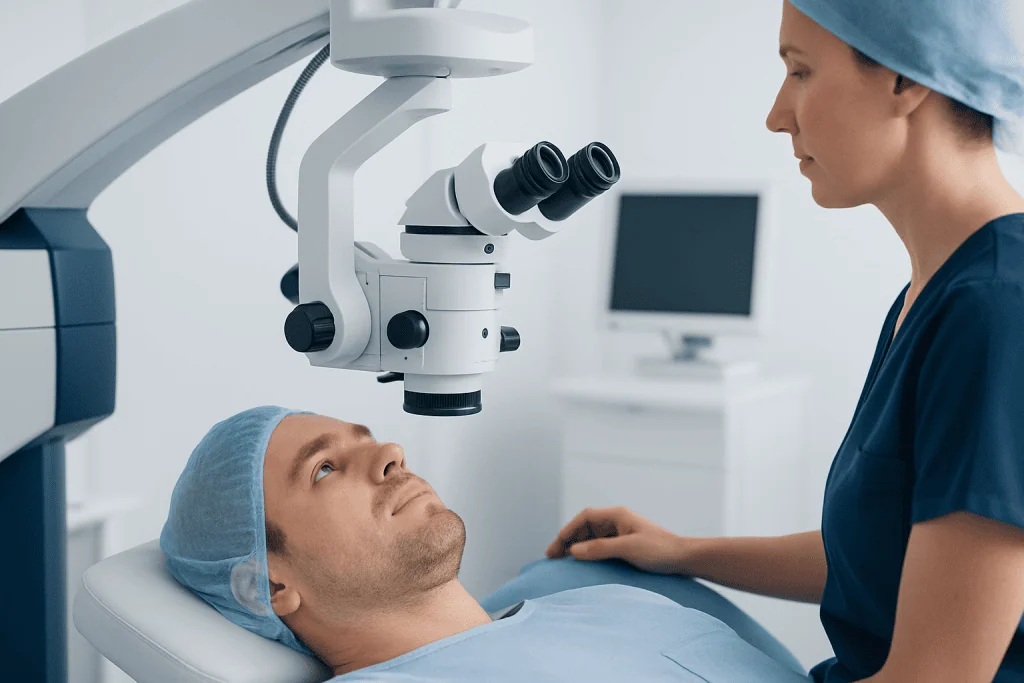
Doctors may recommend esotropia surgery when the eyes remain noticeably misaligned despite appropriate glasses or other non-surgical care. Some people have constant esotropia, while others have intermittent crossing that becomes more frequent or difficult to control. Surgery may also be considered for a significant head turn, double vision, reduced ability to use both eyes together, or concerns about eye alignment and social confidence.
Not everyone with esotropia needs surgery. In some children, fully correcting farsightedness with glasses can significantly reduce or straighten the inward turn. Patching or other treatment may be needed for amblyopia, often called lazy eye, when one eye has reduced vision. These approaches can be important before and after surgery because surgery straightens the eyes but does not directly correct reduced vision.
Before recommending an operation, the eye specialist measures alignment at different distances, checks eye movement, assesses vision in both eyes, and reviews the need for glasses. Further testing may be appropriate when an acquired eye turn, restricted movement, nerve problem, thyroid eye disease, or neurological cause is suspected. Related conditions may be assessed alongside amblyopia where relevant.
How Esotropia Surgery Works: Step by Step

The procedure works by adjusting one or more of the six muscles that move each eye. A surgeon may weaken a muscle that pulls the eye inward by moving its attachment farther back on the eye, known as a recession. They may strengthen an opposing muscle by shortening it, known as a resection or plication. The plan can involve one eye or both eyes and is based on the measured angle of deviation and the type of esotropia.
Most children receive general anesthesia and are fully asleep during surgery. Adults may also have general anesthesia, although anesthetic choices are individualized. After anesthesia begins, the surgeon gently holds the eyelids open, makes a small incision in the thin clear tissue covering the white of the eye, and reaches the selected muscle. The muscle is repositioned or adjusted with fine sutures, and the surface tissue is closed, often with absorbable stitches.
The operation does not usually require an incision through the skin around the eye, and vision is not normally affected by the muscle adjustment itself. In selected adults, adjustable sutures may be used. This allows the surgeon to fine-tune alignment shortly after the operation while the person is awake, when appropriate.
Following surgery, the person is observed as the anesthesia wears off. Written instructions typically cover prescribed eye drops or ointment, pain relief options, bathing, physical activity, and the date of follow-up. The ophthalmology team should be informed about all medicines, allergies, bleeding conditions, and any previous eye surgery before the procedure.
How Long Does Esotropia Surgery Take?
Esotropia surgery itself commonly takes about 30 to 90 minutes, although the exact duration depends on how many muscles are treated, whether one or both eyes are operated on, and whether the case is a first or repeat procedure. Time spent in the hospital or surgical center is longer because it includes admission, anesthesia preparation, recovery monitoring, and discharge planning.
Parents and adult patients should expect several hours at the facility on the day of surgery. A responsible adult is generally needed to accompany the patient home after anesthesia. The surgical team will provide individual fasting instructions and explain whether regular medicines should be taken on the morning of the procedure.
Although the procedure is relatively brief, careful preoperative measurements and follow-up are essential parts of successful care. The final eye position cannot always be judged immediately because swelling, irritation, and healing can temporarily affect alignment.
How Long Does It Take to Recover From Esotropia Surgery?
Initial recovery from esotropia surgery usually takes several days to two weeks, while redness and complete tissue healing can take several weeks. Many children return to school and many adults return to desk-based activities within about a week, depending on comfort, vision, and the advice of their surgeon. More strenuous activity, swimming, and contact sports may need to be delayed until the eye has healed adequately.
During the first few days, the eye can feel scratchy or gritty and may be red, watery, swollen, or sensitive to light. Mild blurred vision can occur temporarily because of tears, ointment, or surface irritation. These symptoms generally improve gradually. The eye may look red for a few weeks, and dissolvable stitches can sometimes be noticed during healing.
Follow-up visits allow the surgeon to check wound healing, eye movements, vision, and alignment. Glasses should be worn if prescribed. Children may still need patching or other amblyopia treatment after surgery, because eye alignment and visual development are related but separate issues. Patients should follow their own ophthalmologist’s instructions rather than relying on a standard timeline.
Is Esotropia Surgery Painful?
Esotropia surgery is not painful during the operation because anesthesia is used. Afterward, most people experience mild to moderate discomfort rather than severe pain. The most common sensations are scratchiness, burning, aching, tearing, and the feeling that something is in the eye. Young children may be irritable or tired for a short time after general anesthesia.
Doctors commonly recommend suitable pain relief and may prescribe antibiotic or anti-inflammatory eye medication when needed. Cool compresses over closed eyelids may be soothing if the care team approves them. Rubbing the eyes should be avoided, and hands should be washed before applying any eye drops or ointment.
Severe or worsening pain is not expected and should be reported promptly, especially if it occurs with declining vision, increasing swelling, pus-like discharge, fever, or marked sensitivity to light. The surgical team can advise whether the symptoms are part of normal healing or need urgent review.
How Successful Is Esotropia Surgery?
Esotropia surgery is often effective at improving eye alignment, but success is individualized and cannot be guaranteed. Results depend on the type and size of the eye turn, the cause, whether vision is reduced in one eye, previous operations, muscle scarring, neurological conditions, and how well the eyes can work together. The main goal may be better alignment rather than perfect vision or freedom from glasses.
Some people achieve a stable, satisfactory alignment after one operation. Others may have a small residual inward or outward turn, recurrence over time, or a change in alignment as a child grows. In these situations, observation, glasses or prisms, treatment for amblyopia, or further surgery may be considered. A temporary or persistent period of double vision can occur, especially in adults whose brain has adapted to longstanding misalignment.
Benefits can include a more centered eye position, improved ability to use the eyes together in selected cases, reduced abnormal head posture, and improved quality of life. The surgeon will discuss realistic goals before surgery, including which symptoms are likely to improve and which may continue to require treatment.
Potential complications are uncommon but include infection, bleeding, scarring, overcorrection or undercorrection, persistent double vision, slipped muscle, and the need for another operation. Rarely, serious complications can affect vision. Asking about the expected outcome in the individual case is an important part of informed consent.
When to Seek Medical Care
A routine ophthalmology appointment is appropriate for any child or adult with a persistent eye turn, frequent intermittent crossing, a new head tilt, eye strain, reduced vision, or double vision. Babies may occasionally have eyes that appear crossed in early life because of facial features, but a persistent or recurring turn should still be checked by an eye professional. Early assessment is especially important in children because visual development is ongoing.
Urgent medical assessment is needed for sudden-onset esotropia, particularly in an older child or adult, or when it is accompanied by headache, vomiting, weakness, poor coordination, drooping eyelid, unequal pupils, severe eye pain, or vision loss. These symptoms can have causes beyond routine childhood strabismus and should not be delayed.
After surgery, patients should contact their surgeon promptly for worsening pain, rapidly increasing redness or swelling, fever, significant discharge, injury to the eye, persistent vomiting, or a noticeable decrease in vision. Acibadem International’s multidisciplinary specialists and JCI-accredited hospitals diagnose and treat eye alignment conditions for international patients, with care plans guided by individual ophthalmic assessment.
Frequently asked questions
How long does it take to recover from esotropia surgery?
Most people recover enough for usual light activities within several days to about two weeks. Redness, irritation, and mild swelling can continue for several weeks as the eye surface heals. The surgeon’s activity guidance should be followed, particularly for swimming, sports, and school or work return.
How successful is esotropia surgery?
Esotropia surgery often improves eye alignment, but the outcome varies with the cause and type of esotropia, vision in each eye, and previous treatment. Some people need only one procedure, while others may need glasses, amblyopia treatment, prism lenses, or additional surgery. The surgeon can explain the expected goal for the individual case.
Is esotropia surgery painful?
Anesthesia prevents pain during the procedure. Afterward, scratchiness, redness, tearing, and mild to moderate aching are common for a short time and can usually be managed with the treatment plan provided by the surgical team. Severe or worsening pain should be assessed promptly.
How long does esotropia surgery take?
The operation commonly takes around 30 to 90 minutes, depending on the muscles being treated and the complexity of the condition. Total time at the hospital or surgical center is longer because of anesthesia preparation and recovery observation. Many patients go home the same day.
Will esotropia surgery eliminate the need for glasses?
Not necessarily. Surgery changes eye muscle alignment, while glasses correct focusing problems such as farsightedness, nearsightedness, or astigmatism. Many people continue wearing glasses after surgery, especially when glasses also help control the inward turn.
Can esotropia come back after surgery?
Eye alignment can change over time, and an inward turn may persist, recur, or occasionally shift in the opposite direction. This does not always mean the initial surgery failed, as growth, healing, focusing needs, and the underlying condition can influence alignment. Regular follow-up helps identify whether additional treatment is useful.
References
- American Academy of Ophthalmology
- American Association for Pediatric Ophthalmology and Strabismus
- National Eye Institute
- NHS
This article is for general information only and is not a substitute for professional medical advice. Please consult a qualified doctor about your individual situation.
Joint and spine care in Turkey — expert assessment & treatment
JCI-accredited · board-certified surgeons · reply within 24h
Add us as a Preferred Source to see more of our trusted health content across Google Search, AI Overviews and Discover.