Duane Retraction Syndrome Treatment: How It Works, Results and What to Expect

Duane retraction syndrome is a congenital eye movement condition caused by atypical development of a cranial nerve that controls eye muscles. Surgery cannot restore normal nerve function or fully normalize all eye movements, but it can improve eye alignment and reduce an uncomfortable head turn.
Key Takeaways
- Duane retraction syndrome is a congenital eye movement condition caused by atypical development of a cranial nerve that controls eye muscles.
- Surgery cannot restore normal nerve function or fully normalize all eye movements, but it can improve eye alignment and reduce an uncomfortable head turn.
- Treatment decisions are based on symptoms, eye position, binocular vision, amblyopia risk and the degree of movement limitation.
- Regular childhood eye examinations are important because some children need glasses or treatment for amblyopia.
- The condition itself is usually stable, but its visible effects and functional impact should be monitored over time.
Duane retraction syndrome treatment is tailored to the person’s eye alignment, head posture, vision and daily symptoms. Many people need observation or glasses only, while carefully planned eye muscle surgery can improve misalignment, abnormal head turning and certain eye movement effects.
Overview: How Duane Retraction Syndrome Treatment Works
Duane retraction syndrome treatment is individualized and may involve observation, prescription glasses, amblyopia treatment or eye muscle surgery. Surgery is considered when eye misalignment, a marked head turn, inward pulling of the eye on side gaze or troublesome upshooting or downshooting affects vision, comfort, appearance or everyday activities.
Duane retraction syndrome is present from birth. It occurs when the sixth cranial nerve, which normally activates the muscle that moves the eye outward, does not develop or connect in the usual way. Other eye muscles may receive atypical nerve signals, so the affected eye has limited movement and may pull backward into the eye socket when it moves inward.
Care is usually led by a paediatric ophthalmologist or strabismus specialist. The aim is not to recreate normal nerve wiring; rather, treatment seeks the best possible eye alignment in the straight-ahead position, improved head posture and protected visual development. A full assessment also checks for related eye conditions and, when appropriate, other congenital differences.
Can Duane Syndrome Be Corrected With Surgery?
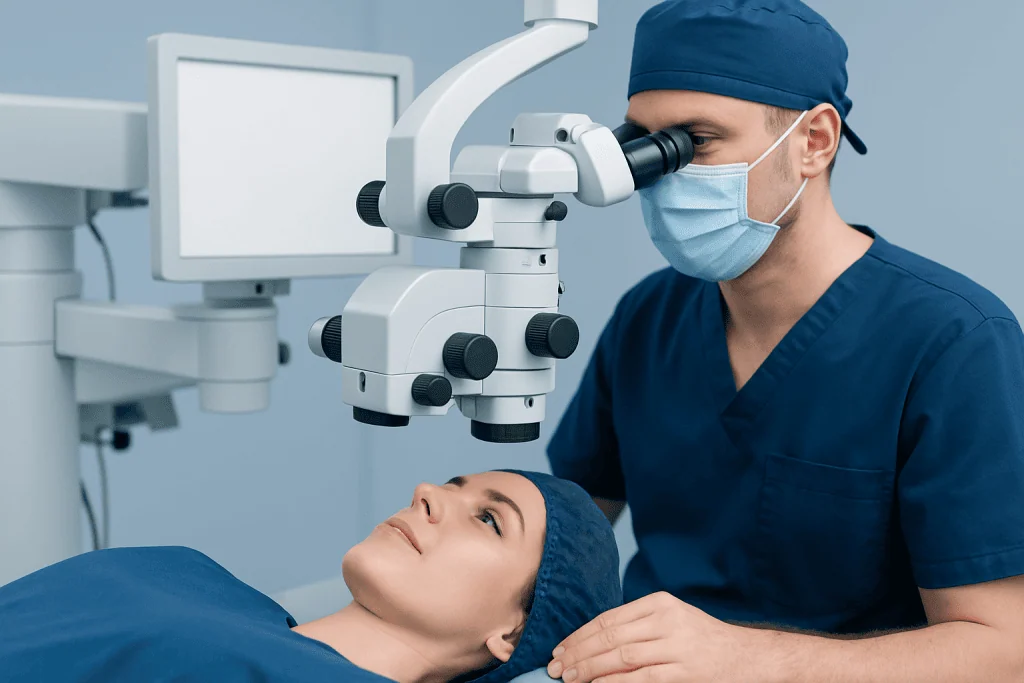
Duane syndrome cannot be completely corrected with surgery because surgery cannot replace the missing or atypically connected nerve pathway. However, strabismus surgery can often improve the features that have the greatest practical effect, including a constant eye turn, compensatory face turn, abnormal vertical eye movements and significant narrowing of the eyelid opening during inward gaze.
During surgery, an ophthalmic surgeon adjusts one or more of the muscles on the outside of the eye. Depending on the pattern of movement and alignment, the surgeon may weaken, reposition or, less commonly, split selected muscles. The exact approach is highly individualized: operating on the wrong muscle or using a standard plan without detailed assessment may not address the person’s main concern.
Results are generally judged by alignment in primary gaze, reduction in head turn, comfort and function rather than by full restoration of outward eye movement. Some people may still have limited movement after a successful operation. In selected cases, further surgery is considered if significant misalignment remains or changes as the child grows.
Who May Benefit and What Happens Before Surgery?

Not everyone with Duane retraction syndrome needs an operation. A person may be a candidate when there is a substantial head turn used to maintain single vision, a noticeable eye deviation when looking straight ahead, a risk of amblyopia, persistent double vision, or pronounced upshoot or downshoot of the eye. The decision also considers age, daily visual demands and the person’s or family’s goals.
Before recommending treatment, the specialist measures vision in each eye, refractive error, eye alignment at different distances and gaze positions, head posture and the range of eye movements. Children are assessed carefully for amblyopia, sometimes called “lazy eye,” because the brain may begin to favor the stronger-seeing eye. Glasses and patching or other amblyopia treatment may be needed before, after or instead of surgery.
Photographs, prism measurements and repeated examinations can help identify whether the eye position is stable and which movements cause the greatest difficulty. A clinician may also ask about birth and family history, hearing, limb differences and symptoms elsewhere in the body. Imaging is not routinely required for typical cases, but it may be advised when examination findings are unusual or another condition is suspected.
What to Expect During Duane Syndrome Eye Muscle Surgery
Eye muscle surgery is usually performed under general anaesthesia, particularly in children. The surgeon makes a small incision in the thin clear tissue covering the white of the eye, called the conjunctiva, to reach the eye muscles. There are no cuts on the skin around the eye.
The operation plan depends on the type of Duane syndrome and the individual pattern of alignment. For example, recession of an overacting inward-pulling muscle may reduce an inward eye turn and lessen globe retraction. In other situations, surgery may address an outward eye turn or problematic upshooting and downshooting. The procedure usually takes place as day surgery, although the care team will advise on the appropriate arrangements for each patient.
After surgery, the eye is not removed or opened. The muscles are adjusted on the surface of the eye, then the conjunctiva is returned to its position. The surgeon will explain the planned muscles, expected benefits, realistic limitations and whether adjustable sutures may be appropriate for an adult or selected older patient.
Recovery Timeline, Benefits and Possible Risks
After surgery, redness, mild swelling, a scratchy sensation, tearing and temporary light sensitivity are common. These symptoms usually improve over the first days to weeks, while redness can take longer to settle fully. The ophthalmology team provides instructions about eye drops, bathing, school or work, sport and follow-up appointments.
Improvement in the straight-ahead eye position and head posture may be noticeable soon after surgery, but the final result is assessed over follow-up visits as healing progresses. Children still need regular vision monitoring because eye alignment is only one part of healthy visual development. Glasses or amblyopia treatment may remain important.
Potential benefits include better alignment, less head turning, improved comfort and a reduction in conspicuous upshooting or downshooting. As with any operation, risks include infection, bleeding, scarring, anaesthesia-related complications, undercorrection, overcorrection, persistent movement limitation and a need for additional surgery. Serious complications are uncommon, but they should be discussed with the surgeon before consent.
- Follow prescribed drops exactly as directed.
- Seek prompt advice for increasing pain, worsening redness, discharge, reduced vision or fever.
- Attend all follow-up appointments so healing, alignment and vision can be checked.
Does Duane Syndrome Get Worse With Age?
Duane retraction syndrome is usually a non-progressive congenital condition. The underlying nerve connection does not typically deteriorate over time, and many people maintain stable vision and function with appropriate monitoring. It is not considered a condition that gradually damages the eye.
Its practical effects can nevertheless become more noticeable at different life stages. A growing child may develop or reveal a head posture, changing visual needs may make eye strain more apparent, and changes in alignment can occasionally occur over time. Regular eye examinations help identify treatable concerns such as refractive error, amblyopia or a developing eye deviation.
Adults who notice new double vision, a rapid change in eye position, pain, drooping eyelid or new neurologic symptoms should not assume these changes are due to Duane syndrome. New symptoms need timely medical assessment because they may have another cause.
How Rare Is Duane's Retraction Syndrome? Can It Cause Other Problems?
Duane retraction syndrome is rare. It accounts for a small proportion of childhood strabismus cases and is more often diagnosed in childhood, although mild cases may be recognized later. It can affect one eye or both eyes, and the left eye is affected more commonly when only one eye is involved.
For many people, the main effects are restricted eye movement, an eye turn in certain gaze positions, globe retraction and a compensatory head turn. Some people have normal visual acuity, while others may develop refractive error, reduced vision in one eye from amblyopia, loss of binocular vision or intermittent double vision. These concerns can often be addressed through regular ophthalmic care.
Most cases occur on their own. Less commonly, Duane syndrome can be associated with differences involving the ears, spine, kidneys, heart, limbs or nervous system, particularly when there are other signs at birth or a relevant family history. The eye specialist may recommend paediatric, genetic, hearing or other assessments based on the individual findings.
When to Seek Medical Care
Children should have an eye assessment if a parent or caregiver notices an eye that does not move normally, a persistent head turn, crossed or drifting eyes, unusual narrowing of one eyelid opening during side gaze, frequent squinting or concerns about vision. Early review is especially important in infants and young children, when visual development is still underway.
Urgent assessment is appropriate for sudden double vision, sudden eye movement weakness, new eyelid drooping, severe headache, eye pain, loss of vision or symptoms after an injury. These symptoms are not typical of stable congenital Duane syndrome and may require prompt evaluation.
Acibadem International’s multidisciplinary specialists and JCI-accredited hospitals can assess eye alignment and coordinate care for international patients who need evaluation or treatment for complex eye movement conditions.
Frequently asked questions
What is the main goal of Duane retraction syndrome treatment?
The main goals are to support clear vision, prevent or treat amblyopia, improve eye alignment in the straight-ahead position and reduce a significant compensatory head turn. Treatment also aims to lessen troublesome globe retraction or abnormal vertical eye movements when these are present.
Is surgery necessary for every child with Duane syndrome?
No. Many children have mild, stable findings and need regular observation, glasses or amblyopia management rather than surgery. Surgery is usually considered only when alignment, head posture, vision or daily functioning is meaningfully affected.
At what age can Duane syndrome surgery be performed?
The timing depends on the child’s visual development, severity of eye misalignment, head posture and overall health. A paediatric ophthalmologist determines whether early surgery is advisable or whether monitoring and nonsurgical treatment are more appropriate.
Can glasses improve Duane retraction syndrome?
Glasses do not correct the atypical nerve connection, but they can correct refractive error and support visual development. In some people, glasses may also improve eye alignment by reducing the effort needed to focus.
Will eye movement be normal after surgery for Duane syndrome?
Surgery may improve alignment and reduce the need for a head turn, but it usually does not restore fully normal outward or inward eye movement. The expected outcome should be discussed in detail with the surgeon because results depend on the individual movement pattern.
Can Duane syndrome run in families?
Most cases are isolated and occur without a known family history. A smaller number may be associated with genetic changes or inherited syndromes, so genetic counselling may be useful when several family members are affected or other congenital differences are present.
References
- American Academy of Ophthalmology
- American Association for Pediatric Ophthalmology and Strabismus
- National Eye Institute
- Orphanet
- MedlinePlus Genetics
This article is for general information only and is not a substitute for professional medical advice. Please consult a qualified doctor about your individual situation.
Joint and spine care in Turkey — expert assessment & treatment
JCI-accredited · board-certified surgeons · reply within 24h
Add us as a Preferred Source to see more of our trusted health content across Google Search, AI Overviews and Discover.