Ra in Feet Treatment: How It Works, Results and What to Expect

Rheumatoid arthritis commonly affects the small joints of the feet and may cause pain, swelling, stiffness and changes in foot shape. Early disease-modifying treatment is central because it can reduce inflammation and help prevent or slow joint damage.
Key Takeaways
- Rheumatoid arthritis commonly affects the small joints of the feet and may cause pain, swelling, stiffness and changes in foot shape.
- Early disease-modifying treatment is central because it can reduce inflammation and help prevent or slow joint damage.
- Shoes, orthoses, physical therapy and targeted pain management can improve comfort and mobility alongside RA medicines.
- Foot surgery is usually considered only for significant deformity, instability, pressure sores or pain that continues despite comprehensive non-surgical treatment.
- New or worsening foot symptoms should be assessed promptly, particularly if there is redness, warmth, inability to bear weight, skin breakdown or fever.
RA in feet treatment aims to control the underlying inflammation, relieve pain, maintain walking ability and reduce the risk of lasting joint damage. Most people benefit from coordinated rheumatology and foot-care treatment, while surgery may help when structural damage or persistent pain does not improve with non-surgical care.
RA in feet treatment: how it works and what to expect
RA in feet treatment addresses rheumatoid arthritis, an autoimmune condition in which the immune system causes inflammation in the joint lining. In the feet, it often affects the toes, forefoot, midfoot, ankle or hindfoot, sometimes on both sides. Treatment works best when it controls whole-body inflammation while also supporting the specific joints and soft tissues that make standing and walking comfortable.
A rheumatologist usually leads medical treatment with medicines that reduce inflammation and modify the disease process. A podiatrist, orthopedic foot-and-ankle specialist, physiotherapist and occupational therapist may also contribute. The plan is individualized according to disease activity, which joints are involved, foot alignment, daily activities and a person’s overall health.
Results vary, but many people experience less pain and stiffness, improved function and fewer flares when treatment begins early and is adjusted regularly. Treatment cannot reverse every existing joint change, but sustained control of inflammation can help protect joints and may reduce the need for surgery.
What does RA in your feet feel like?
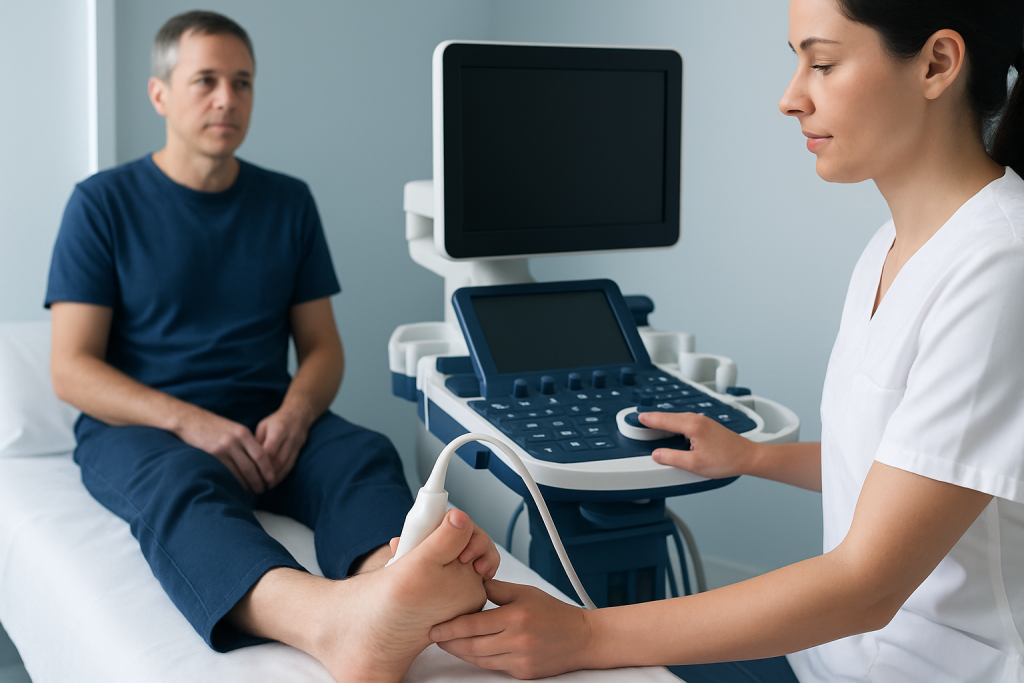
RA in the feet may feel like aching, burning, tenderness or a deep soreness, especially after rest or first thing in the morning. Morning stiffness that lasts longer than a few minutes and improves gradually with movement is common. The forefoot may feel as though there is a pebble under it, while the toes can become painful when bending or pushing off during walking.
Inflamed joints may be swollen, warm and sensitive to pressure. Some people notice pain across the ball of the foot, difficulty fitting into usual shoes, fatigue while walking, or reduced balance because the foot does not feel stable. Symptoms can fluctuate, with quieter periods and flare-ups.
Not all foot pain is caused by RA. Plantar fasciitis, tendon problems, osteoarthritis, nerve compression, stress injury and skin conditions can cause overlapping symptoms. A clinical assessment is important, particularly when symptoms are new, one-sided or rapidly worsening.
How treatment is planned: candidacy and diagnosis

Anyone with confirmed or suspected rheumatoid arthritis and foot symptoms may benefit from an assessment. A clinician will ask about stiffness, swelling, pain pattern, walking tolerance, footwear, previous treatments and the impact on work or daily life. They will examine foot posture, joints, tendons, skin, circulation and sensation.
Blood tests and imaging can help clarify the diagnosis and establish a baseline. X-rays may show alignment changes or erosions, while ultrasound or MRI can identify active inflammation in joints and surrounding tissues. These findings are considered alongside symptoms rather than used alone to decide treatment.
People are generally candidates for non-surgical care first. Surgery may be considered when there is persistent pain, severe deformity, instability, recurrent pressure areas or functional restriction despite well-managed RA and appropriate footwear, orthoses and rehabilitation. A specialist also evaluates infection risk, bone health, blood supply, smoking status and medication planning before an operation.
- Medical treatment controls inflammatory disease activity throughout the body.
- Foot-focused measures reduce pressure, improve alignment and preserve mobility.
- Surgery is selected for a clear structural problem and specific functional goals.
What are the four stages of rheumatoid arthritis in feet?
Rheumatoid arthritis is sometimes described in four broad radiographic stages, although individuals do not always progress in a predictable way and modern treatment can slow or prevent progression. The stages describe changes that may be seen clinically and on imaging rather than a fixed timetable.
Stage 1, or early RA, may involve joint inflammation, tenderness and swelling without clear bone damage on X-ray. Stage 2 may show ongoing inflammation with early cartilage loss, narrowing joint spaces and reduced movement. Stage 3 can include more established cartilage and bone damage, joint instability and visible deformity, such as toe drift or changes at the ball of the foot.
Stage 4 is advanced disease, where substantial joint destruction may lead to stiffness, fusion of some joints, marked deformity and major functional difficulty. These stages are not inevitable. Prompt, effective treatment and regular follow-up can make a meaningful difference to long-term foot health.
RA in feet treatment options: medicines, support and surgery
The foundation of treatment is control of rheumatoid arthritis with disease-modifying antirheumatic drugs, often called DMARDs. Conventional, biologic or targeted synthetic DMARDs may be used according to disease activity and medical history. Anti-inflammatory medicines, pain relievers or short courses of corticosteroids may sometimes support symptom control, but they do not replace long-term disease-modifying treatment.
Foot-specific care may include wider or deeper shoes, cushioned soles, toe-space adjustments, custom or prefabricated orthoses, and padding to redistribute pressure. Physiotherapy can support flexibility, strength, balance and safer walking. Occupational therapy may offer practical strategies for work and home activities. A clinician can also treat calluses or skin pressure points and monitor for ulcers.
When non-surgical measures no longer provide adequate relief, procedures may range from removal of inflamed tissue or problematic bone prominences to tendon balancing, toe correction, joint fusion or selected joint replacement. The goal is usually a more stable, less painful foot that fits footwear and supports daily activity; it is not necessarily to create a perfectly shaped foot.
Surgical planning is careful and collaborative. The team reviews imaging, disease control, current medicines and rehabilitation needs. Procedures can involve one area or multiple joints, so the expected recovery and weight-bearing restrictions depend on the exact operation.
Procedure and recovery: what happens if foot surgery is needed
Before surgery, the surgeon discusses the problem being treated, alternatives, expected benefits and possible limitations. Preoperative assessment may include blood tests, imaging and review of RA medicines, as some may need temporary adjustment to reduce infection risk or support healing. Patients should only change prescribed medicine under guidance from their rheumatology and surgical teams.
On the day of surgery, anesthesia may be local with sedation, regional or general, depending on the procedure and patient factors. The surgeon corrects the identified structural issue, which may involve reshaping bone, repairing or balancing soft tissues, removing damaged joint surfaces, using fixation such as screws or plates, or fusing a joint. Dressings, a protective shoe, boot or cast may be used afterward.
Recovery is gradual. The first days to weeks focus on wound care, swelling control, pain management and following instructions on elevation and weight bearing. Some operations allow protected walking early, while fusion or more extensive reconstruction may require several weeks of reduced or non-weight bearing. Follow-up visits monitor healing and may include repeat X-rays.
Rehabilitation then focuses on restoring safe movement, strength and footwear tolerance. Swelling can last for months, and final results may take longer depending on the operation and RA activity. Possible risks include infection, wound-healing problems, blood clots, nerve symptoms, continued pain, recurrence of deformity, nonunion after fusion and the need for further treatment. A surgeon explains the risks relevant to the individual procedure.
Does foot arthritis go away?
Rheumatoid arthritis itself does not currently have a cure, and existing joint damage generally does not grow back. However, inflammation can often be brought under good control, sometimes into remission, with appropriate disease-modifying treatment. During remission, symptoms may be minimal or absent, but ongoing monitoring is still important.
Foot pain may also improve substantially with footwear changes, orthoses, rehabilitation and treatment of pressure points. If arthritis has caused significant deformity or damage, symptoms may persist despite inflammation control because the mechanics of the foot have changed. In those cases, a foot specialist can help identify whether non-surgical support or surgery is appropriate.
People should not assume that pain is simply something they must tolerate. Ongoing pain, altered walking or difficulty finding comfortable shoes should be discussed with the treating team, since targeted adjustments can often improve daily function.
How long does it take for RA to damage joints?
Joint damage can begin early in rheumatoid arthritis, sometimes within the first year when inflammation remains active, but the pace differs widely between individuals. Some people have mild disease for many years, while others develop changes more quickly. Persistent swelling, high disease activity, delayed treatment and certain personal health factors may increase the likelihood of damage.
There is no reliable symptom-only way to judge whether damage is occurring. Regular rheumatology review, physical examination and appropriate imaging help clinicians assess inflammation and structural change. Treatment is commonly adjusted using a treat-to-target approach, aiming for remission or the lowest achievable disease activity.
Early evaluation of new foot symptoms is worthwhile even if pain seems manageable. The aim is to identify active inflammation or mechanical changes before they increasingly affect walking, footwear choices and other joints.
When to seek medical care
A person should arrange medical assessment for persistent foot pain, swelling, morning stiffness, repeated flare-ups or changes in toe position or shoe fit. This is especially important for anyone with known RA, because active foot inflammation can require adjustment of the overall treatment plan.
Urgent medical care is appropriate for a hot, red, very painful swollen joint; sudden inability to bear weight; an open sore; spreading redness; fever; or new numbness or color change in the foot. These symptoms can have causes other than RA, including infection or circulation problems, and need timely evaluation.
For international patients, Acibadem International’s multidisciplinary specialists and JCI-accredited hospitals can assess and treat rheumatoid arthritis-related foot concerns, coordinating rheumatology, orthopedics and rehabilitation care when needed.
Frequently asked questions
Can rheumatoid arthritis affect only the feet?
RA can begin in the feet or be most noticeable there, but it is a systemic condition and often affects other joints over time. Symptoms commonly occur on both sides of the body, although severity may differ between feet. A clinician should assess isolated foot pain to confirm its cause.
What shoes are best for RA in the feet?
Comfortable shoes with adequate width and depth, cushioning, a supportive sole and a secure fastening are often helpful. The best choice depends on the person’s foot shape, deformity, balance and activity needs. A podiatrist or foot-and-ankle clinician can advise on footwear and whether orthoses may help.
Can exercise make RA foot pain worse?
Appropriately selected exercise can help maintain strength, joint movement and balance. During an active flare, high-impact activities may aggravate symptoms, so lower-impact movement and temporary activity modification may be preferable. A physiotherapist can tailor a plan to disease activity and foot function.
Is foot surgery a cure for rheumatoid arthritis?
Foot surgery does not cure rheumatoid arthritis or stop immune-driven inflammation elsewhere in the body. It may improve pain, alignment, stability or footwear tolerance when structural damage is causing ongoing problems. Medical RA treatment remains important before and after surgery.
Will RA medicines help foot deformities?
Disease-modifying medicines can reduce inflammation and help prevent or slow further joint damage, particularly when started early. They cannot reliably reverse established bone or joint deformity. Supportive devices or surgery may be considered if deformity is painful or limits walking.
How often should feet be checked with rheumatoid arthritis?
Feet should be discussed during routine rheumatology appointments, especially if symptoms, shoe fit or walking ability change. People with diabetes, reduced sensation, circulation problems or skin breakdown may need more frequent foot checks. A clinician can recommend a schedule based on individual risk.
References
- American College of Rheumatology
- National Institute of Arthritis and Musculoskeletal and Skin Diseases
- Arthritis Foundation
- National Health Service
- European Alliance of Associations for Rheumatology
This article is for general information only and is not a substitute for professional medical advice. Please consult a qualified doctor about your individual situation.
Joint and spine care in Turkey — expert assessment & treatment
JCI-accredited · board-certified surgeons · reply within 24h
Add us as a Preferred Source to see more of our trusted health content across Google Search, AI Overviews and Discover.

More from the Health Library



Related Specialists

Assoc. Prof. Dr. Didem Öncel Yakar
General Surgery
Assoc. Prof. Dr. Murad Gulıyev
Medical Oncology
Assoc. Prof. Dr. Gül Dabak
Pulmonology
Assoc. Prof. Dr. Dilek Hacer Çeşme
Radiology