Salter Fracture Treatment: How It Works, Results and What to Expect

A Salter-Harris fracture involves a growth plate in a child or adolescent. Prompt assessment is important because growth plates help bones lengthen and develop normally.
Key Takeaways
- A Salter-Harris fracture involves a growth plate in a child or adolescent.
- Prompt assessment is important because growth plates help bones lengthen and develop normally.
- Many stable fractures are treated with a splint or cast, activity restriction, and repeat examinations.
- Surgery is generally reserved for fractures that are displaced, unstable, extend into the joint, or cannot be aligned without an operation.
- Follow-up imaging may be needed to confirm healing and monitor for uncommon growth disturbances.
Salter fracture treatment aims to restore the injured bone’s alignment while protecting the growth plate, the area of developing tissue near the end of a child’s bone. Many injuries heal well with a cast or splint, while displaced or unstable fractures may need realignment or surgery followed by careful follow-up.
Overview: What Is Salter Fracture Treatment?
Salter fracture treatment refers to care for a Salter-Harris fracture, an injury that affects a growth plate. Growth plates are softer areas of developing cartilage near the ends of children’s and adolescents’ long bones. They allow bones to grow in length, but they can be more vulnerable to injury than surrounding bone.
Treatment begins with protecting the injured area and determining whether the bone and growth plate remain in a good position. A clinician may use a splint or cast, reduce a displaced fracture back into alignment, or recommend surgery when alignment cannot be maintained safely without fixation. The care plan depends on the fracture type, location, degree of displacement, the child’s age, and whether the nearby joint is involved.
With timely evaluation and appropriate follow-up, many children recover fully. Because a growth plate is involved, clinicians may schedule additional checks after the initial healing period to look for signs that growth is continuing normally.
How a Growth Plate Fracture Is Assessed
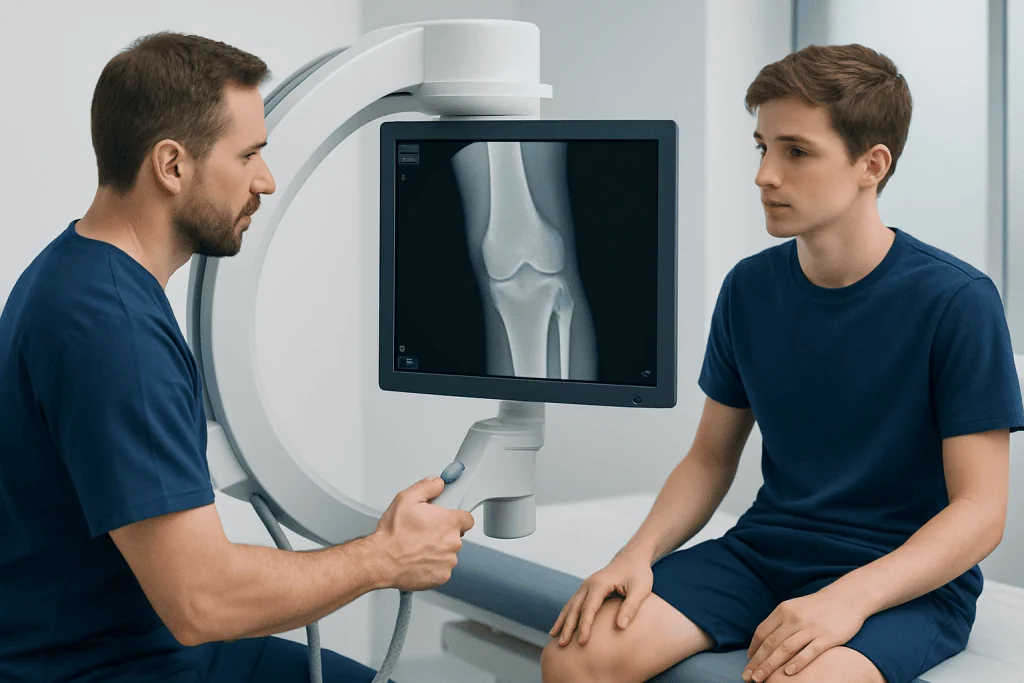
Children commonly sustain growth plate injuries after a fall, sports injury, collision, twist, or direct blow. Pain near a joint after an injury should not be dismissed simply because swelling seems mild or the child can still move the limb. Growth plate fractures can occur at the wrist, ankle, knee, elbow, shoulder, fingers, or other areas where bones are still growing.
During assessment, the clinician asks how the injury happened and examines tenderness, swelling, bruising, movement, circulation, and sensation below the injury. X-rays are usually the first imaging test. Some growth plate injuries may not be visible on an early X-ray, so the examination findings, repeat X-rays, or occasionally MRI or other imaging may help clarify the diagnosis.
Classification systems describe which parts of the bone are involved. In general, lower-grade Salter-Harris injuries are more likely to heal without long-term effects, while fractures that cross the growth plate and enter the joint or involve crushing of the growth plate require particularly careful specialist assessment.
Who May Need Salter Fracture Treatment?

Any child or teenager with a suspected growth plate injury should be assessed by a qualified healthcare professional. Treatment is especially important when there is visible deformity, severe pain, inability to bear weight or use the limb, numbness, a cold or pale hand or foot, or an open wound near the fracture. These features can indicate an injury that needs urgent care.
Stable fractures that are not displaced may be suitable for non-surgical care. Children with displaced fractures, fractures involving a joint surface, repeated loss of alignment in a cast, open fractures, or injuries affecting circulation or nerves may need urgent orthopedic review. A child’s remaining growth also matters: a younger child has more growth remaining, so clinicians take extra care to minimize the risk of a growth disturbance.
Other orthopedic injuries can sometimes occur alongside a growth plate fracture. Assessment considers the entire limb and nearby joints, not only the area where the child feels the most pain.
How Salter Fracture Treatment Works: Step by Step
Initial care focuses on comfort, protection, and safe positioning. The limb may be placed in a splint first, particularly when swelling is expected. A splint can allow room for swelling before a more complete cast is applied. The child should avoid sports, running, climbing, and other activities that could move the fracture.
If the bone is out of position, an orthopedic clinician may perform a closed reduction. This means gently realigning the fracture without making an incision. Pain relief, sedation, or anesthesia may be used depending on the injury and the child’s needs. X-rays are commonly taken afterward to confirm that alignment is acceptable, followed by casting or splinting.
When closed reduction cannot achieve or maintain proper alignment, surgery may be advised. During surgery, the surgeon positions the fracture and may use temporary pins, screws, plates, or other fixation devices. The specific approach is chosen to stabilize the injury while avoiding unnecessary damage to the growth plate. Surgical planning and recovery form part of orthopedic surgical care when an operation is needed.
Follow-up appointments are an essential part of treatment. Repeat examinations and imaging help confirm that the fracture remains aligned and is healing as expected. After immobilization is removed, some children need simple movement exercises, while others benefit from supervised rehabilitation before returning to sport.
Recovery Timeline, Benefits and Possible Risks
The benefit of treatment is to support bone healing in an appropriate position, relieve pain, restore safe movement, and reduce the likelihood of later problems with growth or joint function. Immobilization also gives the injured area time to heal while protecting it from another impact.
Healing time varies by the bone involved, the fracture pattern, the child’s age, and whether surgery was required. Many uncomplicated growth plate fractures show substantial healing within several weeks, but returning to full sport or high-impact activity may take longer. The treating clinician determines when it is safe to stop using a cast or brace and when normal activity can resume.
Potential complications are uncommon but important to monitor. They can include loss of fracture alignment, stiffness after immobilization, infection after surgery, delayed healing, unequal growth, angular deformity, or joint problems when the fracture extends into a joint. The risk is higher with more severe injuries, particularly those with substantial displacement or direct damage to the growth plate.
Parents and caregivers should follow cast-care instructions carefully. A cast should be kept dry if advised, and objects should not be placed inside it to scratch itching. Increasing pain, tightness, numbness, tingling, unusual odor, drainage, or changes in finger or toe color should be reported promptly.
When to Seek Medical Care
Medical assessment should be sought promptly after a child has pain, swelling, tenderness, or reduced use of a limb near a joint following an injury. This is particularly important if the child cannot walk, bear weight, grip, or move the affected area normally. Even when symptoms improve quickly, a growth plate injury may need examination and imaging.
Emergency care is appropriate for a limb that looks deformed, a bone that has broken through the skin, uncontrolled bleeding, severe or worsening pain, or a hand or foot that becomes pale, blue, cold, numb, or weak. These signs may indicate a problem with circulation, nerves, or an unstable fracture.
After treatment has started, families should contact the care team if the cast feels excessively tight, pain is worsening rather than improving, fever develops with wound concerns after surgery, or the child has new numbness or trouble moving the fingers or toes. Keeping scheduled follow-up visits is important, even if the child appears comfortable.
Common Questions About Salter Fracture Treatment
How long does a salter fracture take to heal? Many uncomplicated Salter-Harris fractures heal over several weeks, although the exact period depends on the injured bone, fracture type, alignment, and the child’s age. A child may need to avoid sports and impact activities beyond the time spent in a cast or splint. The treating clinician uses symptoms, examination, and sometimes X-rays to advise on safe return to activity.
What is the hardest fracture to recover from? There is no single fracture that is hardest for every person to recover from. In children, growth plate fractures that are severely displaced, involve the joint, or damage the growth plate itself can be more complex because they may affect both present function and future bone growth. Complex fractures of weight-bearing bones and injuries with nerve, blood-vessel, or soft-tissue damage may also require longer recovery and closer monitoring.
Does a Salter 2 fracture require surgery? A Salter-Harris type II fracture does not always require surgery. Many can be treated with closed reduction when needed and then immobilization in a cast or splint. Surgery may be considered if the fracture is significantly displaced, cannot be aligned adequately without an operation, is unstable after reduction, or has other concerning features.
How painful is a growth plate fracture? Pain can range from mild to severe and is often felt close to a joint, with tenderness, swelling, and discomfort during movement or weight-bearing. Pain level alone does not reliably show how serious the injury is, as some growth plate fractures may be subtle on early imaging. Appropriate pain relief, immobilization, and clinical assessment can help keep the child comfortable while the injury is treated.
Ongoing Follow-Up and Return to Activities
Follow-up care is tailored to the injury. At appointments, the clinician checks pain, swelling, range of motion, fracture alignment, and the child’s ability to use the limb. For higher-risk growth plate injuries, follow-up may continue after the fracture has healed to check that the bone is growing evenly.
Return to school is often possible with practical adjustments, such as avoiding playground activity, carrying heavy bags, or participating in physical education until cleared. Return to sport should be gradual and based on medical advice, particularly after lower-limb fractures or fractures involving a joint. Strength, flexibility, balance, and confidence may need time to return after immobilization.
Acibadem International’s multidisciplinary orthopedic specialists and JCI-accredited hospitals diagnose and treat growth plate injuries for international patients, with care plans based on the child’s injury and recovery needs.
Frequently asked questions
What is a Salter-Harris fracture?
A Salter-Harris fracture is a break that involves a growth plate in a child or adolescent. Growth plates are areas of developing tissue near the ends of bones, so these injuries need appropriate assessment and follow-up.
Can a growth plate fracture be missed on an X-ray?
Yes. Some growth plate injuries are not clearly visible on an initial X-ray, especially if there is little displacement. Clinicians consider the child’s symptoms and examination findings and may arrange repeat imaging or other tests when needed.
Will my child need a cast for a Salter fracture?
Many children need a cast or splint to protect the injury while it heals. The type and duration of immobilization depend on the bone involved, fracture stability, swelling, and whether the fracture was realigned.
Can a Salter fracture affect future growth?
Most growth plate fractures heal without affecting future growth, especially when treated promptly and properly aligned. Some more severe injuries can cause premature closure or uneven growth, which is why follow-up may continue after the fracture has healed.
When can a child return to sports after a growth plate fracture?
Return to sports should occur only after the clinician confirms that healing, movement, strength, and comfort are adequate. The timing varies widely, and returning too early may increase the risk of reinjury.
What should parents watch for after a cast is applied?
Parents should seek advice promptly for increasing pain, numbness, tingling, swelling that does not improve with elevation, pale or blue fingers or toes, or a cast that feels too tight. They should also report drainage, a foul smell, or fever when there are concerns about a surgical wound.
References
- American Academy of Orthopaedic Surgeons
- OrthoInfo by the American Academy of Orthopaedic Surgeons
- Royal Children’s Hospital Melbourne
- Merck Manual Consumer Version
This article is for general information only and is not a substitute for professional medical advice. Please consult a qualified doctor about your individual situation.
Joint and spine care in Turkey — expert assessment & treatment
JCI-accredited · board-certified surgeons · reply within 24h
Add us as a Preferred Source to see more of our trusted health content across Google Search, AI Overviews and Discover.