Nausea and Radiation Therapy: How It Works, Results and What to Expect

Nausea risk depends strongly on the treatment area, dose, schedule and whether chemotherapy is also being given. Radiation to the brain, upper abdomen and pelvis is more likely to cause nausea than treatment to many other body areas.
Key Takeaways
- Nausea risk depends strongly on the treatment area, dose, schedule and whether chemotherapy is also being given.
- Radiation to the brain, upper abdomen and pelvis is more likely to cause nausea than treatment to many other body areas.
- Anti-nausea medicines work best when taken exactly as prescribed, sometimes before symptoms become severe.
- Small meals, adequate fluids and avoiding individual food triggers may reduce discomfort.
- Persistent vomiting, dehydration, severe abdominal pain or new neurological symptoms need prompt medical assessment.
Nausea during radiation therapy is a possible but treatable side effect, most often related to the part of the body being treated rather than radiation itself. The care team can assess the likely cause, prescribe anti-nausea medicine when needed, and help the patient maintain fluids and nutrition throughout treatment.
Overview: nausea and radiation therapy
Nausea and radiation therapy can be connected, but nausea is not inevitable for everyone receiving radiotherapy. It is more likely when radiation is directed near areas involved in vomiting control or digestion, such as the brain, upper abdomen, stomach region, liver, pancreas, intestines or pelvis. The risk may also increase when radiation is combined with chemotherapy, certain medicines, pain, anxiety, infection or the cancer itself.
Radiation therapy uses carefully planned high-energy beams to damage cancer cells and limit their ability to grow. Although treatment is targeted, nearby healthy tissues can temporarily become irritated or inflamed. This can affect the digestive system or, with brain treatment, the centres that regulate nausea and vomiting.
Nausea can range from a mild unsettled feeling to vomiting that makes eating and drinking difficult. It should be reported early to the radiation oncology team. In many cases, symptoms can be prevented or controlled with supportive care, allowing treatment to continue as planned.
How radiation-related nausea happens
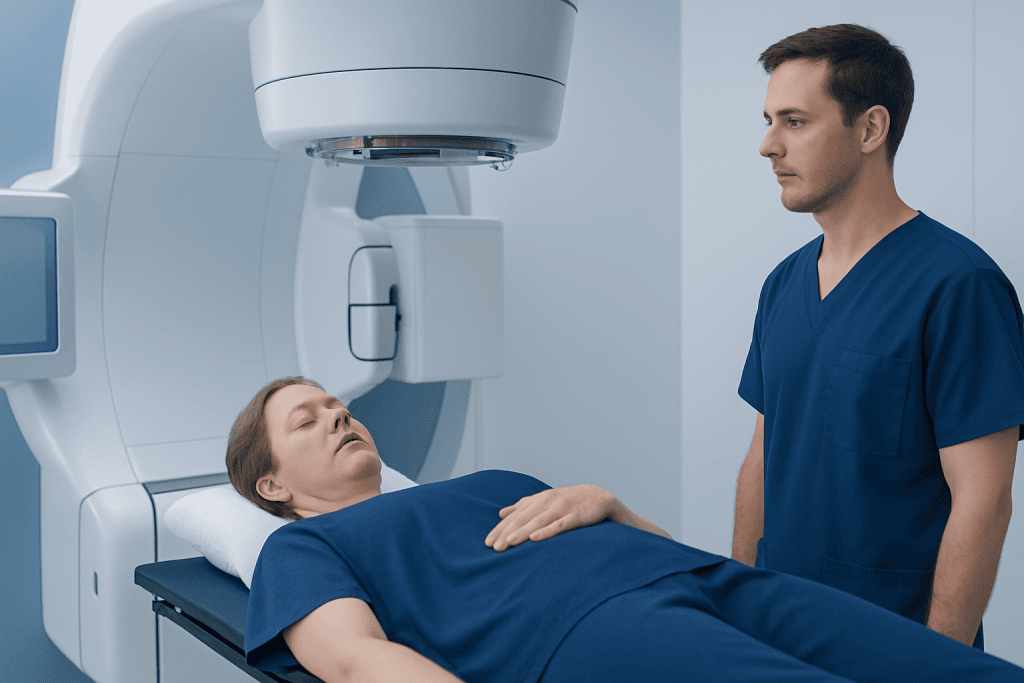
Radiotherapy is planned using imaging and computer-based dose calculations to focus treatment on a tumour or an area at risk of cancer cells. During each session, the patient is positioned carefully and the radiation machine delivers treatment without touching the body. The treatment itself is painless and usually lasts only a few minutes, although setup takes longer.
Nausea may occur soon after a session, build gradually over several days, or appear later as irritation in tissues develops. Radiation to the upper abdomen may irritate the stomach or small bowel. Pelvic radiation can affect bowel function and contribute to nausea, especially if diarrhoea or cramping occurs. Brain radiation may cause nausea through swelling or irritation in the central nervous system.
Not all nausea during a course of radiotherapy is caused by radiation. Constipation, reflux, dehydration, low food intake, opioid pain medicines, antibiotics, emotional stress and chemotherapy can all contribute. Identifying the most likely cause helps clinicians select the right treatment rather than relying on a single approach.
Who is more likely to experience nausea?

Before treatment begins, the radiation oncologist assesses the planned treatment field, total dose, fraction schedule, other cancer therapies and the patient’s general health. People receiving radiation to the whole brain, upper abdomen or a large area of the abdomen may have a greater chance of nausea. Combined chemoradiotherapy can also raise the risk because both treatments may affect the digestive system.
A personal history of motion sickness, nausea with previous cancer treatment, reflux, anxiety or certain digestive conditions may be relevant. However, these factors do not mean that nausea will definitely occur. Preventive medicines may be offered when the expected risk is moderate or high.
People with pre-existing digestive symptoms may need closer monitoring. For example, active stomach or bowel disorders can complicate symptom assessment, and the care team may need to distinguish treatment effects from conditions such as gastritis or other gastrointestinal problems. Patients should provide a full list of medicines, supplements and previous reactions to anti-nausea drugs.
What happens during treatment and in the days afterward?
Radiation therapy usually starts with a planning appointment, often called simulation. This may include a CT scan, positioning aids and, for some treatment areas, instructions about eating, bladder filling or bowel preparation. The oncology team explains whether fasting is needed; patients should not fast unless they have been specifically advised to do so.
At each treatment visit, radiotherapy staff help the patient into the same position used for planning and verify alignment. Most people go home shortly afterward and are not radioactive following standard external-beam radiation therapy. If nausea is anticipated, the team may advise taking prescribed medication before treatment or at scheduled times.
Symptoms can vary across the course. Some people feel well after early sessions, while others develop tiredness, appetite changes or nausea as treatments accumulate. The team commonly reviews side effects weekly, but patients should contact them sooner if symptoms interfere with drinking, eating, sleep or daily activities.
After the final session, acute side effects often peak or remain noticeable for a short period before gradually improving. Recovery depends on the treatment site, the total treatment course, concurrent chemotherapy and the person’s overall condition. Follow-up appointments allow the team to assess recovery and ongoing cancer care needs.
How long does radiation nausea last?
The duration of radiation-related nausea varies. Some people have brief symptoms on treatment days, while others experience nausea that develops during the first week or later in the course. When nausea is related to temporary irritation from radiation, it often starts to improve within days to a few weeks after treatment ends.
If treatment includes chemotherapy, symptoms may follow a different pattern and can continue longer. Nausea that persists, worsens after radiotherapy has finished, or begins unexpectedly should be reviewed rather than assumed to be a normal side effect. The team may check for dehydration, constipation, infection, medication effects, bowel irritation or another medical cause.
For brain radiation, nausea accompanied by worsening headache, confusion, weakness, vision changes or repeated vomiting needs urgent clinical advice. These symptoms can have several causes and should be assessed promptly by the oncology team or emergency services when severe.
What are the hardest days after radiation treatment?
There is no single hardest day after radiation treatment because side effects depend on the body area treated and the individual treatment plan. For many patients, acute effects such as fatigue, skin irritation, bowel changes or nausea are most noticeable near the end of a multi-week course and during the first one to two weeks after it finishes. This happens because normal tissues can continue reacting after the last session.
For shorter treatment schedules, symptoms may follow a different timeline. Some people have few immediate effects, while others notice nausea or tiredness within several days. A symptom diary can help identify patterns related to treatment appointments, meals, medications or bowel movements.
Patients should not wait for a routine follow-up if symptoms become difficult to manage. Early support can reduce the risk of dehydration, weight loss and treatment interruptions. The radiation oncology team can adjust supportive medicines and coordinate care with dietitians, oncology nurses and other specialists.
How do you get rid of nausea from radiation therapy?
Managing nausea from radiation therapy usually combines prescribed medication with practical self-care. Doctors may recommend antiemetic medicines before treatment, on a regular schedule, or as needed depending on the expected risk and symptom pattern. These medicines should be taken exactly as directed; patients should contact the care team if they are not working or cause troublesome side effects.
Eating small, frequent meals can be easier than having large meals. Bland or cool foods may be better tolerated, and sipping fluids regularly can help prevent dehydration. Patients may wish to limit rich, fried, strongly scented, very spicy or highly acidic foods if these worsen symptoms. A dietitian can offer individualized guidance when appetite is low or weight loss is a concern.
It can also help to sit upright after meals, wear loose clothing, get fresh air and rest without lying completely flat immediately after eating. Constipation should be addressed because it can worsen nausea. Any herbal product, vitamin or over-the-counter remedy should be discussed with the oncology team, as some products may interact with cancer treatment or other medicines.
Supportive cancer care can be integrated with the main treatment plan. Patients receiving radiation as part of cancer treatment may discuss radiation therapy planning and side-effect management with their oncology team, including preventive strategies tailored to the treatment area.
How will I feel after 5 days of radiotherapy?
After 5 days of radiotherapy, many people still feel close to their usual state, particularly when a small area is being treated and treatment is not combined with chemotherapy. Others may begin to notice mild tiredness, reduced appetite, nausea or site-specific effects. For example, abdominal or pelvic radiation can affect digestion sooner than radiation to areas farther from the digestive tract.
Feeling tired after a week of weekday treatment is common and does not necessarily mean treatment is harming the body more than expected. Fatigue may also be influenced by travel, disrupted sleep, emotional strain, anaemia, pain, reduced food intake or the cancer itself. Balancing light activity with rest is often helpful.
The best guide is the patient’s own change from baseline. New or increasing vomiting, inability to keep fluids down, severe pain, fever, significant dizziness or a marked decline in functioning should be shared with the treatment team promptly. They can decide whether symptoms need medicine changes, blood tests, imaging or other support.
Benefits, risks and when to seek medical care
The primary benefit of radiation therapy is local cancer control: it may aim to cure cancer, reduce the likelihood of recurrence, slow tumour growth or relieve symptoms, depending on the diagnosis and treatment goal. The radiation plan is designed to deliver an effective dose while protecting surrounding healthy organs as much as possible. Even so, side effects can occur and are discussed before treatment starts.
Nausea is usually manageable, but repeated vomiting can lead to dehydration, electrolyte imbalance, poor nutrition and difficulty taking essential medicines. Contact the oncology team the same day if nausea is persistent, medication does not help, there is vomiting more than once or twice, or fluids cannot be kept down. Medical advice is also important for little or no urine, dizziness on standing, severe constipation, diarrhoea, blood in vomit or stool, fever, severe abdominal pain, or rapidly worsening symptoms.
Emergency assessment is appropriate for severe dehydration, fainting, chest pain, trouble breathing, confusion, seizures, sudden weakness or severe headache with vomiting. Patients should use local emergency services when symptoms are severe or they cannot reach their cancer team.
Acibadem International’s multidisciplinary specialists and JCI-accredited hospitals support international patients receiving cancer care, including assessment and management of treatment-related symptoms. Individual recommendations should always come from the treating radiation oncology team.
Frequently asked questions
Can radiation therapy cause nausea even if the stomach is not being treated?
Yes, although it is less common with treatment away from the brain and abdomen. Nausea may be related to medicines, anxiety, fatigue, constipation, chemotherapy or the cancer itself. The oncology team can help identify the likely cause and recommend appropriate care.
Should anti-nausea medicine be taken before radiotherapy?
Some patients are advised to take preventive anti-nausea medicine before treatment, especially when radiation involves higher-risk areas. Others only need medicine if symptoms develop. The patient should follow the schedule given by their radiation oncology team rather than changing it independently.
Can I eat before a radiation treatment session if I feel nauseated?
In most cases, a small, light meal or snack is reasonable if it is tolerated. However, some radiation plans require specific preparation, such as fasting or a particular bladder or bowel routine. The patient should follow the instructions provided by the treatment centre.
Is vomiting normal during radiation therapy?
Vomiting can occur, particularly with radiation to the brain, upper abdomen or pelvis, but it should always be reported. It may signal a side effect that needs stronger symptom control or another problem such as dehydration, constipation or infection. Prompt support can help prevent complications.
Will nausea stop as soon as radiation ends?
Not always. Some side effects improve quickly, while others may continue or peak for a short time after the final session as tissues recover. Persistent or worsening nausea should be assessed by the cancer care team.
Can dehydration make radiation nausea worse?
Yes. Dehydration can worsen nausea, dizziness, weakness and fatigue, while nausea can make it harder to drink enough fluids. Small, frequent sips may help, but patients who cannot keep fluids down should contact their oncology team promptly.
References
- American Society for Radiation Oncology
- National Cancer Institute
- American Cancer Society
- Multinational Association of Supportive Care in Cancer
- National Comprehensive Cancer Network
This article is for general information only and is not a substitute for professional medical advice. Please consult a qualified doctor about your individual situation.
Radiation Therapy in Turkey — costs, top hospitals & a free quote
JCI-accredited · board-certified surgeons · reply within 24h
Add us as a Preferred Source to see more of our trusted health content across Google Search, AI Overviews and Discover.

Radiation Oncology
Precision radiotherapy and radiosurgery using advanced linear accelerators and image-guided techniques.
26 specialists in this unit