Venipuncture Procedure: An Evidence-Based Patient Guide

Venipuncture collects a blood sample from a vein for laboratory testing, blood donation, or selected treatments. Most samples are taken from a vein in the arm and the needle is in place for only a short time.
Key Takeaways
- Venipuncture collects a blood sample from a vein for laboratory testing, blood donation, or selected treatments.
- Most samples are taken from a vein in the arm and the needle is in place for only a short time.
- Good preparation may include following fasting instructions, drinking water when permitted, and telling staff about fainting, bleeding, or medication concerns.
- Mild bruising or tenderness can occur, while serious complications are uncommon.
- Contact a healthcare professional promptly for persistent bleeding, increasing swelling, signs of infection, or severe arm pain after the procedure.
A venipuncture procedure is the standard method of drawing blood from a vein, usually in the inner elbow, using a sterile needle and collection tube. It is a brief, commonly performed procedure that helps clinicians diagnose, monitor, and manage many health conditions.
Overview: What Is a Venipuncture Procedure?
A venipuncture procedure is the collection of blood by placing a sterile needle into a vein. The sample may be used for laboratory tests, including blood counts, glucose or cholesterol testing, checks of kidney or liver function, infection testing, and monitoring of medicines or long-term conditions. Venipuncture is also used when blood is collected for donation and in certain treatments that require access to a vein.
For most people, the procedure takes only a few minutes. A trained phlebotomist, nurse, or other qualified healthcare professional usually selects a vein in the inside of the elbow, although veins in the hand or another location may occasionally be used. The blood is collected into labeled tubes, and the needle is removed promptly after the required samples have been obtained.
This venipuncture patient education guide explains what usually happens before, during, and after a blood draw. Individual instructions can vary depending on the tests ordered, a person’s medical history, vein access, and whether blood is being collected for testing, donation, or treatment.
Why Venipuncture Is Performed and Who May Need It
Clinicians request venipuncture when a blood sample can help answer an important health question. Blood testing may support routine preventive care, investigate symptoms, confirm or rule out possible conditions, assess organ function, or follow how a treatment is working. Results are interpreted alongside symptoms, examination findings, medical history, and sometimes repeat testing.
People of all ages may need blood drawn. Newborns, children, older adults, people with chronic illness, and individuals receiving hospital care may require specially adapted approaches. Veins can be more difficult to access when a person is dehydrated, has very small or fragile veins, has had repeated blood draws, or has certain medical conditions or treatments.
Before selecting a site, the healthcare professional considers safety and comfort. They may avoid an arm with an intravenous line, swelling, infection, a recent injury, a dialysis access site, or lymph node surgery-related concerns, depending on the clinical situation. A person should mention previous difficulties with blood draws, a history of fainting, a bleeding disorder, and any relevant surgery or vascular access device.
Preparing for a Blood Draw

Preparation depends on the requested test. Many blood tests do not require special preparation, but some require fasting or avoiding particular foods, drinks, supplements, exercise, or medicines beforehand. Patients should follow the instructions provided by their clinician or laboratory rather than stopping prescribed medication on their own.
Unless a clinician has advised fluid restriction, drinking water before an appointment may help prevent dehydration and can make veins easier to identify. Wearing clothing with sleeves that can be rolled up comfortably may also make the process easier. It can be helpful to bring identification and a list of current medicines, vitamins, and herbal products when requested.
People who feel anxious around needles or have previously fainted should tell the staff before the procedure begins. They may be able to lie down, use calming breathing techniques, look away from the equipment, or remain seated for a short observation period afterward. These small adjustments can improve comfort and reduce the chance of injury if lightheadedness occurs.
- Confirm whether fasting or timing instructions apply.
- Tell staff about blood-thinning medicines, bleeding problems, latex or adhesive allergies, and prior fainting.
- Ask questions if the reason for the test or the preparation instructions are unclear.
- Do not use an online venipuncture procedure steps PDF as a substitute for individualized clinical instructions.
Venipuncture Procedure Step by Step
The healthcare professional first verifies the patient’s identity and confirms the tests or collection request. This is an essential safety measure. They explain the process, obtain agreement to proceed, check for relevant precautions, and position the person sitting or lying down with the arm supported.
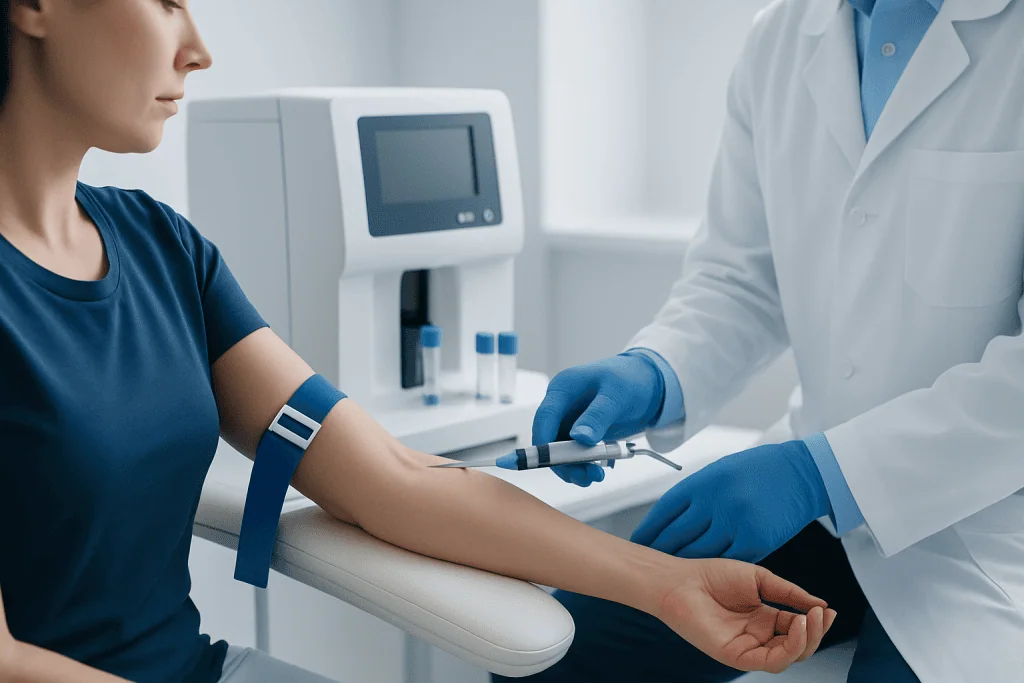
A tourniquet is placed above the intended collection site to make the vein more visible or easier to feel. The clinician identifies a suitable vein, cleans the skin with an antiseptic, and allows the area to dry. The patient may be asked to make a gentle fist, but pumping the fist repeatedly is generally avoided because it can affect some test results.
The clinician inserts the sterile needle into the vein and attaches or uses collection tubes in the appropriate order for the requested laboratory testing. A brief pinch, pressure, or stinging sensation is common when the needle enters the skin. Once the collection is complete, the tourniquet is released, the needle is removed, and firm pressure is applied with clean gauze. The sample tubes are labeled according to established safety procedures and sent for analysis.
A clinical venipuncture procedure checklist includes correct patient identification, test verification, site selection, infection-prevention measures, safe sharps disposal, sample labeling, and post-procedure instructions. Venipuncture procedure documentation generally records the collection date and time, collection site when relevant, patient tolerance, any difficulty or complications, and the handling of the specimen. These records help laboratories and clinical teams maintain sample quality and continuity of care.
What to Expect During Recovery
Most people can return to usual activities immediately after a routine blood draw. The healthcare professional will usually ask the patient to keep steady pressure on the puncture site for a few minutes and to leave the bandage in place for a short period. This helps reduce bleeding and bruising.
A small bruise, mild tenderness, or a tiny raised area at the site can occur and commonly improves over several days. Applying gentle pressure soon after the draw is the most useful early measure. If bruising develops, a cool pack wrapped in cloth may be used briefly during the first day, provided the skin is protected from direct ice contact.
People who take anticoagulants or antiplatelet medicines, have a bleeding disorder, or have fragile skin may bruise more easily and may need to apply pressure for longer. Heavy lifting or strenuous use of the affected arm may be best avoided for a short time if the site is sore, bleeding, or bruised. For ongoing monitoring and laboratory evaluation, clinicians may recommend appropriate blood tests based on the person’s health needs.
Benefits, Risks, and Ways to Improve Comfort
The principal benefit of venipuncture is that it provides a reliable blood sample for testing. Laboratory information can help identify health concerns early, clarify the cause of symptoms, guide treatment decisions, and monitor changes over time. A blood result is rarely interpreted in isolation; the ordering clinician explains what the result means in the context of the individual patient.
Venipuncture is generally safe when performed by trained professionals using standard infection-control practices. Common minor effects include brief pain at needle insertion, bruising, slight bleeding, and temporary lightheadedness. Less common complications include a larger collection of blood under the skin, irritation of a nearby nerve, inflammation of a vein, infection, or prolonged bleeding.
Some situations require extra care. A person with difficult vein access may need a more experienced collector, a warm compress before the draw, or a different collection method. It is appropriate to let staff know immediately if there is sharp or radiating pain, numbness, burning, or significant discomfort during the procedure; they can reassess the needle position or stop the attempt.
Patients should not attempt venipuncture themselves unless they have been specifically trained and authorized to do so within an appropriate clinical setting. Safe collection relies on sterile equipment, correct specimen handling, and qualified assessment of any complications.
When to Seek Medical Care
Minor soreness and a small bruise are usually not concerning after a venipuncture procedure. However, a patient should contact a healthcare professional if bleeding does not stop after firm, continuous pressure; if a bruise becomes rapidly larger; or if there is increasing swelling, severe pain, coolness, paleness, weakness, or numbness in the hand or arm.
Medical advice is also appropriate if the puncture site becomes increasingly red, warm, tender, or produces drainage, especially if fever or feeling unwell develops. These symptoms are uncommon but should be assessed rather than ignored. People taking blood-thinning medication should seek advice sooner if bleeding or bruising seems more than expected.
Urgent evaluation is needed for severe symptoms such as fainting that does not resolve quickly, breathing difficulty, facial swelling, or signs of a serious allergic reaction. For routine questions about results, the patient should speak with the clinician who ordered the test rather than trying to interpret laboratory numbers alone.
Acibadem International’s multidisciplinary specialists and JCI-accredited hospitals support international patients who need diagnostic assessment, blood testing, and coordinated care based on their individual health concerns.
Frequently asked questions
Does a venipuncture procedure hurt?
Most people feel a quick pinch or sting when the needle enters the skin, followed by mild pressure. The sensation usually lasts only a short time. Tell the healthcare professional if pain is severe, burning, or continues during collection.
How long does a venipuncture procedure take?
The blood draw itself commonly takes a few minutes, although preparation and identification checks take additional time. It may take longer when veins are difficult to access or several types of samples are needed. The healthcare professional can explain any delay during the visit.
Should a patient fast before venipuncture?
Fasting is needed for some tests but not for many others. Patients should follow the instructions from their clinician or laboratory, including guidance about water, food, drinks, and medicines. Prescribed medicines should not be stopped unless a qualified clinician specifically advises this.
What should be done if a bruise appears after a blood draw?
Small bruises are common and usually fade gradually over several days. Gentle pressure immediately after the draw may reduce bruising, and a cloth-wrapped cool pack can be used briefly during the first day. Contact a healthcare professional if the bruise enlarges quickly, becomes very painful, or is associated with persistent bleeding or swelling.
Why might a healthcare professional need more than one attempt?
A vein may be small, deep, mobile, fragile, or less visible because of dehydration or previous medical treatment. Safety standards limit the number of attempts by an individual collector, and another trained professional may be asked to help. Patients can share what has worked well during previous blood draws.
Can patients exercise after venipuncture?
Most people can resume normal daily activity after a routine blood draw. If the site is bleeding, painful, or bruised, it is sensible to avoid strenuous activity or heavy lifting with that arm for a short time. People who gave blood or had a larger-volume collection may receive more specific aftercare instructions.
References
- World Health Organization
- Centers for Disease Control and Prevention
- Clinical and Laboratory Standards Institute
- MedlinePlus, U.S. National Library of Medicine
This article is for general information only and is not a substitute for professional medical advice. Please consult a qualified doctor about your individual situation.
Explore treatments in Turkey — costs, top hospitals & a free quote
JCI-accredited · board-certified surgeons · reply within 24h
Add us as a Preferred Source to see more of our trusted health content across Google Search, AI Overviews and Discover.
Check your numbers in seconds
BMI, calories, due date, blood pressure and 30+ more clinical calculators — free, instant, doctor-reviewed ranges.