

Hotel Check-In Guide for Patients Arriving in Turkey

Check in at least a day before your first appointment if you can, and keep your passport, appointment details, insurance or payment documents, medication and medical records in your hand luggage. At reception, ask about Wi-Fi, breakfast hours, taxis, accessibility support and travel time to the hospital. Then rest, hydrate, avoid strenuous activity and follow any pre-appointment instructions.
Will you have the energy to sort out a room, a taxi and tomorrow’s appointment after a long flight? Most patients don’t. Arriving at your hotel is often the first moment you can finally pause, and a calm check-in makes the rest of your stay easier: your documents stay safe, you settle in safely, and you know who to call when something isn’t right.
A few things make the difference. If possible, plan your hotel arrival at least one day before your first appointment. Keep your passport, appointment details, insurance or payment documents, medication and medical records with you rather than packed away. At reception, ask about Wi-Fi, breakfast hours, taxi options, accessibility support and how long the journey to the hospital takes.
Once you’re in the room, the priority is simple: rest, hydrate, avoid strenuous activity and follow any pre-appointment instructions you have been given. And you are not doing this alone — international patient teams can assist with interpreters, transfers and local coordination, so contact your patient coordinator or the hotel team whenever you need help.
At a glance
- Best time to arrive: If possible, plan hotel arrival at least one day before your first appointment.
- Keep with you: Passport, appointment details, insurance or payment documents, medication, and medical records.
- Ask at reception: Wi-Fi, breakfast hours, taxi options, accessibility support, and hospital travel time.
- Health priority: Rest, hydrate, avoid strenuous activity, and follow any pre-appointment instructions.
- Support available: International patient teams can assist with interpreters, transfers, and local coordination.
Before You Reach the Hotel
After landing in Turkey, your hotel check-in may feel like a small task, but it can set the tone for the rest of your medical stay. Keep your most important items in your hand luggage rather than checked bags: passport, visa or entry documents if applicable, appointment confirmation, medical reports, current medication, glasses or hearing aids, phone charger, and any mobility aids you need immediately.
If you are traveling for care at Acibadem International, confirm your arrival plan with your international patient coordinator before you fly or when you land. Depending on your arrangements, this may include airport transfer details, hospital appointment timing, interpreter support, and the address of your hotel or serviced residence. Having these details saved offline is useful in case mobile data does not work right away.
Try to avoid scheduling your first hospital visit too close to your flight arrival unless your care team has specifically arranged it. International travel can cause fatigue, dehydration, swelling in the legs, sleep disruption, and stress. A calmer check-in gives you time to rest, shower, organize your papers, and prepare for the next day.
Documents and Details You May Need at Check-In

Hotels in Turkey normally ask for your passport or official identification at check-in. Reception may also confirm your reservation name, length of stay, contact number, and payment method. If you booked through a coordinator, agency, hospital assistance team, or family member, make sure the reservation name matches the passport of the person who will check in.
Keep your medical documents private but accessible. Hotel staff do not need to see your diagnosis or treatment plan unless there is a practical reason, such as arranging a wheelchair-accessible room or emergency assistance. If you need support, you can simply explain your functional needs: for example, “I need a quiet room near the elevator,” “I cannot climb stairs,” or “I may need help calling a taxi to the hospital.”
It is wise to keep digital and paper copies of key documents in separate places. Your companion can hold one set, and you can keep another in a folder in your cabin bag. Useful documents include:
- Passport and entry stamp or visa information if relevant
- Hotel booking confirmation and hospital appointment schedule
- Emergency contact details in Turkey and at home
- Medication list with generic names and doses
- Recent medical reports, imaging CDs or links, and lab results
- Insurance, guarantee letter, or payment-related documents if applicable
Choosing the Right Room for a Medical Stay
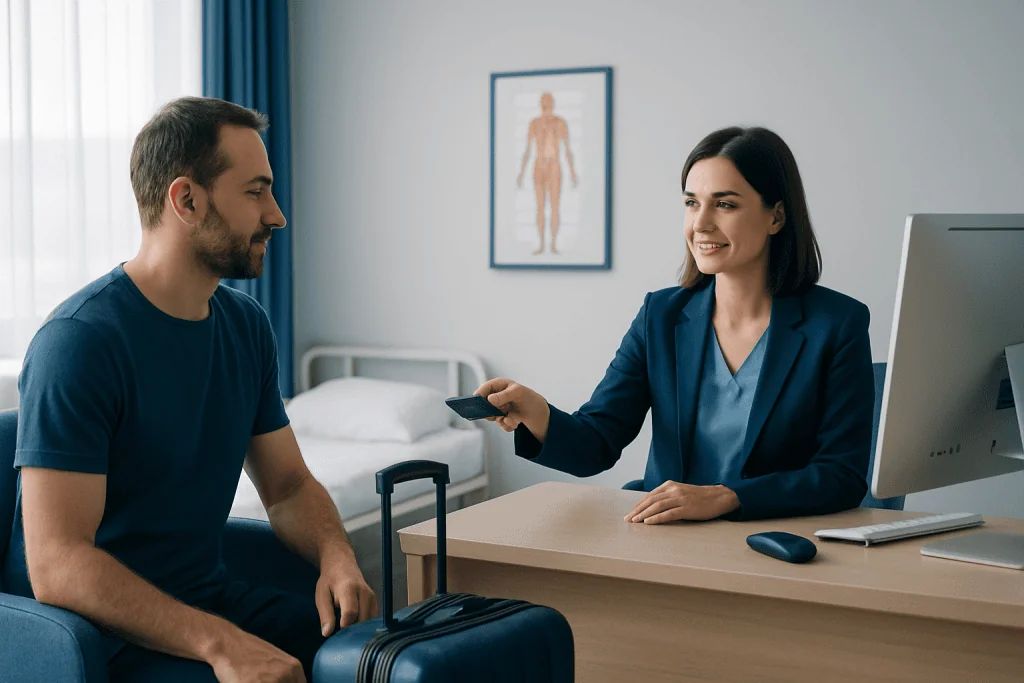
A room that is comfortable for a holiday may not always be ideal for a patient stay. At check-in, ask practical questions before accepting the room if you have specific needs. Consider distance from the elevator, bathroom safety, bed height, noise level, heating and cooling, and whether the room has enough space for a companion, wheelchair, walker, or medical supplies.
If you have limited mobility, recent surgery, breathing difficulties, pain, dizziness, or fatigue, request a room that reduces unnecessary walking. A lower floor or a room close to the elevator can be helpful, but make sure it is still quiet enough for rest. If you are sensitive to noise, ask to avoid rooms near elevators, nightclubs, busy roads, service areas, or breakfast rooms.
Bathroom setup matters. Ask whether the shower is walk-in or has a high step, whether there are grab bars, and whether a non-slip mat can be provided. If you are unsure whether you can manage safely, ask the hotel to show the room before your luggage is fully brought in. A small room change on arrival is much easier than coping with an unsafe setup later.
Communication, Language, and Local Support
Many hotels in major Turkish medical travel destinations have English-speaking staff, but language comfort can vary. Keep essential phrases written down in English and, if possible, translated into Turkish. Include your name, hotel room number, hospital name, patient coordinator contact, allergies, and emergency contact.
If you are under the care of Acibadem International, ask your patient coordinator how to reach the international patient services team during your stay. JCI-accredited Acibadem hospitals regularly support patients from abroad, and coordination may include interpreter arrangements, appointment guidance, transfer assistance, and practical information for companions. Save the contact number in your phone and on paper.
At the hotel, clarify the easiest way to contact reception from your room, how to request a taxi, and what to do if you feel unwell. You do not need to share detailed medical information with the hotel, but it is reasonable to tell them if you may need extra time, a wheelchair, luggage assistance, or help reaching transport.
Food, Medication, and Daily Routine
Once you are checked in, review your meal options and compare them with any instructions from your care team. Before some appointments, blood tests, imaging, anesthesia assessments, or procedures, you may be asked to fast or avoid certain foods. Do not rely on general hotel advice for medical fasting rules; follow the instructions given by your hospital team.
Ask reception about breakfast hours, room service, nearby pharmacies, drinking water, and whether the room has a kettle or mini-fridge. A mini-fridge can be important if you have temperature-sensitive medication, but not all hotel refrigerators maintain medical-grade temperature control. If medication storage is critical, discuss it with your care team or pharmacist in advance.
Try to establish a simple routine after arrival: take medication according to your home schedule unless your doctor advised otherwise, drink water, eat lightly if permitted, and sleep. Jet lag can make medication timing confusing, so set phone alarms and keep a written list. If you are uncertain about time-zone adjustments for important medication, ask your medical team rather than guessing.
Safety, Comfort, and When to Ask for Help
Your first evening in Turkey should be low-pressure. Avoid carrying heavy luggage, walking long distances, or rushing to sightseeing, especially if you have traveled for surgery, cancer care, cardiology assessment, fertility treatment, or another demanding medical reason. Even if you feel well, your body may need time to recover from the flight.
Check the room phone, door lock, bathroom lighting, and path from bed to bathroom. Keep your slippers or shoes easy to reach, especially if you are at risk of falls. If you use a CPAP device, mobility aid, wound care supplies, or other equipment, set it up while you are not overly tired.
Seek help promptly if you develop concerning symptoms such as chest pain, severe shortness of breath, fainting, sudden weakness, heavy bleeding, confusion, or severe allergic reaction. For urgent symptoms, contact local emergency services or ask hotel reception to call emergency help immediately. Also inform your patient coordinator or hospital contact as soon as it is safe to do so.
Step by step
- Confirm your reservation and arrival time. Before you travel, check that your hotel reservation name matches your passport and that the dates match your treatment schedule. If your flight arrives early in the morning or late at night, ask about early check-in, late check-in, or luggage storage in advance.
- Keep essential items in your hand luggage. Do not pack important medication, passports, medical reports, appointment information, or chargers in checked luggage. If a suitcase is delayed, you should still be able to attend your appointment and take your medication safely.
- Use planned transport when possible. If a transfer has been arranged by your hotel, hospital support team, or coordinator, follow the agreed meeting point instructions carefully. Keep the hotel address written in Turkish and English so a driver can find it easily.
- Tell reception about practical needs. You do not need to explain your full medical history. Focus on what helps you function safely, such as needing a room near the elevator, a quiet floor, wheelchair access, luggage help, or assistance booking transport to the hospital.
- Check the room before fully unpacking. Look at the bathroom, bed height, heating or air conditioning, noise level, lighting, and walking distance from the elevator. If something is unsuitable, ask for a change immediately while it is easier for the hotel to assist.
- Organize tomorrow’s hospital visit. Place your appointment details, passport, medical documents, and payment or insurance papers in one folder. Confirm travel time to the hospital, interpreter arrangements if needed, and any fasting or medication instructions.
- Rest and monitor how you feel. After check-in, prioritize hydration, light food if allowed, medication timing, and sleep. If you feel unwell or symptoms worry you, contact hotel reception, your patient coordinator, or emergency services depending on urgency.
Your checklist
- Passport, visa or entry documents, and hotel booking confirmation
- Hospital appointment schedule and patient coordinator contact details
- Medical reports, imaging, test results, and medication list
- Prescription medication in original packaging, kept in hand luggage
- Phone charger, adapter for Turkey, and offline copies of key addresses
- Comfortable clothing, slip-resistant footwear, and any mobility aids
- Insurance, guarantee letter, or payment documents if applicable
- Written allergy information and emergency contact details
- Snacks or special dietary items if permitted by your care team
Key takeaways
- A smooth hotel check-in starts before your flight, with documents, medication, and appointment details kept in your hand luggage.
- At the hotel, share practical needs rather than private medical details unless necessary for your safety.
- Choose a room that supports recovery: quiet, accessible, safe in the bathroom, and convenient for hospital transfers.
- Follow your hospital team’s instructions for fasting, medication, and appointment preparation, not general travel advice.
- Acibadem International patient services can help coordinate interpreters, transfers, and local guidance when arranged as part of your care.
Frequently asked questions
Do hotels in Turkey need my passport at check-in?
Yes, hotels commonly request a passport or official identification for registration. Keep your passport accessible when you arrive, not packed deep in a suitcase. If a companion is staying with you, they may also be asked for identification.
Should I tell the hotel that I am a medical patient?
You only need to share what is useful for your comfort and safety. For example, you can ask for an accessible room, a quiet floor, help with luggage, or reliable taxi arrangements without discussing your diagnosis. If you may need urgent support, it can be helpful for reception to know who to contact.
What should I do if my room is not suitable for my condition?
Speak with reception as soon as possible and explain the practical issue clearly. For example, say that the shower step is too high, the room is too far from the elevator, or the noise prevents rest before treatment. If your stay is coordinated through an international patient team, inform them as well so they can advise or assist.
Can Acibadem International help with hotel or transfer arrangements?
International patient services may support travel-related coordination such as transfer guidance, interpreter planning, and practical arrival information, depending on your care arrangements. Confirm what is included before you travel so you know whom to contact at each stage. Keep all phone numbers and meeting instructions saved offline.
How early should I arrive before my first hospital appointment?
When possible, arriving at least one day before your first appointment gives you time to rest and settle. This is especially helpful after a long-haul flight or if you have mobility limits, pain, fatigue, or complex paperwork. If your medical situation requires same-day assessment, follow the schedule provided by your care team.
What if I need medication refrigerated in the hotel?
Ask in advance whether your room has a refrigerator, but remember that hotel mini-fridges may not be suitable for all medicines. For temperature-sensitive medication, discuss storage with your doctor, pharmacist, or patient coordinator before travel. Do not place critical medication in checked luggage.
Is it safe to use taxis from the hotel to the hospital?
Hotels can usually call licensed taxis or recommend reliable transport options. Ask reception how long the journey may take during traffic and leave extra time for your first appointment. If you have a transfer arranged through your care provider or coordinator, use the confirmed instructions and contact number.
What should I do if I feel unwell after checking in?
For mild travel fatigue, rest, hydrate, and follow your care team’s instructions. If you have serious symptoms such as chest pain, severe breathing difficulty, fainting, sudden weakness, heavy bleeding, or confusion, ask reception to call emergency services immediately. Then notify your hospital contact or patient coordinator when it is safe to do so.
Add us as a Preferred Source to see more of our trusted health content across Google Search, AI Overviews and Discover.

Update history
- PublishedJune 8, 2026
- Medical review approvedAugust 25, 2026
- Last content updateAugust 24, 2026
References3
- CDC Travelers' Health — wwwnc.cdc.gov
- Traveling Abroad with Medicine - CDC — wwwnc.cdc.gov
- Travel Health - MedlinePlus — medlineplus.gov
More Patient Guides
Medical Check-In at Istanbul Airport for Patients: What to Expect
Medical check-in at Istanbul Airport for patients: practical arrival, transfer, documents and support guidance for your Turkey treatment trip.
8 min read
Hospital Check-In in Turkey: Documents International Patients Should Bring
Hospital check-in in Turkey is smoother when you bring your passport, medical records, test results, payment documents and travel details.
8 min read
Mobile Internet and SIM Cards in Turkey for International Patients
Mobile internet and SIM cards in Turkey: practical options for international patients, including eSIMs, local SIMs, registration and hospital connectivity.
8 min read
Airport Arrival After an Overnight Flight: How to Pace Your First Medical Day
Airport arrival after an overnight flight: pace your first medical day in Istanbul with rest, hydration, transport planning and clear check-in steps.
8 min read