Surgery for Heavy Eyelids: Procedure, Recovery and Results

Upper blepharoplasty is the most common procedure for heavy upper eyelids caused by excess skin or protruding fat. A detailed eye and facial assessment is important because brow position, eyelid muscle weakness and dry eye can affect the best treatment plan.
Key Takeaways
- Upper blepharoplasty is the most common procedure for heavy upper eyelids caused by excess skin or protruding fat.
- A detailed eye and facial assessment is important because brow position, eyelid muscle weakness and dry eye can affect the best treatment plan.
- Most people have bruising and swelling for the first one to two weeks, while subtle settling of the eyelids continues for several months.
- The procedure is usually outpatient, but it is still surgery and carries risks such as dry eye, asymmetry, scarring, infection and temporary vision changes.
- New or sudden eyelid drooping, vision loss, eye pain or severe headache needs prompt medical assessment.
Surgery for heavy eyelids is most often an upper blepharoplasty, a procedure that removes or repositions excess skin and, when appropriate, fat from the upper eyelids. It may improve a tired or hooded appearance and can help when overhanging eyelid tissue interferes with the upper field of vision.
Overview: What Is Surgery for Heavy Eyelids?
Surgery for heavy eyelids usually refers to upper blepharoplasty. During this operation, a surgeon removes or repositions extra upper-eyelid skin and sometimes fatty tissue that creates a hooded, weighed-down feeling. The goal may be functional, cosmetic, or both: some people seek a clearer upper visual field, while others want the eye area to look less tired.
Heavy lids do not always have one cause. Loose upper-eyelid skin is common with aging, but a low eyebrow, true eyelid drooping (ptosis), swelling, facial anatomy, allergies or previous surgery may contribute. For this reason, the procedure for heavy eyelids should be planned after an individual assessment rather than based on appearance alone.
When excess skin blocks vision, clinicians may describe the finding as dermatochalasis. If the eyelid edge itself sits too low because of muscle weakness, ptosis repair rather than, or in addition to, blepharoplasty may be needed. A careful examination helps distinguish these possibilities and avoid removing more tissue than is appropriate.
How It Works and Who May Be a Candidate
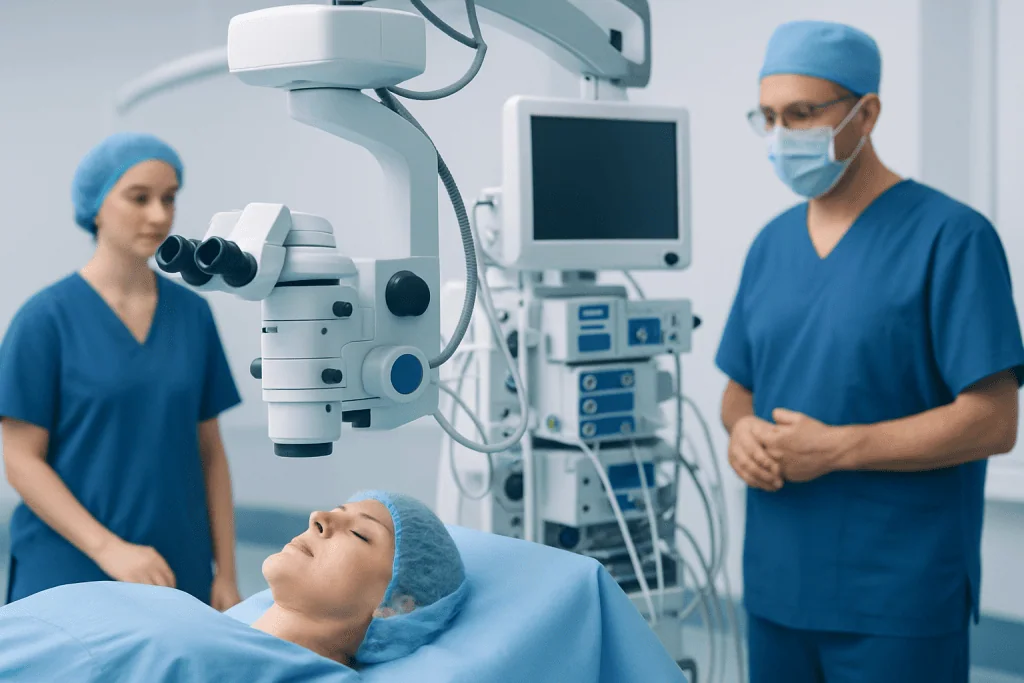
Upper blepharoplasty works by placing an incision in the natural upper-eyelid crease, where the resulting scar is usually designed to be discreet. Through this opening, the surgeon can remove a measured amount of loose skin, adjust or remove selected fat pads, and refine supporting tissues when indicated. The approach is individualized to preserve natural eyelid closure and expression.
Potential candidates for surgery for heavy lids are adults bothered by persistent upper-lid skin overhang, a hooded appearance, irritation from skin folding, or documented obstruction of the upper visual field. Good general health, realistic expectations and the ability to follow recovery instructions are important. The procedure is not intended to stop aging, but results can remain noticeable for many years.
Before recommending surgery, the surgeon reviews eye health, medications, previous eye operations, contact lens use, smoking or nicotine exposure, bleeding history and symptoms of dry eye. People with uncontrolled medical conditions, active eye infection, significant untreated dry eye or certain thyroid-related eye problems may need treatment or stabilization first. A visual field assessment and standardized photographs may be useful when functional vision impairment is a concern.
For patients whose concern is mainly eyelid drooping rather than skin excess, ptosis should be evaluated as part of the surgical plan. In some cases, lifting the brow or repairing the eyelid-lifting muscle provides more meaningful improvement than skin removal alone.
Step by Step: What Happens During the Procedure

At the consultation, the surgeon examines the eyelids, brows and eye surface, discusses goals, and marks the planned incision lines. Measurements are taken to assess symmetry, eyelid opening and the amount of skin that can be safely removed. Patients should disclose all prescribed medicines, supplements and eye drops; the clinical team will explain which substances may need adjustment before surgery.
Upper blepharoplasty is commonly performed as an outpatient procedure under local anesthesia with sedation or, in selected situations, general anesthesia. After the skin is cleansed and anesthetized, the surgeon makes the planned crease incision. Excess skin is conservatively removed, and fat or muscle may be adjusted only when this supports the desired functional and aesthetic result.
The incision is closed with fine sutures or another closure method selected by the surgeon. The operation itself is often relatively short, although timing varies when it is combined with ptosis repair, brow surgery or other facial procedures. After monitoring in recovery, most patients return home the same day with written eye-care and activity instructions.
Patients considering blepharoplasty should ask their surgeon which structures are causing the heaviness, whether a combined procedure is advisable, and what degree of change is realistic for their anatomy. These discussions are central to informed decision-making.
Recovery Timeline and What Results May Look Like
In the first 24 to 72 hours, swelling, bruising, tightness, tearing, light sensitivity and mild blurred vision from ointment or tears can occur. Cool compresses, head elevation and prescribed or recommended eye-care measures can help reduce discomfort and swelling. Patients generally need someone to accompany them home and should avoid driving until vision is clear and the care team says it is safe.
During the first week, eyelid swelling and bruising commonly remain visible. Stitches, if non-absorbable, are often removed within about a week, depending on the technique. Reading, screen use and light walking may be possible as comfort allows, but strenuous exercise, heavy lifting, swimming, eye makeup and contact lenses may need to wait until the surgeon approves their return.
What does eyelid surgery look like after 2 weeks? At two weeks, many people have substantially less bruising and can feel comfortable being seen in public, sometimes with makeup if cleared by the surgeon. However, mild swelling, pinkness along the incision and unevenness between the two sides can still be normal. The eyelids continue to settle over the following weeks and months, so the early appearance is not the final result.
Incisions usually fade gradually, though every person heals differently. Protecting healing skin from sun exposure, avoiding smoking and attending follow-up visits support recovery. The surgeon should provide personalized guidance because recovery can be longer after combined procedures or in people prone to swelling.
How Painful Is Eyelid Surgery Recovery?
How painful is eyelid surgery recovery? Most people describe recovery as more uncomfortable than severely painful. Tightness, tenderness, scratchiness, watering eyes and a mild headache can occur during the first few days, while swelling may make the eyelids feel heavy. Pain that is severe, worsening or not relieved by the agreed care plan is not expected and should be reported promptly.
Cold compresses used as instructed, resting with the head elevated and following the surgeon’s medication advice can make the early period more comfortable. It is important not to rub the eyes or use non-approved drops, creams or pain medicines, since some products can increase bleeding risk or irritate the eye surface.
Dryness or temporary blurred vision may be more noticeable in people who already have dry eye, wear contact lenses or have had previous eye surgery. The surgical team may recommend lubricating drops or ointment and will advise when lenses can be worn again. Persistent pain, reduced vision, marked redness or discharge warrants clinical review.
Benefits, Limitations and Downsides of Blepharoplasty
Potential benefits of surgery for heavy eyes include a more open upper-lid contour, less skin folding, easier application of glasses or makeup for some people, and improved upper peripheral vision when excess skin was obstructing it. Results should look balanced with the rest of the face rather than dramatically changing a person’s identity. Functional and cosmetic outcomes depend on anatomy, healing and whether the true cause of lid heaviness has been addressed.
What is the downside of blepharoplasty? Like any surgery, blepharoplasty has limitations and possible complications. Temporary swelling, bruising, numbness, dryness, watering and sensitivity to light are common early effects. Less common but important risks include visible scarring, asymmetry, difficulty fully closing the eyes, under- or over-correction, infection, bleeding, persistent dry eye, changes in eyelid position and the need for revision surgery.
Serious vision-threatening complications are rare, but sudden increasing pain, rapidly worsening swelling, significant bleeding or any loss of vision requires emergency assessment. The risk profile can be affected by smoking, blood-thinning medicines, dry eye disease, thyroid eye disease, prior eyelid surgery and certain health conditions. An experienced surgeon will discuss individualized risks before consent.
Blepharoplasty cannot correct every cause of a tired-looking eye area. If low brows, ptosis, cheek changes or skin quality are the main contributors, another treatment or a combination of treatments may be more suitable. A conservative plan is often safer than trying to create an overly high or unnatural eyelid crease.
Is Eyelid Surgery a Big Surgery?
Is eyelid surgery a big surgery? Upper eyelid surgery is generally considered a minor outpatient operation rather than major surgery because it is localized, commonly completed in one day and usually does not require an overnight hospital stay. Even so, the eyelids are delicate structures close to the eyes, and careful surgical planning and aftercare are essential.
Its importance should not be underestimated simply because the incision is small. The surgeon must preserve eyelid closure, protect the eye surface and account for natural asymmetry, brow position and eyelid muscle function. People with complex eye conditions, previous surgery or significant drooping may require a more specialized plan.
Acibadem International’s multidisciplinary specialists and JCI-accredited hospitals assess and treat eyelid concerns for international patients, with coordination between appropriate plastic surgery and eye-care teams when needed. A consultation can clarify whether surgery for heavy eyelids is appropriate and whether another cause should be addressed first.
When to Seek Medical Care
Arrange a medical assessment if heavy eyelids are interfering with reading, driving, daily activities or the upper field of vision; if they are associated with persistent irritation or difficulty keeping the eyes open; or if the change is affecting wellbeing. An ophthalmologist, oculoplastic surgeon or qualified plastic surgeon can assess whether excess skin, ptosis, brow descent or another condition is responsible.
Seek urgent medical care for sudden eyelid drooping, new double vision, loss or marked change of vision, severe eye pain, a severe headache with neurologic symptoms, facial weakness, or eyelid swelling with fever. These symptoms may have causes unrelated to normal age-related eyelid changes and should not be managed as a cosmetic concern.
After surgery, patients should contact their surgical team promptly for worsening pain, rapidly increasing one-sided swelling, substantial bleeding, fever, pus-like discharge, inability to close the eye, or reduced vision. Following scheduled reviews gives the team an opportunity to monitor healing and address concerns early.
Frequently asked questions
What surgery is used for heavy upper eyelids?
The most common operation is upper blepharoplasty, which removes or repositions excess upper-eyelid skin and sometimes fat. If the eyelid edge itself is low because of ptosis, a ptosis repair may be needed instead of, or alongside, blepharoplasty.
How long does it take to recover from surgery for heavy eyelids?
Bruising and swelling are usually most noticeable during the first one to two weeks. Many people return to social activities around this time, but subtle swelling and scar maturation can continue for several months. The exact timeline depends on the procedure and individual healing.
Will surgery for heavy eyelids improve vision?
It can improve the upper visual field when redundant upper-eyelid skin physically blocks vision. Surgery will not correct vision problems caused by the cornea, lens, retina or optic nerve. A clinician may perform visual field testing when functional impairment is suspected.
How painful is eyelid surgery recovery?
Recovery is often described as mild to moderate discomfort, tightness or irritation rather than severe pain. Cool compresses, elevation and the surgeon's recommended medicines usually help. Severe or worsening pain should be assessed promptly.
What does eyelid surgery look like after 2 weeks?
At two weeks, bruising has often improved considerably, but mild swelling, incision pinkness and small differences between the eyelids may remain. The eyelids are still healing, and the final contour may take weeks to months to settle.
Can heavy eyelids return after blepharoplasty?
The removed skin does not grow back, but the face and eyelids continue to age. Over time, changes in skin elasticity, brow position and eyelid tissues can create renewed heaviness. Results often last for years, but longevity varies by individual.
References
- American Academy of Ophthalmology
- American Society of Plastic Surgeons
- Mayo Clinic
- National Eye Institute
This article is for general information only and is not a substitute for professional medical advice. Please consult a qualified doctor about your individual situation.
Explore treatments in Turkey — costs, top hospitals & a free quote
JCI-accredited · board-certified surgeons · reply within 24h
Add us as a Preferred Source to see more of our trusted health content across Google Search, AI Overviews and Discover.