CT Scan in Arabic: Preparation, Procedure and Results
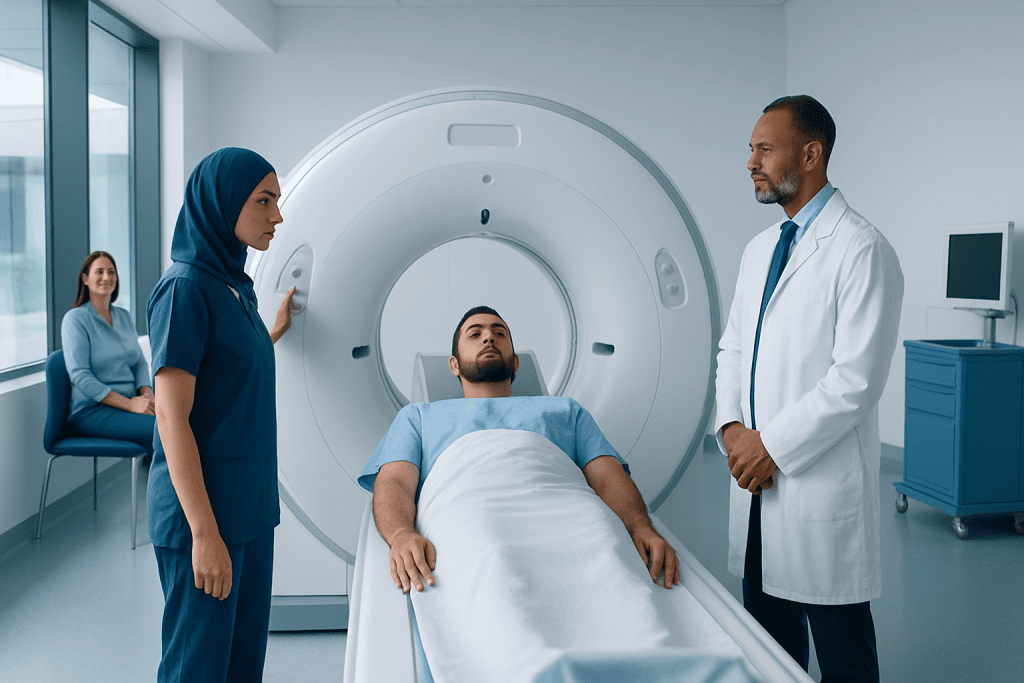
CT scanning combines multiple X-ray images to produce detailed cross-sectional views of organs, blood vessels, bones and tissues. Preparation depends on the body area being examined and whether contrast material is needed; the imaging team’s instructions should take priority.
Key Takeaways
- CT scanning combines multiple X-ray images to produce detailed cross-sectional views of organs, blood vessels, bones and tissues.
- Preparation depends on the body area being examined and whether contrast material is needed; the imaging team’s instructions should take priority.
- Most CT scans are painless and brief, although patients must lie still and may need to hold their breath for short periods.
- Contrast can improve image detail and is usually cleared through the kidneys, commonly within about 24 hours in people with normal kidney function.
- Patients should tell the care team about pregnancy, kidney disease, diabetes medicines, previous contrast reactions and all allergies before the scan.
A CT scan is a fast imaging test that uses X-rays and computer processing to create detailed pictures of the body. This CT scan in Arabic guide explains preparation, contrast, the procedure, aftercare and how results are reviewed, so patients can arrive informed and comfortable.
CT scan in Arabic: what it is and how it works
A CT scan, also called computed tomography, is an imaging examination that creates detailed pictures of the inside of the body. For people looking for a CT scan in Arabic or CT scan عربي explanation, it may help to know that the scanner uses a rotating X-ray source and advanced computer processing to produce thin, cross-sectional images. These images can be viewed individually or combined into detailed three-dimensional views.
CT is used in many clinical settings because it can show bones, lungs, abdominal organs, blood vessels and certain soft tissues clearly. A clinician may request it to investigate symptoms, assess an injury, plan treatment, monitor a known condition, or guide a procedure. The reason for the scan determines which area is examined and whether contrast material is useful.
During the test, the patient lies on a narrow table that moves slowly through a wide, donut-shaped scanner. The CT machine is open at both ends and does not normally cause the enclosed feeling associated with some MRI examinations. The radiographer operates the scanner from an adjacent room while remaining able to see, hear and speak with the patient.
Who may need a CT scan and when contrast is used
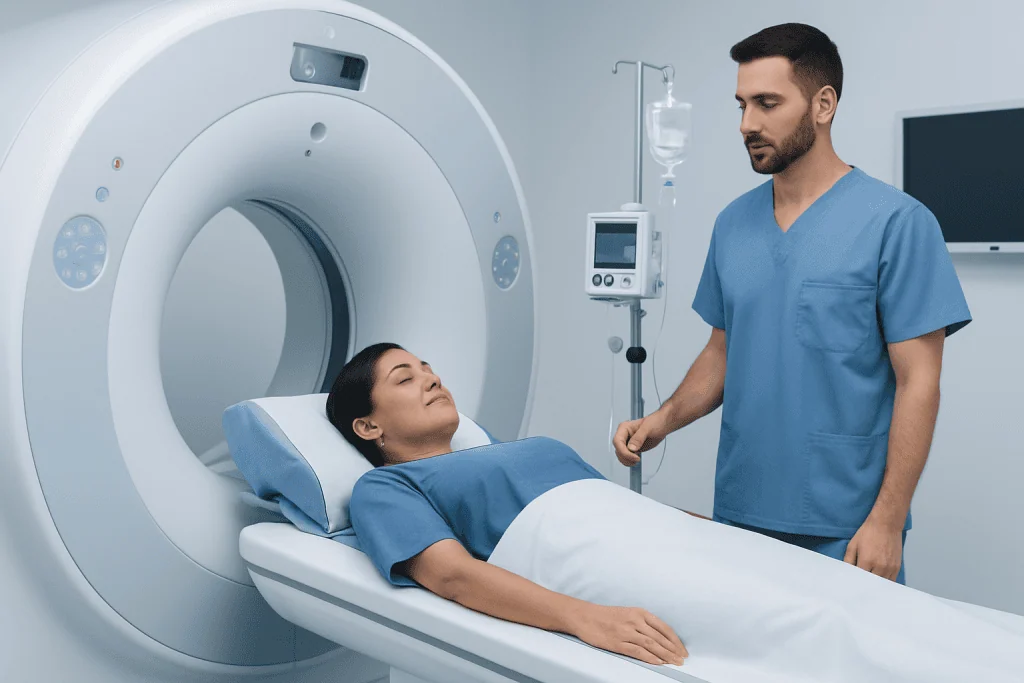
CT scanning may be appropriate for adults and children when the expected diagnostic information is likely to help guide care. It can be requested for concerns involving the head, chest, spine, abdomen, pelvis, blood vessels or other areas. The referring clinician considers the symptoms, examination findings, medical history and whether another test, such as ultrasound or MRI, may be more suitable.
A CT scan in Arabic with contrast refers to a CT examination using a contrast agent, most often iodine-based contrast given into a vein. In some abdominal or pelvic examinations, contrast may also be taken by mouth. Contrast helps highlight blood vessels, inflammation, organs and some abnormal tissue, allowing the radiologist to distinguish structures more clearly.
Not every CT scan requires contrast. The radiologist and referring clinician balance the potential benefit of additional detail against individual factors such as prior contrast reactions and kidney function. Patients should inform the imaging team if they have kidney disease, are on dialysis, have had a previous reaction to contrast, take medicines for diabetes, or may be pregnant.
How do I prepare before a CT scan?

CT scan preparation instructions vary according to the part of the body being scanned and the use of contrast. The imaging center’s appointment instructions are the most important source of guidance, as they reflect the planned examination and the patient’s health needs. In general, patients may be asked to wear comfortable clothing, remove metal objects such as jewelry, and bring relevant referral information or previous imaging records.
For a CT scan without contrast, many people can eat, drink and take usual medicines normally. For scans with intravenous or oral contrast, the team may request a period without solid food before the appointment. This is not universal, and the exact fasting interval differs by scan type and local protocol. Patients should not stop prescribed medicines unless a clinician specifically tells them to do so.
Before the appointment, patients should report all medications, allergies and significant health conditions. This includes asthma, thyroid conditions, kidney problems and prior reactions to contrast. People with diabetes may need individualized advice, particularly if fasting is requested or if they use medicines that require review around contrast administration.
- Arrive at the scheduled time, allowing time for registration and screening questions.
- Ask in advance whether oral contrast, fasting, blood tests or a companion is required.
- Wear clothing without metal fasteners when possible, or be prepared to change into a gown.
- Tell the staff promptly about pregnancy or a possible pregnancy.
What happens if you eat 2 hours before a CT scan?
Eating two hours before a CT scan may be completely acceptable for some examinations, particularly those performed without contrast. However, it may not follow the instructions for certain contrast-enhanced abdominal, pelvic or emergency-related scans. Food in the stomach can sometimes affect preparation, and fasting may also reduce the chance of nausea for people receiving contrast.
Patients should not assume that a scan must be cancelled if they have eaten. They should contact the imaging department as soon as possible and explain what they ate and when. The team can decide whether the scan can proceed, whether a short delay is needed, or whether rescheduling is safest and most useful.
Clear communication is more helpful than skipping important meals or medications without advice. If a patient has diabetes, is pregnant, is frail, or has another condition that makes fasting difficult, the care team can provide individualized CT scan procedure preparation instructions.
CT scan procedure: step by step
On arrival, a radiographer or other imaging professional confirms the patient’s identity, the scan area and relevant safety information. They may ask about allergies, kidney problems, pregnancy and prior imaging. If contrast is planned through a vein, a small intravenous cannula is placed, usually in the hand or arm.
The patient lies on the scanning table in a position chosen for the body area being examined. Cushions or straps may help maintain comfort and prevent movement. The table then moves through the scanner while the machine collects images. The radiographer may ask the patient to hold their breath briefly; following these instructions helps reduce motion blur and improves image quality.
When intravenous contrast is injected, some people notice a brief warm sensation, a metallic taste, or a feeling as though they may need to urinate. These sensations are common and usually pass quickly. The scan itself often takes only minutes, although the overall visit may take longer because of preparation, positioning and any contrast-related steps.
Patients can communicate with the radiographer throughout the examination. If they feel unwell, anxious, itchy, short of breath or otherwise uncomfortable, they should tell staff immediately. The team is trained to monitor and respond to concerns during imaging.
How long do you have to drink water before a CT scan?
There is no single water rule for every CT scan. Some examinations require patients to drink a specified amount of water shortly before the scan so that the bladder is full or particular structures are easier to assess. Other CT examinations may involve oral contrast, which is taken on a schedule provided by the imaging department.
For many contrast-enhanced CT scans, maintaining normal hydration before and after the examination is encouraged unless a clinician has advised fluid restriction because of heart, kidney or liver disease. Drinking water does not replace individualized instructions about fasting or oral contrast. Patients should follow the exact timing and quantity provided with their appointment information.
If no instructions were received, it is reasonable to contact the radiology department before the appointment rather than relying on general online guidance. The appropriate plan depends on the scan region, clinical question and the patient’s medical history.
Recovery, benefits and possible risks
Most people can return to normal daily activities immediately after a CT scan. If intravenous contrast was used, the cannula is removed after the examination and the patient may be observed briefly if needed. Unless fluid intake is restricted for a medical reason, drinking water after the scan can support normal hydration.
The main benefit of CT is that it can provide rapid, detailed information that helps clinicians make or refine a diagnosis and plan next steps. CT does involve ionizing radiation, so it is used when the anticipated medical value outweighs the small potential risk. Imaging teams use protocols intended to keep radiation exposure as low as reasonably achievable while obtaining diagnostic-quality images.
Most people tolerate contrast well. Mild effects such as warmth, a metallic taste or temporary nausea may occur. Less commonly, allergic-like reactions can occur, and more serious reactions are rare but require prompt care. Contrast can also be a concern for some people with significantly reduced kidney function, which is why relevant medical history and, in some cases, blood testing are reviewed beforehand.
For patients arranging care from abroad, Acibadem International’s multidisciplinary specialists and JCI-accredited hospitals provide diagnostic assessment and treatment planning for international patients. A qualified clinician can explain whether CT is appropriate and how the results relate to the individual clinical situation.
How long does contrast stay in your body after a CT scan?
In people with normal kidney function, intravenous iodinated CT contrast is usually filtered from the bloodstream by the kidneys and largely leaves the body in urine within about 24 hours. The exact timing can vary with hydration, kidney function, the type and amount of contrast used, and individual health factors.
People with kidney disease, dehydration or other health concerns may clear contrast more slowly. The imaging team may assess kidney function before contrast administration when indicated and can advise on suitable precautions. Patients should follow any post-scan instructions they receive, especially if they have kidney disease or take medicines that need special consideration.
It is important to seek urgent medical help after leaving the department if symptoms such as trouble breathing, swelling of the face or throat, widespread hives, severe dizziness, or a rapidly worsening illness occur. These are not expected effects and need immediate evaluation.
Results and when to seek medical care
A radiologist, a doctor specially trained to interpret medical imaging, reviews the CT images and prepares a report for the referring clinician. The timing of results depends on the urgency and complexity of the examination. In urgent settings, preliminary findings may be communicated quickly; for planned outpatient scans, the referring clinician often discusses the report at a follow-up appointment.
A CT image is one part of medical assessment. Results are interpreted together with symptoms, physical examination, laboratory tests and prior imaging where available. Patients should ask the referring clinician when and how results will be shared, and what follow-up may be needed.
When to seek medical care: Patients should contact the imaging center or a clinician promptly if they develop a new rash, persistent vomiting, increasing pain or swelling at the injection site, or feel unwell after contrast. Emergency care is appropriate for breathing difficulty, facial or throat swelling, fainting, or severe symptoms. Patients should also seek medical assessment promptly for the symptoms that led to the CT scan if they worsen before results are available.
Frequently asked questions
Is a CT scan painful?
A CT scan is usually painless. The patient needs to lie still on a moving table and may be asked to hold their breath briefly. If contrast is injected, a short-lived warm feeling or metallic taste can occur.
Can I take my regular medicines before a CT scan?
Many people can take their usual medicines, but this depends on the examination and individual medical history. Patients should ask the imaging department or referring clinician before changing or skipping any prescribed medicine. This is especially important for people taking diabetes medicines or those with kidney disease.
Can I drink coffee before a CT scan?
Whether coffee is allowed depends on the specific CT scan instructions. Some scans have no dietary restrictions, while others require fasting or permit only clear fluids for a set period. Patients should follow the instructions issued by their imaging department.
What should I tell staff before receiving CT contrast?
Patients should report previous reactions to iodinated contrast, all significant allergies, kidney disease, thyroid problems, asthma, diabetes and possible pregnancy. They should also provide a complete list of medicines and supplements. This information helps the team plan the examination safely.
Can I drive after a CT scan with contrast?
Most people can drive and resume usual activities after a routine CT scan with contrast. However, patients may need different arrangements if they received a sedative, feel unwell, or have been given specific aftercare instructions. It is best to confirm this before the appointment.
Why might a CT scan be delayed or rescheduled?
A scan may be delayed if preparation instructions were not followed, kidney function needs review, contrast safety questions need clarification, or urgent cases require scanner time. A delay does not necessarily mean there is a problem. The imaging team will explain the reason and advise on the next step.
References
- Radiological Society of North America
- American College of Radiology
- National Institute of Biomedical Imaging and Bioengineering
- U.S. Food and Drug Administration
- NHS
This article is for general information only and is not a substitute for professional medical advice. Please consult a qualified doctor about your individual situation.
Explore treatments in Turkey — costs, top hospitals & a free quote
JCI-accredited · board-certified surgeons · reply within 24h
Add us as a Preferred Source to see more of our trusted health content across Google Search, AI Overviews and Discover.