Falling on a Knee Replacement: Procedure, Recovery and Results

A fall can cause a bruise or sprain, but it may also cause a fracture, wound problem, ligament or tendon injury, or rarely a change in implant position. Avoid trying to test the knee repeatedly or forcing it to bend after a fall; use support and arrange medical advice.
Key Takeaways
- A fall can cause a bruise or sprain, but it may also cause a fracture, wound problem, ligament or tendon injury, or rarely a change in implant position.
- Avoid trying to test the knee repeatedly or forcing it to bend after a fall; use support and arrange medical advice.
- Pain that is severe or worsening, inability to stand, an unusual knee shape, fever, wound drainage or numbness needs prompt medical assessment.
- The first weeks after knee replacement are a particularly important time for fall prevention because muscles, balance and walking confidence are still recovering.
- Rehabilitation, home safety measures and appropriate walking aids can reduce fall risk while strength and mobility return.
Falling on a knee replacement does not always damage the implant, but it can injure the surrounding bone, soft tissues or surgical wound. New severe pain, inability to bear weight, deformity, increasing swelling or a change in knee function should be assessed urgently by a healthcare professional.
Overview: Falling on a Knee Replacement
Falling on a knee replacement can be frightening, especially during the early recovery period. Many falls result in bruising, swelling or a temporary increase in pain rather than damage to the artificial joint itself. However, a direct impact can sometimes affect the bone around the implant, the kneecap, tendons, ligaments, skin incision or the implant’s stability.
It is sensible to stop activity, use a walking aid or another person’s support, and assess how the knee feels. If there is severe pain, visible deformity, an inability to put weight through the leg, a new loss of movement, heavy swelling, bleeding, or concern that the incision has opened, urgent medical assessment is appropriate. A clinician may examine the knee and use X-rays to check the implant and nearby bones.
A knee replacement, also called knee arthroplasty, replaces damaged joint surfaces with metal and durable plastic components. It is commonly performed for advanced arthritis when pain and reduced function have not improved sufficiently with non-surgical care. Knee replacement surgery is planned carefully, but a fall remains possible during recovery and later in life, particularly when balance, muscle strength or vision are affected.
What Happens if You Fall on a Knee Replacement?

What happens depends on how the person fell, the force of impact, how long ago surgery occurred, and the health of the surrounding bone and soft tissue. A minor fall may cause soreness, bruising, mild swelling and anxiety without harming the replacement. Symptoms should begin to settle over the following days with rest and the advice of the surgical team.
More significant injuries can include a fracture around the implant, called a periprosthetic fracture; a fracture of the kneecap; a tear or strain of the quadriceps or patellar tendon; or an injury to the skin and healing incision. Less commonly, a fall may contribute to loosening, instability or a change in the position of a knee component. These problems need timely orthopedic assessment because treatment may range from protective bracing and rehabilitation to surgery in selected cases.
A fall soon after surgery deserves particular attention. The incision and deep tissues are still healing, and the muscles that stabilize the knee may be weak. Even if a person can walk after the fall, they should contact their orthopedic team if pain, swelling, warmth, reduced movement or difficulty walking is clearly worse than before the incident.
How Knee Replacement Works, Who May Be a Candidate, and the Procedure
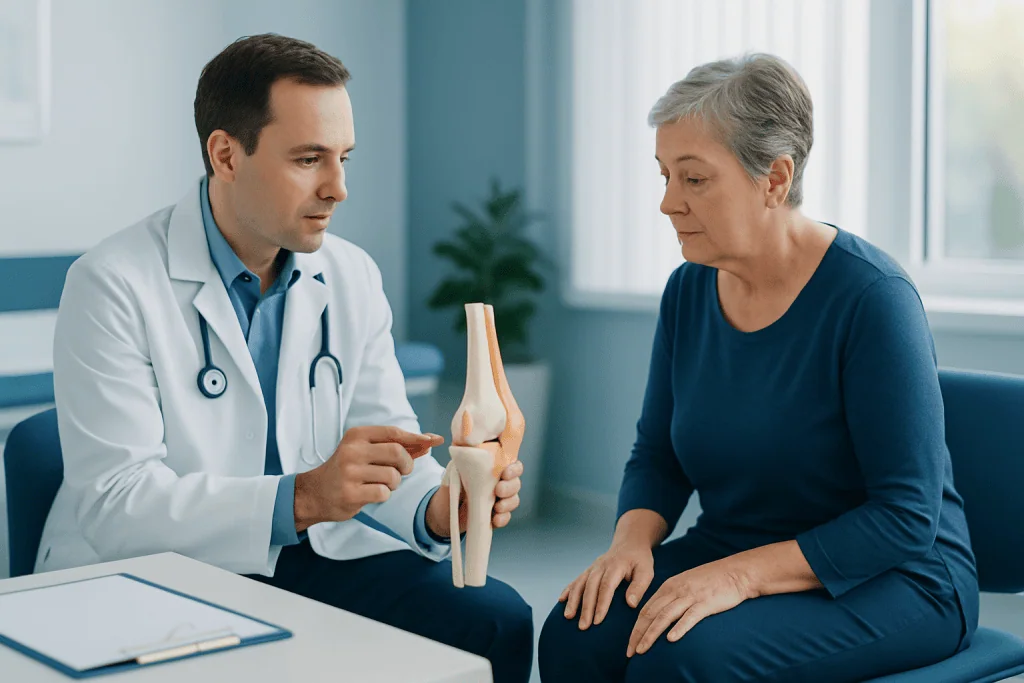
Knee replacement is designed to reduce pain and improve daily function when joint damage is severe. During surgery, the orthopedic surgeon removes damaged cartilage and a small amount of bone from the end of the thighbone and top of the shinbone. These surfaces are reshaped and covered with components that recreate smooth joint movement; the undersurface of the kneecap may also be resurfaced when appropriate.
People may be considered for surgery when knee pain and stiffness substantially limit walking, sleep, work or self-care, and treatments such as exercise therapy, weight management where relevant, pain-relieving medicines or injections have not provided adequate relief. The decision is individualized. A person’s symptoms, X-rays or other imaging, general health, mobility goals, bone quality and ability to participate in rehabilitation are all considered.
Before the operation, the care team reviews medicines, medical conditions and infection risk, and discusses anesthesia and recovery planning. On the day of surgery, the joint is replaced through an incision at the front of the knee. Afterward, pain management, early gentle movement, circulation exercises and physiotherapy help support recovery. Some patients go home soon after surgery, while others need a longer hospital stay depending on their health and mobility.
Expected benefits include less arthritis pain, improved walking ability and better participation in daily activities. Risks include blood clots, infection, stiffness, ongoing pain, nerve or blood vessel injury, implant wear or loosening, and the possibility of future revision surgery. The treating team explains which benefits and risks are most relevant to each individual.
How Do You Know if You Damaged Your Knee Replacement After a Fall?
It is not always possible to tell at home whether a fall caused damage. Pain alone does not prove that the implant has moved or failed, since soft-tissue bruising can be painful. Nonetheless, symptoms that are new, pronounced or worsening should not be ignored, particularly if they differ from the person’s usual postoperative discomfort.
Possible warning signs include an inability to bear weight, a sudden feeling that the knee gives way, severe or sharp pain, rapidly increasing swelling, a new clicking or grinding sensation with pain, marked loss of bending or straightening, and a knee that looks misaligned. A shortened or rotated leg, numbness, a cold or pale foot, or uncontrolled bleeding are emergency concerns.
A clinician generally asks about the fall, examines the wound, knee alignment, movement, circulation and nerve function, and compares findings with the other leg. X-rays are commonly used to assess the implant, kneecap and bones around the replacement. Further imaging may occasionally be needed if the diagnosis remains unclear or a tendon, ligament or subtle fracture is suspected.
People should not assume a normal-looking knee means there is no injury. Equally, a fall does not automatically mean the replacement has failed. Prompt assessment provides reassurance when no serious injury is found and allows early treatment when it is needed.
What Not to Do After a Fall onto the Knee
After a fall onto the knee, a person should avoid rushing to stand if there is severe pain, dizziness, a suspected fracture or uncertainty about whether the leg will support weight. If safe, they can call for help, remain still briefly and use a stable chair, walking aid or another person’s assistance rather than pulling themselves up with a twist through the affected knee.
They should not force the knee to bend or straighten, repeatedly walk on it to “test” it, massage a painful swollen area deeply, or return to exercise until they understand the cause of the symptoms. If the incision has opened or is bleeding, it should be covered with a clean dressing and assessed promptly; creams or unadvised products should not be placed inside the wound.
Unless a clinician has advised otherwise, using a wrapped cold pack for short periods and elevating the leg may help limit discomfort and swelling. Any prescribed medicines should be used only as directed. It is also important not to stop blood-thinning medicine or other regular treatment without advice from the surgical team or another qualified clinician.
After the immediate situation is addressed, consider what contributed to the fall. Slippery floors, loose rugs, poor lighting, unsuitable footwear, rushing, medication side effects, dizziness and a poorly adjusted walking aid can often be corrected to lower the risk of another fall.
The Hardest Part of Knee Replacement Recovery
The hardest part of knee replacement recovery varies from person to person, but many find the first several weeks most demanding. Pain and swelling, interrupted sleep, reduced independence and the need to exercise regularly while the knee is stiff can be physically and emotionally challenging. Recovery is gradual rather than a single turning point.
Regaining knee movement and rebuilding leg strength are central goals. Physiotherapy commonly focuses on safe walking, gradually improving bending and straightening, strengthening the thigh and hip muscles, and practicing everyday activities such as standing from a chair and climbing steps. Temporary use of a walker, crutches or a cane can reduce fall risk while balance and confidence improve.
Recovery timelines differ according to the type of surgery, preoperative function, age, other health conditions and rehabilitation progress. Many people become steadily more mobile over weeks, while swelling and improvement in strength may continue for months. A personalized plan from the orthopedic surgeon and physiotherapist is more useful than comparing progress with another patient.
Persistent severe pain, worsening function, new redness or drainage, fever, calf swelling, chest pain or shortness of breath are not expected rehabilitation challenges and should be reported promptly. A multidisciplinary orthopedic and rehabilitation assessment can help clarify whether symptoms are part of normal healing or need further investigation.
Recovery After a Fall: Protecting the Knee and Preventing Another Fall
If assessment confirms that there is no major injury, the treating clinician may recommend a short period of activity modification, cold therapy, elevation, pain control and a gradual return to the rehabilitation plan. Do not restart exercises or increase activity simply because pain improves for a few hours; follow the specific guidance provided after examination.
Fall prevention is part of successful knee replacement recovery. Clear walking routes at home, secure or remove loose rugs and cables, improve lighting, use non-slip footwear, and keep essential items within easy reach. Handrails in stairways and grab bars in bathrooms may be helpful. A physiotherapist can check whether a cane, walker or crutches are correctly sized and being used safely.
Strength and balance exercises prescribed by a rehabilitation professional can improve stability over time. Vision checks, review of medicines that may cause dizziness or drowsiness, adequate hydration and management of conditions such as low blood pressure or neuropathy may also be relevant. Individuals should discuss these factors with their usual healthcare professional rather than making medication changes themselves.
Acibadem International’s multidisciplinary orthopedic, rehabilitation and medical specialists can assess knee concerns and coordinate care for international patients through its JCI-accredited hospitals.
When to Seek Medical Care
Seek urgent medical care after a fall if the knee or leg appears deformed, there is severe or escalating pain, the person cannot stand or bear weight, or the foot becomes numb, cold, pale or blue. Emergency assessment is also important for a deep or open wound, bleeding that does not stop with gentle pressure, a wound that has separated, or a possible head injury from the same fall.
Contact the orthopedic surgeon or healthcare team promptly for new swelling that continues to increase, pain that does not improve with the recommended measures, new instability, reduced range of motion, drainage from the incision, spreading redness, fever or chills. These signs do not always indicate a serious complication, but they should be evaluated safely.
Symptoms such as chest pain, sudden shortness of breath, coughing blood, fainting, or new one-sided calf swelling need emergency evaluation, especially in the weeks after surgery. They can be signs of conditions unrelated to a direct knee injury but require prompt medical attention.
For a minor fall with no warning signs, it is still reasonable to inform the surgical team, particularly during early recovery. They can advise whether observation is sufficient, whether rehabilitation should be adjusted, and whether an in-person examination or imaging is needed.
Frequently asked questions
Can a fall loosen a knee replacement?
A fall can sometimes injure the bone or tissues around a knee replacement and, less commonly, affect implant stability. Most falls do not automatically loosen an implant, but new pain, instability, deformity or difficulty bearing weight should be assessed by an orthopedic clinician. X-rays can help determine whether the components and surrounding bone are intact.
Should someone walk after falling on a knee replacement?
They should not force themselves to walk immediately if pain is severe, the knee feels unstable, or they are unable to bear weight normally. Using a walking aid and seeking help is safer than repeatedly testing the knee. A clinician can advise when it is appropriate to resume walking and rehabilitation exercises.
Can a knee replacement be damaged without swelling after a fall?
Yes, although swelling is common after a direct impact, its absence does not fully rule out an injury. Changes in alignment, movement, strength, stability or the ability to bear weight may also be important. Persistent or unusual symptoms should be evaluated even when swelling is minimal.
How long should pain last after a minor fall on a replaced knee?
A mild bruise or soft-tissue irritation may improve gradually over several days, although recovery varies. Pain should not steadily worsen or prevent normal progress in mobility. If symptoms are persistent, severe, or different from expected postoperative discomfort, the surgical team should be contacted.
Can a fall cause infection in a knee replacement?
A closed fall without a break in the skin does not usually cause an infection directly. However, an opened incision, wound drainage or skin injury may increase concern for infection, especially soon after surgery. Prompt wound assessment is important if the incision separates, becomes increasingly red or drains fluid.
What activities help prevent falls after knee replacement?
Following a physiotherapist’s strengthening, walking and balance program can help improve stability. Home safety changes, suitable footwear, adequate lighting and correct use of prescribed walking aids are also important. People with dizziness, vision changes or medication side effects should discuss these issues with a healthcare professional.
References
- American Academy of Orthopaedic Surgeons
- National Institute of Arthritis and Musculoskeletal and Skin Diseases
- National Health Service
- Centers for Disease Control and Prevention
- American Association of Hip and Knee Surgeons
This article is for general information only and is not a substitute for professional medical advice. Please consult a qualified doctor about your individual situation.
Joint and spine care in Turkey — expert assessment & treatment
JCI-accredited · board-certified surgeons · reply within 24h
Add us as a Preferred Source to see more of our trusted health content across Google Search, AI Overviews and Discover.