Immunoglobulin Treatment for Guillain Barre: How It Works, Results and What to Expect

IVIG is a standard first-line treatment for many people with Guillain-Barre syndrome. Treatment is most beneficial when started early, usually within the first two weeks after weakness begins.
Key Takeaways
- IVIG is a standard first-line treatment for many people with Guillain-Barre syndrome.
- Treatment is most beneficial when started early, usually within the first two weeks after weakness begins.
- IVIG is commonly infused over several days and requires monitoring for infusion reactions and other uncommon complications.
- Improvement may begin over days to weeks, but nerve recovery often continues for months and sometimes longer.
- Urgent medical assessment is essential for new or worsening weakness, breathing difficulty, swallowing problems, or changes in heart rate or blood pressure.
Immunoglobulin treatment for Guillain Barre syndrome (GBS) is an intravenous therapy called IVIG that helps limit immune-related nerve damage. It is usually given in hospital early in the illness, alongside close monitoring and rehabilitation support as needed.
Overview: what immunoglobulin treatment does for Guillain-Barre syndrome
Immunoglobulin treatment for Guillain Barre syndrome is known as intravenous immunoglobulin, or IVIG. It delivers concentrated antibodies from screened donor plasma through a vein. In GBS, the immune system mistakenly attacks peripheral nerves, which can cause rapidly progressive weakness, tingling, pain, and—in severe cases—difficulty breathing or swallowing. IVIG helps modify this harmful immune response and may limit further nerve injury.
IVIG is one of the main evidence-based treatments for GBS. It is generally considered as effective as plasma exchange, another treatment that removes and replaces plasma to reduce harmful antibodies. The choice depends on the person’s clinical condition, timing, medical history, and the expertise and resources available. Combining IVIG and plasma exchange routinely is not usually recommended because it has not been shown to provide additional benefit.
GBS is a medical emergency because symptoms can worsen quickly. Treatment focuses not only on slowing immune nerve damage, but also on carefully monitoring breathing, heart rhythm, blood pressure, swallowing, blood clots, pain, and mobility. Guillain-Barre syndrome often requires coordinated inpatient neurological and rehabilitation care.
How IVIG works and who may be a candidate
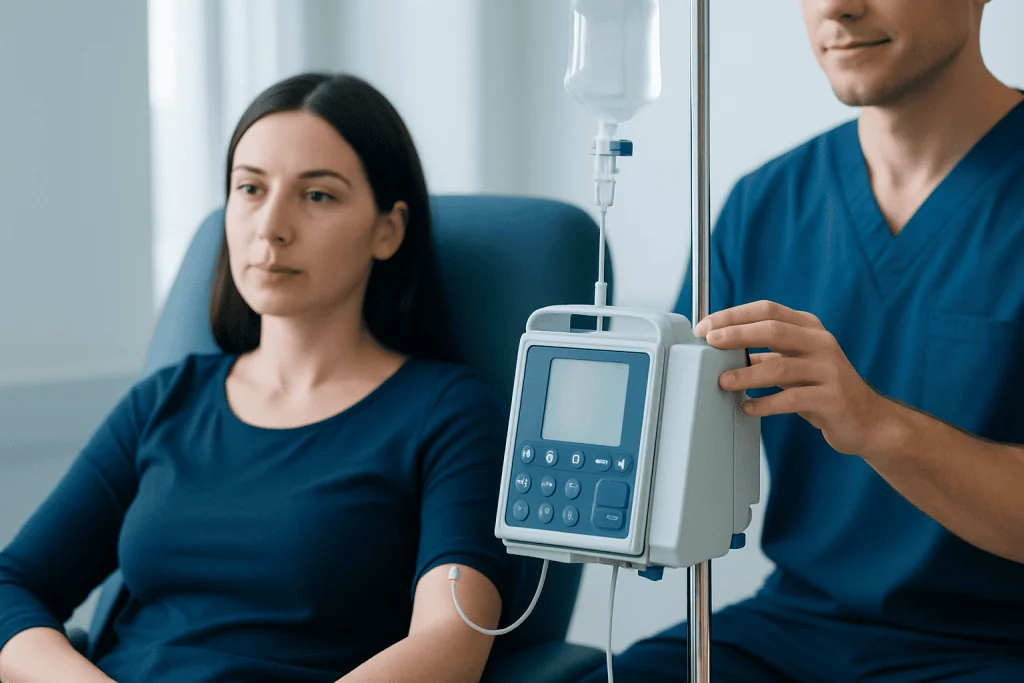
Immunoglobulins are antibodies that normally help the body recognize and respond to infections. At the higher doses used for immune-mediated conditions, IVIG has broader effects on the immune system. It may neutralize harmful antibodies, reduce inflammatory signaling, block immune cells from damaging nerves, and support regulation of an overactive immune response.
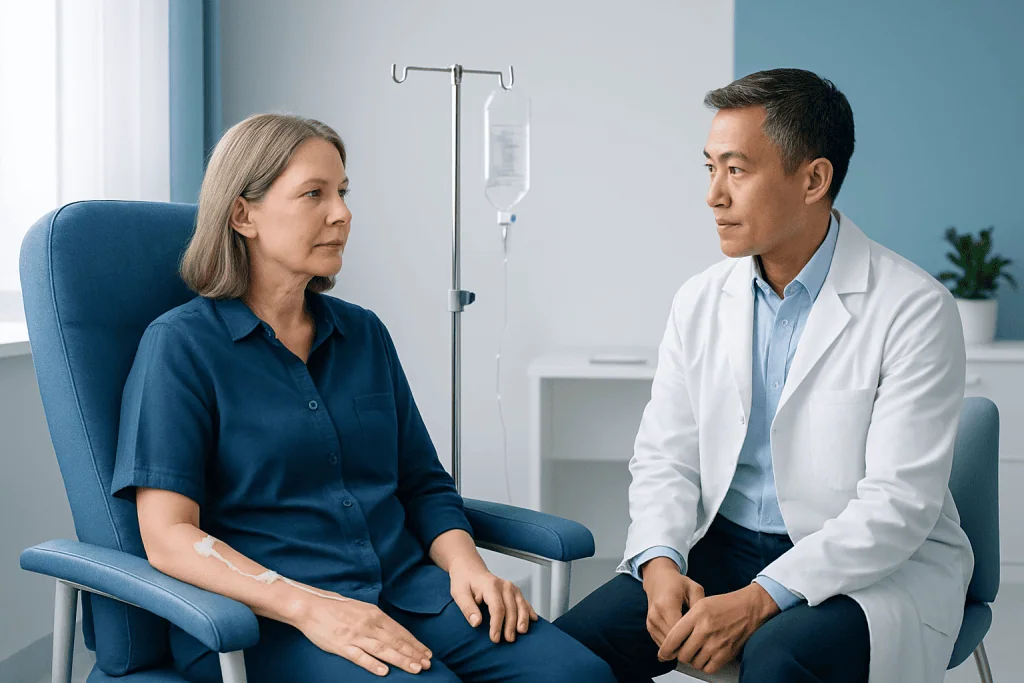
Doctors commonly consider IVIG for people who are unable to walk independently because of GBS, have rapidly worsening weakness, or have symptoms affecting breathing, swallowing, facial muscles, or the autonomic nervous system. It is typically most useful when given within the first two weeks after symptoms begin, although individual decisions may differ. A neurologist considers the pattern and severity of symptoms, test results, and possible alternative diagnoses.
Before treatment, the care team reviews kidney function, hydration status, risk of blood clots, previous reactions to blood products, migraine history, and any known immunoglobulin deficiency. Certain IVIG preparations may need special consideration in people with kidney disease, heart failure, or selective IgA deficiency. These factors do not automatically rule out treatment, but they help clinicians plan it safely.
What happens during the IVIG procedure
IVIG is usually given in a hospital, often over a total of five consecutive days, although the exact schedule is determined by the treating team. A nurse places an intravenous line and checks baseline observations such as temperature, pulse, blood pressure, breathing, and oxygen level. The infusion generally begins slowly and may be increased if it is well tolerated.
During each infusion, staff monitor for headache, fever, chills, rash, chest discomfort, shortness of breath, nausea, or changes in blood pressure. Many people can rest, read, listen to music, or sleep while treatment is running. Depending on the person’s condition, hydration and medicines to reduce infusion-related discomfort may be used.
Because GBS itself can affect breathing and the autonomic nervous system, monitoring continues beyond the infusion. Some patients need care in a high-dependency or intensive care setting, especially if weakness is progressing rapidly. For those who need specialized neurological treatment, intravenous immunoglobulin (IVIG) treatment is planned alongside respiratory, cardiac, nutritional, pain, and rehabilitation support.
Benefits, risks, and expected early results
The key goal of IVIG is to shorten the time to recovery and reduce the likelihood of further disability compared with supportive care alone. It does not repair nerves immediately, and it cannot guarantee that symptoms will stop progressing at once. Some people still worsen for a short period after treatment begins because immune injury may already be underway.
Common short-term effects include headache, fatigue, feverish feelings, chills, muscle aches, nausea, and mild blood pressure changes. These are often manageable by slowing the infusion, ensuring adequate fluids, or using clinician-recommended symptom relief. People should report symptoms promptly rather than trying to tolerate significant discomfort.
Serious complications are uncommon but can include severe allergic reactions, blood clots, kidney problems, hemolysis (breakdown of red blood cells), aseptic meningitis, or fluid overload. The hospital team assesses individual risk and watches for warning signs. New chest pain, severe headache with neck stiffness, reduced urine output, sudden breathlessness, or one-sided swelling should receive immediate medical attention.
- Potential benefit: reduced immune-related nerve damage and improved recovery prospects when started early.
- Important limitation: IVIG does not replace respiratory support, rehabilitation, or other supportive GBS care when these are needed.
- Monitoring need: clinicians may adjust infusion speed or supportive measures based on symptoms and medical conditions.
How long does it take to recover from GBS after taking IVIG?
Recovery after GBS varies widely. Some people notice stabilization or early return of strength within days to weeks, while others need weeks or months before clear functional improvement occurs. Nerves recover slowly, so continued gains may occur over many months and, for some people, longer than a year.
The pace of recovery depends on the severity and subtype of GBS, how quickly weakness progressed, whether breathing support was needed, age, other health conditions, and the extent of nerve injury. Early treatment is important, but it cannot predict an individual outcome. A rehabilitation plan is often central to recovery, helping rebuild strength, balance, endurance, and confidence with everyday activities.
Physical therapy, occupational therapy, speech and swallowing therapy, and psychological support may be recommended according to need. Rehabilitation should be paced carefully: overexertion can worsen fatigue, and rest is an important part of recovery. physical therapy and rehabilitation can be adapted as strength and endurance return.
How long does it take for immunoglobulin therapy to work?
IVIG begins influencing immune activity during and soon after the treatment course, but patients do not always feel an immediate change. In GBS, the first clinical sign may be that weakness stops progressing rather than that strength rapidly returns. This may occur over several days, but the timing differs from person to person.
Clinicians assess response through repeated neurological examinations, breathing measurements, ability to move and walk, swallowing safety, pain control, and autonomic stability. If symptoms continue to worsen, the team first reassesses the diagnosis, complications, and the expected disease course. A second IVIG course is not routinely given solely because recovery is slow; decisions require specialist evaluation.
It is also important to distinguish GBS from related immune neuropathies that may need different long-term treatment strategies. Follow-up with neurology helps confirm that the recovery pattern remains consistent with GBS and identifies persistent symptoms that may benefit from additional rehabilitation or symptom management.
What is the success rate of immunoglobulin therapy?
There is no single success rate that applies to every person with GBS. Clinical trials have shown that IVIG is an effective treatment and is broadly comparable with plasma exchange in helping people recover sooner when used early in appropriate patients. However, the response cannot be reduced to one percentage because GBS has different forms and levels of severity.
Success may mean preventing further rapid deterioration, avoiding or reducing time on breathing support, regaining the ability to walk, or improving independence in daily life. Some people recover almost completely, while others have ongoing weakness, numbness, pain, fatigue, or balance difficulty. A smaller number may experience a treatment-related fluctuation or develop a different chronic inflammatory neuropathy that requires reassessment.
Supportive care strongly affects outcomes. Preventing complications during the acute phase and starting appropriately paced rehabilitation can make an important difference to safety and function. The treating neurologist can discuss the likely outlook using the individual’s symptoms, examination findings, and clinical progress rather than relying on a general statistic.
How will you feel after my first IVIG infusion?
After a first IVIG infusion, many people feel tired and may have a mild headache, chills, flushing, nausea, or muscle aches. Others have no noticeable infusion symptoms. These effects can occur during the infusion or within the following day and are often temporary, but the care team should be told about any new symptom.
Feeling better neurologically after one infusion is not required for the treatment to be working. GBS symptoms may remain unchanged initially, and some weakness can continue to progress before the illness stabilizes. The hospital team will monitor the person closely and explain what changes are expected in their situation.
Immediate attention is needed for breathing difficulty, wheezing, facial or throat swelling, severe chest pain, fainting, a sudden severe headache, confusion, or a marked reduction in urine output. These symptoms are uncommon, but rapid reporting allows clinicians to assess and treat them promptly.
When to seek medical care and follow-up support
Emergency medical care is needed for rapidly increasing weakness, difficulty walking, shortness of breath, inability to take a deep breath, trouble swallowing, choking, difficulty speaking, or inability to clear secretions. New palpitations, fainting, marked blood pressure changes, or severe pain with progressive weakness also need urgent assessment. GBS can change quickly, so patients should not wait to see whether severe symptoms improve at home.
After hospital treatment, follow-up commonly includes neurology review and rehabilitation assessment. Patients should report a return or worsening of weakness after initial improvement, persistent fatigue that limits daily life, falls, new numbness, or emotional distress. The care plan may be adjusted as recovery progresses.
Acibadem International’s multidisciplinary specialists and JCI-accredited hospitals provide diagnostic assessment, IVIG treatment, acute monitoring, and rehabilitation planning for international patients with GBS. Ongoing communication with a qualified medical team helps ensure that recovery goals, complications, and longer-term symptoms are addressed safely.
Frequently asked questions
Is IVIG the same as immunoglobulin treatment for Guillain Barre?
Yes. In GBS, immunoglobulin treatment usually means intravenous immunoglobulin, abbreviated IVIG. It is delivered through a vein and contains pooled antibodies that help regulate the immune attack on peripheral nerves.
Is IVIG better than plasma exchange for Guillain-Barre syndrome?
IVIG and plasma exchange are both established treatments for GBS and are generally considered similarly effective when started early in suitable patients. The most appropriate option depends on clinical severity, timing, medical conditions, and local specialist resources.
Can Guillain-Barre syndrome get worse after IVIG?
Yes, weakness may continue to progress for a short time after IVIG begins because the disease process may already be active. This does not necessarily mean treatment has failed, but it requires close medical monitoring and reassessment by the treating team.
Does IVIG cure Guillain-Barre syndrome?
IVIG does not instantly cure GBS or directly repair damaged nerves. It helps reduce immune-related nerve injury and can support a faster recovery, while the body gradually heals and rehabilitation addresses functional effects.
How long is a hospital stay for GBS treated with IVIG?
Length of stay varies considerably based on how severe the weakness is and whether breathing, swallowing, heart rate, or blood pressure are affected. Some people need only close short-term monitoring, while others require intensive care and a longer rehabilitation period.
What should a person avoid during GBS recovery?
People should avoid pushing through severe fatigue, stopping prescribed rehabilitation without discussion, and delaying care for worsening weakness or breathing symptoms. Activity should be increased gradually under professional guidance, with regular rest and attention to fall prevention.
References
- National Institute of Neurological Disorders and Stroke
- National Health Service
- Mayo Clinic
- Guillain-Barré Syndrome Foundation International
- Cochrane
This article is for general information only and is not a substitute for professional medical advice. Please consult a qualified doctor about your individual situation.
Explore treatments in Turkey — costs, top hospitals & a free quote
JCI-accredited · board-certified surgeons · reply within 24h
Add us as a Preferred Source to see more of our trusted health content across Google Search, AI Overviews and Discover.
Check your numbers in seconds
BMI, calories, due date, blood pressure and 30+ more clinical calculators — free, instant, doctor-reviewed ranges.