Pituitary Tumor Specialist: An Evidence-Based Patient Guide

Most pituitary tumors are benign growths, but they can affect health through hormone changes or pressure on nearby structures. An endocrinologist often leads pituitary tumor evaluation, while a neurosurgeon is involved when surgery may be appropriate.
Key Takeaways
- Most pituitary tumors are benign growths, but they can affect health through hormone changes or pressure on nearby structures.
- An endocrinologist often leads pituitary tumor evaluation, while a neurosurgeon is involved when surgery may be appropriate.
- Blood tests, MRI imaging and visual-field testing help create a complete pituitary tumor assessment.
- Medication can shrink certain hormone-producing tumors, especially prolactinomas; surgery is not required for every tumor.
- Sudden severe headache, vision loss, confusion or fainting requires urgent medical assessment.
A pituitary tumor specialist is usually part of a multidisciplinary team that includes an endocrinologist and, when needed, a pituitary neurosurgeon, neuroradiologist and eye specialist. The right team can confirm the tumor type, assess hormone and vision effects, and recommend monitoring, medication, surgery or other treatment based on the individual situation.
Overview: what a pituitary tumor specialist does
A pituitary tumor specialist helps diagnose and manage growths in the pituitary gland, a pea-sized gland at the base of the brain that regulates many body hormones. These specialists assess whether a tumor is producing too much hormone, reducing normal hormone production, pressing on the optic nerves, or simply needs careful observation. Most pituitary tumors are noncancerous, but their location and hormonal effects can still make expert assessment important.
Pituitary care is often multidisciplinary. An endocrinologist evaluates hormone function and coordinates long-term medical care; a neurosurgeon with experience in pituitary procedures evaluates whether surgery is useful; and an ophthalmologist or neuro-ophthalmologist checks vision when the tumor is close to the optic pathways. Radiologists, pathologists and radiation oncology specialists may also contribute when needed.
A pituitary tumor evaluation should be individualized rather than based on tumor size alone. A small tumor can produce substantial amounts of hormone, while a larger nonfunctioning tumor may cause few symptoms until it affects vision or normal pituitary tissue. The purpose of specialist care is to identify the tumor’s behavior and choose the least intensive effective approach.
What kind of doctor should I see for a pituitary tumor?
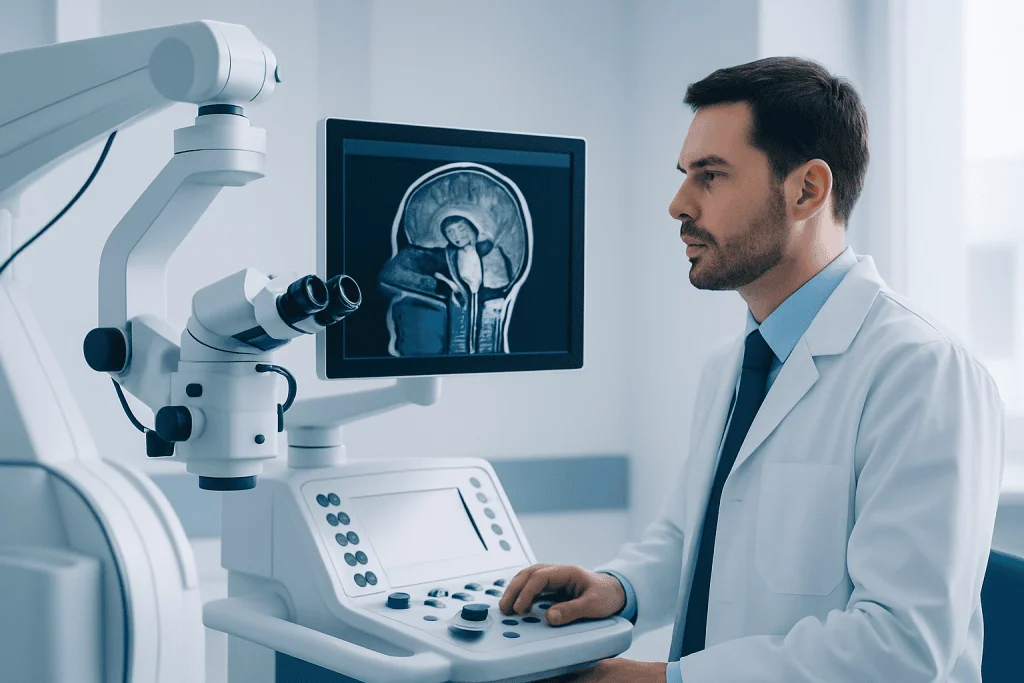
For most people, an endocrinologist is an appropriate first specialist for a suspected or newly identified pituitary tumor. Endocrinologists diagnose hormone disorders, interpret pituitary blood testing and determine whether symptoms may be caused by hormone excess or deficiency. A primary care doctor, neurologist, gynecologist or eye doctor may also be the clinician who first identifies the need for referral.
If imaging shows a tumor near the optic nerves, if there are visual changes, or if the tumor may need removal, the endocrinologist typically works with a neurosurgeon who has specific experience in pituitary and skull-base surgery. A dedicated pituitary team is especially helpful for large tumors, hormone-producing tumors, recurrent growths, uncertain diagnoses, pregnancy planning, or complex hormone replacement needs.
People seeking pituitary experts can ask whether the clinician routinely manages pituitary disorders, works within a multidisciplinary team, and can coordinate endocrine, imaging, vision and surgical care. A second opinion may be reasonable when surgery, radiation treatment or long-term medication is being considered.
Symptoms and four diseases due to pituitary disorder

Symptoms depend on whether a tumor changes hormone production, compresses normal pituitary tissue, or puts pressure on nearby structures. Possible signs include persistent headaches, reduced side vision, fatigue, menstrual changes, reduced libido, fertility concerns, unexplained weight changes, changes in facial or hand features, easy bruising, increased thirst or urination, and intolerance to cold. Many of these symptoms have more common causes, so testing is needed before linking them to the pituitary gland.
What are four diseases due to pituitary disorder? Four commonly recognized disorders are prolactinoma, acromegaly, Cushing disease and hypopituitarism. A prolactinoma produces excess prolactin and may cause menstrual irregularity, milk production unrelated to breastfeeding, infertility or low testosterone. Acromegaly results from excess growth hormone in adulthood and can gradually change hand, foot and facial size.
Cushing disease occurs when a pituitary tumor produces excess adrenocorticotropic hormone (ACTH), leading the body to make too much cortisol. Hypopituitarism means the gland does not make enough of one or more hormones; it can occur because of a tumor, surgery, radiation or other pituitary conditions. Diabetes insipidus is another important disorder involving water balance, though it is less often caused by a typical pituitary adenoma.
- Hormone excess may be subtle and develop gradually.
- Hormone deficiency can cause fatigue, weakness, sexual or menstrual changes, and other nonspecific symptoms.
- Pressure effects may include loss of peripheral vision or double vision when a tumor is larger.
Pituitary tumor evaluation and diagnosis
A thorough pituitary tumor assessment begins with a discussion of symptoms, medications, medical history and family history. The specialist may ask about changes in weight, energy, menstruation, sexual function, growth patterns, skin changes, thirst, urination and vision. A physical examination can identify clues to hormone imbalance, but laboratory and imaging tests are needed to establish the diagnosis.
Blood testing commonly measures pituitary hormones and hormones controlled by the pituitary, such as thyroid, adrenal and sex hormones. The exact panel depends on the person’s symptoms and MRI findings. Some tests require collection at a particular time of day or additional confirmation because stress, illness and medicines can influence hormone levels.
A pituitary MRI with contrast is the main imaging test for defining the size and location of the growth. Visual-field testing is important if the tumor touches or approaches the optic chiasm, where the optic nerves cross. In selected cases, specialists may arrange repeat hormone testing, additional imaging, genetic counseling or testing, or pathology review after surgery.
Small tumors found incidentally on imaging are sometimes called pituitary incidentalomas. They still merit endocrine assessment because a tumor that causes no obvious symptoms may occasionally affect hormones or vision. Follow-up imaging and blood tests are tailored to the lesion’s type, size and clinical behavior.
What shrinks pituitary tumors?
What shrinks pituitary tumors? The answer depends on the tumor type. Dopamine agonist medicines are often the first treatment for prolactinomas and can lower prolactin levels while shrinking the tumor in many patients. These medicines require monitoring by an endocrinologist because treatment response, side effects and follow-up needs differ between individuals.
For other hormone-producing tumors, medicines may reduce hormone production and sometimes reduce tumor size, but they do not work the same way for every tumor. Examples include medications used to control excess growth hormone in acromegaly or excess cortisol in Cushing disease. Treatment is chosen according to the hormone involved, tumor characteristics, overall health and personal goals.
Some nonfunctioning tumors do not need immediate treatment. If they are small, are not causing hormonal changes or vision problems, and appear stable, periodic MRI scans, hormone testing and visual assessment may be the safest plan. Surgery or, less commonly, focused radiation may be considered if a tumor grows, affects vision, causes significant hormone problems, or cannot be controlled with medication.
Pituitary surgery: how it works, candidacy and recovery
Pituitary surgery is most often performed through the nose using an endoscopic transsphenoidal approach. The surgeon passes narrow instruments through the nasal passages and sphenoid sinus to reach the pituitary gland without opening the skull in the traditional way. A neurosurgeon may work alongside an ear, nose and throat surgeon, particularly in complex cases.
People may be candidates for surgery when a tumor compresses the optic nerves, causes significant visual-field loss, produces certain hormones in excess, is growing, bleeds into the tumor, or cannot be adequately managed with medication. The decision also considers MRI anatomy, previous treatment, age, other medical conditions and the likelihood that surgery will improve hormone control or relieve pressure effects.
Before surgery, the team completes endocrine testing, MRI review and, when appropriate, formal vision testing. During the procedure, tissue can be removed for pathology analysis. Afterward, patients are monitored for fluid and electrolyte changes, hormone deficiency, nasal healing and vision changes. Some people need temporary or long-term hormone replacement after treatment.
Recovery varies, but many people remain in hospital for a short period and need several weeks to resume usual activity gradually. Nasal congestion, fatigue and headache can occur early in recovery. Follow-up typically includes blood testing and MRI because some tumors require ongoing monitoring even after successful removal.
Benefits, risks and longer-term treatment planning
The potential benefits of pituitary treatment include protecting vision, reducing hormone excess, replacing missing hormones, improving symptoms and preventing further tumor growth. For some patients, careful monitoring provides these benefits without the risks of an intervention. The expected outcome is best discussed after the team has identified the exact tumor type and its effects.
Risks of pituitary surgery can include bleeding, infection, cerebrospinal fluid leakage, temporary or permanent hormone changes, diabetes insipidus, and injury to nearby structures. Serious complications are uncommon but possible. The risk profile depends on the tumor’s size, direction of growth, prior surgery or radiation, and the person’s overall health.
Radiation therapy may be considered for tumor tissue that remains or returns after surgery, or when medication and surgery are not suitable. It can help control tumor growth and hormone production over time, but its effects may be gradual and it can lead to delayed hormone deficiency. Long-term endocrine follow-up is therefore important after any pituitary treatment.
Acibadem International’s multidisciplinary specialists and JCI-accredited hospitals assess and treat pituitary conditions for international patients, coordinating endocrine, neurosurgical, imaging and vision care when appropriate.
When to seek medical care
Medical review is advisable for persistent symptoms that could reflect hormone imbalance, including unexplained menstrual or sexual changes, milk discharge unrelated to breastfeeding, progressive changes in appearance, new fatigue with other endocrine symptoms, or worsening headaches. A doctor can determine whether pituitary testing is appropriate and refer to pituitary tumor specialists when needed.
Prompt assessment is important for new peripheral vision loss, double vision, a rapidly worsening headache, nausea and vomiting with severe headache, confusion, fainting, or marked weakness. Rarely, bleeding into a pituitary tumor can cause sudden severe symptoms and requires urgent emergency evaluation.
Patients who are already under observation should attend scheduled blood tests, MRI scans and eye examinations, even if they feel well. They should also tell their care team about new symptoms, pregnancy plans, new medicines or changes in hormone replacement treatment. Follow-up is a central part of safe long-term pituitary care.
Frequently asked questions
Who are the best pituitary tumor surgeons in the US?
There is no single universally best surgeon for every pituitary tumor. A suitable surgeon is a board-certified neurosurgeon with substantial experience in pituitary and endoscopic skull-base surgery who works closely with endocrinology, neuroradiology and neuro-ophthalmology specialists. Patients can ask about the team’s experience with their particular tumor type and whether a multidisciplinary review is available.
What kind of doctor should I see for a pituitary tumor?
An endocrinologist is commonly the first specialist to see because pituitary tumors can affect hormone production. If surgery may be needed or there are vision changes, a pituitary-focused neurosurgeon and an eye specialist may join the care team. A coordinated multidisciplinary assessment helps ensure that both tumor size and hormone effects are addressed.
What shrinks pituitary tumors?
Dopamine agonist medication can often shrink prolactinomas while lowering prolactin levels. Other pituitary tumors may respond to medicines that control hormone secretion, while some require surgery or radiation for tumor control. The best approach depends on the tumor’s hormone activity, size, location and effects on vision or normal pituitary function.
Are pituitary tumors cancer?
Most pituitary tumors are benign adenomas rather than cancer. Even benign tumors can require treatment if they produce excess hormones, reduce normal pituitary function or press on the optic nerves. A specialist can explain the MRI findings and expected behavior of an individual tumor.
What are four diseases due to pituitary disorder?
Four examples are prolactinoma, acromegaly, Cushing disease and hypopituitarism. Prolactinoma involves high prolactin, acromegaly results from excess growth hormone, and Cushing disease is related to excess ACTH from the pituitary. Hypopituitarism refers to inadequate production of one or more pituitary hormones.
Will every pituitary tumor need surgery?
No. Some small, nonfunctioning tumors can be monitored with scheduled MRI scans, hormone testing and, when appropriate, vision tests. Medication is often first-line treatment for prolactinomas, while surgery is considered for tumors causing vision problems, significant hormone excess, growth or other complications.
References
- Endocrine Society
- Pituitary Society
- National Institute of Diabetes and Digestive and Kidney Diseases
- National Cancer Institute
- American Association of Neurological Surgeons
This article is for general information only and is not a substitute for professional medical advice. Please consult a qualified doctor about your individual situation.
Pituitary Tumor in Turkey — costs, top hospitals & a free quote
JCI-accredited · board-certified surgeons · reply within 24h
Add us as a Preferred Source to see more of our trusted health content across Google Search, AI Overviews and Discover.