Mold in Eyes Treatment: How It Works, Results and What to Expect

Mold exposure does not always cause an eye infection, but persistent pain, redness, light sensitivity or blurred vision needs urgent assessment. Fungal keratitis is commonly treated with prescription antifungal eye drops, sometimes combined with oral or injected antifungal medicine.
Key Takeaways
- Mold exposure does not always cause an eye infection, but persistent pain, redness, light sensitivity or blurred vision needs urgent assessment.
- Fungal keratitis is commonly treated with prescription antifungal eye drops, sometimes combined with oral or injected antifungal medicine.
- Treatment can take weeks or longer because fungi may penetrate deeply into corneal tissue and respond slowly to therapy.
- Do not use leftover eye drops, steroid drops or contact lenses unless an eye specialist advises doing so.
- Early specialist care can reduce the risk of corneal scarring, perforation and lasting vision loss.
Mold in eyes treatment depends on whether fungal material has caused an infection, most often in the cornea. Prompt assessment by an ophthalmologist is important because antifungal medicines, close monitoring and, in severe cases, surgery may be needed to protect vision.
Overview: What Mold in Eyes Treatment Means
Mold in eyes treatment usually refers to care for a fungal eye infection after mold, plant material, dust or contaminated contact-lens equipment has entered or irritated the eye. The most common serious infection is fungal keratitis, an infection of the clear front surface of the eye, called the cornea. It requires timely evaluation by an ophthalmologist because fungal infections can progress and may threaten sight without appropriate treatment.
Not every exposure to mold causes an infection. A small amount of dust or mold spores may cause temporary irritation, watering or redness and can often be rinsed away. However, pain, worsening redness, sensitivity to light, discharge, a white spot on the cornea, reduced vision or symptoms that persist after rinsing should not be treated as simple irritation.
Care is individualized according to the part of the eye involved, the suspected fungus, the size and depth of the infection, and a person’s eye health. Treatment commonly combines prescription antifungal medication with repeated eye examinations, because the specialist needs to confirm that the infection is responding and that the cornea remains stable.
How Is Mold in the Eye Treated?
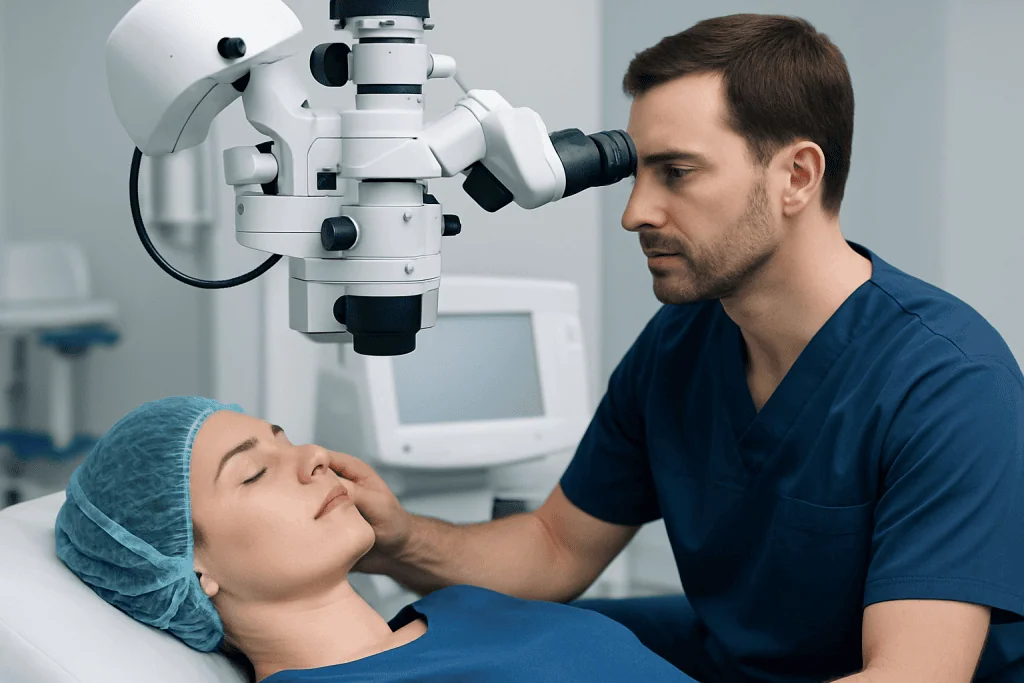
When mold causes a fungal infection of the eye, treatment usually begins with antifungal eye drops prescribed by an ophthalmologist. Drops may need to be used frequently at the start of treatment. The choice of medicine is based on the appearance and location of the infection, local laboratory information and, when possible, culture results from a small corneal sample.
For deeper, larger or more severe infections, treatment may also include oral antifungal medicine or an antifungal injection placed around or into the eye by a specialist. The doctor may gently remove damaged surface tissue or debris from the cornea to obtain samples and help medication reach infected tissue. Pain relief and medicines to control inflammation or eye pressure may be used when clinically appropriate.
Antibiotic drops do not treat fungi. Steroid eye drops can worsen some fungal infections or mask progression, so they should only be used if and when the treating eye specialist specifically recommends them. If an ulcer does not heal, the cornea becomes dangerously thin, or a dense scar affects vision, corneal surgery may be considered. Corneal transplant surgery can be necessary in selected severe cases to remove diseased tissue or restore corneal clarity.
Who Needs Urgent Assessment and How Diagnosis Works

Anyone with possible mold exposure and significant eye symptoms should be assessed promptly, especially after an eye injury involving soil, wood, leaves or other plant material. Farmers, gardeners, construction workers and people exposed to dusty organic material may have higher exposure risk. Fungal keratitis is also more likely in people who wear contact lenses, have a previous corneal injury or surgery, use steroid eye drops, or have conditions or treatments that weaken immune defenses.
During an eye examination, the ophthalmologist checks vision, examines the cornea using a microscope called a slit lamp, and may measure eye pressure. A corneal ulcer may appear as an inflamed area, infiltrate or white-gray spot. The pattern can suggest fungal infection, but appearances alone cannot always identify the cause.
If an infection is suspected, the clinician may collect a small scraping from the corneal surface for microscopy and culture. These tests can help distinguish fungi from bacteria, viruses and other causes of keratitis, although results may take time. Treatment is often started before final culture results when the clinical findings suggest a serious infection. Related causes of painful red eye may also need consideration, including corneal ulcers from non-fungal infections.
People who are not suitable for routine outpatient treatment include those with rapidly worsening vision, a deep corneal infection, concern for spread inside the eye, unreliable access to close follow-up, or significant medical factors that complicate care. In these circumstances, more intensive monitoring or hospital-based treatment may be advised.
What to Expect During Treatment and Recovery
The first visit generally includes symptom review, vision testing, an eye examination and, when needed, corneal sampling. After treatment starts, follow-up is often close because the eye specialist needs to look for changes in ulcer size, inflammation, corneal thinning and vision. A fungal infection can initially look unchanged or even appear more inflamed before it gradually improves, so regular reassessment is essential.
During treatment, patients should use medicines exactly as directed, wash their hands before touching the eye area and attend all planned reviews. Contact lenses should not be worn until the ophthalmologist confirms it is safe. Eye makeup, swimming and activities that could expose the eye to dust, soil or contaminated water may need to be avoided while the cornea is healing.
Recovery differs widely. Surface irritation from a noninfectious exposure may settle within a short time after rinsing and medical advice. Confirmed fungal keratitis usually takes weeks to improve and can require treatment for longer, particularly when infection is deep. Even after infection control, corneal healing and vision recovery may continue over months if scarring is present.
Potential benefits of early treatment include clearing the infection, relieving symptoms and preserving as much corneal clarity and vision as possible. Risks relate both to the infection and its treatment: corneal scarring, irregular corneal shape, raised or lowered eye pressure, medication irritation and, in severe cases, corneal perforation or infection within the eye. These risks are why self-treatment is not appropriate for suspected fungal eye infection.
How Long Does a Fungal Eye Infection Last?
A fungal eye infection often lasts longer than a typical bacterial eye infection because fungi can grow slowly and penetrate corneal layers. Some people begin to notice improvement within days to weeks after effective treatment starts, but complete healing may take several weeks or longer. The duration depends on the fungal species, the size and depth of the corneal ulcer, the timing of treatment and the person’s overall eye health.
Antifungal drops are commonly continued until the ophthalmologist is satisfied that active infection has resolved. Stopping medication early can allow infection to recur or worsen. Follow-up appointments remain important even if discomfort improves, as vision changes and corneal healing do not always match symptoms.
Lasting effects are possible when the infection leaves a corneal scar. Small peripheral scars may have little effect on sight, while central or dense scars can affect visual quality. Further treatment, such as specialty contact lenses or corneal procedures, may be discussed after the eye is fully quiet and stable.
What Happens If Mold Gets in Your Eyes?
If mold or mold-contaminated material gets into an eye, it may cause immediate stinging, tearing, redness and a gritty feeling. In many cases, the material remains on the surface and does not cause infection. The eye should be rinsed promptly with clean running water or sterile saline, without rubbing, and contact lenses should be removed if they come out easily.
A fungal infection can develop when spores enter through a scratch or other disruption of the corneal surface. Symptoms may develop gradually and include increasing pain, light sensitivity, blurred vision, eyelid swelling, discharge or a visible spot on the clear front of the eye. Symptoms may be more subtle in people using steroid drops or who have reduced corneal sensation.
Do not attempt to remove embedded material with fingers, tweezers or cotton swabs. Avoid patching the eye, wearing contact lenses and using non-prescribed drops. If chemicals, high-speed debris or a penetrating injury are involved, emergency assessment is needed regardless of whether mold exposure is suspected.
Can Eye Fungus Be Cured?
Yes, many fungal eye infections can be controlled and cured with early diagnosis, the right antifungal treatment and careful follow-up. The chance of preserving useful vision is generally better when treatment begins before the infection becomes deep, extensive or associated with corneal thinning. However, cure is not always quick, and some people retain a corneal scar or need further treatment to improve vision after the infection has resolved.
More severe infections may be difficult to treat because fungi can resist medication or lie deep within the cornea. In selected cases, a therapeutic corneal transplant is needed to remove infected tissue. Prompt communication with the treating ophthalmologist about worsening pain, reduced vision or difficulty following the medication schedule is important.
Acibadem International’s multidisciplinary specialists and JCI-accredited hospitals provide assessment and treatment for eye conditions, including complex corneal infections, for international patients. Decisions about medication, monitoring and surgery should always be made with a qualified eye specialist based on the individual clinical findings.
When to Seek Medical Care
Urgent same-day eye care is appropriate after possible mold exposure if there is eye pain, reduced or hazy vision, increasing redness, sensitivity to light, discharge, a white or gray corneal spot, swelling, or a sensation that something remains in the eye. These symptoms can occur with fungal keratitis and other urgent eye conditions, which cannot be safely distinguished at home.
Emergency evaluation is especially important after an injury from plant material, soil, wood or metal; after a high-speed injury; or if the eye was pierced, chemicals entered the eye, or vision suddenly decreases. People who wear contact lenses or use steroid eye drops should have a low threshold for prompt assessment when they develop a painful red eye.
For minor irritation without pain or vision change, rinse the eye with clean water or sterile saline and seek medical advice if symptoms do not settle promptly. Avoid using another person’s eye drops or restarting old prescription drops. An ophthalmologist can determine whether the problem is simple irritation, allergy, dryness, bacterial infection or a potentially serious fungal infection.
Frequently asked questions
How is mold in the eye treated?
If mold causes a fungal eye infection, treatment usually involves prescription antifungal eye drops and close ophthalmology follow-up. More severe infections may require oral medication, antifungal injections or corneal surgery. The exact plan depends on the infection’s depth, cause and response to treatment.
How long does a fungal eye infection last?
Fungal eye infections often take weeks to improve and may require treatment for longer. Healing time varies with the type of fungus, how deeply the cornea is affected and how early treatment begins. Corneal scarring can continue to affect vision after the infection has cleared.
What happens if mold gets in your eyes?
Mold exposure may cause temporary irritation, tearing and redness without infection. However, spores can cause a fungal infection if they enter through a scratch in the cornea. Pain, blurred vision, light sensitivity or a visible corneal spot should be assessed urgently.
Can eye fungus be cured?
Many fungal eye infections can be cured or controlled with prompt specialist treatment. Some infections are difficult to treat and may leave corneal scarring, even after the fungus has been eliminated. Early assessment helps reduce the risk of serious complications.
Can I use antibiotic eye drops for a fungal eye infection?
Antibiotic drops treat bacteria, not fungi, so they do not treat fungal keratitis. Using the wrong drops can delay appropriate care. An ophthalmologist may take a sample from the cornea to guide treatment.
Should I wear contact lenses if I think I have an eye infection?
Contact lenses should not be worn when an eye infection is suspected unless an ophthalmologist specifically advises otherwise. Lenses can worsen irritation, trap microorganisms and complicate corneal healing. The lens case and lenses may also need to be replaced after medical guidance.
References
- American Academy of Ophthalmology
- Centers for Disease Control and Prevention
- National Eye Institute
- Mayo Clinic
- Merck Manual Consumer Version
This article is for general information only and is not a substitute for professional medical advice. Please consult a qualified doctor about your individual situation.
Explore treatments in Turkey — costs, top hospitals & a free quote
JCI-accredited · board-certified surgeons · reply within 24h
Add us as a Preferred Source to see more of our trusted health content across Google Search, AI Overviews and Discover.