

Prism Treatment: How It Works, Results and What to Expect

Prism glasses change where an image appears rather than physically strengthening the eye muscles. They may help people with double vision or symptoms related to small eye-alignment differences.
Key Takeaways
- Prism glasses change where an image appears rather than physically strengthening the eye muscles.
- They may help people with double vision or symptoms related to small eye-alignment differences.
- A detailed eye examination is needed because prism is not suitable for every cause of blurred or double vision.
- Some people adapt quickly, while others need days to weeks to assess comfort and benefit.
- New or sudden double vision requires prompt medical assessment, especially when accompanied by neurological symptoms.
Prism treatment usually means prescription glasses with prism built into the lenses. These lenses shift the position of an image so the eyes can work together more comfortably, which may reduce double vision, headaches, or visual strain caused by certain eye-alignment problems.
Overview: What Is Prism Treatment?
Prism treatment is a non-surgical approach that uses specially prescribed spectacle lenses to shift the image entering one or both eyes. It is commonly used when the eyes are not pointing in exactly the same direction and the brain has difficulty combining the two images into one. By moving the image to a more comfortable position, prism lenses can reduce double vision, eye strain, headaches, or difficulty concentrating during visual tasks.
Prism treatment does not cure every eye-alignment condition. It is best understood as a way to improve visual comfort and function when a measured misalignment is contributing to symptoms. The amount and direction of prism are individualized after an examination by an ophthalmologist, optometrist, orthoptist, or neuro-ophthalmology specialist.
Although the phrase prism treatment may appear in searches about unrelated topics, including a “prism research method,” PTSD interventions, or prism trials, optical prism treatment refers specifically to prescribed lenses for visual alignment. Prism glasses are not an established treatment for post-traumatic stress disorder; PTSD should be assessed and managed by qualified mental-health professionals.
How Prism Lenses Work
A prism is an optical element that bends light. In eyeglasses, it shifts the apparent location of an object without changing its actual location. For a person whose eyes produce two images because of a small misalignment, this shift can place the images where the brain can combine them more easily.
Prism power is measured in prism diopters. The prescription may place prism in one lens or divide it between both lenses. Its direction is described as base-in, base-out, base-up, or base-down, depending on the type and direction of the eye deviation. The clinician determines these details through measurements of eye position, eye movements, and symptoms.
Some patients receive temporary press-on Fresnel prism. This thin plastic prism is applied to the surface of a lens and can be adjusted or removed as the condition changes. Fresnel prism may be useful while recovery is being monitored after a nerve palsy, injury, or surgery, while permanent ground-in prism is usually considered when the prescription is stable.
Who May Be a Candidate for Prism Treatment?

Prism lenses may be considered for people with binocular vision disorders that cause double vision or visual discomfort. Examples include small phorias or tropias, convergence insufficiency, some cranial nerve palsies, thyroid eye disease, and residual eye misalignment after injury or eye surgery. Children and adults may both be assessed, although management differs according to age, cause, and visual development.
Candidacy depends on more than the measured eye deviation. The clinician considers whether double vision occurs at distance, near, or both; whether it is constant or intermittent; how long symptoms have been present; and whether the person can fuse images. Large, variable, or complex deviations may be difficult to manage with glasses alone and may need other approaches, such as monitoring, vision rehabilitation, treatment of an underlying condition, or eye muscle surgery.
Prism is not usually appropriate as a self-selected remedy for headaches, dizziness, reading difficulty, or blurred vision without an examination. These symptoms have many possible causes. Accurate assessment is important to identify whether the problem is ocular, neurological, vestibular, medication-related, or caused by another health condition.
The Prism Treatment Process: Step by Step
The process begins with a clinical history. The eye specialist asks when symptoms began, whether they are constant, what tasks make them worse, and whether there are associated symptoms such as pain, drooping eyelid, weakness, numbness, imbalance, or headache. A review of general health, medications, previous eye disease, trauma, and surgery is also important.
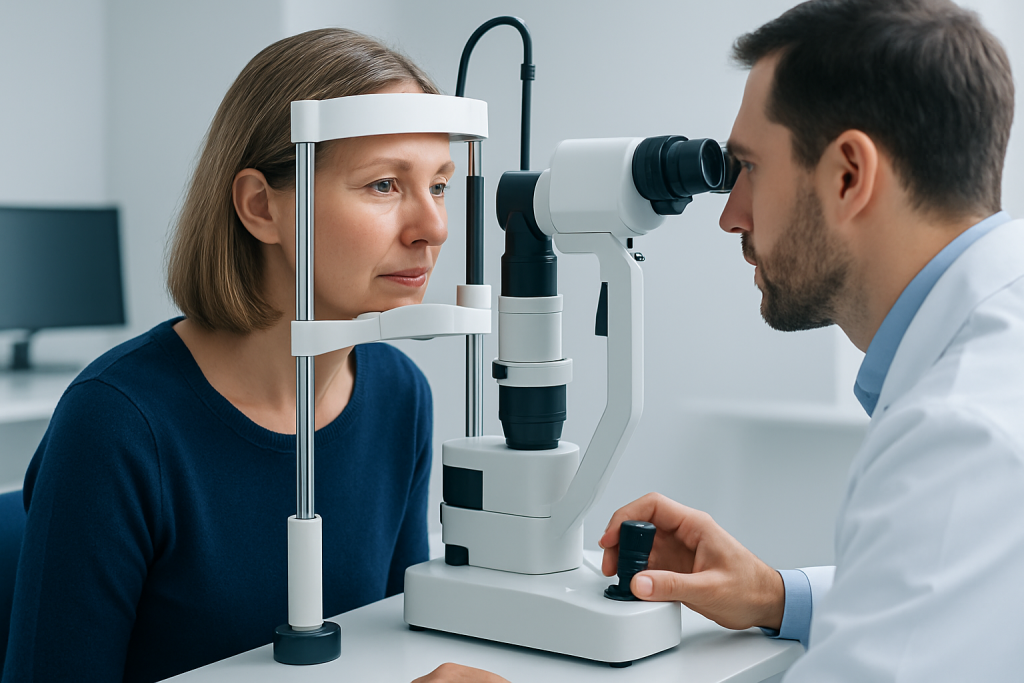
Next, the clinician measures vision in each eye, checks the pupils and eye movements, and assesses how the eyes align at near and distance. Refraction determines whether a standard glasses prescription is needed. Tests with prisms may be performed in the examination room to find the amount that improves single, comfortable vision.
If prism appears appropriate, the patient may receive a trial frame demonstration, temporary Fresnel prism, or a final spectacle prescription. Follow-up helps determine whether symptoms have improved and whether the prism amount remains suitable. Changes are sometimes needed as the underlying condition recovers, progresses, or becomes stable.
- Assessment: symptom review and complete eye examination.
- Measurement: alignment testing at relevant viewing distances.
- Trial: testing prism strength and direction for comfort and single vision.
- Prescription: temporary or permanent prism glasses, when appropriate.
- Review: monitoring adaptation, benefit, and any change in symptoms.
How Long Does It Take for Prism Glasses to Work?
Some people notice improvement immediately during the in-office prism trial, particularly when the main problem is stable double vision from a small eye misalignment. Others need several days to a few weeks to adapt to the altered visual input, especially if they have worn no glasses previously or if the prescription includes a substantial change in lens power as well as prism.
Temporary effects during adaptation can include a sense that the floor is tilted, mild visual distortion, or discomfort when moving through busy environments. These effects should gradually lessen. If symptoms are severe, persist, or worsen, the patient should contact the prescribing eye-care professional rather than trying to adjust the glasses independently.
The timeline also depends on the cause of the eye deviation. When prism is used during recovery from a temporary nerve problem or after surgery, the prescription may need revision as alignment changes. A clinician can advise when it is reasonable to reassess the fit and effectiveness of the lenses.
How Do You Know if Prism Glasses Are Working?
Prism glasses are working when they meaningfully improve the symptoms they were prescribed to address. For a person with double vision, this may mean seeing one clear image more consistently at the distance or task that previously caused difficulty. For others, it may mean less eye strain, fewer visual headaches, improved reading endurance, or greater confidence while walking and using stairs.
Improvement should be judged in everyday situations as well as in the clinic. It can be helpful to note whether symptoms change when reading, driving, using screens, looking across a room, or moving outdoors. The glasses should not create new persistent double vision, disabling distortion, or a significant decline in function.
Follow-up examination is important because comfort alone does not confirm that the prescription remains correct. The clinician can repeat alignment measurements and discuss whether the prism should be continued, changed, reduced, or replaced by another management option.
Do Prism Glasses Strengthen Your Eyes?
Prism glasses do not strengthen eye muscles. They do not exercise the eyes or permanently correct the cause of eye misalignment. Instead, they optically shift the image so that the visual system may be able to combine information from both eyes with less effort.
For some conditions, targeted eye exercises or vision therapy may be recommended alongside or instead of prism, particularly for selected cases of convergence insufficiency. However, these approaches are not suitable for all types of double vision, and a personalized plan is needed. Treatment should focus on the diagnosed cause rather than on the assumption that eye muscles simply need strengthening.
When an underlying medical condition is responsible, managing that condition is also important. For example, thyroid-related eye disease, diabetes-related nerve problems, stroke, or myasthenia gravis may need coordinated care beyond an eyeglass prescription.
What Is the Downside of Prism Glasses?
The main limitation is that prism glasses do not work equally well for everyone. They are often most useful for small, relatively stable deviations. If alignment varies substantially during the day or differs greatly between near and distance, one prism prescription may not provide comfortable single vision in all situations.
Possible drawbacks include lens thickness or weight with higher prism powers, visual distortion near the edges of lenses, adaptation symptoms, and the need for prescription changes if the eye alignment changes. Fresnel prisms are convenient for temporary use but can slightly reduce visual clarity and may be noticeable on the lens surface.
Prism can also mask an important symptom if new double vision is not assessed properly. It should therefore be prescribed only after an appropriate examination. In some cases, the better option may be treating the underlying disorder, using an eye patch temporarily, undertaking rehabilitation, or considering surgery once the deviation is stable.
Benefits, Risks, Recovery and When to Seek Medical Care
The potential benefit of prism treatment is improved daily function without an invasive procedure. It may make reading, computer use, driving, social interaction, or navigating surroundings more comfortable for selected people. There is no surgical recovery period: patients generally begin wearing the glasses as advised and return for review if symptoms do not settle.
However, glasses should not delay evaluation of sudden or unexplained visual changes. Prompt medical assessment is needed for sudden double vision, especially when it occurs with a severe headache, facial droop, weakness, numbness, speech difficulty, new imbalance, confusion, eye pain, a drooping eyelid, or a change in pupil size. These symptoms can have causes that require urgent care.
People should also arrange an eye assessment for persistent double vision, new symptoms after head injury, worsening eye strain, or difficulty with reading or driving. Acibadem International’s multidisciplinary specialists and JCI-accredited hospitals can assess eye-alignment concerns and coordinate care for international patients when needed.
Frequently asked questions
What conditions can prism treatment help with?
Prism treatment may help selected people with double vision or visual strain caused by an eye-alignment difference. It can be used in some cases of strabismus, convergence insufficiency, cranial nerve palsy, thyroid eye disease, and other binocular vision problems. The underlying cause determines whether prism is likely to be useful.
Can prism glasses cure double vision permanently?
Prism glasses can relieve double vision while they are worn, but they do not necessarily cure the underlying cause. Some causes improve over time, while others require ongoing glasses, treatment of a medical condition, rehabilitation, or surgery. Regular review helps guide the next step.
Can prism glasses cause dizziness or headaches?
Some people experience temporary dizziness, spatial distortion, or mild headaches while adapting to a new prism prescription. These symptoms should improve over days to weeks. Persistent or severe symptoms should be discussed with the prescribing clinician, as the prescription or diagnosis may need reassessment.
Can I drive with prism glasses?
Many people can drive safely with prism glasses once their vision is single, clear, and comfortable and they have adapted to the lenses. Driving should be avoided if double vision, dizziness, distortion, or impaired confidence continues. Local legal vision requirements also apply.
Are prism glasses used for PTSD?
Prism glasses are prescribed for optical and binocular vision conditions, not as a standard treatment for PTSD. Research and clinical approaches for PTSD may involve psychological therapies, medication when appropriate, and support from mental-health professionals. Anyone seeking care for trauma-related symptoms should consult a qualified mental-health clinician.
What happens if prism glasses stop helping?
If symptoms return or change, the eye alignment or the underlying condition may have changed. The person should schedule a review rather than continuing to rely on an uncomfortable prescription. The clinician may adjust the prism, investigate another cause, or recommend a different treatment approach.
References
- American Academy of Ophthalmology
- American Association for Pediatric Ophthalmology and Strabismus
- National Eye Institute
- Mayo Clinic
- Merck Manual Consumer Version
This article is for general information only and is not a substitute for professional medical advice. Please consult a qualified doctor about your individual situation.
Explore treatments in Turkey — costs, top hospitals & a free quote
JCI-accredited · board-certified surgeons · reply within 24h
Add us as a Preferred Source to see more of our trusted health content across Google Search, AI Overviews and Discover.

More from the Health Library



Related Specialists

Dr. Ersin Adem Hadzhiyusein
Inpatient Clinic Physicians Clinical Service
Dr. Kurtuluş Delibaş
Otorhinolaryngology
Dr. Onur Güney Yılmaz
Emergency Service
Dr. Serdar Tekçe
Emergency Service