Prostate Biopsy Blood Ejaculate: Procedure, Recovery and Results

Blood in semen after a prostate biopsy is usually expected and temporary. Discolored ejaculate can continue for several weeks because blood clears gradually from the prostate and seminal fluid.
Key Takeaways
- Blood in semen after a prostate biopsy is usually expected and temporary.
- Discolored ejaculate can continue for several weeks because blood clears gradually from the prostate and seminal fluid.
- Heavy or worsening bleeding, fever, inability to urinate, or severe pain should be assessed urgently.
- A prostate biopsy helps determine whether suspicious prostate findings are cancerous or due to another cause.
- Patients should follow their urologist’s instructions about restarting blood-thinning medicines, exercise, and sexual activity.
Blood in the ejaculate after a prostate biopsy is a common recovery effect caused by small amounts of bleeding from the prostate tissue that was sampled. Semen may look pink, red, brown, or rust-colored and usually returns to normal as healing progresses, although patients should know which symptoms need medical review.
Prostate Biopsy Blood Ejaculate: Why It Happens
Prostate biopsy blood ejaculate, also called hematospermia, is common after tissue samples are taken from the prostate. During a biopsy, a needle passes through or near prostate tissue to collect small cores for laboratory examination. Tiny blood vessels can bleed during this process, and blood may mix with semen produced by the prostate and seminal vesicles.
The appearance can be surprising but is usually not dangerous. Semen may be light pink, bright red, dark red, brown, or rust-colored. The color may vary from one ejaculation to the next as older blood changes color while it clears. A person may also notice a small amount of blood in the urine or rectal bleeding after a transrectal biopsy.
A biopsy is commonly recommended after an elevated or changing prostate-specific antigen (PSA) result, an abnormal digital rectal examination, or a suspicious area on prostate MRI. The purpose is to identify or rule out prostate cancer and guide further care. A detailed evaluation may include prostate biopsy assessment and tissue sampling when a urologist considers it appropriate.
How Long Will You Ejaculate Blood After a Prostate Biopsy?
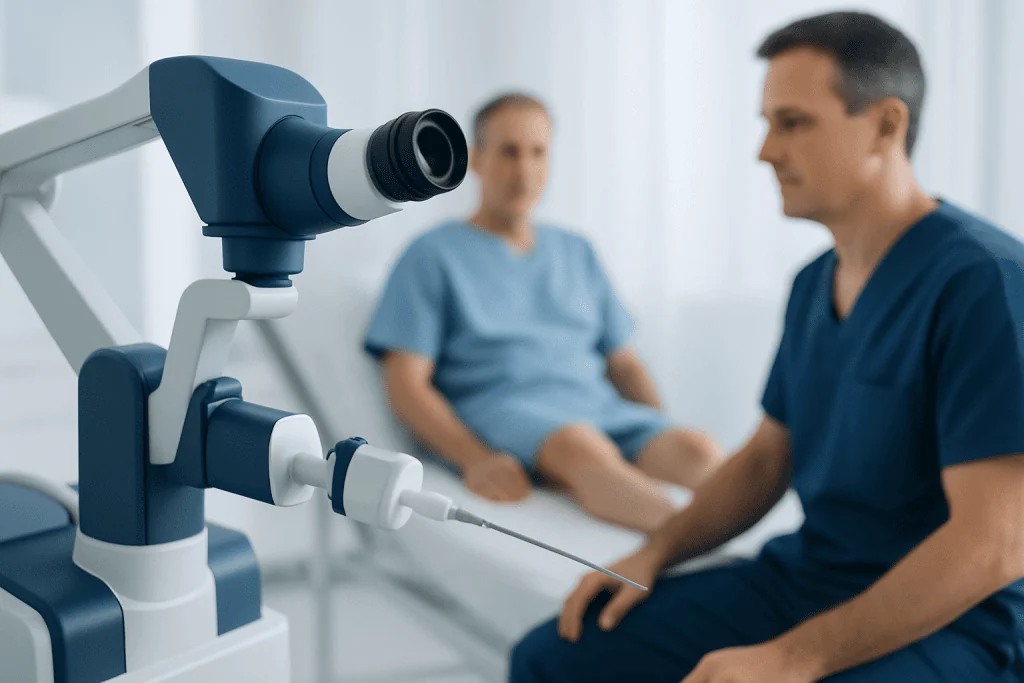
Blood in the ejaculate often improves over several days to a few weeks after a prostate biopsy. For some people, especially after multiple samples are taken, discoloration can continue for four to six weeks and occasionally longer. This can still be within the expected recovery period if the amount is gradually decreasing and there are no other concerning symptoms.
Blood may not appear until the first ejaculation after the procedure. It may also be more noticeable after a period without ejaculation because blood has had more time to collect in prostate or seminal fluid. Dark brown or rust-colored semen commonly reflects older blood and is often part of normal healing.
Duration can differ according to the biopsy approach, the number of cores collected, individual healing, use of medicines that affect clotting, and pre-existing prostate inflammation. If blood in semen persists beyond the timeframe advised by the treating urologist, returns after it had resolved, or is accompanied by pain, fever, or urinary problems, medical advice is important.
Who May Need a Prostate Biopsy and How It Works
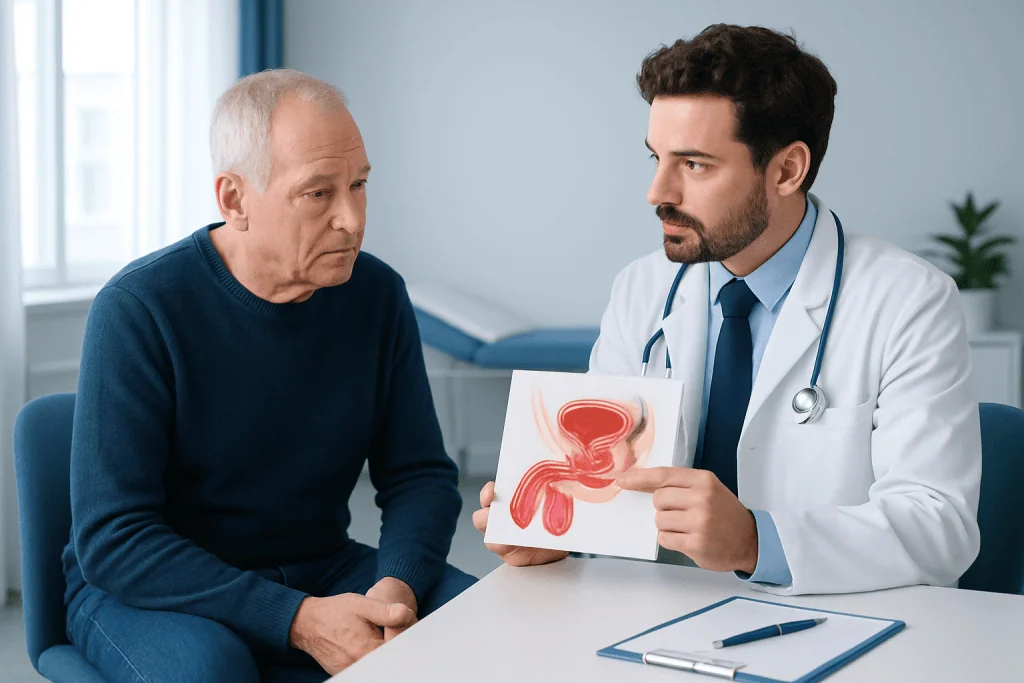
A prostate biopsy is not performed solely because of blood in semen. Instead, it is used when there is concern about a prostate abnormality, such as a persistently raised PSA level, an unusual examination finding, or a lesion seen on imaging. PSA can increase for reasons other than cancer, including benign prostate enlargement, infection, inflammation, recent ejaculation, or urinary procedures. A urologist considers the whole clinical picture before recommending biopsy.
Many modern biopsies use ultrasound guidance, MRI guidance, or a combined MRI-ultrasound fusion technique to improve targeting of suspicious areas. Samples may be taken through the rectum (transrectal) or through the skin between the scrotum and anus (transperineal). The preferred approach depends on local practice, imaging findings, infection-risk considerations, and the patient’s health history.
Before biopsy, the care team reviews allergies, infections, urinary symptoms, diabetes, implanted devices, and all medicines and supplements. Anticoagulants and antiplatelet medicines can increase bleeding risk, but they should never be stopped without individualized advice from the clinician who prescribed them. In selected cases, an MRI may help clarify the need for targeted sampling before biopsy.
What Happens During the Procedure
Preparation varies by technique and hospital protocol. Patients may receive antibiotics to reduce the risk of infection, particularly with transrectal biopsy, and may be given local anesthetic, sedation, or anesthesia depending on the planned approach. The urologist explains how to prepare, including whether bowel preparation, fasting, or an escort home is needed.
During ultrasound-guided biopsy, an ultrasound probe provides images of the prostate. A spring-loaded biopsy device obtains several tiny tissue cores through a guide. For transperineal biopsy, needles enter through the perineal skin; for transrectal biopsy, the sampling needle passes through the rectal wall. The sample-taking portion is generally brief, though appointment time includes preparation and recovery.
Collected cores are examined by a pathologist. Results may show no cancer, inflammation, benign changes, atypical cells, or cancer. If cancer is found, the report typically describes features such as grade group and the extent of cancer in the samples. These details help the urology and oncology teams discuss whether monitoring, further imaging, surgery, radiation, or other care is appropriate.
How Often Should You Ejaculate After a Prostate Biopsy?
There is no medical requirement to ejaculate at a particular frequency after a prostate biopsy. Patients should wait until they feel comfortable and follow the timeframe given by their urologist, which may depend on the biopsy method, bleeding, pain level, and use of medicines that affect bleeding. Some clinicians advise avoiding sexual activity for a short period after the procedure to allow initial healing.
When sexual activity resumes, blood-stained semen can still be expected. Ejaculation does not usually harm the prostate after the recommended recovery period, but it may make discoloration visible. If it causes significant pain or fresh, increasing bleeding, it is sensible to pause and contact the care team for guidance.
Condom use may be preferred if a partner is concerned about seeing blood, although blood in semen after biopsy does not by itself indicate a sexually transmitted infection. A person should not assume that all blood in semen is due to the biopsy if it begins long after recovery or occurs with new urinary, pelvic, or systemic symptoms.
Recovery Timeline, Benefits, and Possible Risks
Most people return home the same day. Mild soreness in the pelvic or perineal area, a small amount of blood in urine, rectal spotting after a transrectal procedure, and blood in semen are frequent short-term effects. Rest, hydration, and avoiding strenuous activity for the period advised by the treating team can support recovery. Pain-relief choices should be discussed with a clinician, especially for people taking blood-thinning medicines or with kidney, stomach, or liver conditions.
The central benefit of biopsy is diagnostic clarity. Pathology results can distinguish cancer from many non-cancerous explanations for abnormal tests and can help avoid treatment that is not needed. When cancer is identified, accurate information about its characteristics supports individualized planning, including prostate cancer evaluation and management discussions.
Potential complications include infection, significant bleeding, urinary retention, pain, and, rarely, more serious infection requiring hospital treatment. The risk profile differs somewhat between transrectal and transperineal approaches. A patient’s urologist can explain the expected benefits and risks in the context of their PSA level, imaging findings, general health, and personal preferences.
- Rest on the day of the procedure unless the clinical team gives different advice.
- Drink fluids as recommended, unless fluid intake is restricted for another medical reason.
- Take prescribed antibiotics exactly as directed and report possible allergic reactions.
- Ask before restarting exercise, sexual activity, aspirin, anticoagulants, or herbal supplements.
Can Prostate Cancer Cause Blood in the Ejaculate?
Prostate cancer can occasionally be associated with blood in the ejaculate, but it is not a common or specific sign of prostate cancer. In many cases, especially in younger and otherwise well people, blood in semen is caused by benign inflammation, infection, recent trauma, a procedure such as biopsy, or changes in the prostate or seminal vesicles.
After a prostate biopsy, blood in semen is much more likely to be related to the procedure than to a cancer diagnosis itself. The biopsy results, PSA trend, physical examination, imaging, and overall medical history are more useful than semen color for understanding cancer risk.
Persistent or recurrent hematospermia without a recent procedure deserves medical assessment, particularly for people over 40 or those with urinary symptoms, pelvic discomfort, fever, blood in urine, or risk factors for prostate disease. Evaluation may include urine testing, sexual health testing where appropriate, PSA assessment, examination, and imaging based on individual circumstances.
Is It Normal to Bleed a Lot After a Prostate Biopsy? When to Seek Medical Care
A small to moderate amount of bleeding is common after biopsy, but bleeding that is heavy, persistent, or increasing is not something to manage alone. It can be difficult to judge what is “a lot,” so patients should use the specific instructions given by their biopsy team and contact them when uncertain. Fresh blood may occur briefly, but it should generally settle rather than worsen.
Urgent medical assessment is needed for fever, chills, feeling acutely unwell, difficulty or inability to pass urine, severe or increasing pain, fainting, or heavy bleeding from the urine or rectum. Blood clots in urine, urine that remains markedly red, or bleeding that does not improve should also be reported promptly. These symptoms may signal infection, urinary obstruction, or bleeding that needs treatment.
Patients should contact their urologist if blood in semen continues beyond the expected recovery period, becomes heavier after initially improving, or causes ongoing anxiety or discomfort. Acibadem International’s multidisciplinary specialists and JCI-accredited hospitals can assess prostate concerns and coordinate diagnostic and treatment planning for international patients.
Frequently asked questions
Is blood in semen normal after a prostate biopsy?
Yes. Blood in semen is a common effect after prostate biopsy because the needle samples prostate tissue containing small blood vessels. The color may range from pink or red to brown, and it usually fades as the area heals.
How long will you ejaculate blood after a prostate biopsy?
Many people notice blood-stained semen for days to several weeks. It may occasionally last four to six weeks or longer, particularly after extensive sampling, but it should gradually improve. A urologist should review persistent, worsening, or recurrent bleeding.
How often should you ejaculate after a prostate biopsy?
There is no required frequency of ejaculation after a biopsy. A person should resume sexual activity only when comfortable and according to the instructions from their urologist. Blood may still be visible when ejaculation resumes and does not necessarily mean there is a complication.
Can prostate cancer cause blood in the ejaculate?
It can occur in some people with prostate cancer, but blood in semen is not a reliable or common sign of the disease. Infection, inflammation, benign prostate conditions, and recent procedures are more frequent explanations. Medical evaluation is appropriate if hematospermia is persistent or occurs with other symptoms.
Is it normal to bleed a lot after a prostate biopsy?
Mild bleeding in urine, semen, or from the rectum after a transrectal biopsy can be expected. Heavy, increasing, or prolonged bleeding is not expected and should be reported promptly. Emergency assessment is needed if bleeding is associated with faintness, inability to urinate, severe pain, fever, or chills.
When can a person exercise after a prostate biopsy?
Light activity may be possible soon after the procedure, but strenuous exercise, cycling, heavy lifting, and vigorous activity are often avoided for a short period. The exact advice depends on the biopsy method, bleeding, medications, and the individual’s health. The treating team’s instructions should take priority.
References
- American Urological Association
- European Association of Urology
- National Cancer Institute
- NHS
- Mayo Clinic
This article is for general information only and is not a substitute for professional medical advice. Please consult a qualified doctor about your individual situation.
Oncology care in Turkey — second opinion and treatment plan
JCI-accredited · board-certified surgeons · reply within 24h
Add us as a Preferred Source to see more of our trusted health content across Google Search, AI Overviews and Discover.