Vascular Surgery vs Interventional Radiology: Differences Explained

Vascular surgeons and interventional radiologists often treat many of the same artery and vein conditions. Interventional radiology uses imaging to guide catheters, balloons, stents, drains, or clot-treatment devices through small punctures.
Key Takeaways
- Vascular surgeons and interventional radiologists often treat many of the same artery and vein conditions.
- Interventional radiology uses imaging to guide catheters, balloons, stents, drains, or clot-treatment devices through small punctures.
- Vascular surgery can include open operations, endovascular procedures, and hybrid treatments when a durable reconstruction is needed.
- A minimally invasive procedure is not automatically better; suitability depends on individual anatomy, urgency, and long-term needs.
- Complex vascular care is commonly planned by a multidisciplinary team, with follow-up imaging and risk-factor management playing an important role.
Vascular surgery and interventional radiology both diagnose and treat diseases of arteries and veins. Vascular surgery includes open, minimally invasive, and hybrid operations, while interventional radiology primarily uses imaging-guided catheters through small skin punctures; the best approach depends on the condition, anatomy, health status, and treatment goals.
Overview: vascular surgery vs interventional radiology
Vascular surgery vs interventional radiology is a comparison between two specialties that treat problems affecting blood vessels. Interventional radiology (IR) usually treats disease from inside the vessel using catheters guided by ultrasound, X-ray fluoroscopy, CT, or other imaging. Vascular surgery treats blood vessel conditions with open surgery, endovascular techniques, or a combination of both.
Neither specialty is universally preferable. A small catheter-based procedure may be appropriate for one person, while another may benefit more from surgical repair or bypass. The decision considers the affected vessel, the pattern and severity of disease, symptoms, previous procedures, kidney function, bleeding risk, overall health, and the expected durability of treatment.
Both teams may care for people with peripheral artery disease, aneurysms, narrowed carotid arteries, deep vein problems, dialysis access concerns, and circulation-threatening wounds. In many hospitals, specialists review imaging and develop a shared plan, especially when a condition is complex or treatment options overlap.
How the specialties differ in practice
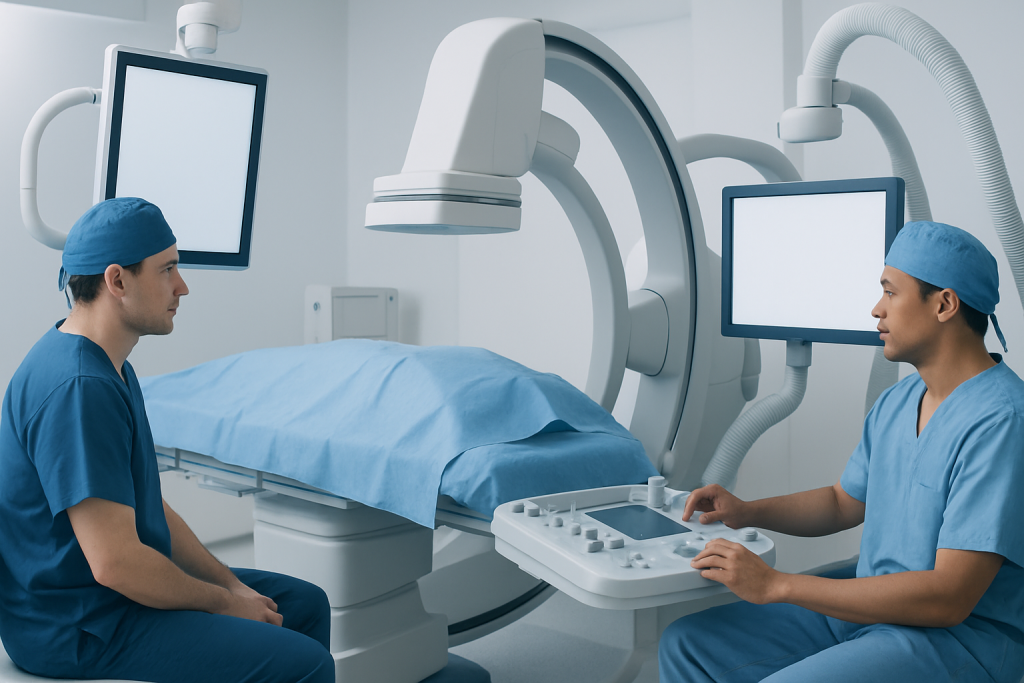
Interventional radiologists are physicians trained to interpret medical imaging and perform minimally invasive, image-guided procedures. For vascular treatments, they generally enter an artery or vein through a needle puncture, commonly at the wrist, groin, arm, or leg. They then advance thin wires and catheters to the target area under live imaging.
Vascular surgeons are surgical specialists focused on arteries, veins, and lymphatic circulation. They can perform traditional open procedures, such as bypass surgery or removal of diseased tissue, as well as catheter-based endovascular procedures such as angioplasty and stent placement. This broader procedural range can be particularly important when open reconstruction, emergency surgery, or a hybrid procedure is required.
There is meaningful overlap. For example, both specialties may perform angiography, angioplasty, stenting, embolization in selected settings, or catheter-directed clot treatments, depending on local practice and training. The title of the specialist matters less than whether the proposed treatment is appropriate, the clinician has relevant expertise, and follow-up care is clearly arranged.
- Open surgery: involves an incision to repair, replace, remove, or bypass a diseased vessel.
- Endovascular treatment: works inside a vessel using catheters, balloons, stents, grafts, or clot-removal tools.
- Hybrid treatment: combines open and endovascular methods during one treatment plan.
How vascular and interventional procedures work

Before either approach, clinicians review symptoms, medical history, medications, kidney function, and imaging. Tests may include duplex ultrasound, CT angiography, MR angiography, or catheter angiography. These examinations help identify narrowing, blockage, aneurysm, abnormal bleeding, clot, or poor blood flow to tissues.
During an endovascular or interventional radiology procedure, the skin is cleaned and numbed, and sedation may be offered when appropriate. A clinician inserts a small tube called a sheath into a blood vessel and uses imaging to guide instruments to the area of concern. Depending on the problem, treatment may involve inflating a balloon, placing a stent, closing a bleeding vessel with embolization materials, improving drainage, or removing or dissolving a clot.
During open vascular surgery, anesthesia is typically more extensive. The surgeon exposes the vessel through an incision and may remove plaque, repair an aneurysm, place a graft, or create a bypass around a blockage. Some operations use a catheter-based component as well. The care team discusses the intended method, alternatives, and possible need to change the plan if findings during treatment differ from expectations.
Candidacy: choosing the right approach
Catheter-based treatment may be considered when a target vessel can be reached safely, the anatomy is suitable, and a less invasive option is likely to provide meaningful symptom relief or protect organ or limb function. It can be especially useful for people who may face higher risks from a large incision or prolonged anesthesia. However, it still involves contrast material, radiation exposure in many cases, and a risk of complications.
Open vascular surgery may be recommended when disease is extensive, vessels are heavily calcified or fully blocked, an aneurysm has anatomy not suited to an endovascular graft, infection is present, or a longer-lasting reconstruction is preferred. It may also be necessary when a minimally invasive procedure has not worked or when urgent bleeding or loss of blood flow requires surgical control.
For people with narrowed leg arteries, options may range from supervised exercise and medication to endovascular treatment or bypass surgery. The appropriate pathway for peripheral artery disease depends on symptoms, wound healing, imaging findings, and the risk of limb-threatening ischemia. A second opinion can be helpful when more than one reasonable approach is available.
Step-by-step treatment and recovery timeline
On the day of a planned procedure, patients are usually asked to follow instructions about fasting and medicines, particularly blood thinners and diabetes drugs. The team confirms allergies, kidney health, and whether contrast dye is appropriate. After consent, monitoring equipment is applied and the access site or surgical area is prepared.
For many image-guided vascular procedures, the treatment itself may take from less than an hour to several hours, depending on complexity. Pressure or a closure device is used at the access point afterward. Some patients go home the same day, while others stay overnight for observation, medication adjustment, or monitoring of circulation.
Recovery after open surgery generally takes longer because of the incision and effects of anesthesia. Hospital stay and return to routine activities vary widely by operation and individual health. In both settings, patients may need follow-up ultrasound or other imaging, wound checks, and medications to reduce clotting or manage cholesterol, blood pressure, diabetes, or smoking-related risk.
Patients should follow their own team’s advice about walking, lifting, bathing, driving, and returning to work. New or worsening pain, bleeding, fever, a cold or pale limb, increasing swelling, or changes around an incision or puncture site should be reported promptly.
Benefits, limitations, and possible risks
The main potential benefit of interventional radiology and endovascular vascular care is that treatment can often be performed through a small puncture rather than a large incision. This may mean less tissue disruption and, for suitable patients, a shorter recovery. It can also allow treatment of blood vessels that are difficult to reach with open surgery.
Open surgery can provide direct access to the vessel and may offer a durable solution in selected situations. It can be essential for certain complex aneurysms, extensive arterial disease, infected grafts, trauma, or cases needing bypass. The trade-off may include a larger incision, more postoperative discomfort, and a longer recovery period.
Risks vary by procedure but may include bruising or bleeding at the access site, infection, allergic reaction to contrast, kidney injury related to contrast in susceptible people, blood vessel injury, clot formation, stroke, heart complications, and the need for another procedure. Open operations also carry risks related to anesthesia, wound healing, and blood loss. The treating clinician can explain the risks that apply to the individual procedure and health profile.
Why is interventional radiology better than surgery?
Interventional radiology is not inherently better than surgery. For an appropriate condition and anatomy, it may offer a less invasive route to treatment, with a smaller skin opening and potentially faster recovery. This can be valuable for people who are medically frail or for conditions that respond well to catheter-based therapy.
However, a minimally invasive approach may not be technically possible, may not last as long in every situation, or may require repeat treatment over time. Open or hybrid vascular surgery may provide the safer or more durable option for certain blockages, aneurysms, infections, or emergencies.
The most useful question is not which specialty is better overall, but which treatment has the best balance of safety, effectiveness, recovery, and long-term follow-up for the person’s condition. Shared decision-making with a vascular specialist and interventional radiologist can help clarify that choice.
Can an interventional radiologist do vascular surgery?
Interventional radiologists perform many minimally invasive vascular procedures, including angiography, angioplasty, stenting, embolization, and selected clot treatments. These procedures are sometimes described as endovascular or image-guided vascular interventions.
Traditional open vascular surgery, such as surgical bypass or open aneurysm repair, is performed by a vascular surgeon. Vascular surgeons are also trained in many endovascular techniques. Training pathways, hospital credentialing, and scope of practice differ by country and institution, so patients should ask who will perform the procedure and what experience the team has with that specific treatment.
Collaboration is common and beneficial. An interventional radiologist may perform the image-guided portion of care, while a vascular surgeon provides operative treatment when direct surgical repair is needed.
What is the most common procedure in interventional radiology?
There is no single procedure that is most common in every hospital or country because interventional radiology treats a broad range of vascular and nonvascular conditions. Common IR procedures include image-guided biopsies, drainage of fluid collections, placement of central venous access devices, angiography, angioplasty, stenting, and embolization.
Within vascular care, angiography is a foundational procedure. It uses contrast dye and X-ray imaging to show blood flow and identify narrowing, blockage, bleeding, or vessel abnormalities. If treatment is needed, angioplasty or stent placement may sometimes be performed during the same session.
For patients, the important point is that an IR procedure is selected for a defined clinical reason, not simply because it is minimally invasive. The team should explain the purpose, expected benefit, alternative options, and follow-up plan beforehand.
What is the most common vascular surgery?
There is no single vascular operation that is most common in all settings, as vascular surgeons manage a wide range of artery and vein conditions. Frequently performed vascular procedures include treatment for peripheral artery disease, repair of aneurysms, carotid artery procedures to reduce stroke risk in selected patients, creation or revision of dialysis access, varicose vein treatments, and procedures for blood clots or acute limb ischemia.
For arterial disease in the legs, common treatments include angioplasty and stenting, surgical bypass, or endarterectomy, which removes plaque from inside an artery. The choice depends on where the blockage is located, how long it is, the quality of nearby vessels, and whether there are wounds or threatened tissue.
Many vascular surgeons also perform endovascular procedures. Therefore, the term “vascular surgery” does not always mean a large open operation; it describes the specialty responsible for comprehensive blood vessel care.
When to seek medical care
Medical assessment is important for leg pain that consistently occurs with walking, nonhealing foot or leg wounds, unexplained limb swelling, prominent painful veins, or a new pulsating sensation in the abdomen. These symptoms do not always indicate a vascular problem, but timely evaluation can identify whether circulation is involved.
Urgent medical care is needed for sudden severe limb pain, a limb that becomes cold, pale, blue, numb, or weak, sudden one-sided swelling with chest pain or shortness of breath, uncontrolled bleeding, or symptoms of stroke such as facial drooping, arm weakness, or speech difficulty. Emergency services should be contacted for severe or rapidly worsening symptoms.
Acibadem International’s multidisciplinary specialists and JCI-accredited hospitals evaluate and treat vascular conditions for international patients. Depending on the diagnosis, care may include vascular surgery or image-guided treatment planned with the relevant specialists.
Frequently asked questions
Is vascular surgery more invasive than interventional radiology?
Open vascular surgery is generally more invasive because it requires an incision to directly access the blood vessel. Interventional radiology usually uses a small skin puncture and catheters guided by imaging. Vascular surgeons also perform minimally invasive endovascular procedures, so invasiveness depends on the planned treatment rather than the specialty name alone.
Do vascular surgeons and interventional radiologists treat the same conditions?
They can treat many of the same vascular conditions, including narrowed arteries, blood clots, aneurysms, bleeding vessels, and some vein disorders. Their methods and training differ, and the overlap varies between hospitals. Complex cases are often best reviewed by both specialties.
Will an interventional radiology procedure require general anesthesia?
Many interventional radiology procedures are performed with local anesthetic and, when needed, sedation. General anesthesia may be used for longer, more complex, or particularly uncomfortable procedures. The anesthesia plan depends on the procedure, medical history, and safety needs.
How long does recovery take after a vascular procedure?
Recovery after a catheter-based procedure may be measured in hours to days, although follow-up and activity restrictions still matter. Recovery after open vascular surgery often takes weeks and can be longer for major operations. Individual healing depends on the procedure, circulation, other medical conditions, and whether wounds are present.
Can a stent replace bypass surgery?
A stent can be an effective alternative to bypass surgery for some vessel narrowings or aneurysms, but it cannot replace bypass in every case. Vessel anatomy, the length and location of blockage, previous treatment, and long-term durability all influence the decision. A vascular specialist can explain which option is suitable.
What questions should a patient ask before choosing a procedure?
Patients may ask what condition is being treated, why the recommended approach is appropriate, and what alternatives exist. It is also reasonable to ask about expected recovery, major risks, the likelihood of further procedures, medication changes, and the follow-up imaging schedule. Clear answers support informed decision-making.
References
- Society for Vascular Surgery
- Society of Interventional Radiology
- National Heart, Lung, and Blood Institute
- National Institute for Health and Care Excellence
- American Heart Association
This article is for general information only and is not a substitute for professional medical advice. Please consult a qualified doctor about your individual situation.
Explore treatments in Turkey — costs, top hospitals & a free quote
JCI-accredited · board-certified surgeons · reply within 24h
Add us as a Preferred Source to see more of our trusted health content across Google Search, AI Overviews and Discover.