Autism Spectrum Disorder: Early Signs and Developmental Evaluation

Autism spectrum disorder can look different from one child to another, so evaluation focuses on each child’s strengths and support needs. Early signs may include differences in eye contact, response to name, gestures, play, language development, routines, or sensory reactions.
Key Takeaways
- Autism spectrum disorder can look different from one child to another, so evaluation focuses on each child’s strengths and support needs.
- Early signs may include differences in eye contact, response to name, gestures, play, language development, routines, or sensory reactions.
- A developmental evaluation may involve parent interviews, observation, standardized tools, hearing assessment, and input from multiple specialists.
- Early support can improve communication, daily functioning, learning, and family confidence, even before a formal diagnosis is complete.
- Parents should speak with a pediatrician if they notice developmental differences or loss of previously learned skills.
Autism spectrum disorder is a neurodevelopmental condition that affects social communication, behavior, interests, and sensory processing. Early recognition and a comprehensive developmental evaluation can help children and families access supportive interventions at the right time.
Overview
Autism spectrum disorder, often called ASD, is a developmental condition that begins in early childhood and affects how a child communicates, interacts, learns, plays, and responds to the world around them. The word spectrum is important because autism is highly variable. Some children need substantial daily support, while others speak fluently, attend mainstream school, and mainly need help with social understanding, flexibility, or sensory challenges.
ASD is not caused by parenting style, and it is not a behavior problem. It reflects differences in brain development and information processing. Many autistic children have notable strengths, such as strong memory, attention to detail, honesty, creativity, visual learning, or deep interest in specific topics. At the same time, they may need structured support for communication, transitions, emotional regulation, or everyday independence.
Early recognition matters because the first years of life are a key period for language, social learning, and adaptive skills. A developmental evaluation does not label a child for the sake of labeling. Its goal is to understand the child’s profile, rule out other causes of delays, and guide practical support at home, in therapy, and at school.
Early Signs of Autism Spectrum Disorder
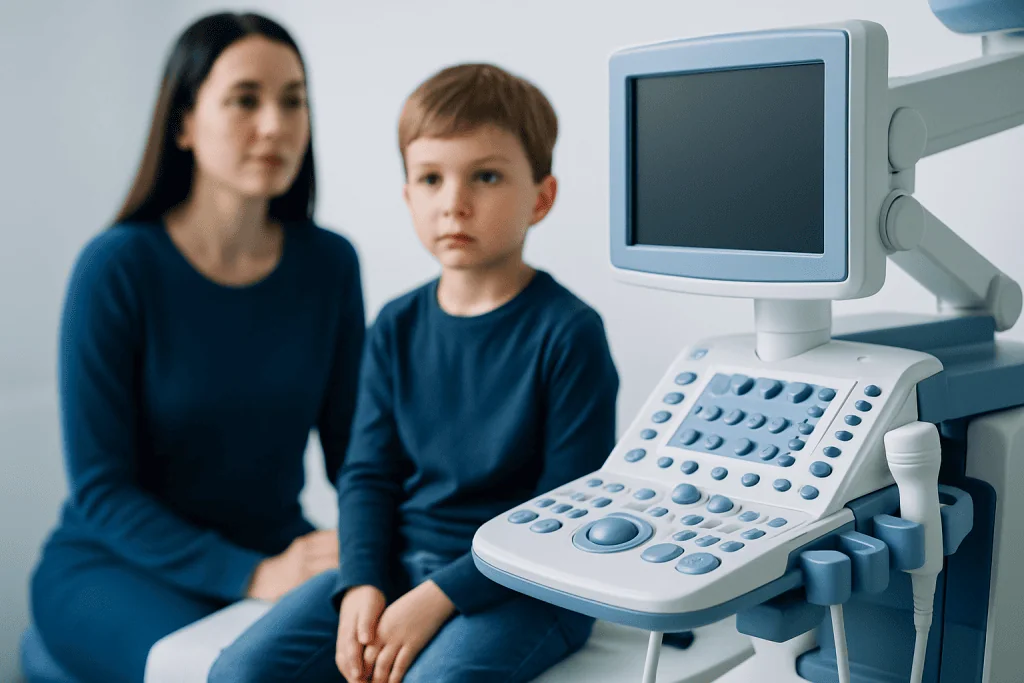
Early signs of autism may appear in infancy or toddlerhood, although some become clearer when social and communication demands increase. Parents may notice that a baby rarely makes eye contact, does not smile back consistently, seems less interested in social games, or does not respond to their name. Some children do not use gestures such as pointing, waving, reaching to be picked up, or showing objects to share interest.
Language development can vary widely. Some children have delayed speech, use only a few words, repeat words or phrases, or speak in a way that sounds scripted. Others develop words on time but have difficulty using language socially, such as taking turns in conversation, answering questions, or understanding facial expressions and tone of voice. A child may also seem more interested in parts of toys, patterns, letters, numbers, or objects than in pretend play with others.
Behavioral and sensory differences are also common. A child may strongly prefer routines, become upset with small changes, line up toys, flap hands, spin, rock, or focus intensely on a narrow interest. Sensory responses may include being unusually bothered by sounds, textures, lights, smells, or clothing, or seeking sensations such as deep pressure, movement, or visual stimulation. These signs do not automatically mean autism, but they are reasons to discuss development with a pediatrician.
Developmental Milestones and When Differences May Appear
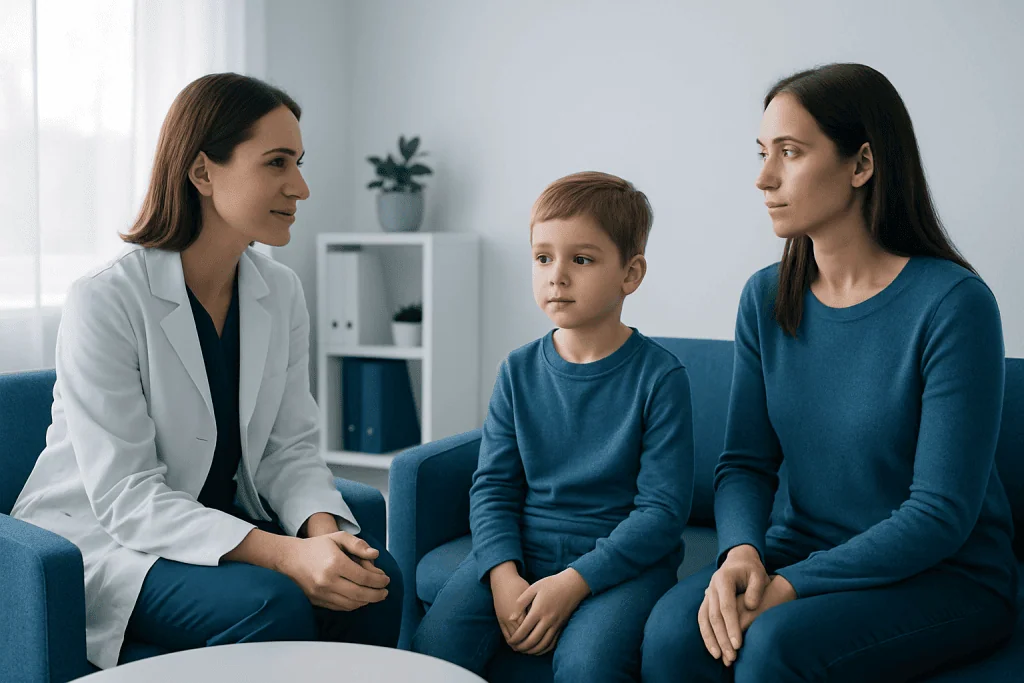
Developmental milestones are skills that most children achieve within an expected age range, such as smiling, babbling, pointing, walking, and using simple words. Children develop at different speeds, so one missed milestone does not always indicate a disorder. However, patterns of differences across communication, social interaction, play, and behavior deserve attention, especially when they persist or affect daily life.
In many children, signs are noticed before age 2. For example, a toddler may not point to show something interesting, may not bring objects to share, may not imitate simple actions, or may not look back and forth between a parent and a toy. Some children appear to develop typically at first and later lose words, social engagement, or play skills. Any loss of previously acquired language or social skills should be evaluated promptly.
Developmental screening is an important part of well-child care. Pediatricians commonly ask parents about milestones, observe the child, and may use structured questionnaires. If screening suggests possible ASD or another developmental concern, the next step is a more detailed evaluation rather than waiting to see whether the child will simply outgrow the differences.
Causes and Risk Factors
Autism spectrum disorder does not have a single known cause. Research shows that ASD is related to differences in early brain development influenced by genetic and biological factors. Many genes may contribute, and in some children autism is associated with known genetic conditions. In many others, no single cause is identified, and the diagnosis is based on the child’s developmental and behavioral profile.
Certain factors may increase the likelihood of ASD, such as having a sibling with autism, some genetic or chromosomal conditions, being born very prematurely, or certain complications affecting early development. These are risk factors, not direct causes, and many children with one or more risk factors do not develop autism. Vaccines do not cause autism; this has been examined extensively by major public health and medical organizations.
It is also helpful to understand that autism often occurs together with other conditions. Some children may have language disorder, intellectual disability, attention-deficit/hyperactivity disorder, anxiety, sleep difficulties, feeding challenges, epilepsy, motor coordination issues, or gastrointestinal concerns. A careful evaluation looks for these associated needs because treating them can greatly improve comfort, participation, and learning.
How Developmental Evaluation Works
A developmental evaluation is a structured process that gathers information from several sources. It usually begins with a detailed discussion with parents or caregivers about pregnancy and birth history, early milestones, communication, play, behavior, sleep, feeding, medical history, family history, and daily functioning. Parent observations are highly valuable because they show how the child behaves across familiar settings.
The clinician may observe the child during play, social interaction, problem-solving, and communication tasks. Standardized autism assessment tools and developmental tests may be used to evaluate social communication, language, cognitive abilities, motor skills, adaptive behavior, and sensory processing. Depending on the child’s needs, the team may include a developmental pediatrician, child neurologist, child psychiatrist, psychologist, speech-language therapist, occupational therapist, audiologist, and other specialists.
Hearing evaluation is especially important because hearing difficulties can look like delayed response to name or speech delay. Vision assessment, genetic testing, neurological evaluation, or other medical tests may be recommended in selected cases, based on the child’s history and examination. The purpose is not to do every possible test, but to answer the right questions for that child.
At the end of the evaluation, families should receive clear feedback. This may include whether the child meets criteria for ASD, whether another developmental condition is present, what strengths were observed, and which supports are recommended. Even if the diagnosis is uncertain, early intervention services, speech therapy, occupational therapy, parent coaching, or educational support may still be appropriate.
Treatment and Support Options
There is no single treatment that is right for every autistic child. Support should be individualized, developmentally appropriate, and respectful of the child’s communication style, sensory needs, and family priorities. The main goal is to help the child communicate, learn, participate safely, build relationships, and manage daily routines with as much independence and comfort as possible.
Common supports include speech and language therapy, occupational therapy, developmental or behavioral interventions, parent-mediated programs, social communication support, and educational planning. Some children benefit from augmentative and alternative communication, such as picture systems, communication boards, or speech-generating devices. These tools do not prevent speech; they can reduce frustration and support communication while speech develops.
Medical treatment may be considered for associated concerns such as sleep problems, anxiety, attention difficulties, seizures, severe irritability, constipation, or feeding problems. Medication does not treat the core features of autism, but it may help specific symptoms when carefully prescribed and monitored by a qualified physician. Families should be cautious about unproven therapies, restrictive diets, supplements, or treatments promoted as cures without strong evidence.
Prevention, Self-care, and Family Support
Autism itself is not something parents can prevent through parenting choices, and families should not blame themselves. What families can do is support development early and consistently. Helpful strategies include using simple language, following the child’s interests during play, encouraging turn-taking, using visual routines, preparing the child for transitions, and praising communication attempts in any form.
Daily life can be easier when routines are predictable but flexible enough to build coping skills gradually. Sensory supports, such as quieter spaces, soft clothing, movement breaks, or structured bedtime routines, may help some children regulate. Parents can also track triggers for distress, sleep patterns, eating habits, and communication successes to share with clinicians and therapists.
Family support is part of good care. Parents and siblings may need education, practical coaching, and time to adjust. Schools and early childhood programs can provide accommodations and individualized learning plans when appropriate. Support groups, counseling, and reliable educational resources can help families make informed decisions and feel less isolated.
When to See a Doctor
Parents should speak with a pediatrician if a child does not respond to their name, avoids or has limited eye contact, does not point or use gestures, has delayed speech, does not engage in pretend play, has strong repetitive behaviors, is unusually sensitive to sensory input, or has difficulty with changes in routine. A consultation is also recommended if caregivers feel that social communication is different from other children of the same age.
Prompt evaluation is especially important if a child loses words, gestures, play skills, or social interest at any age. Families do not need to wait until school age or until symptoms become severe. If concerns are present, early screening and referral can open the door to supportive services during an important period of development.
For international families seeking assessment or treatment planning, Acibadem International’s multidisciplinary specialists and JCI-accredited hospitals can evaluate and manage developmental conditions such as ASD within a coordinated pediatric care approach. Families should consult a qualified healthcare professional for advice tailored to the child’s age, development, medical history, and local service options.
Frequently asked questions
At what age can autism spectrum disorder be identified?
Signs of autism can sometimes be noticed in the first year of life, but they often become clearer between 18 and 24 months. Some children are identified later, especially if their language develops early or their needs are more subtle. A developmental evaluation can be useful at any age when concerns are present.
Does delayed speech always mean autism?
No. Speech delay can occur for many reasons, including hearing difficulties, language disorder, developmental delay, or limited language exposure. However, when speech delay occurs together with reduced gestures, limited social interaction, repetitive behaviors, or unusual sensory responses, an autism evaluation may be recommended.
Can a child have autism and still make eye contact?
Yes. Some autistic children make eye contact, especially with familiar people or in comfortable situations. Clinicians do not rely on one behavior alone; they look at the overall pattern of social communication, play, flexibility, sensory responses, and development.
What should parents do while waiting for an evaluation?
Parents can begin supportive steps right away, such as speaking with the pediatrician, requesting early intervention or school-based services, and arranging hearing assessment if speech is delayed. At home, they can encourage communication through play, gestures, pictures, simple choices, and predictable routines. Support does not need to wait for a final diagnosis.
Is autism spectrum disorder curable?
Autism is a lifelong neurodevelopmental condition, not an illness that needs to be cured. Many children make significant progress with the right support, especially in communication, learning, independence, and coping skills. The goal of care is to understand the child’s needs and help them thrive.
Are vaccines linked to autism?
No. Large bodies of research reviewed by major medical and public health organizations have found no evidence that vaccines cause autism. Vaccination remains an important part of protecting children from serious infectious diseases. Parents with vaccine questions should discuss them with a pediatrician.
References
- American Academy of Pediatrics
- Centers for Disease Control and Prevention
- World Health Organization
- National Institute of Mental Health
- National Institute for Health and Care Excellence
This article is for general information only and is not a substitute for professional medical advice. Please consult a qualified doctor about your individual situation.
Autism Spectrum in Turkey — costs, top hospitals & a free quote
JCI-accredited · board-certified surgeons · reply within 24h
Add us as a Preferred Source to see more of our trusted health content across Google Search, AI Overviews and Discover.

Neurology
Diagnosis and treatment of disorders of the brain, spinal cord, nerves and muscles.
51 specialists in this unit