Wearable Health Devices: What Your Data Can and Cannot Tell You

Wearable health devices are best used to identify trends over time, not to interpret single readings in isolation. Common metrics such as steps, heart rate, sleep, oxygen saturation, and ECG notifications can be helpful but may be affected by device fit, movement, skin tone, temperature, and software algorithms.
Key Takeaways
- Wearable health devices are best used to identify trends over time, not to interpret single readings in isolation.
- Common metrics such as steps, heart rate, sleep, oxygen saturation, and ECG notifications can be helpful but may be affected by device fit, movement, skin tone, temperature, and software algorithms.
- Consumer wearables can support healthier habits and may prompt timely medical evaluation, but they cannot confirm or rule out most diseases on their own.
- People should seek medical advice for concerning symptoms, repeated abnormal readings, or device alerts that suggest a possible heart rhythm problem.
- Data privacy, device validation, and integration with a qualified healthcare team are important when choosing and using wearable technology.
Wearable health devices can help people notice patterns in activity, sleep, heart rate, and other daily health signals. Their data is useful for awareness and conversations with clinicians, but it does not replace a medical diagnosis or professional care.
Overview
Wearable health devices include smartwatches, fitness bands, rings, patches, connected blood pressure cuffs, continuous glucose monitors, and other sensors worn on or close to the body. They collect information during daily life, often continuously, and present it through an app or dashboard. For many people, this makes health feel more visible and easier to discuss.
The most common wearable measurements include step count, active minutes, heart rate, sleep duration, estimated calories, oxygen saturation, skin temperature, and heart rhythm notifications. Some devices can record a single-lead electrocardiogram, commonly called an ECG, while others are designed for specific medical uses such as glucose monitoring or remote monitoring after a procedure.
These tools can be empowering when used with realistic expectations. They are particularly useful for showing patterns over days, weeks, or months. However, they are not the same as a full medical examination, laboratory test, diagnostic ECG, sleep study, or imaging test. The safest approach is to treat wearable data as one piece of the health picture, alongside symptoms, medical history, clinical examination, and professional testing when needed.
What Wearable Health Devices Can Tell You
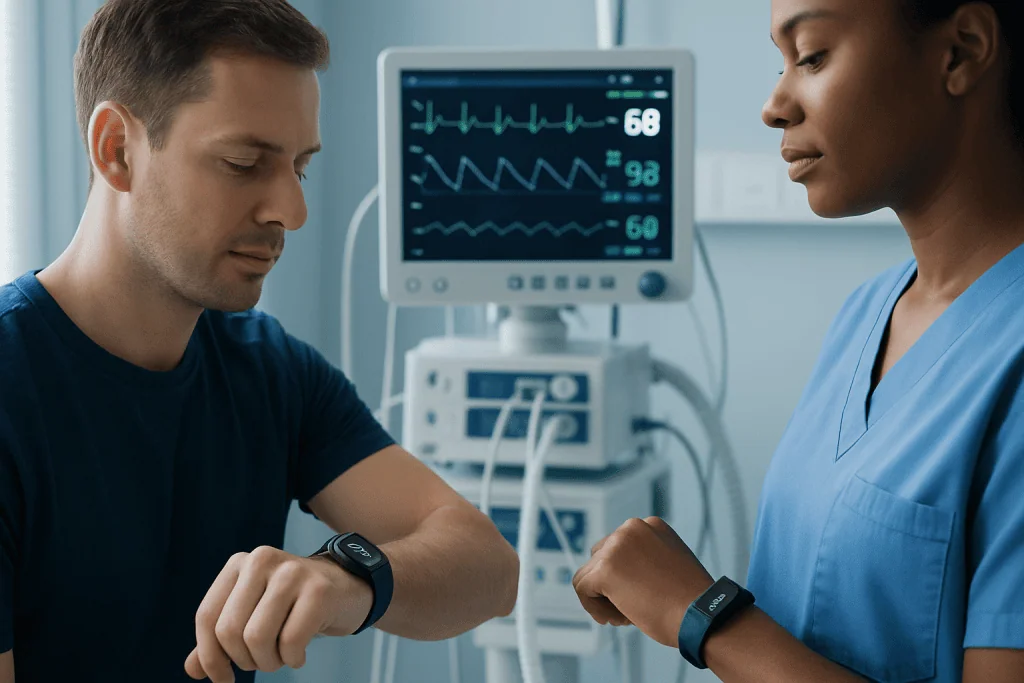
Wearables can help people understand everyday habits. A step count, for example, may show whether activity is increasing, decreasing, or staying stable. Active minutes and heart rate during exercise can help users pace themselves and recognize improvements in fitness over time. For people working on lifestyle changes, this feedback can make goals more concrete and easier to maintain.
Heart rate data can also reveal useful trends. Resting heart rate may change with improved fitness, stress, illness, dehydration, poor sleep, certain medicines, or overtraining. A sudden change does not automatically mean a serious problem, but a consistent pattern can be worth discussing with a clinician, especially if symptoms are present.
Sleep tracking can provide an overview of bedtime, wake time, sleep duration, and night-to-night consistency. Some devices estimate sleep stages, but these estimates are less precise than a formal sleep study. Still, wearable sleep data may help users notice patterns such as irregular schedules, short sleep duration, or frequent awakenings that affect daytime wellbeing.
Some wearables provide notifications for irregular heart rhythms or allow users to record an ECG tracing. These features can be helpful for detecting possible atrial fibrillation in selected situations, especially when a person has intermittent symptoms. The result should be reviewed by a qualified healthcare professional, because device alerts require clinical interpretation and may need confirmatory testing.
What Your Data Cannot Tell You

Wearable data cannot diagnose most medical conditions by itself. A high heart rate reading does not identify the exact cause, and a normal reading does not rule out illness. Similarly, a low sleep score does not diagnose a sleep disorder, and an oxygen reading from a consumer device cannot replace medical assessment when breathing symptoms are present.
Many measurements are estimates rather than direct medical-grade results. Calorie burn, stress scores, recovery scores, sleep stages, and fitness age are typically calculated by proprietary algorithms. These algorithms may be helpful for personal tracking, but they are not universal medical standards and may vary significantly between brands.
Wearables also cannot reliably interpret symptoms. Chest discomfort, fainting, severe shortness of breath, sudden weakness, or new confusion require medical attention even if a device shows normal numbers. Conversely, an abnormal reading in someone who feels well may be due to poor sensor contact, motion, cold skin, low battery, or software error.
For this reason, users should avoid making major medical decisions based only on wearable data. Starting, stopping, or changing medications, delaying emergency care, or making decisions about a chronic condition should always involve a qualified doctor or care team.
Accuracy, Limitations, and Data Quality
The accuracy of wearable health devices depends on the type of sensor, the quality of the device, how it is worn, and the situation in which data is collected. Heart rate is often more accurate at rest than during rapid movement, interval training, or activities that involve wrist flexion. A loose strap, tattoos, darker or lighter skin pigmentation, cold weather, sweating, and poor device placement can all affect optical sensors.
Step counting is generally useful for trend tracking, but it may miss steps if the arms are still or count movements that are not walking. Sleep trackers can estimate when a person is resting, but they may confuse quiet wakefulness with sleep. Wrist-based oxygen saturation readings can be affected by movement, nail polish if measured at the finger, circulation, and device design.
Medical-grade devices are usually tested for specific clinical purposes, while many consumer wellness devices are designed primarily for general information. Some features may have regulatory clearance in certain countries, while other features are intended only for wellness use. Users should read the device labeling carefully to understand what a feature is and is not approved to do.
It is also important to look at trends rather than isolated numbers. One unusual reading may not mean much, particularly if it does not match how the person feels. Repeated unusual readings, readings that occur with symptoms, or alerts that recur should be discussed with a healthcare professional.
Using Wearable Data With Your Healthcare Team
Wearable data is most useful in medical care when it is organized and connected to the person’s symptoms. Instead of bringing months of raw data to an appointment, patients can share a short summary: when the concern began, what the device showed, how often it happened, and whether symptoms such as palpitations, dizziness, fatigue, chest discomfort, or shortness of breath occurred at the same time.
For heart rhythm concerns, a saved ECG tracing or notification history may help a clinician decide whether further testing is needed. This may include a standard ECG, Holter monitor, event monitor, blood tests, echocardiography, or other evaluation depending on the person’s history and symptoms. A wearable alert is not a final diagnosis, but it can be a useful starting point.
In chronic disease care, wearable data may support remote patient monitoring when used within a structured medical program. Examples include activity monitoring during cardiac rehabilitation, glucose trends in diabetes care, blood pressure tracking for hypertension, or recovery monitoring after surgery. In these settings, the care team defines what data is relevant, how often it should be checked, and what changes require action.
Patients should tell their doctor which device they use and whether any health apps are connected to it. This helps clinicians understand the source of the data and its limitations. At Acibadem International, multidisciplinary specialists and JCI-accredited hospitals can evaluate wearable-generated concerns and integrate appropriate diagnostic testing for international patients when needed.
Privacy, Security, and Choosing a Device
Wearable health devices collect sensitive personal information, including movement, sleep, heart rate, location, and sometimes reproductive, glucose, or cardiovascular data. Before using a device, users should review the privacy policy, understand what data is collected, and check whether information may be shared with advertisers, app partners, employers, insurers, or third parties.
Good security habits matter. Users should enable strong passwords, two-factor authentication when available, device lock features, and regular software updates. They should also be cautious about connecting health apps that request broad access to personal information. If a device is no longer used, accounts and stored data should be managed according to the manufacturer’s instructions.
When choosing a device, the best option depends on the goal. A person who wants motivation to move more may need a simple activity tracker. Someone with a known heart rhythm concern should ask a doctor whether a device with ECG capability is appropriate. People with diabetes, hypertension, sleep symptoms, or heart disease may benefit from medical devices or monitoring plans recommended by their care team.
Cost, comfort, battery life, ease of reading the app, accessibility features, and compatibility with a smartphone should also be considered. A wearable is only helpful if it is comfortable enough to use consistently and understandable enough to guide healthy routines without creating unnecessary worry.
When to See a Doctor
A healthcare professional should be consulted if wearable data repeatedly shows unusual readings, especially when the readings are new, persistent, or linked to symptoms. Examples include frequent irregular rhythm alerts, unexplained high or low heart rate, oxygen saturation readings that are repeatedly lower than expected, or significant changes in sleep and activity accompanied by fatigue or breathlessness.
Medical advice is also important when symptoms occur even if the device appears normal. Chest pain or pressure, fainting, severe shortness of breath, sudden weakness on one side of the body, sudden difficulty speaking, new confusion, or severe allergic symptoms require urgent medical evaluation according to local emergency guidance. Wearables should not be used to decide whether these symptoms are safe to ignore.
People with existing heart disease, diabetes, lung disease, pregnancy-related concerns, implanted devices, or complex medical conditions should discuss wearable use with their doctor. The care team can explain which measurements are meaningful, what limits to use, and when a reading should prompt contact.
Used thoughtfully, wearable health devices can support prevention, self-awareness, and better communication with healthcare professionals. The goal is not to monitor every number perfectly, but to combine reliable technology, personal wellbeing, and medical expertise in a balanced way.
Frequently asked questions
Are wearable health devices accurate?
Many wearable health devices are reasonably useful for tracking trends such as activity, resting heart rate, and sleep timing. Accuracy varies by device, body position, movement, skin contact, and the specific metric being measured. Medical decisions should not be based on wearable data alone.
Can a smartwatch diagnose a heart problem?
A smartwatch may detect an irregular rhythm pattern or record a single-lead ECG, but it cannot provide a complete heart diagnosis by itself. A doctor may need to review the tracing and order further tests such as a standard ECG, Holter monitor, or echocardiogram. Symptoms and medical history are also essential.
Should I worry about one abnormal reading?
One abnormal reading can happen because of poor device contact, movement, low battery, cold skin, or a temporary body response such as stress or exercise. It is usually more helpful to look for repeated patterns and consider how the person feels. If abnormal readings recur or occur with symptoms, medical advice is recommended.
Can wearables track sleep disorders?
Wearables can show sleep timing, duration, and possible restlessness, but they cannot reliably diagnose sleep disorders such as sleep apnea or narcolepsy. A formal sleep evaluation may be needed if there is loud snoring, pauses in breathing, excessive daytime sleepiness, or persistent poor sleep. Device sleep scores should be viewed as estimates.
Is my health data private on a wearable device?
Privacy depends on the device, app, settings, and company policies. Users should review what data is collected, whether it is shared, and how it can be deleted or exported. Strong passwords, two-factor authentication, and careful app permissions can reduce privacy risks.
How should I share wearable data with my doctor?
A concise summary is usually more useful than a large amount of raw data. Patients can note the date and time of abnormal readings, related symptoms, activity at the time, and any saved ECG or alert reports. This helps the doctor decide whether additional testing is needed.
References
- World Health Organization
- U.S. Food and Drug Administration
- American Heart Association
- American College of Cardiology
- American Academy of Sleep Medicine
This article is for general information only and is not a substitute for professional medical advice. Please consult a qualified doctor about your individual situation.
Medical weight-loss options in Turkey — costs & eligibility
JCI-accredited · board-certified surgeons · reply within 24h
Add us as a Preferred Source to see more of our trusted health content across Google Search, AI Overviews and Discover.
Check your numbers in seconds
BMI, calories, due date, blood pressure and 30+ more clinical calculators — free, instant, doctor-reviewed ranges.