Intussusception
Intussusception is a bowel blockage, most often in infants and young children. Learn symptoms, diagnosis, treatment and when to seek care.

Quick answer
Intussusception is a condition in which one part of the intestine slides into a neighboring section, causing blockage, pain, vomiting, and sometimes reduced blood flow to the bowel. Treatment depends on the child’s condition and may include imaging-guided reduction or surgery, with care focused on confirming the diagnosis quickly and restoring normal bowel function.
Intussusception is a condition in which one part of the intestine slides into a nearby part, causing a bowel blockage and swelling. It most often affects babies and young children and usually needs prompt medical assessment and treatment.
Overview
Intussusception is a bowel condition in which one section of the intestine slides, or telescopes, into an adjacent section. This can create a blockage that prevents intestinal contents from moving normally. It can also squeeze the blood vessels in the affected bowel, causing swelling and irritation.
Intussusception is one of the important causes of bowel obstruction in infants and young children. It most often involves the area where the small intestine meets the large intestine, called the ileocolic region, although other parts of the bowel can be involved. The condition can develop suddenly in an otherwise well child.
Prompt evaluation is important because early treatment can often correct the problem without major surgery. Many children recover well after timely care. The right treatment depends on the child’s age, symptoms, imaging findings, overall condition, and whether there are any signs of complications.
Symptoms
Intussusception symptoms can come and go because the bowel may tighten in waves. A baby or young child may suddenly cry, draw the knees toward the chest, appear pale, or seem very uncomfortable for a short period, then become calmer between episodes. These repeated episodes are a classic pattern, but not every child has the same presentation.
Vomiting is common and may start early. The abdomen may become swollen or tender, and the child may refuse feeding or have less energy than usual. Some children appear unusually sleepy or weak, which can be an important warning sign even if the abdominal symptoms are not obvious.
Stools may contain mucus or blood, sometimes described as a red, jelly-like stool. However, blood in the stool may not be present at the beginning, and waiting for this symptom can delay care. In some cases, a healthcare professional may feel a sausage-shaped lump in the abdomen, but this is not always detectable.
- Sudden, repeated bouts of crying or abdominal pain
- Pulling the legs up toward the belly
- Vomiting or feeding refusal
- Sleepiness, weakness, or reduced responsiveness
- Swollen or tender abdomen
- Blood or mucus in the stool
Causes & Risk Factors
In many babies and young children, no single cause is found. Intussusception may occur after the lymph tissue in the intestine becomes temporarily enlarged, for example after a viral illness. This enlarged tissue can act as a starting point that allows one part of the bowel to slide into another.
Sometimes intussusception is linked to a specific lead point, meaning a structural area inside the bowel that pulls the intestine inward. Possible lead points include polyps, a Meckel diverticulum, swollen lymph nodes, or other uncommon bowel abnormalities. Lead points are more likely to be considered in older children, in recurrent cases, or when the location is unusual.
The condition is most often seen in infants and toddlers. It can occur in children who were previously healthy, and families should not assume it is related to feeding choices or anything they did wrong. In adults, intussusception is uncommon and is more often associated with an underlying bowel condition that requires specialist evaluation.
Risk factors can include young age, a previous episode of intussusception, certain intestinal abnormalities, and some conditions that affect bowel structure or movement. A recent infection may be noted in some children. A doctor will consider the full clinical picture rather than relying on one risk factor alone.
Diagnosis
Diagnosis begins with a careful medical history and physical examination. The doctor will ask about the timing of pain or crying episodes, vomiting, stool changes, feeding, fever, and overall alertness. The abdomen is examined for swelling, tenderness, or a possible mass, and the child’s hydration and circulation are assessed.
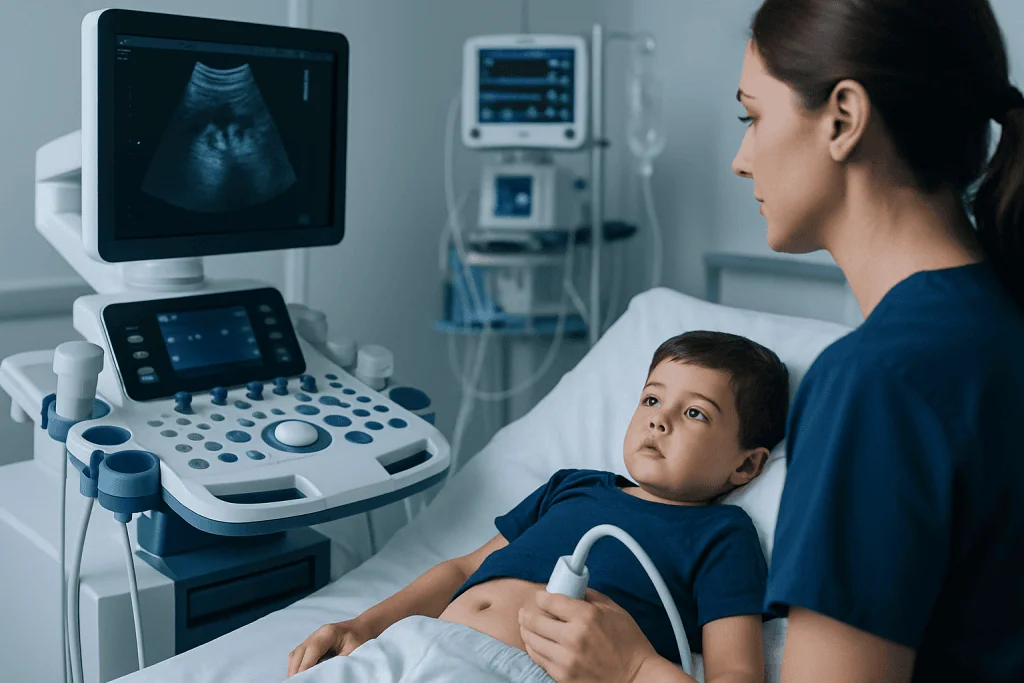
Ultrasound is commonly the preferred imaging test for suspected intussusception in children. It does not use radiation and can show the characteristic appearance of bowel telescoping. In some situations, an abdominal X-ray may be used to look for signs of bowel obstruction or to help decide whether enema treatment is safe.
Blood tests are not always needed to diagnose intussusception, but they may be used to assess dehydration, infection, or the child’s general condition. If the child is very unwell, the medical team may start supportive care, such as fluids, while tests are being arranged. Diagnosis and treatment are often closely connected because an enema study can both confirm and correct the condition in suitable cases.
Treatment Options
Intussusception treatment is chosen by a specialist team after assessment of the child’s symptoms, imaging results, and overall stability. The first steps often include keeping the child from eating or drinking temporarily, giving fluids through a vein if needed, and monitoring pain, hydration, and vital signs. These supportive measures help prepare the child for safe treatment.
For many children with ileocolic intussusception and no signs of bowel perforation or severe bowel injury, an air or liquid contrast enema may be recommended. This is performed under imaging guidance by experienced clinicians. The pressure from the enema can gently push the telescoped bowel back into its normal position, avoiding surgery in many suitable cases.
Surgery may be needed if an enema is not safe, is not successful, or if there are signs that the bowel is damaged. During surgery, the surgeon reduces the intussusception and checks the bowel. If a portion of bowel is not healthy, or if a lead point is found, the surgeon may need to remove or repair the affected area.
After treatment, children are observed for comfort, feeding, hydration, and any signs that symptoms are returning. Recurrence can happen, particularly soon after treatment, so families are given clear instructions about what to watch for at home. The best approach is individualized and should always be decided by qualified pediatric, radiology, and surgical specialists.
Living With / Prognosis
Most children who receive timely treatment for intussusception recover well and return to normal feeding and activity as advised by their doctor. The hospital team may observe the child for a period after reduction or surgery to make sure symptoms do not return and that the child can tolerate fluids or food safely.
Parents and caregivers should follow discharge instructions closely. These may include guidance on feeding, wound care if surgery was performed, activity limits, and when to return for review. It is important to seek medical advice again if the child develops repeated crying episodes, vomiting, abdominal swelling, blood in the stool, or unusual sleepiness.
The outlook depends on how early the condition is recognized, whether the bowel was injured, and whether there is an underlying lead point or another medical condition. Children who have had intussusception once may need careful attention if similar symptoms occur in the future. This does not mean symptoms will definitely return, but early assessment is the safest approach.
For international families seeking coordinated care, Acibadem International provides diagnosis and treatment for pediatric gastrointestinal conditions, including intussusception, through multidisciplinary specialists in JCI-accredited hospitals. Care decisions remain based on the child’s individual medical assessment and the treating team’s recommendations.
When to See a Doctor
Suspected intussusception should be assessed urgently by a doctor. Parents should seek immediate medical care if a baby or child has repeated severe crying or abdominal pain, pulls the legs up toward the belly, vomits repeatedly, becomes unusually sleepy, or passes blood or mucus in the stool. These symptoms may indicate a bowel blockage that needs prompt evaluation.
Medical attention is also important if the child has a swollen abdomen, signs of dehydration, persistent feeding refusal, fever with abdominal symptoms, or worsening weakness. Even if symptoms come and go, assessment should not be delayed because intussusception can temporarily improve between painful episodes.
After a child has been treated for intussusception, families should return for medical review if similar symptoms reappear. A healthcare professional can decide whether repeat imaging or further treatment is needed. When in doubt, it is safer to contact a qualified doctor or emergency service for guidance.
Frequently asked questions
What is intussusception?
Intussusception is a condition where one part of the intestine slides into another part, creating a bowel blockage. It can also reduce blood flow to the affected bowel segment. It is most common in infants and young children and needs prompt medical assessment.
What are the first signs of intussusception in a baby?
Early signs may include sudden episodes of crying, drawing the knees toward the chest, vomiting, and periods of looking tired or unusually sleepy. Symptoms may come in waves, with the baby seeming better between episodes. Blood or mucus in the stool can occur but may not be present at first.
How is intussusception diagnosed?
A doctor diagnoses intussusception using the child’s symptoms, physical examination, and imaging. Ultrasound is commonly used because it can clearly show the telescoped bowel without radiation. Sometimes an X-ray or enema study is also used depending on the situation.
Can intussusception be treated without surgery?
Yes, many children can be treated with an air or contrast enema performed under imaging guidance. This method can gently push the bowel back into position when it is safe and appropriate. Surgery is considered if enema treatment is unsuitable, unsuccessful, or if there are signs of bowel injury.
Can intussusception come back after treatment?
Intussusception can recur in some children, especially soon after successful enema treatment. Families are usually advised to watch for returning symptoms such as repeated abdominal pain, vomiting, unusual sleepiness, or blood in the stool. Any recurrence of concerning symptoms should be assessed promptly by a doctor.
Is intussusception caused by something parents did?
In most young children, intussusception happens without a clear cause and is not due to anything parents did or did not do. It may sometimes follow a viral illness or be related to enlarged lymph tissue in the bowel. The most important step is early medical evaluation when symptoms suggest a possible bowel blockage.
When is intussusception an emergency?
Intussusception should be treated as urgent whenever it is suspected. Immediate care is needed for repeated severe crying or abdominal pain, persistent vomiting, a swollen belly, blood or mucus in the stool, or unusual drowsiness. Prompt diagnosis and treatment help reduce the risk of complications.
References
- American Academy of Pediatrics
- National Institute of Diabetes and Digestive and Kidney Diseases
- Mayo Clinic
- Cleveland Clinic
- European Society of Paediatric Radiology
This article is for general information only and is not a substitute for professional medical advice. Please consult a qualified doctor about your individual situation.