

Robotic Surgery in Turkey: Treatment Guide
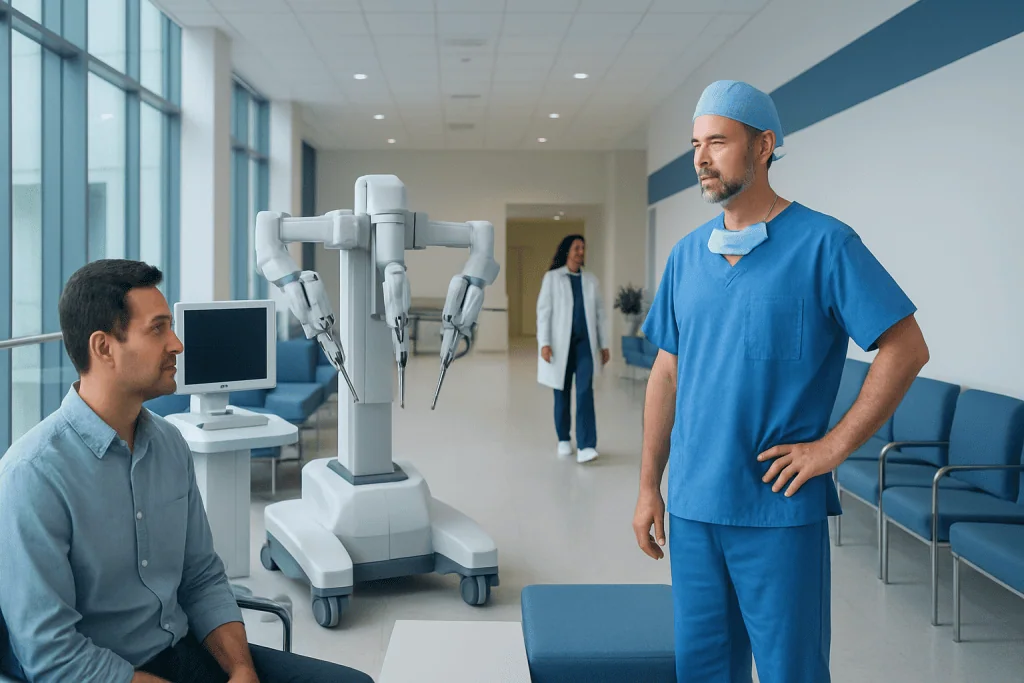
Robotic surgery is a minimally invasive technique in which the surgeon controls robotic arms and a high-definition camera to perform precise operations through small incisions. At Acibadem in Turkey, robotic surgery is used across selected specialties after detailed evaluation, with treatment planned by a multidisciplinary team and carried out using advanced imaging, anesthesia, and postoperative care protocols.
This guide explains how robotic surgery is used in different specialties, what you can expect before and after treatment, and how Acibadem International supports you when travelling to Turkey for care. It is designed to help you prepare practical questions for your physician and understand the patient journey with confidence.
At a glance
- Procedure type: Minimally invasive robot-assisted surgery
- Purpose: To perform selected operations through small incisions with enhanced precision, visualization and control
- Anesthesia: Usually general anesthesia
- Hospital stay: Varies by procedure; commonly from short observation to several nights
- Estimated recovery: Depends on the organ and operation; often faster than comparable open surgery, when suitable
- Return to daily life: May range from several days to a few weeks, based on your surgery and physician advice
- Final result timeline: Functional recovery may continue for weeks to months; cancer-related outcomes require follow-up
- Suitable department: Urology, gynecology, general surgery, colorectal surgery, thoracic surgery and other surgical specialties when appropriate
- International patient support: Interpreter assistance, appointment coordination, airport transfers, accommodation guidance and remote follow-up support
What is this treatment?
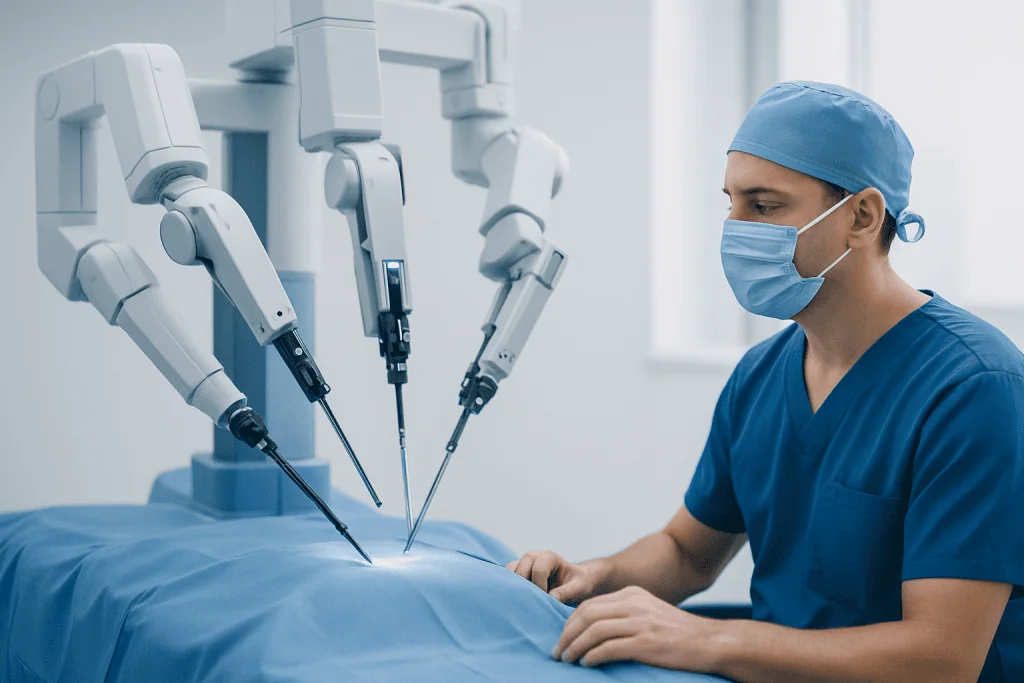
Robotic surgery is a minimally invasive surgical approach in which your surgeon controls robotic instruments from a console. The robotic system does not operate by itself; every movement is directed by the surgeon. The system provides magnified three-dimensional vision and highly flexible instruments that can help the surgeon work precisely through small incisions.
In Turkey, robotic surgery may be used in several specialties, including urology, gynecology, general surgery, colorectal surgery and thoracic surgery. Common examples include selected prostate, kidney, bladder, uterine, endometriosis, colorectal, hernia, bariatric and chest procedures, depending on the hospital, surgical team and your individual diagnosis.
The main goal is to perform the required operation safely while reducing tissue trauma where possible. For suitable patients, this may support smaller incisions, less post-operative discomfort, earlier mobilization and a shorter hospital stay compared with traditional open surgery. However, robotic surgery is not always the best option, and your surgeon will recommend the approach that is safest and most effective for your condition.
When is it recommended?
Robotic surgery may be recommended when a minimally invasive approach is appropriate and the robotic platform can help the surgeon access a complex area with precision. It is often considered for operations in confined spaces, such as the pelvis, or when fine dissection and suturing are important. The recommendation always depends on your diagnosis, anatomy, imaging results and treatment goals.
For cancer-related surgery, robotic techniques may be considered as part of a broader treatment plan that can include pathology review, imaging, oncology consultation and long-term surveillance. For benign conditions, robotic surgery may be suggested when it can help remove diseased tissue, repair anatomy, improve function or treat symptoms while supporting recovery.
It may not be recommended if open surgery is safer, if the disease is too advanced for a robotic approach, if previous operations have caused extensive scar tissue, or if your medical condition makes the planned anesthesia or positioning unsuitable. In some cases, surgery may start robotically but need to be converted to laparoscopic or open surgery for safety.
Who is a good candidate?

You may be a good candidate for robotic surgery if your condition can be treated surgically, your imaging and examination support a minimally invasive approach, and you are medically fit for anesthesia. Good candidates usually have a clear diagnosis, realistic expectations and an understanding that robotic surgery is a tool used by the surgeon rather than a guarantee of a specific result.
Your surgeon will review your age, general health, body weight, previous surgeries, medications, allergies, bleeding risk, heart and lung status, and any chronic conditions such as diabetes or hypertension. If you are travelling internationally, your team will also consider whether you can safely fly after surgery and whether you can complete early follow-up before returning home.
Some patients require additional evaluation before a final decision. This may include updated imaging, blood tests, cardiology or pulmonary assessment, oncology input, or review by an anesthesiologist. At Acibadem International, your preliminary plan is refined after in-person consultation and pre-operative testing in Turkey.
Treatment options
Robotic surgery covers many different operations rather than one single treatment. In urology, it may be used for selected prostate, kidney, bladder and reconstructive procedures. In gynecology, it can be considered for selected hysterectomy, fibroid, endometriosis, pelvic organ prolapse and complex pelvic operations. In general and colorectal surgery, it may support selected colon, rectal, hernia, gallbladder or bariatric procedures.
The main surgical approaches include robotic-assisted surgery, conventional laparoscopy and open surgery. Robotic-assisted surgery uses small incisions and console-controlled instruments. Conventional laparoscopy also uses small incisions but with standard instruments. Open surgery uses a larger incision and may still be the safest choice for certain complex, emergency or advanced cases.
Your treatment options may also include non-surgical management, medication, monitoring, radiotherapy, chemotherapy, interventional procedures or lifestyle-based treatment, depending on your diagnosis. For example, not every prostate condition requires surgery, not every fibroid needs removal, and not every abdominal condition is best treated robotically.
During planning, your surgeon will explain why one approach is preferred, what alternatives exist, what the expected benefits are and what limitations apply. If robotic surgery is chosen, the plan will include the target organ, expected incision sites, possible need for drains or catheters, hospital stay, recovery restrictions and follow-up schedule.
Online evaluation before travel
For international patients, the process usually begins with an online medical evaluation. You share your medical history, current diagnosis, symptoms, previous operations, test results, imaging reports and, when relevant, photos or videos. This helps the medical team understand whether robotic surgery may be appropriate before you arrange travel.
The preliminary review is not a final diagnosis or surgical approval. It is a practical first step to determine which specialist should assess you, what documents are missing, whether additional tests may be needed and how long you may need to stay in Turkey. The final decision is made only after in-person consultation, examination and pre-operative evaluation.
Acibadem International patient services can help organize secure document submission, appointment scheduling and communication with the relevant department. If needed, interpreter support is available so you can clearly understand the proposed plan, possible alternatives and next steps before making travel arrangements.
Before the treatment
Before robotic surgery, you will have a detailed consultation with your surgeon. This includes reviewing your diagnosis, imaging, previous treatment, surgical goals, expected benefits, limitations and possible risks. You should use this appointment to ask practical questions about the procedure, anesthesia, hospital stay, recovery, travel timing and follow-up after returning home.
Pre-operative tests may include blood tests, urine tests, ECG, chest imaging, anesthesia assessment and specialty-specific imaging or consultations. If you take blood thinners, diabetes medication, supplements or long-term prescriptions, your medical team will tell you what to continue, stop or adjust. You should not change prescribed medication without medical advice.
You may be asked to stop eating and drinking for a specific period before anesthesia. Depending on the type of surgery, bowel preparation, skin preparation or infection prevention measures may be needed. Your team will also check consent forms, allergy information, blood group details and any documents required for admission.
What happens during the treatment
On the day of surgery, you are taken to the operating room and anesthesia is administered. Most robotic operations are performed under general anesthesia, meaning you are asleep and monitored throughout the procedure. The surgical team positions you carefully, prepares the skin and creates small incisions for the camera and robotic instruments.
The surgeon sits at a console near the operating table and controls the robotic arms in real time. A trained surgical team remains at your side to assist with instrument changes, monitoring and patient safety. The robotic system translates the surgeon’s hand movements into precise instrument movements inside the body.
The exact steps depend on the operation being performed. Tissue may be removed, repaired, reconstructed or sampled for pathology. At the end, the instruments are removed, small incisions are closed, and drains or catheters may be placed if needed. You are then moved to the recovery area for close monitoring as you wake from anesthesia.
Hospital stay and discharge
Your hospital stay depends on the complexity of the surgery, your general health and how quickly you meet recovery milestones. Some less complex procedures may require a short stay, while major cancer, pelvic, colorectal or reconstructive operations may require several nights. Your team monitors pain control, wound condition, breathing, circulation, urination, bowel function and mobility.
Before discharge, your surgeon or care team will explain your medication plan, incision care, diet, activity restrictions and follow-up appointments. If you have a catheter, drain or special dressing, you will receive instructions on how it will be managed and when it may be removed. Interpreter support can help ensure you and your companion understand the discharge plan clearly.
For international patients, discharge does not always mean you are ready to fly immediately. Your physician may recommend staying in Turkey for a first control visit and early recovery observation. Travel clearance is based on your procedure, healing progress, mobility, risk factors and any post-operative findings.
Recovery timeline
Recovery after robotic surgery varies widely because the technique is used for many different operations. A simple procedure and a major cancer operation do not have the same recovery path. Your surgeon will provide the most accurate timeline based on your specific procedure, anesthesia, pathology and overall health.
| Timeframe | What to expect |
|---|---|
| First 24 hours | You are monitored after anesthesia. Mild to moderate pain, tiredness, nausea, shoulder discomfort from surgical gas or urinary catheter discomfort may occur, depending on the operation. |
| First week | You gradually increase walking, follow wound care instructions and attend early control if planned. Swelling, bruising and fatigue are common, but symptoms should steadily improve. |
| Weeks 2-4 | Many patients return to light daily activities if approved by the surgeon. Heavy lifting, strenuous exercise and long travel may still be restricted after some procedures. |
| Months 1-3 | Energy, strength and organ-specific function continue to improve. Cancer-related or reconstructive procedures may require additional follow-up, pathology review or complementary treatment planning. |
| Final result | Final functional results can take weeks to months. Scars usually mature gradually, and long-term outcomes depend on the condition treated, surgical findings and follow-up care. |
Your recovery plan may include walking, breathing exercises, wound care, a gradual diet, medication, catheter or drain management and follow-up tests. You should follow your surgeon’s instructions rather than comparing your recovery with another patient’s, as each operation and body responds differently.
What to avoid after treatment
After robotic surgery, avoid heavy lifting, intense exercise, swimming, sauna use and abdominal strain until your surgeon confirms it is safe. Even though incisions are small, deeper tissues still need time to heal. Returning too quickly to strenuous activity may increase discomfort, swelling or wound-related problems.
You should avoid driving while taking strong pain medication or until you can move comfortably and react quickly. Alcohol, smoking and poor hydration may interfere with recovery and should be discussed with your physician. If you have dietary instructions after bowel, bariatric, gallbladder or pelvic surgery, follow them carefully.
Do not remove dressings, drains, catheters or stitches unless instructed. Do not restart blood thinners, supplements or restricted medications without medical approval. If you plan to fly, wait for your surgeon’s travel clearance and follow advice about walking, hydration and compression stockings if recommended.
Risks and possible complications
All surgery carries risks, even when performed with advanced technology. Possible risks include bleeding, infection, pain, wound problems, anesthesia-related reactions, blood clots, urinary or bowel issues, organ injury, nerve irritation, scarring and the need for additional treatment. The exact risks depend on the operation, your anatomy and your health status.
Robotic surgery may reduce some issues associated with open surgery in suitable cases, but it does not remove risk completely. There can be technical challenges, unexpected findings or scar tissue from previous operations. In some situations, your surgeon may decide to convert to laparoscopic or open surgery to protect your safety.
For cancer surgery, final results also depend on pathology findings, disease stage and whether additional treatment is needed. For functional or reconstructive surgery, symptoms may improve gradually, but complete correction cannot be guaranteed. Your surgeon will discuss the benefits, risks and alternatives before you give informed consent.
Warning signs: when to contact a doctor
Most patients experience some tiredness, mild swelling and manageable discomfort after robotic surgery. However, certain symptoms should be discussed with your doctor promptly because they may require assessment. If you are unsure whether a symptom is normal, it is safer to contact your care team.
- Fever, chills or feeling increasingly unwell
- Worsening pain that is not controlled with prescribed medication
- Heavy bleeding, increasing bruising or persistent wound drainage
- Redness, warmth, swelling, bad smell or pus around an incision
- Shortness of breath, chest pain, fainting or rapid heartbeat
- New swelling, redness or pain in the calf or leg
- Persistent vomiting, inability to eat or drink, or signs of dehydration
- Difficulty urinating, no urine output, severe abdominal swelling or inability to pass gas or stool when this is concerning for your procedure
- Catheter, drain or dressing problems that you cannot manage safely
Before leaving the hospital, ask which symptoms are expected for your specific operation and which require urgent help. International patients should keep the hospital contact details, discharge summary and local emergency number easily accessible after returning to their accommodation.
Results and expectations
The expected result depends on why robotic surgery is being performed. For some patients, the goal is to remove diseased tissue. For others, it is to improve function, repair anatomy, reduce symptoms or support cancer treatment. Your surgeon will explain what success means for your condition and how it will be measured.
Small incisions do not always mean a minor operation. Internal healing can take time, and fatigue may last longer than expected after major procedures. Some results, such as urinary, bowel, sexual, hormonal or digestive function, may improve gradually and may require rehabilitation, medication or lifestyle adjustments.
Results vary from person to person. Revision surgery, additional procedures or complementary treatments may sometimes be needed, especially if pathology results, healing response or disease behavior require a change in plan. A realistic discussion with your physician is the best way to understand your likely outcome.
International patient travel planning
Planning medical travel for robotic surgery requires coordination between your medical schedule and travel needs. You should allow enough time for in-person consultation, pre-operative testing, surgery, hospital stay, early recovery and first control. The required stay in Turkey varies by procedure and will be estimated after your medical review.
It is helpful to travel with a companion, especially for the first days after discharge. You may need support with mobility, meals, medication reminders and communication. Acibadem International can assist with interpreter coordination, airport transfers and accommodation guidance so your trip is organized around your care plan.
Before booking return flights, wait for guidance about the expected travel clearance window. Long flights after surgery require special attention to movement, hydration and clot prevention advice. If you need medical documents for your home physician, insurance provider or employer, request them before discharge whenever possible.
Cost and package information
The cost of robotic surgery in Turkey depends on several factors, including the specialty, type and complexity of the operation, surgeon and operating room requirements, length of hospital stay, anesthesia, implants or special materials if needed, pathology tests, imaging, laboratory work and any additional consultations. A personalized quotation can only be prepared after medical review.
A typical international patient package may include hospital admission for the planned procedure, operating room services, anesthesia, standard nursing care, routine medications during hospitalization, basic pre-operative tests related to the package, interpreter support for hospital processes and selected transfer services. The exact inclusions should always be confirmed in writing.
Items that may not be included can include extra tests requested after evaluation, treatment for unrelated conditions, extended hospital stay, intensive care if unexpectedly required, additional procedures, special medications, post-discharge accommodation, personal expenses, companion costs and flights. If pathology results change the treatment plan, further care may also affect the final cost.
Acibadem International provides quotations based on the available medical information, but the final plan may be updated after in-person examination and pre-operative tests. Asking what is included, what is excluded and what may change helps you plan transparently and avoid misunderstandings.
Why choose Acibadem
Acibadem International supports patients travelling to Turkey for complex care across JCI-accredited hospitals within the Acibadem network. Robotic surgery is delivered by specialty teams who evaluate whether the robotic approach is appropriate for your diagnosis rather than using technology as a one-size-fits-all solution.
Your care may involve surgeons, anesthesiologists, radiologists, pathologists, oncology specialists, nurses, physiotherapists and international patient coordinators, depending on your condition. This multidisciplinary structure is especially important for cancer surgery, complex pelvic procedures, digestive surgery and patients with other medical conditions.
For international patients, practical support matters as much as clinical planning. Interpreter services, appointment coordination, airport transfer arrangements, accommodation guidance and remote follow-up support can help you feel informed and accompanied throughout your journey. The goal is to make each step clear, safe and well coordinated.
Medical review and disclaimer
This guide has been reviewed by the Acibadem International medical team and is intended to provide general information about robotic surgery for international patients considering treatment in Turkey. It is not a diagnosis, treatment prescription or guarantee of suitability, outcome or recovery timeline.
Robotic surgery may or may not be appropriate for your condition. Suitability requires evaluation by a qualified physician, review of your medical records and, when necessary, physical examination, imaging, laboratory tests and anesthesia assessment. Your final treatment plan may change after in-person evaluation.
This information does not replace consultation with your doctor. If you have urgent symptoms or a medical emergency, you should seek immediate medical care in your current location. Always follow the instructions provided by your treating physician and surgical team.
Step by step
- Initial contact. You contact Acibadem International and share your main diagnosis, symptoms, preferred treatment goals and travel expectations.
- Medical record / photo submission. You send relevant medical reports, imaging, laboratory results, operation notes, medication list and photos or videos when useful for your specialty.
- Preliminary medical review. The appropriate surgical team reviews your documents to assess whether robotic surgery may be considered and whether additional information is needed.
- Treatment plan and quotation. You receive a preliminary plan with expected tests, procedure approach, estimated length of stay and a personalized quotation based on available information.
- Travel planning. International patient services help coordinate appointments, interpreter needs, transfers and accommodation guidance according to your medical schedule.
- Arrival. You arrive in Turkey and proceed to your hospital or accommodation with support according to the arrangements made before travel.
- In-person consultation. Your surgeon examines you, reviews original records and confirms whether the robotic approach remains suitable after face-to-face assessment.
- Pre-operative tests. You complete required blood tests, imaging, anesthesia evaluation and any specialty consultations needed for surgical clearance.
- Treatment. Your operation is performed under the care of the surgical and anesthesia team, with the robotic system used if confirmed as the best approach.
- Hospital stay. You recover under nursing and medical supervision until pain, mobility, wound condition and key body functions are stable for discharge.
- First control. Your surgeon checks your early recovery, reviews wound healing and explains pathology or next steps if relevant to your procedure.
- Discharge / travel clearance. You receive discharge instructions, prescriptions, medical reports and advice on when it is safe to travel home.
- Remote follow-up. After returning home, you may share updates and reports with the international patient team, and you will be guided on follow-up with local physicians when needed.
Your checklist
- Valid passport and travel documents
- Medical history summary, including current diagnosis and symptoms
- List of current medications, supplements and blood thinners
- Known allergies, especially medication, latex, food or anesthesia-related reactions
- Reports from previous surgeries, hospitalizations or complications
- Recent laboratory results, pathology reports and specialist notes
- Imaging files and reports, such as MRI, CT, ultrasound, X-ray or PET/CT when relevant
- Cardiology, pulmonary or anesthesia clearance documents if you have chronic conditions
- Photos or videos when requested for wound, functional or specialty-specific assessment
- Insurance information or payment documents if applicable
- Contact details for your home physician and emergency contact person
- Questions you want to ask about alternatives, recovery, travel timing and follow-up
Key takeaways
- Robotic surgery is not a separate disease treatment; it is a surgical technique used for selected operations when it offers clinical advantages.
- Suitability depends on your diagnosis, imaging, previous surgeries, general health, anesthesia fitness and the surgeon’s assessment.
- Many patients travel for a stay that includes consultation, pre-operative tests, surgery, early recovery and first control before flying home.
- Recovery can be smoother than open surgery in suitable cases, but you still need rest, wound care, movement guidance and follow-up.
- You should contact your care team urgently for fever, worsening pain, heavy bleeding, breathing problems, chest pain, leg swelling or wound changes.
Frequently asked questions
Is robotic surgery suitable for every patient?
No. Robotic surgery is suitable only when your diagnosis, anatomy, imaging results and general health make it an appropriate option. Your surgeon will also consider whether laparoscopic, open or non-surgical treatment would be safer or more effective.
Does the robot perform the operation by itself?
No. The robotic system is fully controlled by the surgeon during the operation. It provides enhanced vision and instrument movement, but clinical decisions and surgical actions are made by the trained surgical team.
How long should I stay in Turkey for robotic surgery?
The required stay depends on the procedure, your recovery and whether a first control visit is needed before flying home. Many patients need time for consultation, pre-operative tests, surgery, hospital recovery and early follow-up. Your estimated stay will be discussed after medical review.
Is recovery faster than open surgery?
In suitable cases, robotic surgery may support smaller incisions, less tissue trauma and earlier mobilization compared with open surgery. However, recovery still depends on the type of operation and your overall health. Major internal healing can take weeks to months even when the skin incisions are small.
Will I have scars after robotic surgery?
Robotic surgery usually uses several small incisions, so scars are typically smaller than with many open procedures. Scar appearance varies based on healing, skin type, incision location and wound care. Your surgeon will explain where incisions are expected for your operation.
What factors affect the cost of robotic surgery in Turkey?
Cost depends on the specialty, procedure complexity, hospital stay, anesthesia, tests, imaging, pathology, materials, consultations and whether additional care is needed. A personalized quotation is prepared after your records are reviewed. You should always confirm what is included and what is not included.
Is it safe to fly after robotic surgery?
Flying after surgery may be safe once your physician confirms that your recovery is stable and your risk factors are managed. The timing depends on the type of operation, mobility, pain control, bleeding risk and clot risk. Do not book a tight return schedule without discussing travel clearance.
What happens if robotic surgery cannot be completed robotically?
In some cases, the surgeon may convert to laparoscopic or open surgery for safety, such as when there is unexpected bleeding, scar tissue or difficult anatomy. This possibility is discussed during consent. Conversion is a surgical judgment made to protect your outcome.
Can robotic surgery be used for cancer treatment?
Yes, robotic surgery may be used for selected cancer operations in specialties such as urology, gynecology, colorectal surgery and thoracic surgery. Suitability depends on cancer type, stage, imaging, pathology and multidisciplinary evaluation. Additional treatments or follow-up may be needed after surgery.
How will follow-up work after I return home?
You will receive discharge documents and instructions for wound care, medication, activity and warning signs. Acibadem International can support remote communication for planned updates, while you may also need a local physician for physical examination, urgent issues or long-term monitoring. Your follow-up plan will depend on the procedure performed.
Add us as a Preferred Source to see more of our trusted health content across Google Search, AI Overviews and Discover.

More Patient Guides
Day Surgery in Turkey: Can You Leave Hospital the Same Day?
Day surgery in Turkey often lets you go home the same day if your procedure and recovery are suitable and your doctor…
11 min read
General Anesthesia in Turkey: How to Prepare and What Happens Before You Sleep
General anesthesia in Turkey helps you sleep safely through surgery. Learn preparation, recovery, risks, and travel planning in Istanbul.
11 min read
Choosing Between Outpatient and Inpatient Treatment in Turkey: What Affects the Decision
Choosing Between Outpatient and Inpatient Treatment in Turkey depends on your procedure, health, recovery needs and travel plans.
11 min read