

Choosing Between Outpatient and Inpatient Treatment in Turkey: What Affects the Decision

The setting depends on the procedure, the anaesthesia, your medical history and how much monitoring you are likely to need afterwards. Lower-risk procedures with a straightforward recovery are often done as outpatient care with same-day discharge. Major surgery, general anaesthesia and certain health conditions usually point towards an inpatient stay. For international patients, travel circumstances also carry real weight in the decision.
You are trying to book flights, but one basic question is still open: will you sleep in the hospital, or back at your hotel? That single answer changes your dates, your accommodation, whether you bring a companion, and when it is realistic to fly home. This guide explains how the decision is made, so you can plan around it rather than guess.
Choosing between outpatient and inpatient treatment in Turkey is not something you decide alone, and it is not something a hospital decides for convenience. It is a clinical judgement, made by your treating doctor, shaped by the procedure, the anaesthesia, your health and — because you are travelling — your practical circumstances. Below you will find what goes into that judgement, what each pathway looks like in practice, and where the decision can change along the way.
At a glance
- What this covers: How the care setting — same-day discharge or a hospital stay — is decided for your planned test, procedure or surgery
- Purpose: Matching the level of monitoring after treatment to the procedure and to your health, not to the shortest possible schedule
- Anaesthesia: Varies by procedure; local anaesthesia, sedation, regional or general anaesthesia all influence the setting
- Hospital stay: Outpatient means same-day discharge after a recovery period; inpatient means one or more nights, decided on medical grounds
- Recovery: Ranges from hours to weeks depending on the treatment and your overall health; discharge is not the same as fitness to fly
- Return to daily life: Often sooner after outpatient care, but the procedure and your doctor’s advice set the pace, not the setting alone
- Who decides: The treating physician, with anaesthesia review where relevant, confirmed after in-person examination
- International patient support: Pre-travel record review, interpreter support, transfers, accommodation guidance and remote follow-up
What this decision actually is
Choosing between outpatient and inpatient treatment is not a treatment in itself. It is the part of planning that decides where your immediate recovery happens: in a monitored recovery area followed by same-day discharge, or in a hospital room under nursing observation for one or more nights.
For a patient who lives near the hospital, the difference is a matter of hours. For you, arriving from abroad, it reshapes the whole trip. It determines how many nights of hotel you book, whether you need someone with you after anaesthesia, how far from the hospital you can reasonably stay, and how much buffer to leave before your return flight. A procedure that is routinely done as day surgery for a local patient may still call for more cautious planning when the patient is flying home afterwards.
The recommendation rests on a handful of factors: the type of procedure, the anaesthesia planned, the expected recovery, pain control, mobility, the risks that need watching, and your general health. At Acibadem, this planning brings together the treating specialty, the anaesthesia team where needed, and international patient coordinators, so the medical plan and the travel plan are worked out together rather than in sequence.
When each setting is recommended
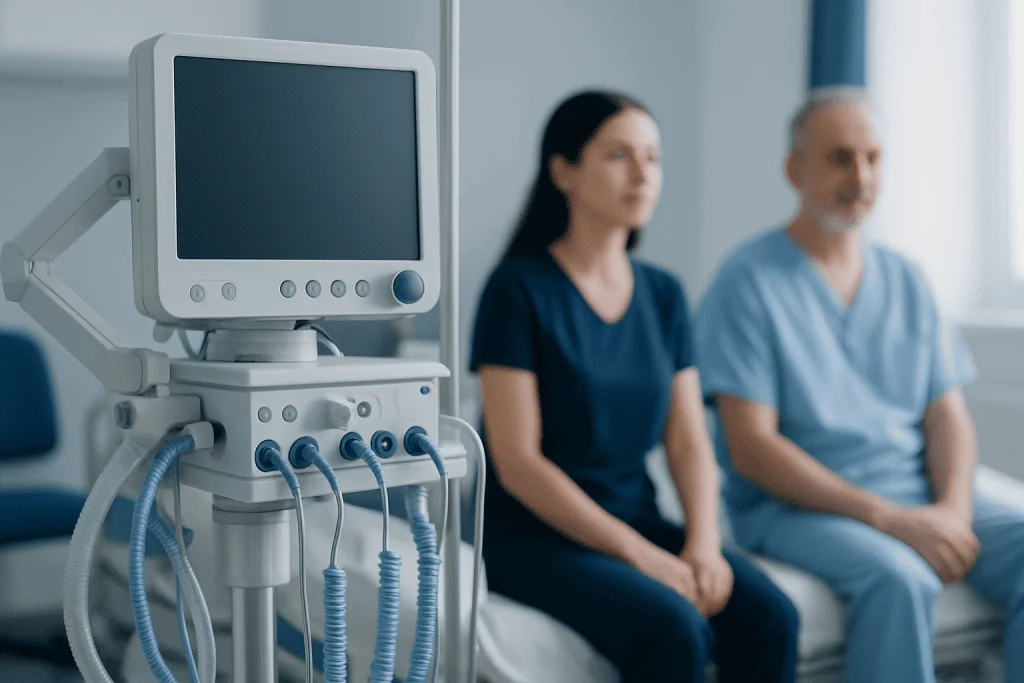
An outpatient pathway is usually proposed when the procedure is less invasive, recovery is expected to be straightforward, and you can leave safely after a period of observation. Common examples include certain endoscopic procedures, minor surgeries, diagnostic interventions and some image-guided procedures. You arrive, have the procedure, recover under monitoring, and are assessed against discharge criteria before you leave.
An inpatient stay is recommended when you are likely to benefit from longer monitoring, nursing care, intravenous treatment, structured pain management, mobility support, or repeated checks after the procedure. This is more common after major surgery, complex interventions, operations under general anaesthesia, or when existing medical conditions make recovery less predictable.
Sometimes the answer is obvious from the start: a major joint replacement will not be a day case, and a routine diagnostic endoscopy will rarely need a hospital bed. Between those poles sits a large middle ground where the same procedure can go either way depending on the patient. That is why the recommendation is personal, and why the plan can shift. Doctors may plan outpatient care and then advise an overnight stay if the procedure becomes more extensive than expected, if a symptom needs watching, or if your immediate recovery is simply slower than planned. That change of plan is not a failure; it is the system working as designed.
Who suits which pathway

Outpatient treatment tends to fit patients who are having a lower-risk procedure, are medically stable, can mobilise safely afterwards where that matters, and are likely to recover well with rest at a hotel or residence. It also assumes you understand your aftercare instructions and have support available after discharge — someone to be with you, and somewhere comfortable to stay.
Inpatient care tends to fit patients with significant heart, lung, metabolic or bleeding-related conditions, patients having more complex procedures, and anyone the doctor expects to need closer observation. If pain control, drains, wound checks, nutrition, mobility or medication adjustment are likely to need professional attention in the first days, a hospital stay is usually the sounder plan.
For international patients, suitability is never purely medical. If you are travelling alone, staying far from the hospital, or hoping to fly home very soon after treatment, your care team may recommend the more cautious pathway. The shortest option is not automatically the best one. When you are choosing between outpatient and inpatient treatment in Turkey, the honest question is not “which is quicker?” but “which one still works if my recovery is slower than average?”
The three settings in practice
In practice there are three arrangements, not two:
- Outpatient care. You come in for the procedure, recover in a monitored area, and return to your accommodation the same day once you meet discharge criteria.
- Short-stay observation. A middle option, used when the doctor wants several extra hours of monitoring or a single overnight stay without a longer admission. Many day-case decisions land here when there is any doubt. The differences are covered in more detail in our guide to choosing between inpatient and day-case treatment in Turkey.
- Inpatient admission. One or more nights in hospital, common after major surgery, procedures involving drains or catheters, cases needing repeat blood tests or imaging, or situations where pain, nausea, mobility or fluid balance should be watched closely.
Admission can also be planned or unplanned. Planned admission is arranged in advance from your treatment type and health profile. Unplanned admission happens when an outpatient procedure runs longer than expected, anaesthesia recovery is slow, or the doctor judges that extra observation is the safer course. Your travel plan should leave room for this possibility even when it is unlikely.
The same procedure name can sit in different settings across specialties. Orthopaedic, general surgery, gynaecology, urology, ENT, cardiology, gastroenterology, oncology and interventional radiology procedures can all be done as day care or inpatient care depending on complexity. Only a physician evaluation can match the setting to your specific case.
Online evaluation before travel
Before you travel, the medical team can often make a preliminary assessment from your records: recent test results, imaging, previous operative notes, medication details and a summary of your symptoms and goals. This gives an early indication of whether outpatient or inpatient care is more likely — useful information before you commit to flights — although the final decision is confirmed after in-person examination.
For some specialties, photographs, scan reports and pathology results are especially informative. Chronic conditions such as diabetes, heart disease, sleep apnoea or a bleeding tendency are worth documenting early, because they are exactly the kind of factor that moves a case from day surgery towards admission. The more complete the picture before you travel, the fewer surprises after you arrive.
Acibadem’s international patient services coordinate this review, including translation support where needed, so the relevant specialist team sees your information in usable form before your trip is planned.
Before the treatment
Once treatment is being planned, expect pre-assessment forms and a detailed medical history: current symptoms, previous procedures, medications, allergies, chronic illnesses, and any past problems with anaesthesia. Depending on your age, background and procedure, you may also need blood tests, an ECG, imaging, specialist clearance or an anaesthesia review. These checks decide two things at once: whether the treatment is suitable, and whether same-day discharge is realistic.
If outpatient care is on the table, plan the practical side in advance. Arrange a companion where advised, avoid being alone immediately after anaesthesia, choose accommodation reasonably close to the hospital, and do not book a return flight tight against the procedure date. It also helps to arrive at your consultation with questions ready — our patient decision checklist of questions to ask before surgery in Turkey covers the ones that matter most, including length of stay and fitness to fly.
What happens on the day
The procedure itself is the same whichever setting is chosen; what changes is how care is organised around it. In outpatient care, you are admitted for the procedure, monitored in recovery, assessed by the clinical team, and discharged once you are stable, comfortable and able to follow your instructions safely.
In inpatient care, the day begins similarly, but afterwards you are transferred to your room for continued nursing observation and doctor review. Monitoring may include vital signs, pain control, wound or drain checks, fluid intake, mobilisation and repeat tests where needed.
One principle applies across both: discharge timing follows medical criteria, not convenience. If closer observation becomes necessary, the plan changes, and the team will explain why.
Hospital stay and discharge
As an outpatient, discharge usually follows a recovery period once you are alert, stable, able to drink where appropriate, and your symptoms are controlled. You leave with written instructions covering medications, wound care, activity, bathing, eating, warning signs and your next review.
As an inpatient, length of stay depends on the procedure and your progress. Some patients stay one night for observation; others need several days for pain control, wound care, mobility support or specialist review, with the discharge plan updated daily. If a hospital stay is likely, it is worth reading what happens from admission to discharge during an inpatient stay in Turkey and what to bring for an inpatient stay before you pack.
One point deserves emphasis for travellers: discharge is not the same as fitness to fly. You may still need to remain in Turkey for follow-up visits, dressing changes, repeat tests or surgeon clearance. Build that period into your plan from the start rather than treating it as a delay.
Recovery timeline
Recovery varies widely with the treatment, the anaesthesia and your general health. Outpatient care gets you back to your accommodation sooner, but that does not mean overall recovery is faster. Inpatient care can feel slower at first because it includes more observation, yet for some procedures it is the smoother route. Your doctor will give you a personal timeline; the outline below is a general comparison only.
| Timeframe | What to expect |
|---|---|
| First 24 hours | Monitoring for pain, nausea, bleeding, dizziness, mobility and anaesthesia recovery. Outpatients are discharged if stable; inpatients remain under observation. |
| First week | Rest, medication as prescribed by your doctor, reduced activity, and early follow-up if needed. Some swelling, fatigue or discomfort can be normal depending on the procedure. |
| Weeks 2–4 | Gradual return to routine for many minor or moderate procedures. Some patients still need restrictions, dressings, wound review or rehabilitation. |
| Months 1–3 | Steadier healing and improving comfort for many treatments. Functional recovery continues, particularly after larger operations or orthopaedic procedures. |
| Final result | Depends on the treatment. Some results are immediate; others become clear only after healing is complete and follow-up assessment is done. |
Your medical timeline and your travel timeline have to be planned as one. Even after a smooth outpatient procedure, your team may advise a short local stay before flying, especially where mobility, bleeding risk or comfort during a long flight is a consideration.
What to avoid after treatment
Same-day discharge does not mean no restrictions. Depending on your procedure, you may be asked to avoid driving, alcohol, smoking, heavy lifting, strenuous exercise, swimming or certain foods for a period. Any question about your medications belongs to your treating doctor — do not adjust them on your own initiative.
If you had sedation or general anaesthesia, avoid making important decisions, signing significant documents or travelling alone in the hours afterwards. If your treatment involved an incision, catheter, injection site or internal healing, follow the wound and activity instructions carefully even if you feel well — feeling well and being healed are not the same thing in the first days.
The most consequential thing to avoid is changing travel plans without medical approval. Flying home early, skipping a follow-up or taking a long flight before your doctor considers it appropriate can undermine an otherwise straightforward recovery.
Risks and possible complications
Both settings carry the general risks of the procedure itself, the anaesthesia and your underlying health: pain, nausea, dizziness, bleeding, infection, delayed healing, medication reactions and procedure-specific complications. No setting removes these.
Outpatient care adds practical risks if discharge happens without adequate support, clear instructions or access to follow-up. Inpatient care reduces some of those concerns through monitoring, but it is not a shield against medical risk. The right setting is the one that best balances safety, comfort and recovery needs for your case — which is why honest pre-assessment matters more than preference.
Some patients recover more slowly than expected after a routine procedure; others need extra tests, a longer stay or a revised plan. Discharge paperwork will set out, in writing, which symptoms are expected after your specific treatment and which are not, so you know what your own recovery should look like. Ask your treating team to walk you through those instructions before you leave — they are written for your procedure, not for procedures in general.
Results and expectations
The point of getting this decision right is a safer, smoother recovery. A shorter stay is not automatically better, and a longer stay is not a sign that something has gone wrong. Many patients prefer outpatient care for its convenience and the comfort of familiar surroundings; others value the reassurance and supervised recovery of an inpatient stay. Doctors generally aim for the least restrictive option that remains medically appropriate.
Keep expectations flexible. Recovery speed, comfort and final results vary between people. Plans are sometimes adjusted after in-person assessment or after the procedure itself, and occasionally further treatment or longer follow-up is needed. Building slack into your schedule costs little; needing slack you did not build in costs a lot.
Travel planning around the decision
For anyone choosing between outpatient and inpatient treatment in Turkey, the decision touches almost every line of the itinerary: pre-operative tests, the treatment day, possible overnight monitoring, follow-up visits, and the point at which flying home is sensible. Even a planned outpatient procedure deserves buffer days — delays, extra tests or a need for additional observation are all possible. For complex treatments, an inpatient stay is planned from the start, typically followed by hotel nights nearby before travel clearance.
Two related questions are worth settling early. First, whether your treatment fits into a single visit or is better split across two — see choosing between a one-trip and two-trip treatment plan in Turkey. Second, what to do with the gaps in your schedule once you are here — our guide to managing time between appointments in Turkey during treatment covers that. Acibadem’s international coordinators, interpreters and transfer arrangements exist to keep this pathway structured rather than improvised.
Cost: what changes the picture
The total cost of any treatment depends on the specialty involved, the complexity of the procedure, whether it is outpatient or inpatient, the type of anaesthesia, pre-operative testing, imaging, pathology, implants or devices where relevant, and the length of stay. Outpatient care involves fewer stay-related items; inpatient care includes room charges, nursing care, monitoring and a broader range of hospital services. That does not make outpatient care the lower overall option in every case, because the setting follows medical need, not the other way round.
A quotation commonly covers the main procedure, standard hospital services and care directly related to the planned treatment. It may or may not include extra nights, additional specialist consultations, unexpected tests, treatment for unrelated issues, companion expenses, flights, visas or hotel accommodation. Read any quotation for three things: what is included, what is excluded, and which situations would change it. Those three answers matter more than any single figure.
Why choose Acibadem
When you are weighing outpatient against inpatient care in another country, coordination matters as much as clinical expertise. At Acibadem, your evaluation involves the relevant specialist, anaesthesia review where needed, and a practical discussion of recovery, follow-up and travel timing — so the treatment pathway is set against your real circumstances, not an idealised schedule.
International patient services provide interpreter assistance, transfers, accommodation guidance and remote follow-up communication after you return home. The aim is a journey that is clear, well-organised and medically responsible from first contact to final follow-up.
Medical review and disclaimer
This guide has been medically reviewed by the Acibadem International medical team. It provides general information for international patients planning treatment in Turkey who want to understand how outpatient and inpatient decisions are made.
It does not replace a personal consultation, physical examination or physician-led review of your records. Not every procedure is suitable for outpatient care, and no two inpatient recommendations are identical. Your diagnosis, treatment setting, length of stay and travel clearance are always determined by the treating physician based on your condition, test results, medical history and recovery progress.
Step by step
- Initial contact. You get in touch with your treatment request, symptoms, diagnosis if known, and travel goals.
- Medical record submission. You share relevant reports, imaging, medication details and previous procedure notes for preliminary review.
- Preliminary medical review. The relevant team assesses your information and gives an initial view on suitability and whether outpatient or inpatient care is more likely.
- Treatment plan and quotation. You receive a proposed care plan, the likely stay type, expected follow-up needs and a quotation based on the available information.
- Travel planning. Flights, accommodation, companion arrangements and local timing are planned around your estimated tests, treatment date and recovery period.
- Arrival. Your local schedule is confirmed and you are guided through the next steps.
- In-person consultation. Your doctor examines you and finalises the treatment plan, expected recovery and care setting.
- Pre-operative tests. You complete any required blood tests, imaging, cardiac checks, anaesthesia review or specialty evaluations.
- Treatment. The procedure is performed in the planned setting with monitoring appropriate to the treatment and anaesthesia used.
- Hospital stay. If needed, you stay for observation, nursing care, pain control and doctor review until discharge criteria are met.
- First control. An early follow-up check assesses recovery and confirms the next steps.
- Discharge and travel clearance. You receive discharge instructions and, when appropriate, advice about when returning home is sensible.
- Remote follow-up. After you return home, your team can continue follow-up remotely and advise if further review is needed.
Your checklist
- Passport copy
- Medical history summary
- Current medication list
- Known allergies
- Details of previous surgeries or procedures
- Description of current symptoms and diagnosis if available
- Recent blood tests or other relevant results
- Relevant imaging and reports, such as MRI, CT, ultrasound, X-ray or endoscopy findings
- Pathology reports if relevant
- Anaesthesia-related history, including any past reactions
- Companion details if someone will travel with you
- Questions about length of stay, follow-up and fitness to fly
Key takeaways
- The setting is decided by your treatment, anaesthesia, medical history, recovery needs and travel circumstances — together, not separately.
- Outpatient care means same-day discharge after monitored recovery; inpatient care means overnight hospital observation for one or more nights.
- Discharge is not the same as fitness to fly; international patients often stay in Turkey for follow-up even after outpatient treatment.
- Plans can change on the day — an unplanned overnight stay is a safety measure, not a setback.
- A proper physician evaluation is always required before the care pathway is confirmed.
Frequently asked questions
What is the difference between outpatient and inpatient treatment?
Outpatient treatment means you have your procedure and leave the hospital the same day after a monitored recovery period. Inpatient treatment means you stay at least one night so doctors and nurses can observe your recovery more closely.
How do doctors decide whether I need an overnight stay?
The decision rests on the procedure, the type of anaesthesia, your medical history and how much monitoring you are likely to need afterwards. Age, chronic conditions, mobility, pain control and your travel circumstances can all shift the recommendation.
Can a treatment planned as outpatient become inpatient later?
Yes. A procedure may take longer than expected, recovery from anaesthesia may be slower, or a symptom may need observation. In those situations an overnight stay or admission is recommended for safety, and travel plans should leave room for this.
Will I know before I travel whether I need to stay in hospital?
Often a preliminary plan can be made from your records before you travel, which helps with booking flights and accommodation. The final decision is confirmed after in-person consultation, examination and any required pre-treatment tests.
Is outpatient treatment always easier or better?
No. Outpatient care is convenient for suitable cases, but inpatient care can be the sounder and more comfortable choice for complex procedures or for patients who need closer monitoring. Neither setting is inherently superior; each fits different situations.
How long should I stay in Turkey after treatment?
There is no single answer, because it depends on your procedure, your recovery and the follow-up plan. Some patients need only a short local stay; others should remain longer for checks, dressings, tests or travel clearance. Your treating team advises on timing.
What if I am travelling alone?
Travelling alone does not automatically prevent treatment, but it affects planning. For procedures involving sedation or general anaesthesia, your team may advise a companion, accommodation close to the hospital, or a more cautious recovery pathway.
Does inpatient treatment mean my condition is serious?
No. An inpatient stay usually reflects the nature of the procedure and the need for observation rather than the severity of your condition. It is often simply the most appropriate way to support your recovery.
Add us as a Preferred Source to see more of our trusted health content across Google Search, AI Overviews and Discover.

Update history
- PublishedJuly 8, 2026
- Medical review approvedSeptember 1, 2026
- Last content updateSeptember 1, 2026
References3
- Having an operation (surgery) — NHS — nhs.uk
- Surgery — MedlinePlus — medlineplus.gov
- Medical Tourism — CDC Travelers' Health — wwwnc.cdc.gov
More Patient Guides

HoLEP in Turkey: How It Compares With TURP and What Recovery Involves
HoLEP in Turkey treats enlarged prostate tissue with laser enucleation; learn how it compares with TURP, recovery, travel and follow-up.
13 min read
Porcelain Veneers in Turkey: Who Is Suitable and How Many Visits Are Needed?
Porcelain veneers in Turkey can enhance tooth shape and colour in two visits for suitable patients after a personalised dental assessment.
14 min read
How to Prepare for a Sedation Procedure in Turkey
Prepare safely for a sedation procedure in Turkey with guidance on fasting, medicines, travel, recovery and follow-up.
12 min read
Treatment Delays in Turkey: What Happens If Tests or Recovery Change Your Schedule
Treatment delays in Turkey can happen if tests or recovery change your plan. Learn how to manage appointments, travel, accommodation and follow-up.
8 min read