

Facelift in Turkey: SMAS, Deep Plane and Mini Facelift Guide

A facelift in Turkey has become a considered option for adults from the United Kingdom, Ireland and North America who want surgical facial rejuvenation performed in a hospital rather than a stand-alone clinic. The procedure, known medically as rhytidectomy, tightens sagging skin and the deeper supporting tissues to reduce visible ageing in the lower face, jawline and neck. It is not a cosmetic treatment in the light-touch sense: it is an operation under general anaesthesia that requires careful planning, a suitable candidate and structured aftercare.
This guide explains what a facelift involves, the differences between SMAS, deep plane and mini facelift approaches, what recovery looks like week by week, and how the pathway compares with private treatment in the UK or the US. It also sets out how Acıbadem organises the journey for international patients, what to ask before you decide, and what to arrange with your own doctor once you are home. Cost is addressed in context, with the verified price band shown further down this page.
What a facelift is and who it suits
A facelift, or rhytidectomy, is a surgical procedure that repositions and tightens the skin and the deeper layers of the face to address sagging in the lower face, along the jawline and in the neck. Unlike injectable treatments, which add volume or relax muscles temporarily, a facelift changes the position of tissue that has descended with age. The result is a firmer contour rather than a different face; the aim is to look rested, not altered.
Who is usually a good candidate
- Adults with visible laxity of the cheeks, jowls or neck who are in good general health.
- Non-smokers, or people willing to stop smoking well before and after surgery, because nicotine impairs skin healing.
- People with realistic expectations who understand that a facelift treats sagging, not skin texture, pigmentation or fine lines on their own.
- Those able to commit to two to four weeks of recovery and to follow-up appointments.
Who should think carefully or not proceed
- Anyone with uncontrolled diabetes, bleeding disorders or heart and lung conditions that make general anaesthesia unsafe.
- People taking blood-thinning medicines that cannot be paused, or with a history of poor wound healing or keloid scarring.
- Those seeking surgery under pressure from others, or during a period of significant emotional stress.
- People whose concerns are mainly about the upper face, forehead or eyelids, for whom other procedures may be more appropriate.
A consultation with a plastic surgeon establishes which category you fall into. The surgical plan is personalised according to skin quality, facial structure and degree of sagging, and part of that assessment is deciding whether a facelift is the right operation at all.
Why UK and US patients travel to Türkiye for a facelift
Patients from the UK and the US rarely travel for a facelift on impulse. The decision usually follows months of research, and certain features of the Turkish hospital system come up repeatedly in their reasoning.
Hospital medicine rather than a clinic setting. In many countries, cosmetic surgery is performed in small day-surgery units. In Türkiye, Acıbadem performs facelifts inside full hospitals, with anaesthesia teams, intensive care units, blood banks and imaging departments on the same site. For an operation lasting up to five hours under general anaesthesia, that infrastructure matters.
Independent accreditation. Seven Acıbadem hospitals hold Joint Commission International accreditation, within a network of more than 20 hospitals and 3,300 or more physicians. JCI accreditation is an international standard for patient safety, infection control and clinical governance, and it is audited rather than self-declared.
Experience with international patients. The group runs a dedicated international patient service. English-speaking coordinators manage records, appointments and translation, so a patient from Manchester or Boston is not navigating an unfamiliar system alone.
No waiting list. Cosmetic surgery is not available through the NHS, and private clinics in the UK and the US often schedule popular surgeons months ahead. In Istanbul, once the medical review is complete, surgery can typically be arranged within weeks.
Accessibility. Istanbul is around four hours by air from London and roughly ten hours from New York, with direct flights from many cities. Recovery in a hotel near the hospital is straightforward, and the city offers a comfortable environment for a companion.
Cost is part of the picture, and it is addressed honestly in the comparison section below; the verified price band appears further down the page. What most patients say afterwards is that the deciding factor was confidence in the hospital, not the figure alone.
How a facelift in Turkey works with Acıbadem, step by step
The pathway is designed so that clinical decisions are made before you travel, and so that nothing is rushed on arrival.
- Remote medical review. You submit a medical history, current medications, recent photographs taken in natural light and any previous surgical records. A plastic surgeon reviews them and confirms whether you appear to be a candidate, and which technique may suit you.
- Personal treatment plan. Your coordinator sends a written plan: the proposed procedure, expected duration, hospital stay, recommended length of stay in Istanbul and a personal quote following the free medical review.
- Arrival and coordinator. You are met at the airport and taken to your hotel. Your coordinator remains your single point of contact throughout, including out of hours.
- Consultation and pre-operative tests. You meet the surgeon in person for a detailed facial assessment, a review of your medical history and a frank discussion of expectations. Blood tests and an anaesthesia evaluation are carried out in the hospital. You will have been advised beforehand to stop smoking and to avoid blood-thinning medicines or supplements.
- The operation. Surgery takes place under general anaesthesia and lasts two to five hours depending on technique and extent. You stay the same day or one night, monitored by nursing staff.
- Recovery in Istanbul. Follow-up visits for dressing changes and suture checks are scheduled over the following days. Your coordinator arranges transport and can contact the surgical team if anything concerns you.
- Follow-up after returning home. Before departure you receive a discharge summary, operative notes and aftercare instructions in English. Remote check-ins with the surgical team continue, and you are encouraged to register the surgery with your GP or own doctor.
At every stage you can pause. The consultation in Istanbul is a genuine assessment, not a formality, and surgeons do decline to operate when the in-person examination changes the picture.
SMAS, deep plane and mini facelift: the procedure explained
All facelifts share a common principle: sagging skin and the deeper supporting tissues are repositioned and tightened to restore definition to the lower face, jawline and neck. The differences lie in how deeply the surgeon works and how extensive the lift is. The surgical plan is personalised according to skin quality, facial structure and degree of sagging, so the technique is chosen for you rather than selected from a menu.
SMAS facelift
The SMAS is the superficial musculoaponeurotic system, a layer of connective tissue beneath the skin. In a SMAS facelift the surgeon tightens or repositions this layer as well as the skin, which gives more durable support than pulling on skin alone.
Deep plane facelift in Turkey
A deep plane facelift releases the tissues beneath the SMAS layer and moves the skin and deeper tissue together as one unit. Surgeons who favour this approach use it for patients with more pronounced descent of the cheeks and jowls. It is technically more demanding and forms part of the longer end of the two-to-five-hour range.
Mini facelift in Turkey
A mini facelift uses shorter incisions and a more limited area of tightening, usually focused on the jawline and lower cheeks. It suits people with early, mild sagging and generally sits at the shorter end of the operating time. It is not a lesser operation in terms of care: it is still performed under general anaesthesia in a hospital.
Anaesthesia, duration and hospital stay
- Anaesthesia: general.
- Duration: 2 to 5 hours.
- Hospital stay: same day or one night.
- Recovery: 2 to 4 weeks.
Incisions are typically placed within the hairline and around the ear so that they are discreet once healed. Your surgeon will explain exactly where yours will be.
Recovery and aftercare timeline
Recovery from a facelift is gradual and follows a broadly predictable pattern. Swelling, bruising and a feeling of tightness are expected and improve steadily over the first weeks. Knowing what is normal helps you avoid unnecessary worry and recognise when something needs attention.
First 48 hours
You wake from general anaesthesia in the recovery area and are monitored before returning to your room or being discharged the same day. A soft dressing supports the face. Discomfort is managed with prescribed medication. You should keep your head elevated, including while sleeping, and rest.
Days 3 to 7
Swelling and bruising usually peak and then begin to subside. Follow-up visits are scheduled for dressing changes and suture checks. Gentle walking is encouraged; strenuous activity, bending and lifting are not. Incisions should be kept clean and protected as instructed.
Week 2
Most patients feel well enough to travel home at this point, and many have their remaining sutures removed before departure. Bruising can be covered with make-up once the surgical team confirms the incisions have sealed. Numbness and tightness are common and expected.
Weeks 3 to 4
Desk-based work and social activities are generally possible. Residual swelling continues to settle. Exercise is reintroduced gradually according to your surgeon’s advice.
Months 2 to 6
Final refinement of facial contour continues for several months as swelling fully resolves and scars mature and fade.
Practical aftercare points
- Sleep with the head raised for the first weeks.
- Avoid smoking and alcohol throughout recovery.
- Protect incisions from sun exposure.
- Attend every scheduled follow-up, in person or remotely.
- Report increasing pain, one-sided swelling, fever or wound discharge promptly.
What it costs: UK, US and Türkiye
Typical self-pay ranges from the Turkey Medical Price Index. Türkiye figures are guide ranges for hospital treatment; your personal quote follows a free medical review.
Source: Turkey Medical Price Index (quarterly edition). Ranges depend on the extent of treatment, materials and hospital stay; they are not a quote.
Safety and risks
A facelift is a well-established operation, but it is major surgery under general anaesthesia and carries risks that deserve plain description.
Who is not suitable
Patients with uncontrolled medical conditions, bleeding disorders, active smoking they cannot stop, or unrealistic expectations are generally advised against surgery. The pre-operative anaesthesia evaluation exists precisely to identify people for whom the risk is too high.
Complications
- Haematoma (a collection of blood under the skin), the most common early complication, which may need surgical drainage.
- Infection of the incisions.
- Nerve injury, usually temporary weakness or numbness, occasionally permanent.
- Skin necrosis, more likely in smokers, where a patch of skin heals poorly.
- Visible or thickened scarring, hairline distortion or earlobe shape changes.
- Asymmetry or a result that does not match expectations.
- Anaesthetic complications, rare but serious.
What cases that go wrong abroad usually share
When cosmetic surgery abroad ends badly, the same features appear repeatedly: a decision made quickly on price, no proper medical review before travel, surgery in a facility with no intensive care or emergency backup, discharge to a hotel with no follow-up plan, and a flight home before complications could be detected. Often no one on the home side was told the surgery had happened.
How a hospital setting changes that
In a JCI-accredited hospital, the anaesthesia team, intensive care and a blood bank are on site. A haematoma at midnight is treated by the same surgical team, not by an emergency department miles away. Follow-up visits are built into the stay, and you leave with written records for your own doctor. None of this eliminates risk; it makes complications manageable when they occur.
UK and US vs Türkiye: how the facelift pathway compares
Comparing a facelift at home with one in Türkiye is not simply a matter of price. The pathways differ in structure, and understanding those differences helps you compare like for like.
Waiting and access
In the UK, a facelift is not available on the NHS, so all patients are self-paying in the private sector. In the US, cosmetic surgery is likewise excluded from most insurance. Sought-after surgeons in London or New York may have waiting times of several months. In Istanbul, scheduling is typically measured in weeks.
Aftercare
At home, follow-up is local and open-ended. Abroad, the intensive early follow-up happens in Istanbul, and later reviews are remote or shared with your own doctor. That is workable for most patients, but it does require you to stay long enough for the early checks and to keep in contact afterwards.
Travel
Travelling adds a flight of around four hours from London or ten from New York, a hotel stay and, ideally, a companion. These are real costs in time and organisation.
What facelift cost in Turkey does and does not mean
The lower cost of surgery in Türkiye reflects lower salaries, lower property and staffing overheads and a different pricing structure. It does not reflect different sutures, anaesthetic agents, implants or operating theatre standards; the materials and equipment used in accredited Turkish hospitals are the same internationally sourced products used in the UK and the US. The verified price band below shows the UK, US and Türkiye ranges side by side; a personal quote follows a free medical review.
Compare like for like
- Hospital or day clinic, and whether intensive care is on site.
- Surgeon’s qualifications and how often they perform facelifts.
- What the fee includes: anaesthesia, hospital stay, follow-up, transfers.
- How complications and revisions are handled.
Planning the trip to Istanbul
Good planning removes most of the stress from treatment abroad. The following points cover what UK, Irish, US, Canadian and Australian patients typically need to arrange.
Passport and entry
UK, Irish, US, Canadian and Australian passport holders enter Türkiye visa-free for up to 90 days. Rules can change, so check current requirements with your government’s travel advice before booking. Your passport should be valid for the whole stay with the margin your government recommends.
How long to stay
Most facelift patients remain in Istanbul for about one to two weeks. This covers the pre-operative consultation and tests, the operation, the same-day or one-night hospital stay, and the follow-up visits for dressings and suture checks. Your surgeon may recommend longer if the operation is extensive. Do not book a return flight that forces you to leave before the team is satisfied.
Companion
Bringing a partner, friend or family member is strongly advised. You will need help in the first days after surgery, and a companion provides reassurance and a second set of ears at appointments. Hotels near the hospital are used to hosting patients and their companions.
Travel insurance
Standard travel insurance excludes planned medical treatment. Look for a specialist policy that covers elective surgery abroad, including complications and, if needed, medical repatriation. Read the exclusions carefully.
What to bring
- Passport, flight details and your written treatment plan.
- A list of medications and allergies, and any relevant medical records.
- Loose, front-fastening clothing and slip-on shoes.
- Sunglasses, a wide-brimmed hat and a scarf for discretion after surgery.
- Any prescribed medicines you take regularly, in their original packaging.
- A phone with roaming or a local SIM so your coordinator can reach you.
Back home: follow-up, records and your own doctor
Returning home does not mean the end of care. Recovery continues for two to four weeks overall, and refinement of the result carries on for months. A few simple steps keep that period safe.
Follow-up with your GP or own doctor
Tell your GP or family doctor that you have had surgery, ideally before you travel and certainly on return. Give them the discharge summary and operative notes you received in Istanbul. This is not about seeking approval; it ensures that anyone treating you later knows what was done and by whom.
Sharing records
Acıbadem provides documentation in English, including the anaesthesia record, operative report and aftercare instructions. Keep digital and paper copies. Remote follow-up with the surgical team continues after you leave, and photographs at agreed intervals help them monitor healing.
When to seek help
Contact your coordinator or seek local medical care if you notice increasing rather than decreasing pain, sudden one-sided swelling, fever, wound redness or discharge, new facial weakness, or calf pain and breathlessness after the flight. Do not wait for a scheduled check-in if something feels wrong.
Insurance, NHS and your own doctor
Private medical insurance in the UK and the US rarely covers elective cosmetic treatment abroad or its consequences; check your policy wording. In the UK, the NHS will treat complications as it would for any other patient, but it does not provide routine cosmetic follow-up or revision surgery. Speak to your GP about what they can and cannot offer. US readers should note that HSA and FSA eligibility for cosmetic surgery is limited and that travel-medical policies vary widely in what they cover, so confirm in writing before relying on them.
Questions to ask before deciding on a facelift in Turkey
A good decision rests on good questions. Use this checklist in your remote review and again at the in-person consultation. Clear, specific answers are a positive sign; vague ones are a reason to pause.
About the surgeon and hospital
- Is the surgeon a board-certified plastic surgeon, and how often do they perform facelifts?
- Will the operation take place in a hospital with an intensive care unit on site?
- Is the hospital independently accredited, and by whom?
- Who administers the anaesthesia, and will I meet them beforehand?
About the procedure
- Which technique do you recommend for me, and why: SMAS, deep plane or mini facelift?
- Where will the incisions be, and how will scars be managed?
- What are the specific risks in my case, given my medical history?
- What can this operation not achieve for me?
About the stay and aftercare
- How long should I remain in Istanbul, and how many follow-up visits are planned?
- Who do I contact at night or at the weekend if I am worried?
- What happens if a complication occurs while I am still in Türkiye, and what if it occurs after I return home?
- What records will I take home, and in which language?
About the cost
- What exactly does the quote include: hospital stay, anaesthesia, medication, transfers, follow-up?
- What would generate additional charges?
- How does the quote relate to the published price band?
Take time with the answers, discuss them with your own doctor and with the people close to you, and do not feel obliged to proceed on any particular timetable. Ultimately, whether a facelift is appropriate for you is determined by a physician’s evaluation.
Is a facelift in Turkey safe?
Facelift surgery carries the same medical risks wherever it is performed: haematoma, infection, nerve injury and scarring among them. What changes the safety picture is the setting. Surgery in a JCI-accredited hospital with anaesthesia, intensive care and imaging on site, preceded by proper medical review and followed by structured aftercare, is a very different proposition from a quick procedure in a stand-alone clinic.
What is the difference between a deep plane facelift and a SMAS facelift?
A SMAS facelift tightens the connective tissue layer beneath the skin as well as the skin itself. A deep plane facelift works beneath that layer, releasing and repositioning the skin and deeper tissue together as one unit. Deep plane techniques are usually chosen for more pronounced sagging and sit at the longer end of the two-to-five-hour operating range. Your surgeon recommends the approach based on your facial structure and degree of laxity.
Who is a mini facelift in Turkey suitable for?
A mini facelift uses shorter incisions and a more limited area of tightening, typically focused on the jawline and lower cheeks. It suits people with early, mild sagging who do not need a full neck lift. It is still performed under general anaesthesia in a hospital, and recovery follows the same principles, though the extent of swelling is often less.
How long does facelift recovery take?
Recovery typically takes two to four weeks. Swelling and bruising peak in the first week and then subside, most patients travel home after one to two weeks, and desk-based work is usually possible by week three or four. Final refinement of facial contour continues for several months as residual swelling resolves and scars mature.
How long do I need to stay in Istanbul after a facelift?
Most patients stay around one to two weeks. This allows for the pre-operative consultation and tests, the surgery itself with a same-day or one-night hospital stay, and the follow-up visits for dressing changes and suture checks. Your surgeon confirms the recommended length of stay in your personal plan; avoid booking a return flight that cuts this short.
How much does a facelift cost in Turkey?
The verified UK, US and Türkiye price band is shown further down this page. The lower cost in Türkiye reflects lower salaries and overheads rather than different materials or standards. A personal quote follows a free medical review, and you should confirm exactly what it includes: hospital stay, anaesthesia, medication, transfers and follow-up.
Will my GP or insurance cover follow-up after a facelift abroad?
Private medical insurance in the UK and the US rarely covers elective cosmetic surgery abroad or its aftercare, so check your policy wording. In the UK, the NHS treats complications as it would for any patient but does not provide routine cosmetic follow-up. Tell your GP about the surgery and share your records; specialist travel-medical policies that cover planned treatment are worth considering.
Do I need a visa to travel to Türkiye for surgery?
UK, Irish, US, Canadian and Australian passport holders currently enter Türkiye visa-free for up to 90 days, which comfortably covers a facelift stay. Entry rules can change, so check your government's travel advice before booking. Ensure your passport is valid for the whole trip with the margin recommended by your government.
Your care team
Physicians of the Acıbadem network who perform this treatment in Istanbul.
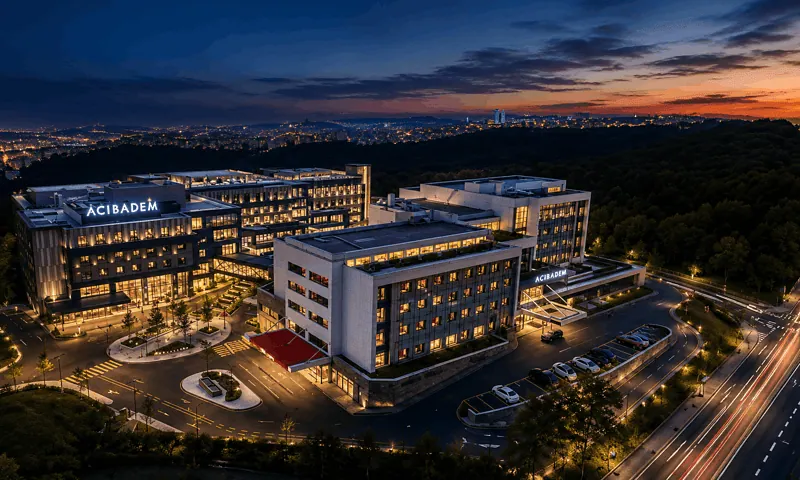 Where it is performed Acibadem Maslak Hospital İstanbul · JCI-accredited hospitals
Clinical guide & data
The evidence-based pages behind this guide.