Bladder Cancer: Blood in Urine and Diagnostic Evaluation

Blood in the urine is the most common warning sign of bladder cancer, but it can also result from infections, stones, prostate conditions, or other causes. Visible or repeated microscopic blood in urine should be assessed by a qualified doctor, especially in adults and people with risk factors such as smoking history.
Key Takeaways
- Blood in the urine is the most common warning sign of bladder cancer, but it can also result from infections, stones, prostate conditions, or other causes.
- Visible or repeated microscopic blood in urine should be assessed by a qualified doctor, especially in adults and people with risk factors such as smoking history.
- Cystoscopy is a key test because it allows the urologist to inspect the bladder lining and take a biopsy if needed.
- Treatment depends on the tumor type, grade, stage, and the patient’s overall health, and may include surgery, intravesical therapy, chemotherapy, immunotherapy, radiation therapy, or a combination.
- Follow-up is important because some bladder cancers can recur, and regular surveillance helps detect changes early.
Bladder cancer often first comes to attention because of blood in the urine, a symptom that should always be medically evaluated even when it comes and goes. Diagnosis usually involves urine tests, imaging, and cystoscopy to look directly inside the bladder and confirm the cause.
Overview
Bladder cancer is a disease in which abnormal cells grow in the lining or wall of the bladder, the organ that stores urine before it leaves the body. Most bladder cancers begin in the urothelial cells, which line the inside of the bladder and other parts of the urinary tract. When detected early, many bladder cancers are treatable, and timely evaluation plays an important role in planning care.
One of the most common reasons people are evaluated for bladder cancer is blood in the urine, medically called hematuria. The urine may look pink, red, tea-colored, or cola-colored, or the blood may be so small in amount that it is only found on a urine test. Importantly, blood in the urine may appear once, disappear, and then return later; this pattern should not be ignored.
Hematuria does not automatically mean cancer. Urinary tract infections, kidney stones, an enlarged prostate, kidney disease, trauma, strenuous exercise, and some medications can also cause blood in the urine. However, because bladder cancer is one of the important possible causes, a structured diagnostic evaluation helps identify the reason and guide the right treatment.
Symptoms of Bladder Cancer
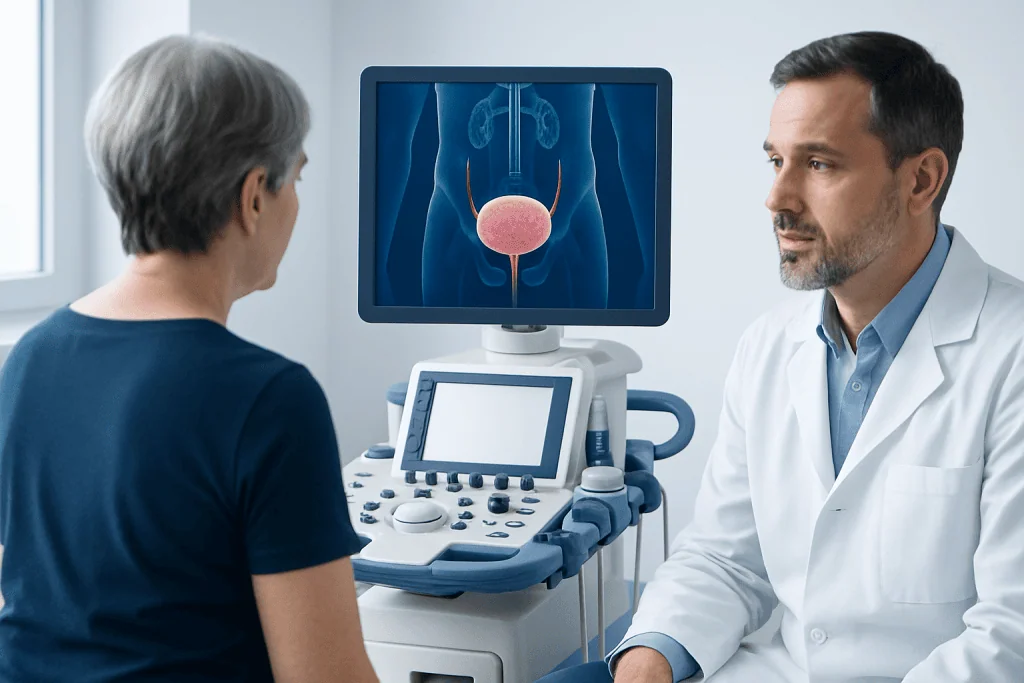
The main symptom associated with bladder cancer is blood in the urine, often without pain. Some people notice obvious discoloration, while others feel well and learn about microscopic hematuria during routine testing. Because bleeding may be intermittent, a normal-looking urine sample after a previous episode does not always rule out a bladder problem.
Bladder cancer can also cause urinary symptoms that resemble an infection or bladder irritation. These symptoms may include a frequent need to urinate, urgency, burning or discomfort during urination, waking at night to urinate, or feeling unable to empty the bladder completely. When these symptoms do not improve with usual treatment, further assessment may be recommended.
In more advanced cases, symptoms may include pelvic discomfort, lower back pain on one side, swelling in the legs, loss of appetite, fatigue, or unintentional weight loss. These symptoms can occur for many reasons and are not specific to bladder cancer, but they should be discussed with a doctor, especially when they persist or occur together with hematuria.
Causes and Risk Factors

Bladder cancer develops when cells in the bladder lining acquire changes that allow them to grow in an uncontrolled way. The exact cause is not always known, and many people with bladder cancer cannot identify a single reason why it occurred. Still, several risk factors are well recognized and can help doctors decide how urgently and thoroughly to investigate urinary symptoms.
Smoking is one of the most important risk factors because harmful substances in tobacco can be filtered by the kidneys and stored in the urine, where they may affect the bladder lining. Occupational exposure to certain chemicals, particularly in industries involving dyes, rubber, leather, textiles, paints, or petroleum products, may also increase risk, especially when exposure is prolonged or protective measures are limited.
Other risk factors include increasing age, male sex, previous bladder cancer, a history of certain cancer treatments, long-term bladder inflammation, some inherited conditions, and exposure to arsenic in drinking water in certain regions. People with risk factors should not assume that urinary symptoms are harmless, but they also should not panic; the right next step is medical evaluation.
Diagnostic Evaluation: What Tests May Be Used
The evaluation usually begins with a medical history, physical examination, and urine testing. The doctor may ask about visible blood, urinary frequency, pain, infections, smoking history, occupational exposures, medications, and previous urinary tract conditions. A urinalysis can confirm blood and look for signs of infection, while urine culture may be used if infection is suspected.
Urine cytology may be recommended in selected cases. This test examines urine under a microscope to look for abnormal cells shed from the urinary tract lining. It can be helpful for detecting some higher-grade cancers, but a normal result does not always exclude bladder cancer, so it is usually interpreted alongside other tests rather than used alone.
Imaging helps evaluate the kidneys, ureters, and surrounding structures. Depending on the situation, doctors may request ultrasound, CT urography, MRI, or other imaging tests. These tests can look for masses, stones, blockages, or other causes of hematuria and help determine whether changes are limited to the bladder or involve other parts of the urinary tract.
Cystoscopy is a key diagnostic test for suspected bladder cancer. During cystoscopy, a urologist uses a thin instrument with a camera to look directly inside the bladder through the urethra. If an abnormal area is seen, the doctor may recommend biopsy or a procedure called transurethral resection of bladder tumor, which removes tissue for laboratory analysis and often serves as the first step in treatment.
Understanding Staging and Grading
If bladder cancer is confirmed, the pathology report provides important information about the tumor type, grade, and depth of invasion. Grade describes how abnormal the cancer cells look under the microscope and helps estimate how likely the tumor is to grow or recur. Stage describes how far the cancer has spread into the bladder wall or beyond.
Many bladder cancers are described as non-muscle-invasive, meaning they are limited to the inner lining or nearby superficial layers of the bladder and have not grown into the bladder muscle. Other tumors are muscle-invasive, meaning they have reached the muscle layer and often require more intensive treatment planning. The distinction is important because treatment strategies differ significantly.
Additional tests may be used after diagnosis to assess the extent of disease. These may include imaging of the abdomen, pelvis, chest, or other areas depending on the stage and clinical findings. The goal is to create an individualized plan based on accurate information rather than relying on symptoms alone.
Treatment Options
Treatment depends on the tumor’s stage, grade, size, number of tumors, prior history, and the patient’s overall health and preferences. For many non-muscle-invasive tumors, transurethral resection of bladder tumor is performed to remove visible cancer from inside the bladder. Afterward, medication may sometimes be placed directly into the bladder, called intravesical therapy, to reduce the risk of recurrence or progression.
For higher-risk or muscle-invasive bladder cancer, treatment may include a combination of approaches. Surgery to remove part or all of the bladder, systemic chemotherapy, immunotherapy, targeted therapy for selected patients, and radiation therapy may be considered. Some people may be candidates for bladder-preserving strategies, while others may benefit from more extensive surgery; the decision is made after careful multidisciplinary review.
Follow-up is an essential part of bladder cancer care. Because bladder tumors can recur, surveillance may include scheduled cystoscopy, urine tests, and imaging when appropriate. The timing and frequency of follow-up depend on the initial diagnosis and treatment response, and patients should keep appointments even if they feel well.
Prevention and Self-Care
Not all bladder cancers can be prevented, but certain habits may reduce risk and support urinary tract health. Avoiding smoking or seeking help to quit is one of the most meaningful steps for people who smoke. In workplaces with chemical exposure, following safety rules, using protective equipment, and participating in occupational health monitoring can help reduce harmful contact.
General self-care includes staying well hydrated unless a doctor has recommended fluid restriction, reporting urinary symptoms promptly, and completing treatment for urinary tract infections as prescribed. People should avoid repeatedly self-treating urinary symptoms without a diagnosis, especially when blood is present. Persistent or recurrent symptoms deserve medical attention.
Patients who have already been treated for bladder cancer can support their care by attending surveillance visits, discussing new symptoms early, and telling their healthcare team about medication changes or side effects. Emotional support is also important; speaking with the care team, counselors, or patient support resources can help patients manage uncertainty during diagnosis and follow-up.
When to See a Doctor
A person should seek medical evaluation for any visible blood in the urine, even if it happens only once or is not painful. Microscopic blood found on a urine test should also be followed up according to the doctor’s advice, particularly in adults and those with risk factors. Waiting for the symptom to return before seeking care can delay diagnosis of conditions that are easier to manage when identified early.
Medical care is also recommended for urinary symptoms that persist, recur, or do not improve after treatment for a presumed infection. These include burning, urgency, frequent urination, pelvic discomfort, or repeated nighttime urination. Urgent care may be needed if blood clots, inability to urinate, fever, severe pain, or significant weakness occurs.
International patients seeking evaluation for hematuria or bladder cancer can access diagnostic and treatment services through multidisciplinary specialists at Acibadem International’s JCI-accredited hospitals. As with any medical decision, patients should discuss test results, treatment choices, benefits, and risks with a qualified doctor who understands their full medical history.
Frequently asked questions
Does blood in the urine always mean bladder cancer?
No. Blood in the urine can be caused by urinary tract infection, kidney stones, prostate conditions, kidney disease, injury, or certain medications. However, because bladder cancer is an important possible cause, visible blood or repeated microscopic blood should be evaluated by a doctor.
Can bladder cancer cause blood in urine without pain?
Yes. Bladder cancer often causes painless blood in the urine, and the bleeding may come and go. Even if the urine returns to a normal color, medical evaluation is still recommended.
What is the most important test for diagnosing bladder cancer?
Cystoscopy is one of the most important tests because it allows the urologist to look directly inside the bladder. If an abnormal area is found, tissue can be removed or biopsied so a pathologist can confirm whether cancer is present.
Can a urine test rule out bladder cancer?
Urine tests can provide helpful information, but they usually cannot rule out bladder cancer by themselves. A normal urine cytology or temporary absence of blood does not always exclude a tumor, so doctors often combine urine tests with imaging and cystoscopy.
Is bladder cancer treatable?
Many bladder cancers are treatable, especially when found before they have grown deeply into the bladder wall. Treatment depends on the stage and grade of the tumor, and follow-up is important because some bladder cancers can recur.
What should a person do after one episode of red or pink urine?
They should contact a healthcare professional for advice, even if there is no pain and the color returns to normal. The doctor may order urine tests, check for infection, review medications, and decide whether imaging or cystoscopy is needed.
References
- American Cancer Society
- National Cancer Institute
- European Association of Urology
- American Urological Association
- World Health Organization
This article is for general information only and is not a substitute for professional medical advice. Please consult a qualified doctor about your individual situation.
Bladder Cancer in Turkey — costs, top hospitals & a free quote
JCI-accredited · board-certified surgeons · reply within 24h
Add us as a Preferred Source to see more of our trusted health content across Google Search, AI Overviews and Discover.

Medical Oncology Department
Medical treatment of cancer with chemotherapy, immunotherapy and targeted therapies under a multidisciplinary tumor board.
60 specialists in this unit