Quick answer
Bladder cancer is a malignancy that usually starts in the lining of the bladder and is typically evaluated with imaging, urine tests, and cystoscopy, then treated according to its stage and grade. At Acibadem in Turkey, care may include endoscopic tumor removal, intravesical therapy, surgery, chemotherapy, immunotherapy, or radiation within a multidisciplinary treatment plan.
What is bladder cancer?
Bladder cancer is a disease in which abnormal cells grow uncontrollably in the bladder, the hollow organ in the lower abdomen that stores urine. Most bladder cancers begin in the urothelium, the thin layer of cells that lines the inside of the bladder. Cancer that starts in this lining is called urothelial carcinoma (sometimes called transitional cell carcinoma), and it accounts for the large majority of bladder cancer cases. Less common types include squamous cell carcinoma and adenocarcinoma, which start in other cell types within the bladder wall.
When people ask what is bladder cancer in practical terms, doctors often explain it by how deeply the tumor has grown. Non-muscle-invasive bladder cancer stays in the inner lining or the layer just beneath it. Muscle-invasive bladder cancer has grown into the muscle wall of the bladder, which makes it more serious and changes how it is treated. In some cases, the cancer spreads beyond the bladder to lymph nodes or other organs; this is called metastatic bladder cancer.
Bladder cancer can affect anyone, but it is more common in older adults, and most people are diagnosed after age 55. It occurs more often in men than in women, although women can be diagnosed at a later stage in some cases because early symptoms are sometimes mistaken for urinary tract infections. Smoking is the single most important known risk factor.
Symptoms of bladder cancer
Bladder cancer symptoms are often noticeable early, which is one reason many cases are found at a stage when treatment can be effective. The most common warning sign is blood in the urine, which doctors call hematuria. The blood may make urine look pink, red, or dark brown, and it may come and go. Importantly, blood in the urine is often painless, and it can be the only symptom for a long time.
Common bladder cancer symptoms include:
- Blood in the urine (hematuria)visible blood, or blood found only on a urine test (microscopic hematuria)
- Frequent urinationneeding to urinate more often than usual
- Urgencya sudden, strong need to urinate, even when the bladder is not full
- Pain or burning during urination (dysuria)
- Difficulty urinating or a weak urine stream
- Pelvic or lower abdominal discomfort
Symptoms can differ depending on how advanced the disease is. Early, non-muscle-invasive tumors often cause painless blood in the urine or mild bladder irritation and little else. When bladder cancer grows into the muscle wall or spreads beyond the bladder, additional symptoms may appear, such as lower back pain on one side, inability to urinate, bone pain, unintended weight loss, loss of appetite, swelling in the feet, or persistent fatigue. Flat, aggressive tumors of the bladder lining known as carcinoma in situ may cause irritation symptoms, frequency, urgency, and burning, that can be mistaken for a bladder infection.
None of these symptoms proves that a person has cancer. Blood in the urine, for example, is more often caused by infections, kidney stones, or benign prostate enlargement. However, because these symptoms overlap, only a medical evaluation can determine the cause, and blood in the urine should always be checked by a doctor.
Causes and risk factors
Bladder cancer causes are not fully understood, but the disease develops when cells in the bladder acquire changes (mutations) in their DNA that make them grow and divide abnormally. Certain exposures and characteristics are known to raise the risk of these changes occurring.
- Smoking. Tobacco use is the most important known risk factor. Harmful chemicals from tobacco smoke pass into the blood, are filtered by the kidneys, and concentrate in the urine, where they damage the bladder lining over time. People who smoke are several times more likely to develop bladder cancer than people who have never smoked.
- Occupational chemical exposure. Long-term exposure to certain industrial chemicals, particularly aromatic amines used in dye, rubber, leather, paint, and textile industries, has been linked to bladder cancer.
- Older age. Risk increases with age; the disease is uncommon before age 40.
- Male sex. Men are diagnosed more often than women.
- Chronic bladder irritation. Long-standing bladder inflammation, repeated urinary infections, long-term use of urinary catheters, and, in some regions, a parasitic infection called schistosomiasis can raise the risk, particularly of squamous cell carcinoma.
- Previous cancer treatment. Prior radiation therapy to the pelvis and certain chemotherapy drugs, such as cyclophosphamide, can increase risk.
- Personal or family history. People who have had bladder cancer before have a higher chance of developing it again, and a family history of bladder cancer or certain inherited conditions may modestly increase risk.
- Arsenic in drinking water. In areas where drinking water contains high levels of arsenic, bladder cancer risk is increased.
Having one or more risk factors does not mean a person will develop bladder cancer, and some people who develop the disease have no known risk factors. Quitting smoking is the single most effective step a person can take to lower their risk, and it also improves outcomes for people who have already been diagnosed.
Diagnosis
Bladder cancer diagnosis usually begins when a person reports blood in the urine or persistent urinary symptoms. Doctors use a combination of tests to confirm whether cancer is present, identify its type, and determine how far it has spread: a process called staging.
- Urine tests. A urinalysis checks for blood and infection. Urine cytology examines urine under a microscope to look for cancer cells. Some centers also use urine-based molecular tests that detect substances associated with bladder tumors.
- Cystoscopy. This is the key test. A doctor passes a thin tube with a camera (a cystoscope) through the urethra into the bladder to look directly at the bladder lining. It is often done in an outpatient setting with local anesthetic.
- Biopsy and TURBT. If an abnormal area is seen, tissue is removed for examination under a microscope. This is usually done through a procedure called transurethral resection of bladder tumor (TURBT), in which the surgeon removes the visible tumor through the urethra under anesthesia. The biopsy confirms the diagnosis and shows how deeply the tumor has grown, which is essential for planning treatment.
- Imaging. Scans such as CT urography (a detailed X-ray-based scan of the urinary tract), MRI, or ultrasound help doctors examine the kidneys, ureters, and surrounding tissues. When there is concern that cancer may have spread, advanced imaging such as PET-CT imaging, which combines a metabolic scan with a CT scan, may be used to look for disease outside the bladder.
Based on these results, doctors assign a stage, which describes how far the cancer has grown and spread, and a grade, which describes how abnormal the cells look and how quickly they are likely to grow. Low-grade tumors tend to grow slowly and are less likely to invade, while high-grade tumors are more aggressive. Stage and grade together guide every subsequent treatment decision.
Treatment options
Bladder cancer treatment depends mainly on whether the tumor has invaded the bladder muscle, the tumor grade, the number and size of tumors, whether the cancer has spread, and the person’s overall health and preferences. Treatment is typically planned by a multidisciplinary team that includes urologists (surgeons who specialize in the urinary system), medical oncologists (cancer physicians who use drug-based treatments), and radiation oncologists. In hospital groups such as Acibadem, drug-based cancer care is coordinated through the medical oncology department, working together with urology and radiation oncology teams. An overview of how this condition is managed is also available on the bladder cancer treatment page.
Treatment for non-muscle-invasive bladder cancer
- TURBT. Transurethral resection is often both the diagnostic procedure and the first treatment, removing visible tumors through the urethra without any incision. For some tumors, a second resection is recommended to make sure no cancer remains.
- Intravesical therapy. Medication placed directly into the bladder through a catheter can lower the chance of the cancer coming back. Options include chemotherapy drugs and BCG (Bacillus Calmette-Guérin), a form of immunotherapy that stimulates the immune system to attack cancer cells in the bladder lining. BCG is commonly used for higher-risk non-invasive tumors and carcinoma in situ.
- Surveillance. Because non-invasive bladder cancer often recurs, regular follow-up cystoscopies and urine tests are a standard part of care, usually for several years. For some very low-risk, slow-growing tumors in selected patients, doctors may discuss a period of close monitoring (active surveillance) rather than immediate repeat procedures.
Treatment for muscle-invasive bladder cancer
- Radical cystectomy. Surgical removal of the bladder, nearby lymph nodes, and in many cases neighboring organs (the prostate in men; often the uterus and part of the vagina in women) is a standard treatment for cancer that has invaded the muscle. After the bladder is removed, the surgeon creates a new way for urine to leave the body, either an external pouch connected through an opening in the abdomen (urostomy), or an internal reservoir or “neobladder” constructed from a segment of intestine. In many centers this surgery can be performed with minimally invasive or robot-assisted techniques when appropriate.
- Chemotherapy. Chemotherapy given before surgery (neoadjuvant chemotherapy) is often recommended for muscle-invasive disease because it can improve outcomes. Chemotherapy may also be given after surgery in some situations, or as the main treatment when cancer has spread.
- Bladder-preserving treatment. For selected patients, a combined approach, thorough TURBT followed by chemotherapy given together with radiation therapy (chemoradiation), can treat the cancer while keeping the bladder. This option requires careful patient selection and lifelong follow-up.
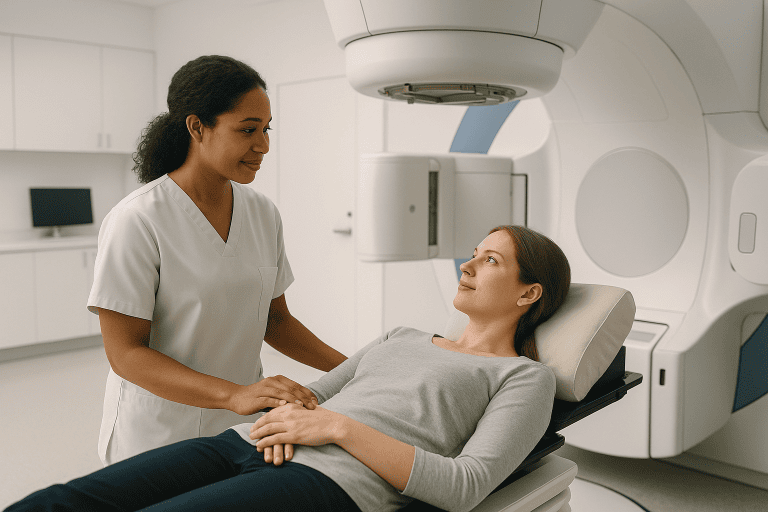
- Radiation therapy. High-energy beams that destroy cancer cells may be used as part of bladder-preserving treatment, for people who cannot have surgery, or to relieve symptoms in advanced disease.
Treatment for advanced or metastatic bladder cancer
- Systemic chemotherapy remains a cornerstone of treatment when cancer has spread beyond the bladder.
- Immunotherapy. Drugs called immune checkpoint inhibitors help the immune system recognize and attack cancer cells and are used in certain situations, including some advanced cancers and some cases where BCG has stopped working.
- Targeted therapy. For tumors with specific genetic changes, targeted drugs may be an option; testing the tumor for these changes is increasingly part of care for advanced disease.
- Supportive (palliative) care. At any stage, treatment aimed at relieving pain, urinary symptoms, and other problems is an important part of care and can be given alongside cancer-directed treatment.
Every treatment carries potential benefits and side effects, and the right plan varies from person to person. Your care team should explain the expected goals of each option, cure, control, or symptom relief, so you can make informed decisions.
Living with bladder cancer and outlook
The outlook for bladder cancer varies widely. In general, cancers found while they are still confined to the bladder lining have a considerably better prognosis than cancers that have invaded the muscle or spread to other organs. Many people with non-muscle-invasive bladder cancer are treated successfully, although recurrences are common, which is why long-term follow-up with regular cystoscopies is a normal part of life after treatment. Muscle-invasive and metastatic disease are more serious, but treatments continue to improve, and many people live meaningful lives during and after treatment. No doctor can promise a specific outcome for an individual; prognosis depends on stage, grade, response to treatment, and overall health.
Living with bladder cancer often involves practical adjustments. People who have had their bladder removed learn to manage a urostomy pouch or a reconstructed neobladder, usually with support from specialized nurses. Quitting smoking, staying physically active as able, drinking adequate fluids, and attending all follow-up appointments are widely recommended. Emotional effects, anxiety about recurrence, changes in body image, and effects on intimacy, are common and legitimate concerns; counseling, support groups, and open conversations with the care team can help. Family members and caregivers may also benefit from support.
Frequently asked questions
What is bladder cancer in simple terms?
Bladder cancer is a growth of abnormal cells in the bladder, most often starting in the thin lining inside the organ. In simple terms, cells in this lining begin to multiply out of control and can form a tumor. If found early, the tumor may be limited to the lining; if not treated, it can grow into the bladder wall and, in some cases, spread to other parts of the body.
What are the first signs of bladder cancer?
The most common first sign is blood in the urine, which is often painless and may come and go. Other early bladder cancer symptoms can include needing to urinate more often, a sudden urgent need to urinate, or burning during urination. Because these symptoms are also caused by common conditions such as urinary infections, only a medical evaluation can identify the cause.
Can bladder cancer be cured?
In many cases, especially when the cancer is found before it has invaded the bladder muscle, treatment can remove the cancer completely, although recurrences are common and lifelong monitoring is usually advised. Muscle-invasive cancer can also be treated with the goal of cure in many patients, typically with surgery or chemoradiation. When cancer has spread widely, cure is less likely, but treatment can often control the disease and relieve symptoms. Outcomes vary from person to person, and your doctor can discuss what is realistic in your situation.
How serious is bladder cancer?
Seriousness depends largely on stage and grade. Non-muscle-invasive, low-grade tumors are often manageable with outpatient procedures and follow-up, while muscle-invasive or metastatic disease is a serious illness requiring major treatment. Because early tumors frequently cause visible blood in the urine, bladder cancer is often detected at a treatable stage, one reason prompt evaluation of symptoms matters so much.
Does bladder cancer come back after treatment?
Bladder cancer, particularly the non-muscle-invasive type, has a relatively high tendency to recur, sometimes years after the original tumor was removed. This is why regular surveillance cystoscopies and urine tests are a standard part of follow-up care. Treatments placed directly into the bladder, such as BCG or intravesical chemotherapy, are often used to reduce the chance of recurrence.
What is recovery like after bladder cancer surgery?
Recovery depends on the procedure. After a TURBT, most people go home within a day or two and may notice blood in the urine or mild burning for a short time. After radical cystectomy, recovery is longer, often involving several days in the hospital and weeks of gradual healing at home, along with learning to manage a urostomy or neobladder. Care teams typically provide detailed guidance, and many people return to their usual activities over time.
Can you live a normal life without a bladder?
Many people adapt well after bladder removal. Depending on the reconstruction chosen, urine is collected in an external pouch or stored in an internal reservoir made from intestine. There is an adjustment period, and some routines change, but with support and practice, most people return to work, travel, exercise, and social life. Your surgical team can explain which reconstruction options are appropriate for you and what daily life with each one involves.
When to see a doctor
See a doctor promptly if you notice any of the following warning signs. They do not necessarily mean cancer, but they always deserve medical evaluation:
- Blood in your urine, even once, even if painless, and even if it goes away on its own
- Urinary symptoms that persistfrequent urination, urgency, or burning that does not improve with treatment for infection
- Inability to urinate or a sudden major change in your urine stream
- Persistent pelvic, lower abdominal, or one-sided lower back pain
- Unexplained weight loss, loss of appetite, or ongoing fatigue alongside urinary symptoms
- Repeated urinary tract infections without a clear cause
If you have already been treated for bladder cancer, report any new blood in the urine or return of urinary symptoms to your care team without waiting for your next scheduled check-up. Early evaluation gives doctors the best chance to find and treat any problem at its most manageable stage.
Medically reviewed by the Acıbadem International Medical Board September 3, 2026
See our medical review board →
Update history
- PublishedJune 14, 2026
- Medical review approvedSeptember 3, 2026
- Last content updateSeptember 2, 2026