Kidney Cancer: Symptoms, Imaging, and Surgery Options

Many kidney tumors cause no symptoms at first and may be found incidentally on ultrasound, CT, or MRI. Blood in the urine, persistent flank pain, unexplained weight loss, or a new abdominal lump should be evaluated by a doctor.
Key Takeaways
- Many kidney tumors cause no symptoms at first and may be found incidentally on ultrasound, CT, or MRI.
- Blood in the urine, persistent flank pain, unexplained weight loss, or a new abdominal lump should be evaluated by a doctor.
- CT and MRI are key imaging tools for identifying kidney tumors and planning treatment.
- Surgery may involve removing only the tumor, called partial nephrectomy, or removing the whole kidney, called radical nephrectomy.
- Treatment depends on tumor size, location, stage, kidney function, general health, and patient preferences.
- Long-term follow-up is important to monitor kidney function and check for recurrence.
Kidney cancer often develops quietly and is sometimes discovered during imaging for another reason. Early evaluation, accurate imaging, and individualized treatment planning help doctors choose the safest and most effective approach.
Overview
Kidney cancer is a disease in which abnormal cells grow in the kidney and form a tumor. The kidneys are two bean-shaped organs located toward the back of the abdomen. They filter blood, remove waste products through urine, help control blood pressure, and support red blood cell production and bone health.
The most common type of kidney cancer in adults is renal cell carcinoma, often shortened to RCC. Other types, such as urothelial carcinoma of the renal pelvis, lymphoma involving the kidney, or Wilms tumor in children, are managed differently. This article focuses mainly on adult kidney cancer, especially renal cell carcinoma.
Many kidney cancers are found at an early stage because modern imaging tests are frequently used for abdominal pain, digestive symptoms, kidney stones, or routine health checks. When a tumor is limited to the kidney, treatment often aims to remove or destroy the cancer while preserving as much kidney function as possible. More advanced disease may require a combination of surgery, medicines, and careful monitoring.
Symptoms of Kidney Cancer
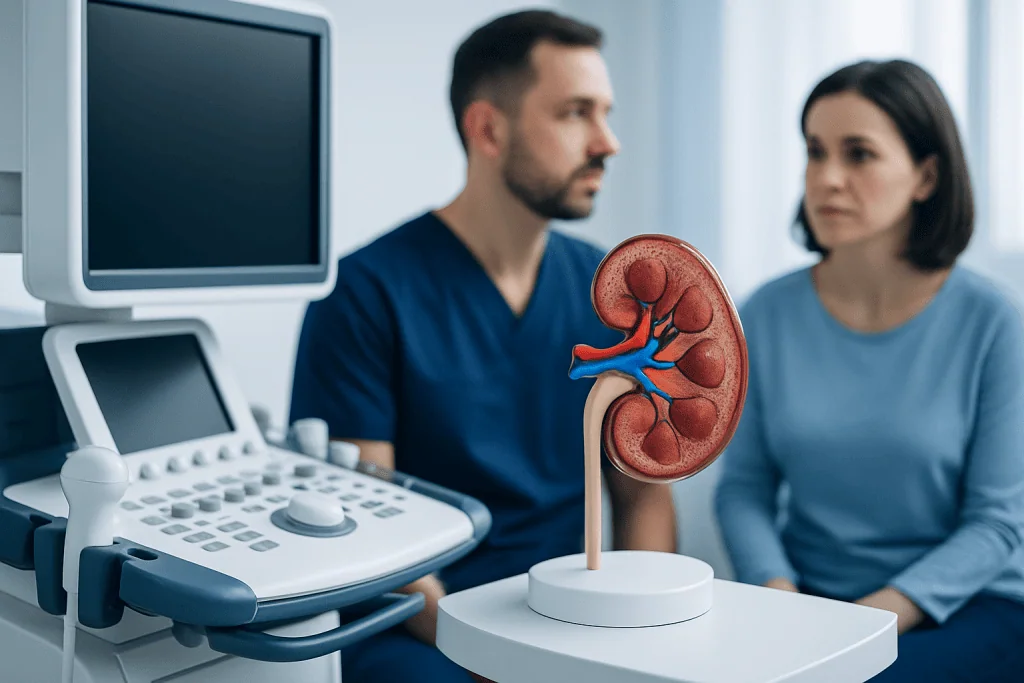
Kidney cancer may not cause noticeable symptoms in its early stages. Some people feel completely well when a kidney mass is found on an ultrasound, CT scan, or MRI performed for another reason. This is why kidney tumors are often described as incidental findings.
When symptoms do occur, they can be nonspecific and may overlap with kidney stones, urinary tract infections, muscle strain, or other conditions. Possible symptoms include:
- Blood in the urine, which may look pink, red, tea-colored, or cola-colored
- Persistent pain or pressure in the side, flank, or lower back
- A lump or fullness in the abdomen or side
- Unexplained weight loss or reduced appetite
- Fatigue, fever, or night sweats without a clear infection
- New or worsening high blood pressure
- Anemia or abnormal blood test results
Blood in the urine should always be assessed, even if it happens only once and goes away. In many cases, the cause is not cancer, but timely evaluation helps doctors identify urinary tract problems and decide whether imaging or specialist care is needed.
Causes and Risk Factors

Kidney cancer begins when changes in the DNA of kidney cells allow them to grow and divide in an uncontrolled way. In most people, the exact cause is not known. Cancer usually develops through a combination of genetic changes, environmental exposures, medical conditions, and lifestyle factors over time.
Several factors are associated with a higher risk of kidney cancer. These include smoking, obesity, high blood pressure, long-term dialysis for kidney failure, and a family history of kidney cancer. Certain inherited syndromes, such as von Hippel-Lindau disease, hereditary papillary renal cell carcinoma, Birt-Hogg-Dubé syndrome, and hereditary leiomyomatosis and renal cell cancer, can increase risk and may require specialized genetic evaluation.
Having one or more risk factors does not mean a person will develop kidney cancer, and many people with kidney cancer have no obvious risk factor. Still, addressing modifiable risks can support overall kidney and cardiovascular health. Stopping smoking, managing blood pressure, maintaining a healthy weight, and following medical advice for chronic kidney disease are important preventive steps.
Diagnosis and Imaging
Diagnosis usually begins with a medical history, physical examination, urine tests, and blood tests. Urine testing may detect blood or other abnormalities, while blood tests can assess kidney function, anemia, liver function, calcium levels, and general health. These tests do not diagnose kidney cancer on their own, but they help guide further evaluation and treatment planning.
Imaging is central to diagnosing and staging kidney cancer. Ultrasound can identify many kidney masses and distinguish solid tumors from simple fluid-filled cysts. Contrast-enhanced CT is commonly used because it shows the kidney, blood vessels, lymph nodes, and nearby organs in detail. MRI may be preferred when CT contrast is not suitable, when more detail is needed about blood vessel involvement, or when a complex cystic mass requires further assessment.
Doctors also evaluate whether a kidney mass has spread beyond the kidney. Depending on the situation, staging may include chest imaging, additional abdominal imaging, bone scans, brain imaging, or other tests. The choice depends on symptoms, tumor appearance, lab results, and clinical judgment.
A biopsy is not always required before surgery for a kidney mass because imaging can often strongly suggest renal cell carcinoma. However, biopsy may be recommended when the diagnosis is uncertain, when a small mass may be monitored or ablated, or when systemic drug treatment is being considered. The decision is individualized and should be discussed with a urologist, radiologist, or oncology team.
Treatment Options
Treatment depends on the size, location, and stage of the tumor, as well as kidney function, age, general health, and personal preferences. For small kidney tumors, doctors often aim to preserve kidney tissue when it is safe to do so. For larger or more complex tumors, removing the whole kidney may provide better cancer control.
Common treatment options include active surveillance, thermal ablation, partial nephrectomy, radical nephrectomy, and systemic therapy. Active surveillance means the tumor is monitored with scheduled imaging, usually for selected small tumors or for patients in whom treatment risks may outweigh immediate benefit. Thermal ablation uses heat or cold, such as radiofrequency ablation or cryoablation, to destroy selected small tumors, often with image guidance.
Partial nephrectomy removes the tumor and a small margin of normal tissue while leaving the rest of the kidney in place. It is often preferred for small tumors when technically feasible, especially if preserving kidney function is important. Radical nephrectomy removes the entire kidney and surrounding fatty tissue, and sometimes the adrenal gland or lymph nodes if needed. Both partial and radical nephrectomy may be performed through open, laparoscopic, or robot-assisted approaches depending on tumor characteristics and surgical expertise.
If kidney cancer has spread, treatment may involve immunotherapy, targeted therapy, surgery in selected cases, radiation for symptom control, or a combination of approaches. Modern systemic treatments are chosen according to cancer type, disease extent, patient health, and expected benefits and side effects. Decisions are best made through a multidisciplinary discussion involving urology, medical oncology, radiology, pathology, and supportive care specialists.
Surgery: What Patients Can Expect
Before kidney cancer surgery, the care team reviews imaging, blood and urine tests, current medicines, anesthesia risk, and overall kidney function. Patients may be asked to stop or adjust certain medications, especially blood thinners, under medical supervision. The surgeon explains the planned procedure, the chance of conversion to a different approach if needed, and the possible risks and benefits.
During partial nephrectomy, the surgeon removes the tumor while trying to protect as much healthy kidney tissue as possible. In some cases, blood flow to part of the kidney is temporarily controlled to reduce bleeding during tumor removal. During radical nephrectomy, the affected kidney is removed. Many people can live well with one kidney, but long-term monitoring of blood pressure, urine protein, and kidney function remains important.
Recovery varies depending on the type of surgery, surgical approach, general health, and whether complications occur. Minimally invasive approaches may be associated with smaller incisions and a shorter hospital stay, but they are not suitable for every tumor. After discharge, patients usually receive instructions about wound care, activity, pain control, hydration, diet, and when to return for follow-up.
The pathology report after surgery provides important details, including cancer type, tumor size, grade, margins, and stage. These results help estimate recurrence risk and determine the follow-up schedule. Some patients with higher-risk features may be referred to medical oncology to discuss additional therapy or clinical trial options.
Prevention, Self-Care, and Follow-Up
There is no guaranteed way to prevent kidney cancer, but healthy habits can reduce some risks and support long-term kidney function. Avoiding tobacco is one of the most important steps. Managing blood pressure, maintaining a healthy body weight, staying physically active, and following medical advice for diabetes or chronic kidney disease can also help protect overall health.
After treatment, follow-up is tailored to the individual. It may include physical examinations, blood tests, urine tests, and scheduled imaging of the abdomen and chest. The timing depends on tumor stage, type of treatment, kidney function, and the risk of recurrence. Follow-up also gives patients a chance to discuss fatigue, pain, emotional concerns, urinary symptoms, and lifestyle questions.
People living with one kidney or reduced kidney function may be advised to avoid unnecessary use of medicines that can affect the kidneys, stay well hydrated, and have regular monitoring. Any medication or supplement should be discussed with a healthcare professional, particularly if kidney function is impaired. A balanced diet and blood pressure control are often key parts of long-term care.
When to See a Doctor
A medical appointment is recommended if a person notices blood in the urine, persistent flank or back pain, an unexplained abdominal mass, ongoing fever, unexplained weight loss, or unusual fatigue. These symptoms have many possible causes, and most are not cancer, but evaluation is important to identify conditions that need treatment.
Urgent medical care is appropriate for heavy bleeding in the urine, inability to urinate, severe flank pain, high fever, sudden weakness, fainting, or symptoms that rapidly worsen. People with a known kidney mass should contact their care team if new symptoms develop or if follow-up appointments are missed.
Patients diagnosed with kidney cancer often benefit from care by a multidisciplinary team. Acibadem International’s JCI-accredited hospitals provide diagnosis and treatment for international patients with kidney tumors through coordinated urology, oncology, radiology, pathology, and supportive care services. Any treatment decision should be based on a personal consultation with qualified specialists.
Frequently asked questions
Is blood in the urine always a sign of kidney cancer?
No. Blood in the urine can be caused by urinary tract infection, kidney stones, enlarged prostate, injury, medications, or other urinary conditions. However, it should always be evaluated because it can sometimes be related to kidney, bladder, or urinary tract cancer.
Can kidney cancer be found on an ultrasound?
Yes, ultrasound can detect many kidney masses and is often the first imaging test used. If a solid mass or complex cyst is seen, CT or MRI is usually needed to define the tumor more clearly and plan treatment.
Does every kidney tumor need surgery?
Not always. Some small kidney tumors may be monitored with active surveillance, especially in older patients or those with other serious medical conditions. Others may be treated with ablation or surgery depending on size, location, growth pattern, and overall health.
What is the difference between partial and radical nephrectomy?
Partial nephrectomy removes the tumor while preserving the remaining healthy part of the kidney. Radical nephrectomy removes the entire kidney and surrounding tissue. The best option depends on tumor size, position, kidney function, and surgical feasibility.
Can a person live normally with one kidney?
Many people live healthy lives with one kidney. They may need periodic monitoring of kidney function, blood pressure, and urine protein. Protecting the remaining kidney through healthy habits and medical follow-up is important.
Is a biopsy required before kidney cancer surgery?
A biopsy is not required in every case because imaging may be enough to guide surgery for many kidney masses. Biopsy may be useful when the diagnosis is uncertain, when ablation or surveillance is being considered, or when drug treatment is planned before surgery.
References
- National Cancer Institute
- American Cancer Society
- European Association of Urology
- European Society for Medical Oncology
- American Urological Association
This article is for general information only and is not a substitute for professional medical advice. Please consult a qualified doctor about your individual situation.
Kidney Cancer in Turkey — costs, top hospitals & a free quote
JCI-accredited · board-certified surgeons · reply within 24h
Add us as a Preferred Source to see more of our trusted health content across Google Search, AI Overviews and Discover.
Check your numbers in seconds
BMI, calories, due date, blood pressure and 30+ more clinical calculators — free, instant, doctor-reviewed ranges.

Medical Oncology Department
Medical treatment of cancer with chemotherapy, immunotherapy and targeted therapies under a multidisciplinary tumor board.
60 specialists in this unit