Vascular Lesion Laser Treatment
Vascular lesion laser treatment is a non-surgical dermatology procedure that uses specific wavelengths of light to target hemoglobin in unwanted blood vessels, heating and closing them so the body can clear them.…
Quick answer
Vascular lesion laser treatment is a non-surgical procedure that uses targeted light, absorbed by hemoglobin in blood, to heat and close unwanted blood vessels in the skin. It is used for spider veins, port-wine stains, cherry angiomas, rosacea redness, and red scars. Sessions are short, outpatient, and often repeated several times.
What is vascular lesion laser treatment?
Vascular lesion laser treatment is a non-surgical procedure that uses focused light to reduce or remove visible blood vessels in the skin. A vascular lesion is any mark on the skin caused by abnormal, enlarged, or excess blood vessels. The laser delivers a specific wavelength of light that is absorbed mainly by hemoglobin, the red pigment inside red blood cells. The absorbed light turns into heat, which damages the wall of the unwanted vessel. Over the following weeks the body gradually breaks down and clears the treated vessel, so the mark fades or disappears.
Doctors most often use vascular lesion laser treatment for:
- Telangiectasias (small, thread-like red or purple veins on the face or legs, sometimes called spider veins).
- Port-wine stains (flat red or purple birthmarks caused by malformed capillaries).
- Hemangiomas (benign, non-cancerous growths of blood vessels that often appear in infancy) in selected cases.
- Cherry angiomas (small, bright red bumps that are common with age).
- Rosacea-related redness (a long-term skin condition causing flushing and visible vessels on the face).
- Venous lakes (soft, dark blue spots usually on the lip).
- Some scars and stretch marks that are still red because of increased blood flow.
Several laser and light devices are used for this purpose. The most common include the pulsed dye laser (PDL), the potassium titanyl phosphate (KTP) laser, the neodymium-doped yttrium aluminum garnet (Nd:YAG) laser, and intense pulsed light (IPL), which is a broad-spectrum light source rather than a true laser. The choice depends on the type, color, depth, and size of the vessel, as well as the patient’s skin tone. In many hospital groups, including Acibadem, this treatment is managed by the Dermatology department.
Who needs vascular lesion laser treatment, and who is not a candidate
Understanding who needs vascular lesion laser treatment starts with recognizing that most vascular lesions are harmless. Treatment is usually chosen for cosmetic reasons, because a lesion is causing emotional distress, or because it bleeds, ulcerates, or interferes with function. A dermatologist (a doctor specializing in skin) will examine the lesion and decide whether laser treatment is appropriate.
People who are often considered suitable candidates include those with:
- Facial or leg spider veins that do not respond to other measures.
- Port-wine stains, especially when treatment begins in childhood, as vessels are smaller and skin is thinner.
- Persistent facial redness from rosacea that does not improve with topical or oral medicines.
- Cherry angiomas or venous lakes that bleed easily or are cosmetically bothersome.
- Red, immature scars that a doctor believes may benefit from reduced blood flow.
- Realistic expectations and the ability to attend several sessions and follow aftercare advice.
Laser treatment may not be suitable, or may need extra caution, in the following situations:
- Recently tanned or sun-exposed skin, because extra pigment competes for the laser light and raises the risk of burns and color changes.
- Darker skin tones with certain devices; some wavelengths carry a higher risk of pigment changes, so the doctor may choose a different laser or advise against treatment.
- Pregnancy, mainly because safety data are limited and many vessels that appear during pregnancy fade afterward.
- Active skin infection in the treatment area, including cold sores.
- Certain medicines that increase light sensitivity, such as some antibiotics and isotretinoin, a strong acne medicine.
- Bleeding disorders or blood-thinning medicines, which may increase bruising.
- A history of keloids (thick, raised scars) or poor wound healing.
- Uncontrolled epilepsy in rare cases where flashing light is a concern.
- Large leg veins (varicose veins), which usually require other treatments such as injection sclerotherapy or vein procedures rather than surface laser.
Any lesion that has changed in size, shape, or color, or that has an unusual appearance, should first be assessed to rule out other diagnoses before laser treatment is planned.
How the vascular lesion laser treatment procedure works
The vascular lesion laser treatment procedure is usually performed in an outpatient clinic and does not require a hospital stay. Here is what typically happens.
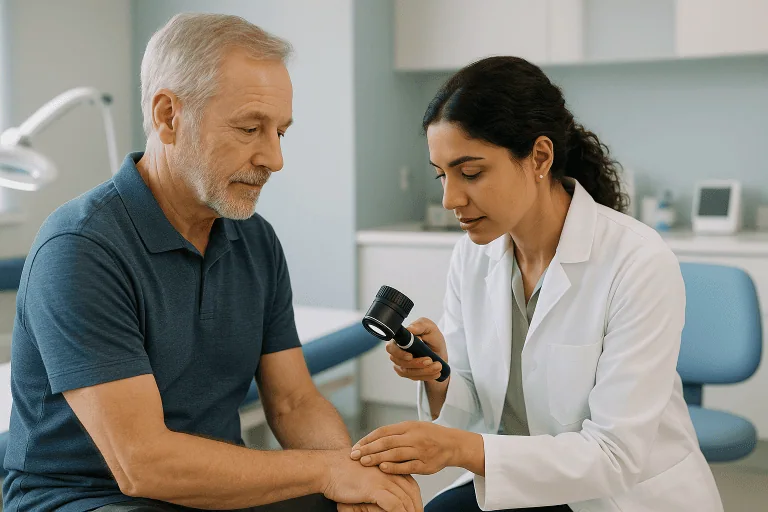
Before the session: The doctor reviews your medical history, examines the lesion, and may take photographs to track progress. In some cases a small test area is treated first to check how your skin responds. The skin is cleaned and any makeup is removed. A topical numbing cream may be applied about 30 to 60 minutes beforehand, although many patients tolerate the treatment without it. You will be given protective eyewear, which must be worn throughout.
During the session: The doctor holds the laser handpiece against or just above the skin and delivers a series of short pulses. Many devices release a cooling spray or use a chilled tip just before each pulse to protect the surface of the skin and reduce discomfort. Most people describe the sensation as a quick snap, similar to a rubber band flicking against the skin, followed by warmth. Small lesions can take only a few minutes; larger areas such as a port-wine stain may take 20 to 45 minutes. Depending on the device and settings, you may notice the vessel darken, turn gray, or seem to vanish immediately, or the area may simply become red.
After the session: A cool compress or soothing gel is often applied. The treated skin may look red, swollen, or bruised, and with pulsed dye lasers a purple-gray discoloration called purpura is common and expected. You can usually go home right away and drive yourself, unless you have received sedation, which is rare and generally reserved for young children with extensive lesions.
Most vascular lesions require more than one session. Sessions are commonly spaced four to twelve weeks apart to allow the skin to heal and the body to clear the treated vessels. Small spider veins may need one to three sessions, whereas port-wine stains often require many treatments over a longer period.
Preparation for vascular lesion laser treatment
Good preparation lowers the risk of side effects and helps the laser target the vessels accurately. Your doctor will give you specific instructions, which often include the following:
- Avoid sun exposure and tanning (including self-tanning products) for at least two to four weeks before treatment. Use broad-spectrum sunscreen on the area daily.
- Tell your doctor about all medicines and supplements, including aspirin, ibuprofen, blood thinners, fish oil, vitamin E, and herbal products, as some increase bruising. Do not stop prescription medicines unless your doctor advises it.
- Mention light-sensitizing medicines and any history of cold sores; antiviral tablets may be prescribed before treating around the mouth.
- Stop retinoid creams and exfoliating acids on the area for several days before the session if your doctor recommends it.
- Arrive with clean skin, free of makeup, lotion, and perfume.
- Plan your schedule around possible bruising, especially for facial treatments before important events.
- Ask questions about the expected number of sessions, likely results, and what the treated area will look like in the first week.
Recovery and aftercare
Vascular lesion laser treatment recovery time is generally short, but it varies with the device, the settings, the size of the treated area, and the type of lesion. Most people return to normal daily activities the same day or the next day. The main issue is usually the appearance of the skin rather than pain.
A typical recovery timeline looks like this, although individual experiences differ:
- First 24 to 48 hours: Redness, mild swelling, and a sunburn-like feeling are common. Swelling around the eyes can be more noticeable after facial treatment, especially in the morning.
- Days 2 to 10: If purpura (bruise-like discoloration) develops, it typically fades over one to two weeks. Small crusts may form on treated cherry angiomas or venous lakes and should be left to fall off on their own.
- Weeks 2 to 6: The skin usually looks normal, and the vessel gradually fades as the body clears it. The full result of a single session is often judged at about six to eight weeks.
Aftercare instructions commonly include:
- Applying cool compresses for the first day or two to reduce swelling and discomfort.
- Keeping the area clean with gentle soap and water and applying a bland moisturizer or petroleum-based ointment if the skin is crusted.
- Avoiding hot baths, saunas, vigorous exercise, and alcohol for about 24 to 48 hours, as heat and flushing can worsen swelling and bruising.
- Not picking, scrubbing, or exfoliating the area until it has fully healed.
- Using a broad-spectrum sunscreen with a high sun protection factor every day for several weeks, since treated skin is more prone to darkening or lightening.
- Using mineral-based makeup only once the skin surface is intact, if your doctor agrees.
- Taking acetaminophen (paracetamol) for discomfort if needed; your doctor may ask you to avoid aspirin or ibuprofen because of bruising.
Vascular lesion laser treatment risks and benefits
Weighing vascular lesion laser treatment risks and benefits is part of the consultation. The procedure is widely used and generally considered safe when performed by trained professionals on appropriate patients, but no treatment is free of risk.
Potential benefits include fading or clearing of visible vessels, reduced redness and flushing, less bleeding from fragile lesions, improved texture of red scars, and, for many people, improved confidence. The treatment does not involve cuts or stitches and rarely requires time off work.
Common, usually temporary side effects include:
- Redness and swelling lasting hours to a few days.
- Bruising or purpura, especially with pulsed dye lasers, lasting one to two weeks.
- Mild pain, stinging, or itching during and shortly after treatment.
- Small crusts or blisters, which usually heal without scarring if left undisturbed.
Less common risks include:
- Hyperpigmentation (darkening of the skin) or hypopigmentation (lightening), which is more likely in darker or tanned skin and may take months to resolve; occasionally it is long-lasting.
- Burns from excessive energy or inadequate cooling.
- Scarring, including indented or raised scars, which is uncommon but possible.
- Infection, including reactivation of cold sores around the mouth.
- Incomplete response or recurrence, particularly with port-wine stains, rosacea, and leg veins, where new vessels can form over time.
- Eye injury if protective eyewear is not used, which is why it is mandatory.
- Rarely, a rectangular or patterned appearance in the treated area (“footprinting”) from overlapping or missed pulses.
Your doctor will discuss which of these risks apply to your skin type, lesion, and chosen device.
Results and outlook
The evidence generally shows that laser and light treatments are effective for many superficial vascular lesions. Small facial telangiectasias and cherry angiomas often respond well after one to a few sessions. Rosacea-related redness typically improves but tends to return gradually, so maintenance sessions may be needed. Port-wine stains usually lighten significantly over a series of treatments, but complete clearance is uncommon, and some degree of redarkening may occur years later. Leg veins are generally more challenging than facial vessels because of vessel depth, size, and pressure, and other treatments are sometimes combined with laser.
Results depend on the type and depth of the vessel, skin tone, the device used, the experience of the treating team, and how carefully aftercare and sun protection are followed. Photographs taken before and after each session help both you and your doctor judge progress objectively. Because new vessels can develop with age, sun damage, hormonal changes, or the underlying condition, laser treatment reduces visible lesions but does not prevent new ones from forming.
Cost considerations
The cost of vascular lesion laser treatment varies widely and is best discussed directly with the treating clinic. Factors that generally influence price include:
- Number of sessions, which is the biggest driver; a single cherry angioma needs far less treatment than a large port-wine stain.
- Size and location of the area treated.
- Type of device, since different lasers have different operating costs.
- Whether the treatment is classified as medical or cosmetic, which affects whether insurance or public health coverage contributes. Lesions that bleed, ulcerate, or affect function are more likely to be considered medical.
- Consultation, photography, test patches, and follow-up visits.
- Anesthesia or sedation in the rare cases where it is needed, for example in young children.
Because the procedure is almost always outpatient, hospital stay costs do not usually apply, and no implants or devices are left in the body.
Frequently asked questions
Is vascular lesion laser treatment painful?
Most people feel a brief snapping or stinging sensation with each pulse, along with warmth. Built-in cooling and, when needed, numbing cream make the procedure tolerable for the majority of adults. Discomfort after the session is usually mild and similar to a sunburn, and it typically settles within a day or two.
How long is vascular lesion laser treatment recovery time?
Recovery time is usually short. Redness and swelling often settle within one to three days, while bruising, if it occurs, commonly fades over one to two weeks. Most people return to work and normal activities immediately or the next day, although you may prefer to wait until any bruising on the face has faded before social events.
How many sessions of the vascular lesion laser treatment procedure will I need?
This depends on the lesion. Small spider veins and cherry angiomas may clear after one to three sessions, rosacea redness often needs several sessions plus occasional maintenance, and port-wine stains frequently require many treatments over a longer period. Your doctor can give a more specific estimate after examining you, but exact numbers cannot be promised in advance.
Who needs vascular lesion laser treatment rather than other options?
Laser is often chosen for vessels that are too small to inject, for facial vessels, for port-wine stains, and for redness that does not respond to creams or tablets. Larger leg veins are usually better treated with injection sclerotherapy or vein procedures. A dermatologist can advise which approach, or combination, suits your lesion.
What are the main vascular lesion laser treatment risks and benefits?
The main benefit is fading or clearing of visible vessels without cuts or stitches. Common side effects are temporary redness, swelling, and bruising. Less common risks include pigment changes, blistering, scarring, and infection, and some lesions may respond only partially or return over time. These risks are generally lower when tanning is avoided and aftercare is followed.
Can vascular lesion laser treatment be used on children?
Yes, particularly for port-wine stains and some hemangiomas, where early treatment is often recommended because vessels are smaller and skin is thinner. Young children may need numbing cream or, for extensive lesions, sedation or general anesthesia so they can stay still. The decision is made individually by the treating team and the child’s parents or guardians.
Will the treated vessels come back?
A vessel that has been fully destroyed does not return, but new vessels can form nearby because of sun exposure, aging, hormonal changes, or the underlying condition such as rosacea. Port-wine stains may also redarken slowly over years. Daily sun protection and treating any underlying condition can help maintain results, and touch-up sessions are sometimes needed.
When to see a doctor
You should consider being assessed by a dermatologist or other specialist if you have a vascular lesion that:
- Bleeds easily, ulcerates, or becomes painful.
- Is growing quickly, particularly in an infant or young child.
- Has changed in color, shape, or texture, since some skin cancers can look red or vascular.
- Is located near the eye, on the eyelid, or in a position that interferes with vision, feeding, or breathing.
- Causes significant emotional distress or affects daily life.
- Is part of widespread redness or flushing that has not responded to other treatments.
After vascular lesion laser treatment, contact the clinic or seek medical care promptly if you notice any of the following red flags:
- Increasing pain, spreading redness, warmth, pus, or fever, which may indicate infection.
- Large blisters, open wounds, or skin that looks white, gray, or charred, which may indicate a burn.
- Cold sores or clusters of small blisters around the treated area.
- Any change in vision or eye pain after treatment near the eyes.
- Swelling that worsens after the second day rather than improving.
- Signs of scarring, such as thickened or indented skin, once the area has healed.
Most side effects are mild and settle on their own, but early review allows problems to be treated before they leave lasting marks.
Preparation
- Avoid sun exposure and tanning products for several weeks before treatment and use daily sunscreen on the area. Tell your doctor about all medicines and supplements, including blood thinners and light-sensitizing drugs, and mention any history of cold sores. Arrive with clean skin free of makeup and lotions, and plan around possible bruising.
Aftercare
- Apply cool compresses for the first day or two and keep the area clean with gentle soap and water. Avoid heat, vigorous exercise, and alcohol for about 24 to 48 hours, and do not pick at crusts or bruises. Use broad-spectrum sunscreen daily for several weeks and report increasing pain, blistering, or signs of infection promptly.
Medically reviewed by the Acıbadem International Medical Board — September 13, 2026
See our medical review board →
Update history
- PublishedSeptember 13, 2026
- Medical review approvedSeptember 13, 2026
- Last content updateSeptember 13, 2026